Hear from Our Customers
When your architectural plans call for curved glass panels or your industrial project needs intricate cutouts, standard cutting methods force compromises. You’re left adjusting designs around what’s possible instead of what’s needed.
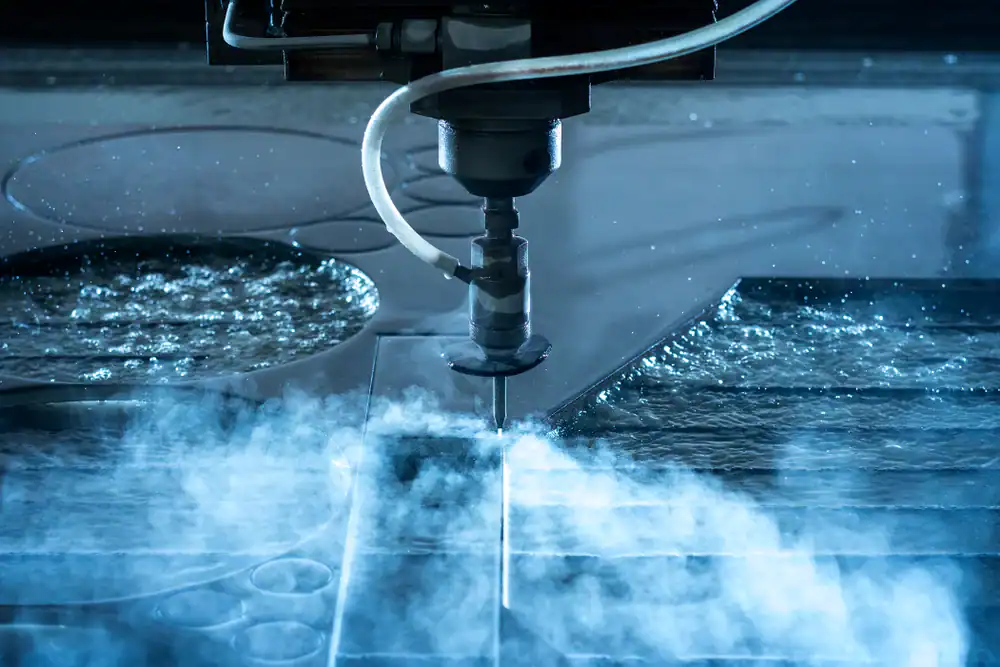
Waterjet technology cuts glass without generating heat. No thermal stress means no micro-cracks forming along cut lines. No weakened structural integrity. The cold-cutting process handles thickness up to 4 inches and creates shapes traditional methods can’t touch—curves, angles, and complex geometries that match your specifications exactly.
You get tolerance levels within ±0.1mm. That precision means panels fit correctly during installation. No gaps requiring adjustment. No delays while replacement pieces get recut. Your project moves forward on schedule because the glass arrives ready to install.
We operate from West Islip, positioned to serve Plainview’s industrial sector efficiently. Your area hosts major manufacturing operations—Veeco Instruments, Technic Inc., and over 448,000 square feet of industrial space across Nassau County. These facilities need precision glass components that meet tight specifications.
We’ve built our reputation on CNC-controlled accuracy and straightforward service. Architects, contractors, and manufacturers work with us because we understand the cost of errors. When you’re coordinating installation schedules or production timelines, you need a fabricator who delivers what they promise, when they promise it.
Our equipment handles optical glass, quartz, borosilicate, and fused silica. We cut pieces up to 9 inches thick using 2-axis and 3-axis CNC machinery. That capability means you’re not limited by equipment constraints when designing your project.
You start by sending your design specifications—CAD files, technical drawings, or dimensional requirements. We review them to confirm feasibility and identify any potential issues before cutting begins. If adjustments would improve structural integrity or installation ease, we’ll tell you upfront.
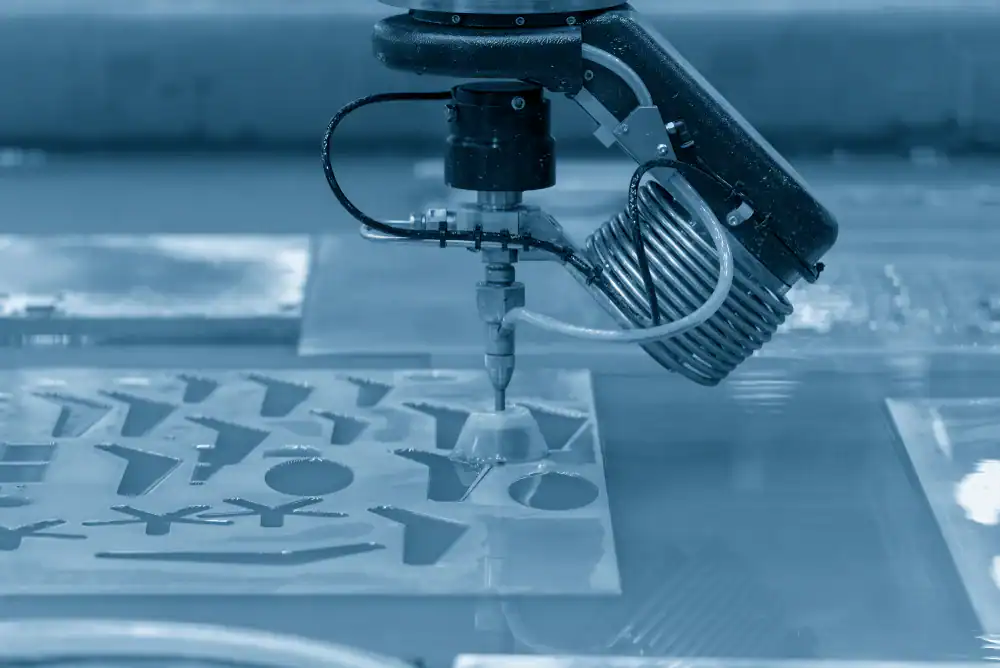
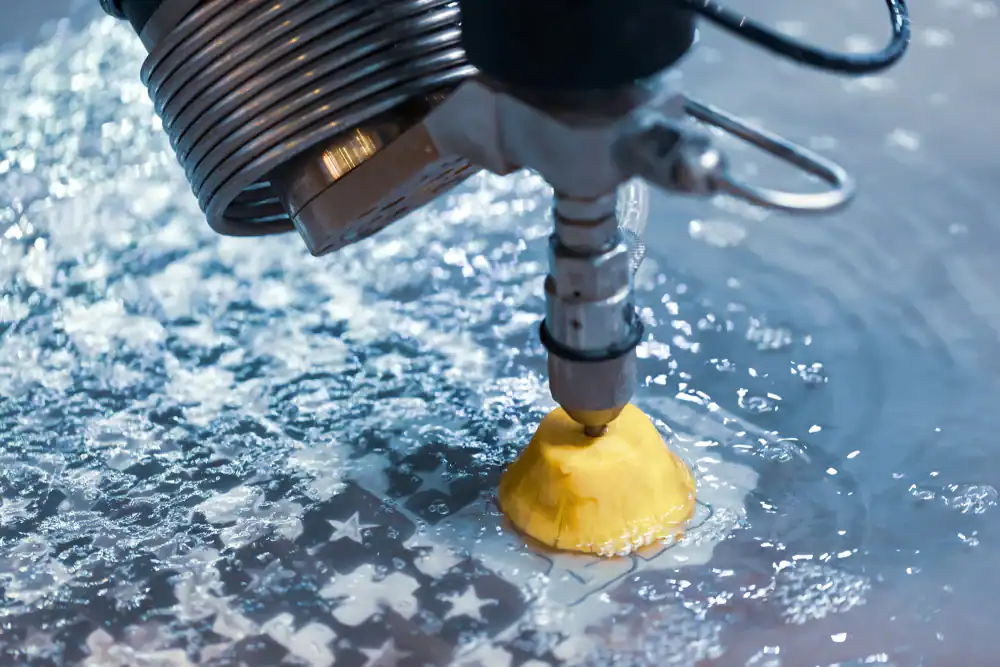
Once specs are confirmed, your design loads directly into our CNC system. The waterjet cuts using a high-pressure stream mixed with fine abrasive particles. This stream follows your programmed path with computer-controlled precision, creating clean edges without chipping or cracking. There’s no blade contact, no heat generation, no vibration that could cause stress fractures.
After cutting, edges come off the machine smooth and ready for your next process—whether that’s tempering, lamination, or direct installation. Most projects don’t require secondary finishing because the waterjet produces a polished edge quality. You receive your glass pieces cut to specification, packaged for transport, and ready to integrate into your project timeline.
Ready to get started?
Your glass arrives cut to the exact dimensions you specified. Tolerances stay within ±0.1mm across the entire piece—that level of consistency matters when you’re fitting panels into frameworks or aligning multiple pieces for a seamless appearance.
Edge quality comes finished from the cutting process. The waterjet produces smooth, clean edges without the micro-chipping you’d see from traditional scoring and breaking methods. For architectural applications in Plainview’s commercial buildings or custom residential projects, this means glass that looks professional without additional polishing steps.
Complex shapes get handled in a single cutting operation. If your design includes curves, interior cutouts, or intricate patterns, the CNC system executes them all from one setup. You’re not coordinating multiple processes or risking alignment issues between different cutting stages. The entire piece gets completed as one continuous operation, maintaining precision across every detail.
Plainview’s mix of industrial facilities and commercial construction creates demand for both heavy-duty industrial glass components and refined architectural elements. Waterjet cutting serves both needs—thick industrial glass for equipment housings and manufacturing applications, plus precise decorative pieces for building facades and interior design features.
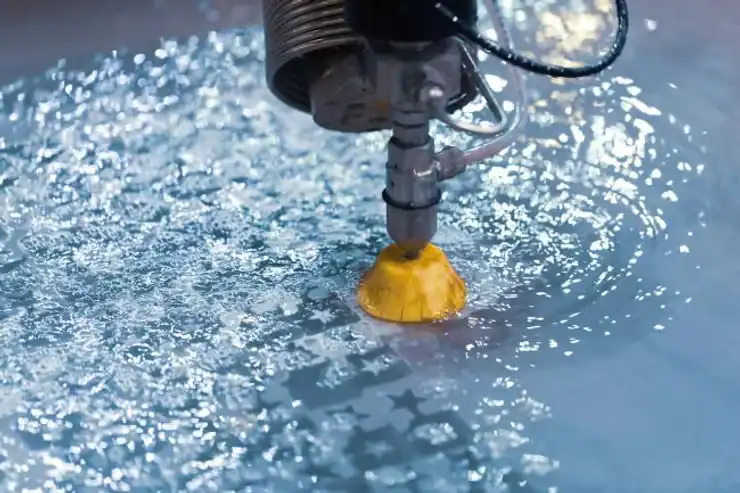
Waterjet systems cut glass up to 4 inches thick, though most architectural and industrial applications use glass between ½ inch and 2 inches. The cutting capability depends on glass type—standard float glass, tempered glass, laminated glass, and specialty materials like borosilicate all cut successfully.
Thicker glass takes longer to cut because the waterjet stream needs to maintain pressure and abrasive flow through the entire depth. A ½-inch piece might cut in minutes, while a 3-inch thick industrial component could take significantly longer. But thickness doesn’t compromise edge quality or precision. You still get the same ±0.1mm tolerance and smooth edges regardless of how thick the material is.
If you’re working with glass thicker than 2 inches, expect the cutting process to require more time for your project timeline. The tradeoff is worth it—you get complex shapes in thick glass that would be nearly impossible with traditional cutting methods.
Waterjet cutting works best on annealed (non-tempered) glass. Once glass has been tempered, cutting it causes the internal stress pattern to release, shattering the entire piece. If your project requires tempered glass, the waterjet cutting happens first, then the cut pieces go through the tempering process.
This sequence actually works in your favor. You can create complex custom shapes that would be difficult or impossible to temper as standard sheets, then have those custom pieces tempered after cutting. The result is custom-shaped tempered glass that meets safety requirements while maintaining your design specifications.
Laminated glass can be cut with waterjet technology, but it requires specific techniques. The waterjet cuts through both glass layers and the interlayer material. Some edge finishing might be needed afterward to ensure the lamination remains sealed along cut edges. For most laminated applications, cutting the glass layers before lamination produces better results.
CNC glass waterjet cutting maintains tolerance of ±0.1mm (about 0.004 inches) across the cut. For context, that’s roughly the thickness of a human hair. When you’re installing glass panels that need to align precisely or fit within metal frameworks, that level of accuracy eliminates the gaps and misalignments that cause installation headaches.
The CNC system follows your programmed design exactly, repeating the same cuts with identical precision if you need multiple pieces. This consistency matters for projects requiring several matching panels—each piece comes out dimensionally identical to the others. You’re not dealing with accumulated variance across multiple cuts.
Accuracy holds true for both straight cuts and complex curves. The waterjet stream follows programmed paths whether it’s cutting a simple rectangle or an intricate pattern with multiple curves and angles. Interior cutouts for hardware, fixtures, or design elements maintain the same precision as exterior edges. If your design file specifies a 3-inch diameter circle positioned 5 inches from the corner, that’s exactly what you’ll get on the finished glass.
Traditional glass cutting uses scoring and breaking—creating a controlled crack along a scored line. That cracking process inherently produces micro-chips along the edge because you’re literally fracturing the glass. Even with skilled technique, those edges need grinding and polishing to become smooth.
Waterjet cutting removes material through erosion, not fracturing. The high-pressure water stream mixed with abrasive particles gradually wears away glass along the cut path. There’s no impact force, no vibration, and no crack propagation. The glass doesn’t experience the stress that causes chipping.
The result is an edge that comes off the machine already smooth. For many applications, it’s ready to use immediately without secondary finishing. If your project requires polished edges for aesthetic reasons, the waterjet edge provides an excellent starting surface—but for structural and installation purposes, the as-cut edge is typically sufficient. This saves you time and cost compared to traditional methods that require mandatory edge finishing.
Start with dimensions—length, width, and thickness of the glass you need cut. If you have CAD files or technical drawings, those work perfectly. Even a detailed sketch with measurements gives us what we need to understand your project scope.
Specify the glass type if you know it. Standard float glass, low-iron glass, tempered glass (to be cut before tempering), laminated glass, or specialty materials like borosilicate all have different characteristics that affect cutting approach and timing. If you’re not sure what glass type your project needs, we can discuss options based on your application.
Describe any complexity in the cuts—straight edges only, curves, interior cutouts, or intricate patterns. Complex shapes take longer to cut and program, which affects both timeline and cost. The more detail you provide about edge finish requirements, quantity needed, and your project timeline, the more accurate the quote will be. If you’re in the design phase and exploring what’s possible, we can work from preliminary concepts to help you understand feasibility and budget.
Simple cuts on standard-size glass panels often complete within a few days from approval. A straightforward rectangular piece or basic shape with straight edges might be ready in 2-3 business days, depending on current project queue.
Complex designs with curves, multiple interior cutouts, or intricate patterns require more cutting time and careful programming. These projects typically take 5-7 business days. The CNC system needs to follow more detailed paths, and quality control becomes more involved to ensure every detail matches specifications.
Large orders or specialty glass materials may extend timelines. If you need 50 identical pieces, the cutting time multiplies—though programming only happens once. Specialty materials like optical glass or thick borosilicate might require specific abrasive types or adjusted cutting parameters, adding setup time. Rush projects can often be accommodated if your timeline is tight, but standard lead times ensure thorough quality control and proper attention to detail. When you’re coordinating with installation schedules or construction timelines, knowing realistic lead times helps you plan effectively.
Useful Links
Other Services we provide in Plainview