
Hear from Our Customers
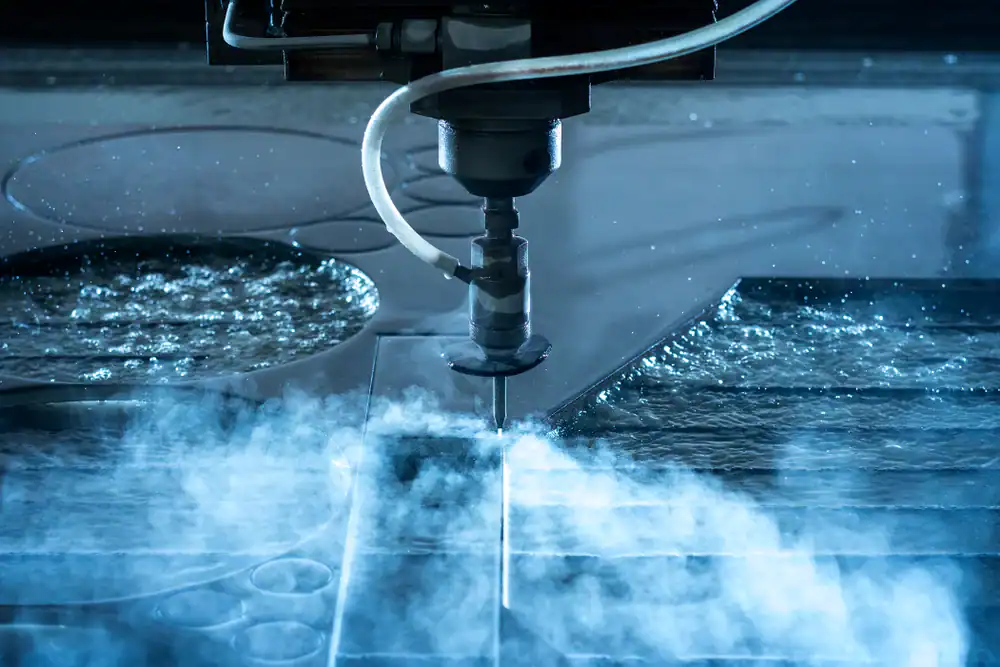
You’re not dealing with score-and-snap guesswork or the constant risk of edge chips ruining your material. Waterjet cutting uses high-pressure water to slice through glass without generating heat, which means no thermal stress, no micro-fractures, and no warping.
The edge quality is clean enough that most projects skip secondary finishing entirely. You save time, reduce waste, and avoid the frustration of breaks that don’t follow your line.
For architectural glass in Ridge, NY, this matters even more. Complex curves, tight inside corners, decorative patterns—waterjet handles what traditional cutting can’t. You get the shape you designed, not the shape your tools allowed.
We operate out of West Islip, NY, serving architects, contractors, and designers throughout Suffolk County and Ridge. We’re not a massive production facility pushing volume—we’re a precision shop focused on custom work that requires accuracy and consultation.
Ridge has a strong residential and remodeling market, with homeownership rates near 90% and a population that values quality craftsmanship. That’s exactly the kind of client we work with: people who need glass cut right the first time, whether it’s for a custom shower enclosure, architectural feature, or decorative installation.
Our CNC waterjet equipment handles the technical side. Our team handles the planning, material guidance, and project coordination so your glass arrives ready to install.
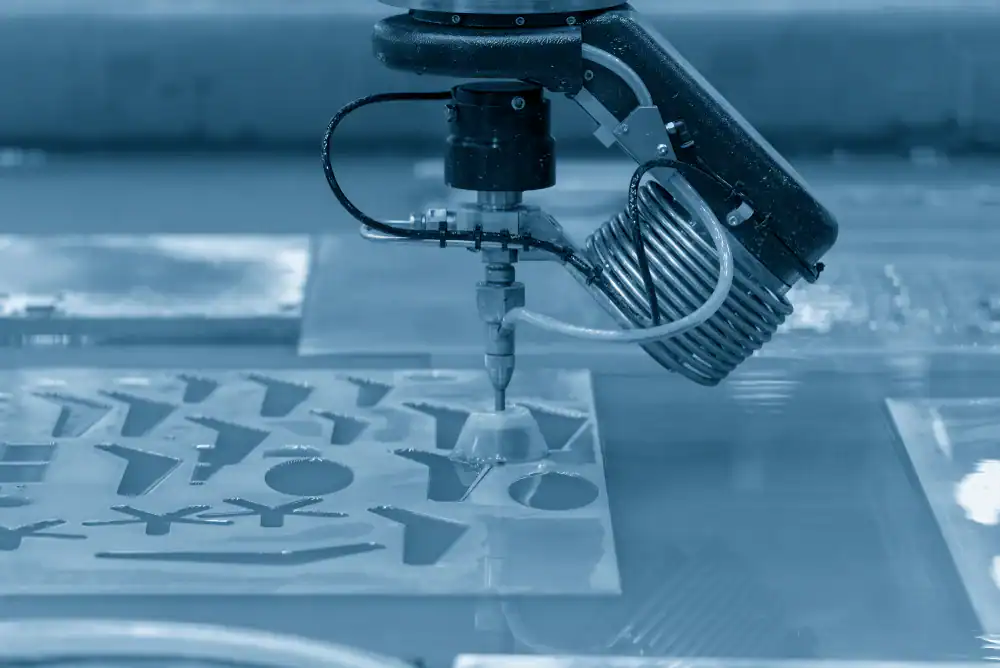
You send us your design specs—CAD files, drawings, or even sketches if you’re still working through the concept. We review the design for any potential issues with material thickness, edge requirements, or structural concerns. If something won’t work, we’ll tell you before we cut.
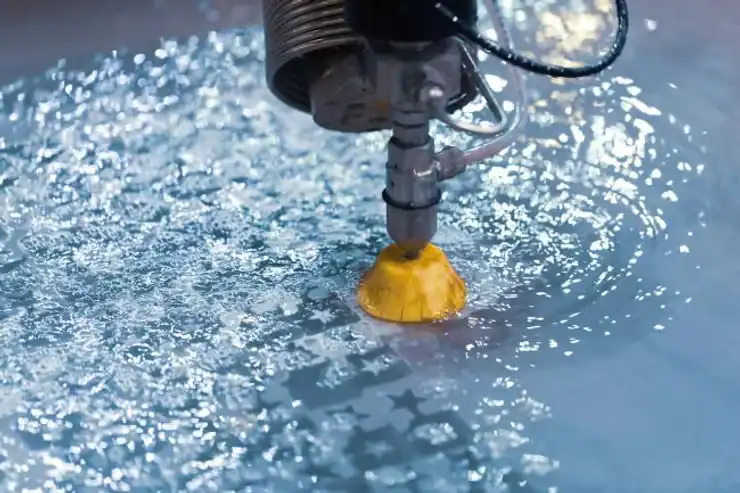
Once the design is finalized, we program the CNC waterjet system with your exact dimensions. The machine uses a high-pressure stream of water (sometimes mixed with fine abrasive for thicker glass) to cut along your specified path. There’s no blade contact, no heat buildup, and no vibration that could cause cracking.
After cutting, we inspect every piece for dimensional accuracy and edge quality. Most projects are ready to go as-is. If you need additional edge polishing or finishing, we can coordinate that too. Then your glass ships to Ridge, NY, or you pick it up from our West Islip location.
Ready to get started?
You’re getting more than just a cutting service. We handle design consultation upfront, which means we review your plans and flag any issues before material gets wasted. That saves you money and delays.
Our waterjet cutting works on standard float glass, tempered glass, laminated glass, and specialty architectural glass. Thickness ranges from thin decorative panels up to heavy structural glass. The process handles straight cuts, curves, radius corners, and intricate interior cutouts that would be nearly impossible with traditional methods.
Ridge, NY has a mature housing stock with plenty of renovation and custom build activity. Many of those projects involve custom glass for entryways, interior partitions, kitchen backsplashes, or bathroom enclosures. Waterjet cutting gives you design flexibility without the limitations of standard sizing or simple geometry.
We also work with contractors on commercial and institutional projects throughout Suffolk County. If your project involves decorative glass panels, signage, or architectural features, waterjet cutting delivers the precision and repeatability you need for multi-piece installations.
Waterjet cutting works best on annealed (non-tempered) glass. Tempered glass can’t be cut after the tempering process because the internal stress causes it to shatter when you breach the surface. If your project requires tempered glass, we cut it first, then send it out for tempering.
Laminated glass is a different story. Waterjet can cut through laminated glass, but the interlayer (usually PVA or resin) requires specific techniques to avoid delamination or rough edges. We adjust pressure, speed, and abrasive levels depending on the laminate type.
If you’re not sure what glass type your project needs, that’s part of the consultation. We’ll walk through your application—whether it’s safety glass for a commercial storefront or decorative laminated panels for an interior feature—and recommend the right material and process sequence.
CNC waterjet cutting holds tolerances down to ±0.005 inches, which is significantly tighter than manual scoring and breaking. Traditional glass cutting relies on controlled fracture propagation, which works fine for straight lines but struggles with curves, angles, and complex shapes.
Waterjet cutting follows a programmed tool path, so every piece comes out identical. That’s critical for projects involving multiple panels that need to align perfectly, like tiled glass installations or multi-piece architectural features.
The edge quality is also more consistent. Traditional cutting can leave micro-chips or require extensive grinding and polishing. Waterjet edges are smooth enough for most applications without secondary finishing. If you do need polished edges, you’re starting from a much better baseline, which reduces labor and cost.
Most custom glass cutting projects in Ridge, NY take between 3 to 7 business days from design approval to pickup or delivery. Simple cuts with standard glass can sometimes turn around faster. Complex multi-piece projects or specialty glass may take longer, especially if we’re coordinating additional services like edge polishing or tempering.
The biggest variable is usually design finalization. If you come to us with complete CAD files and confirmed material specs, we can move quickly. If you’re still working through design options or need material consultation, that adds time upfront but prevents costly mistakes later.
We’re transparent about timelines during the quoting process. If your project has a hard deadline—like a scheduled installation in Ridge—let us know upfront. We’ll tell you whether it’s feasible and what we need from you to hit that date.
Waterjet cutting is one of the most material-efficient methods available. The cutting stream is extremely narrow (typically 0.020 to 0.040 inches), so there’s minimal kerf loss compared to saw blades or routers. That means more usable glass from each sheet and less waste ending up in the dumpster.
The process does use water and abrasive (usually garnet), but both are contained in the cutting tank. We handle all cleanup and disposal, so you’re not dealing with glass dust, coolant, or debris. Your finished pieces arrive clean and ready for installation.
For projects in Ridge, NY, this efficiency matters. Glass isn’t cheap, and wasting material on bad cuts or excessive kerf loss adds up quickly. Waterjet cutting maximizes yield, which keeps your project costs down and reduces environmental impact.
Yes. Waterjet cutting handles intricate patterns, tight radius curves, and small interior cutouts that are extremely difficult or impossible with traditional glass cutting methods. The CNC system can execute complex tool paths with high repeatability, so decorative patterns come out consistent across multiple pieces.
Small holes are possible, but there are practical limits. The waterjet stream needs room to pierce the material and stabilize before cutting. Generally, holes smaller than the glass thickness become challenging. For example, cutting a 1/8-inch hole in 1/4-inch glass is pushing the limits of the process.
If your design includes very small features, we’ll review it during consultation and let you know what’s feasible. Sometimes we can adjust the design slightly to make it more manufacturable without compromising the visual effect. That’s the advantage of working with a shop that understands both the technology and the application—you get practical guidance, not just order-taking.
Waterjet cutting typically costs more per linear foot than simple straight cuts with a glass cutter, but that’s not the whole picture. You’re comparing apples to oranges because waterjet can do things traditional cutting simply can’t—complex curves, interior cutouts, and intricate patterns without secondary operations.
The real cost comparison comes down to total project cost, not just cutting cost. Waterjet reduces material waste, eliminates most secondary finishing, and dramatically lowers the risk of scrapped pieces due to bad breaks. For custom architectural glass projects in Ridge, NY, those factors often make waterjet the more cost-effective option overall.
Pricing depends on material type, thickness, design complexity, and quantity. Simple cuts in standard glass are less expensive than intricate multi-piece patterns in specialty glass. We provide detailed quotes upfront so you know exactly what you’re paying for. No surprises, no hidden fees for setup or programming.
Useful Links
Other Services we provide in Ridge