Hear from Our Customers
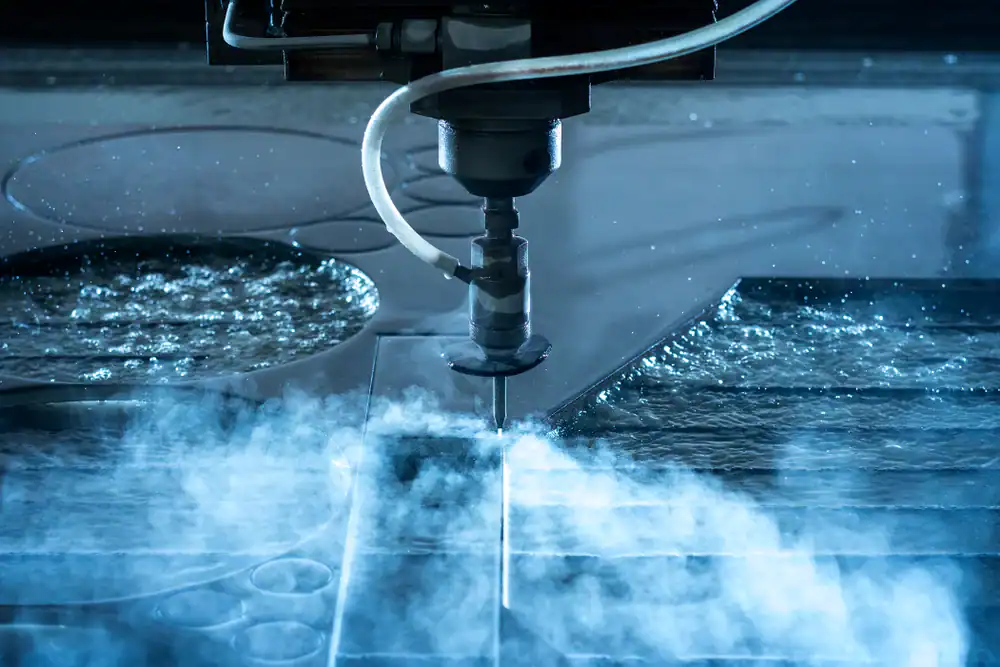
When your project calls for glass that fits exactly right, you don’t have room for heat damage, rough edges, or do-overs. Waterjet cutting gives you clean results on the first pass.
You get smooth, satin edges that often skip secondary finishing entirely. No warping from heat. No stress fractures that show up later. Just accurate cuts that match your CAD file, whether you’re working with tempered glass for a storefront, laminated panels for an interior feature, or thick architectural pieces that need to look sharp and stay structurally sound.
The process works because there’s no thermal impact. Water and abrasive do the cutting, so the material stays cool and stable. That means you can push design boundaries without worrying about whether the glass will hold up during fabrication. Complex curves, tight interior cutouts, repeating patterns across multiple panels—all possible, all consistent.
We operate out of West Islip, serving Roosevelt and the broader Nassau County market with CNC-controlled waterjet technology. Our Flow Mach 500 system runs directly off your CAD files, so what you design is what gets cut.
Roosevelt’s construction activity—from residential builds in Nassau County to commercial renovations—creates steady demand for glass that doesn’t just look good but performs structurally. You need fabricators who understand tolerances, timelines, and the difference between acceptable and actually correct. That’s where our experience with advanced equipment makes the difference between a delayed project and one that moves forward on schedule.
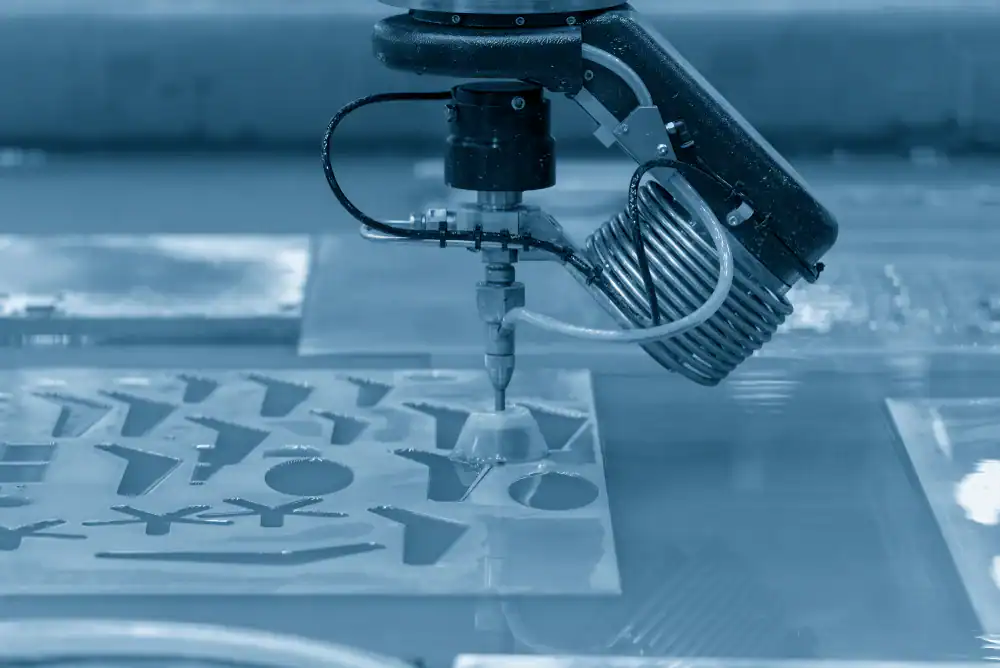
You start by sending over your design—CAD files work best, but we can work with what you have. Our CNC system translates that directly into cutting paths, which means fewer chances for human error between concept and execution.
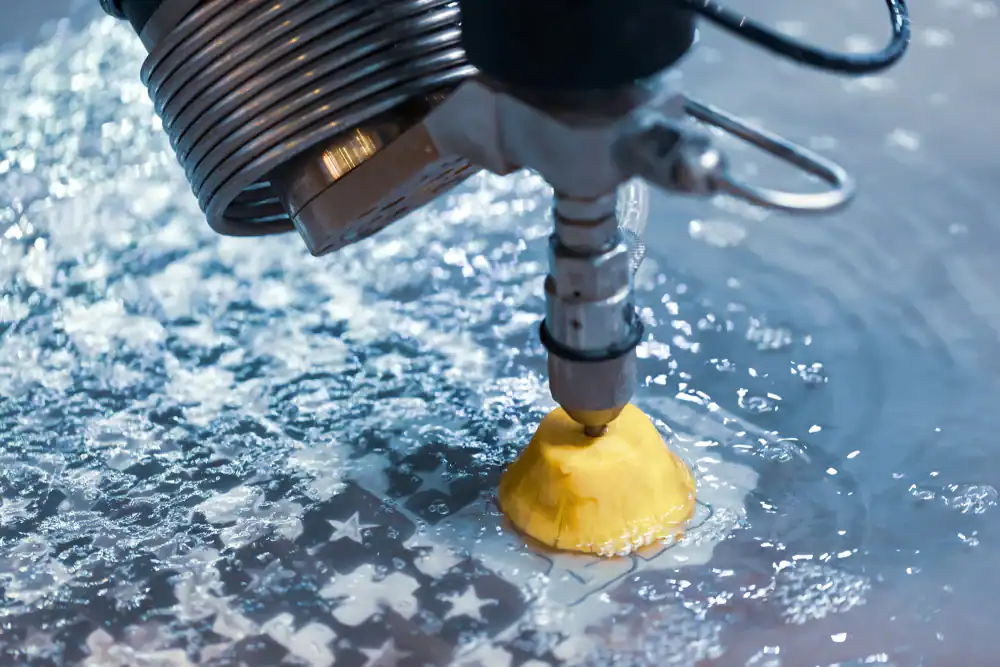
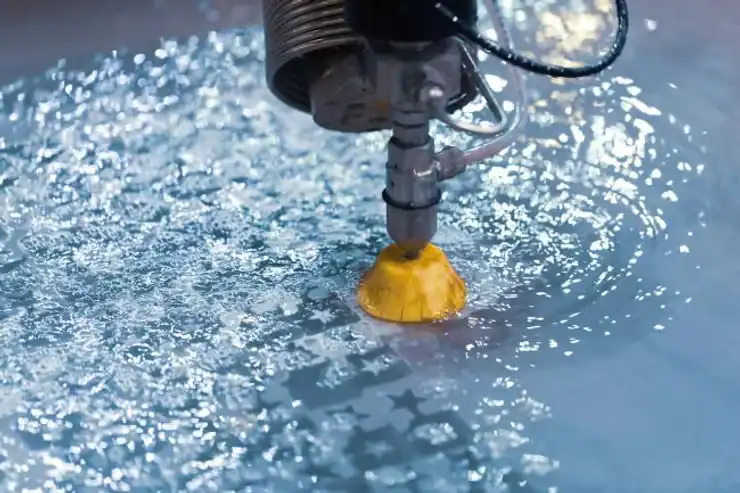
The waterjet uses a stream thinner than a credit card, mixed with fine abrasive, traveling at speeds that cut through glass without generating heat. Because there’s no thermal zone, you don’t get the micro-cracks or edge stress that come with laser cutting or traditional scoring methods. The narrow kerf also means less material waste, which matters when you’re working with expensive or specialty glass.
Once the cut is complete, the edges come out smooth enough that many projects skip additional polishing. If your design calls for it, secondary finishing is still an option, but the waterjet process reduces how much post-work you’ll need. Turnaround depends on complexity and volume, but the CNC control keeps production moving faster than manual methods while maintaining repeatable accuracy across multiple pieces.
Ready to get started?
Precision matters more in Roosevelt’s market than people realize. Nassau County’s mix of older homes getting renovated and new construction going up means you’re often dealing with non-standard dimensions, custom architectural details, and clients who expect finished work to match renderings exactly.
Waterjet cutting handles tempered glass without shattering it, works through laminated panels without delaminating layers, and cuts thick architectural glass up to several inches when the project calls for it. You’re not limited to straight lines or simple curves—if you can draw it in CAD, our system can cut it. That opens up design possibilities for everything from custom shower enclosures and glass countertops to storefront installations and decorative interior panels.
The process also accommodates quick adjustments. If dimensions change during a project—and they do—you’re not locked into tooling or templates that can’t adapt. Our CNC system just runs the updated file. For contractors and designers working in Roosevelt’s active construction environment, that flexibility keeps projects on track when field conditions don’t match the original plans.
Yes, but with an important clarification. Waterjet cutting works on tempered glass, but you need to cut it before tempering. Once glass is tempered, cutting it causes the internal stress pattern to release, and the panel shatters. If your project requires tempered glass with custom shapes, the cutting happens first, then the glass goes through the tempering process.
Laminated glass is a different story. Waterjet handles it well because there’s no heat to melt or separate the interlayer between glass panels. The abrasive stream cuts cleanly through both the glass and the laminate without delamination, which is a common problem with other cutting methods that generate heat or vibration.
For projects in Roosevelt where safety glass is required—storefronts, railings, overhead installations—this sequence matters. Plan the fabrication order correctly, and you get the structural properties you need with the exact shapes your design calls for.
Waterjet cutting holds tolerances around ±0.1mm, which translates to about four-thousandths of an inch. That’s tight enough for parts that need to fit together without gaps, align across multiple panels, or match up with metal framing systems that don’t have much adjustment built in.
The CNC control is what makes this possible. The system follows your CAD file exactly, and because there’s no heat distortion or mechanical force pushing the glass around, the cut stays true to the programmed path. You also get repeatability—if you need ten identical pieces, the tenth one matches the first one within those same tolerances.
This level of precision matters most when you’re doing architectural installations where panels meet at seams, or industrial applications where glass components fit into assemblies with other materials. A few hundredths of a millimeter might not sound like much, but it’s the difference between parts that fit right and parts that need rework.
Waterjet systems running at higher pressures—60,000 to 90,000 PSI—have successfully cut glass up to 12 inches thick. Most architectural and commercial projects don’t push anywhere near that limit, but it’s useful to know the capability exists for specialized applications.
For typical work in Roosevelt—residential glass cutting services, commercial storefronts, custom interior features—you’re usually looking at glass between a quarter-inch and two inches thick. Waterjet handles that range easily, and the process stays consistent across different thicknesses. Thicker glass just takes longer to cut because the stream needs more passes or slower travel speeds to penetrate fully.
The advantage over other methods becomes more obvious as thickness increases. Scoring and breaking doesn’t work past a certain point. Laser cutting struggles with thick glass because of heat buildup. Waterjet just keeps cutting, with the same cold process and clean edges regardless of how much material it’s going through.
The edges come out with a smooth, satin finish that’s often acceptable as-is for many applications. You won’t get the razor-sharp edges that come from traditional glass cutting methods, but you also won’t get the chipping, micro-cracks, or heat-affected zones that require extensive finishing to fix.
Whether you need additional edge work depends on the application and aesthetic requirements. Architectural glass that’s going into frames or channels often doesn’t need further polishing because the edges aren’t visible in the finished installation. Decorative pieces or glass that’s meant to be handled might benefit from a quick polish to achieve a crystal-clear edge, but you’re starting from a much better baseline than other cutting methods provide.
The narrow kerf of the waterjet stream—around 0.005 to 0.007 inches—also means you’re removing minimal material during the cut. Less material removal generally means smoother results and less disruption to the glass structure along the cut line.
The fundamental difference is heat. Laser cutting uses focused light energy that melts or vaporizes material, which creates a heat-affected zone around the cut. For glass, that thermal stress often leads to micro-cracks, edge weakness, or even fracturing during the cut or afterward when the glass cools unevenly.
Waterjet cutting is a cold process. The abrasive stream mechanically erodes the glass without raising its temperature, so you don’t get thermal stress or heat-related damage. The material properties of the glass stay consistent right up to the cut edge, which matters for structural applications where you can’t afford weakened zones.
Laser cutting can be faster for thin materials and works well for certain applications, but when you’re dealing with thicker glass, complex shapes, or projects where edge integrity is critical, waterjet gives you more control and better material preservation. For custom glass waterjet cutting in Roosevelt, NY, where projects range from residential installations to industrial components, that versatility across different glass types and thicknesses makes waterjet the more reliable choice.
Architectural projects make up a significant portion—custom glass panels for building facades, interior partitions with intricate patterns, decorative features that require curves or cutouts traditional methods can’t achieve. Roosevelt’s construction market, with its mix of renovation work and new builds, creates steady demand for glass that fits non-standard openings or matches specific design visions.
Industrial applications are another major category. Glass components for machinery, equipment housings that need precise dimensions, protective shields with mounting holes in exact locations—these all benefit from CNC glass waterjet cutting’s accuracy and repeatability. When you’re producing multiple identical parts or components that need to integrate with other manufactured elements, the tight tolerances matter.
You also see waterjet cutting used for custom residential work: shower enclosures with unusual shapes, glass countertops, tabletops with inlays or edge details, artistic installations. Basically, any time a project calls for glass in a shape that’s not a simple rectangle, or when the tolerances are tight enough that traditional cutting methods introduce too much risk, waterjet becomes the practical choice.
Useful Links
Other Services we provide in Roosevelt