Hear from Our Customers
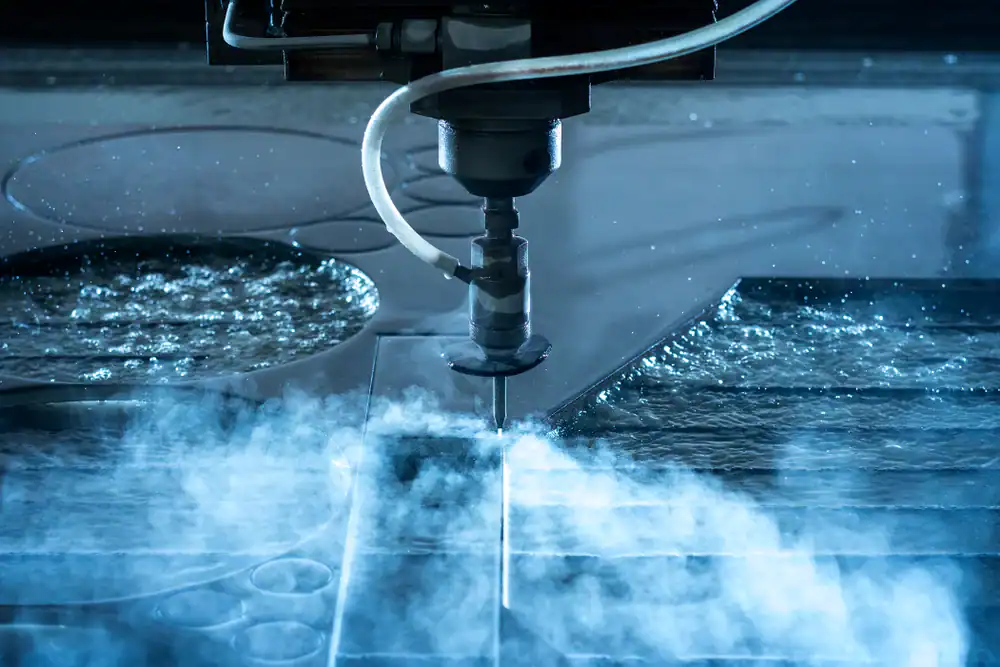
You send CAD files. We program them directly into our Flow Mach 500 CNC system. The waterjet cuts your glass exactly as designed—curves, angles, intricate patterns—without generating heat that causes cracks or warping.
That means your architectural panels fit the first time. Your windshield prototypes match specifications without grinding or polishing. Your custom residential glass installs without gaps or stress fractures.
The edge quality comes out clean enough that most projects skip secondary finishing entirely. You’re not paying for extra processing time or dealing with delayed timelines because the cuts weren’t precise enough. The waterjet handles thickness up to 9 inches, materials from standard glass to optical glass, quartz, and borosilicate—all with the same level of accuracy.
We operate in Shirley, NY, serving Long Island’s architectural firms, contractors, and industrial manufacturers who need glass cut right. Our in-house design team reviews every file before programming to catch issues that would cause problems during cutting or installation.
We’re not running a general fabrication shop that happens to cut glass. We specialize in waterjet cutting for materials that require precision measured in thousandths—glass included. That specialization matters when you’re working with curved architectural panels for commercial buildings or custom residential installations where fit tolerances are tight.
Our Shirley location’s proximity to major construction projects across Long Island means faster turnaround for local clients. You’re not shipping glass across state lines and hoping it arrives intact.
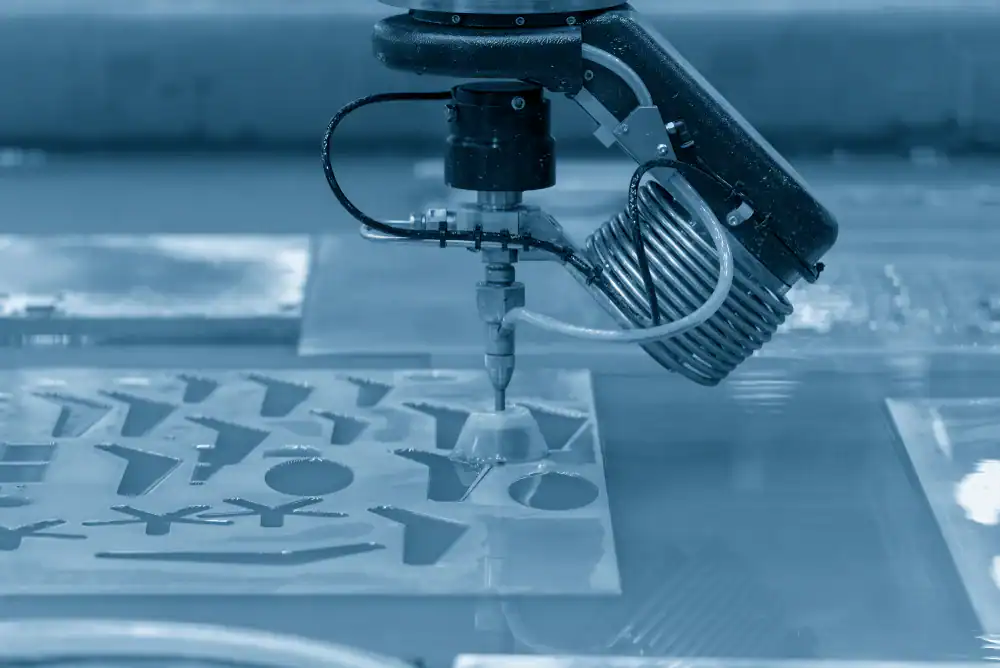
You provide your design file—DXF, DWG, or most CAD formats work. Our design team opens it, checks for issues like overlapping lines or incorrect scaling, and confirms dimensions match your specifications. If something looks off, we contact you before cutting anything.
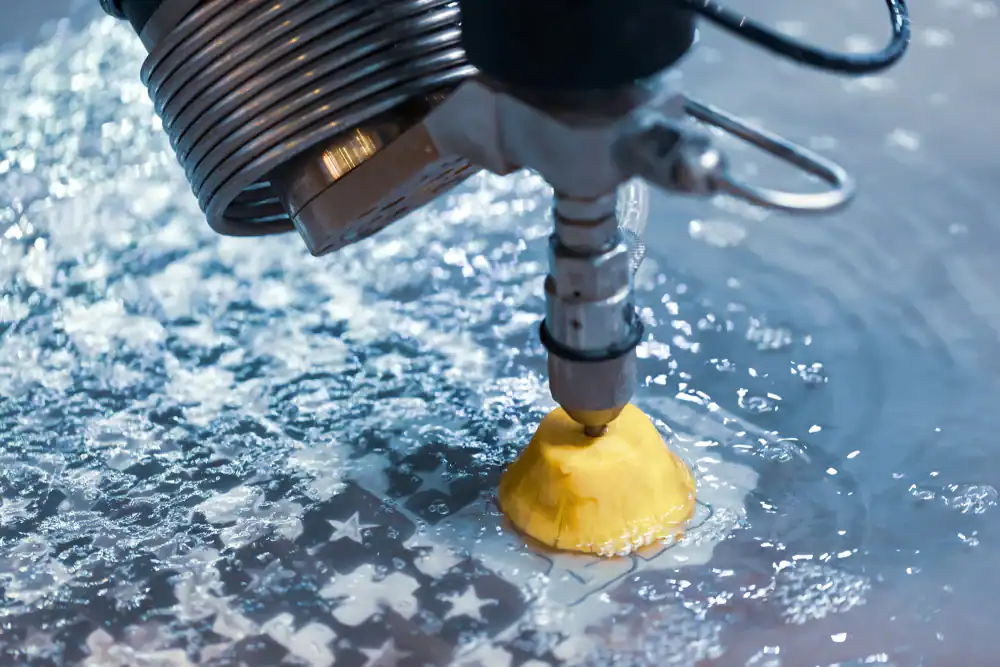
Once the file is verified, we program it directly into the CNC waterjet system. The machine positions the glass, and the omnidirectional jet stream begins cutting. There’s no heat involved, so the glass doesn’t develop thermal stress or microcracks. The abrasive waterjet moves up to four times faster than conventional cutting methods while maintaining edge quality that typically eliminates grinding or polishing.
Complex shapes—tight curves, asymmetric patterns, custom architectural designs—get cut with the same precision as straight lines. The CNC control ensures repeatability, so if you need multiple identical pieces, each one matches exactly. After cutting, we inspect edges and dimensions before the glass leaves our facility.
Ready to get started?
You get glass cut to your exact specifications without heat-affected zones that cause cracking. The waterjet doesn’t create thermal stress, which matters significantly when you’re working with thick glass pieces or materials like tempered glass that are sensitive to temperature changes.
Edge quality comes out smooth and perpendicular—not chipped or angled like mechanical cutting often produces. Most projects don’t require additional edge treatment, which cuts your production timeline and eliminates the cost of secondary finishing processes.
For architectural projects in Shirley and across Long Island, this capability aligns with the growing demand for custom-curved glass panels in organic building designs. The 2024 trend toward fluidity in architecture—curved glass replacing flat panels—requires cutting technology that can handle complex shapes without compromising structural integrity. Our CNC glass waterjet cutting in Shirley, NY handles those specifications.
Industrial applications benefit from the same precision. If you’re manufacturing glass components for electronics, automotive, or aerospace, the waterjet cuts intricate patterns and tight tolerances that traditional methods struggle with. The process is environmentally responsible too—no hazardous fumes or gases like laser cutting produces.
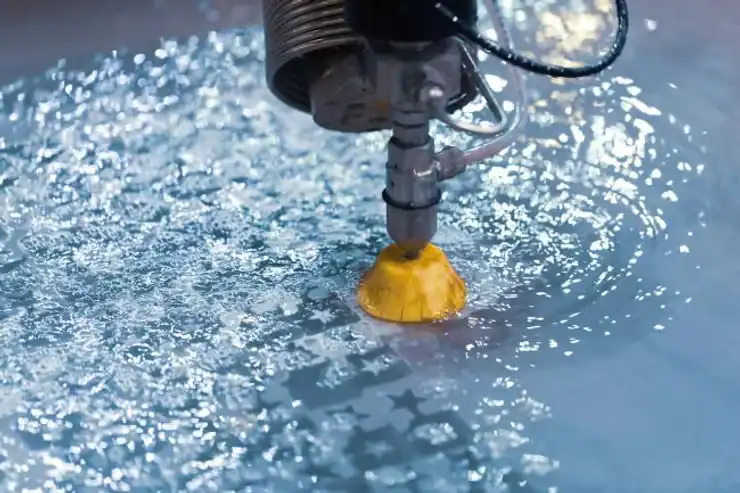
Waterjet cutting generates zero heat during the process, which is exactly why it works for tempered glass and other heat-sensitive materials. Traditional cutting methods that use friction or lasers create heat-affected zones that cause thermal stress—and that stress leads to cracks, especially in tempered glass that’s already under internal tension.
The waterjet uses high-pressure water mixed with abrasive particles to erode the glass material. No friction means no heat buildup. Your glass maintains its structural integrity throughout the cutting process.
This matters significantly if you’re working with architectural glass installations where tempered glass is required by building codes. You can’t risk cracks during fabrication. The waterjet eliminates that risk entirely while still delivering the complex shapes and tight tolerances your project requires.
Our CNC-controlled waterjet system cuts glass down to 0.01mm thickness with accuracy measured in thousandths of an inch. That level of precision holds true whether you’re cutting straight lines or complex curves with tight radiuses.
The omnidirectional jet stream moves in any direction without repositioning the glass, which means intricate patterns—like the asymmetric designs required for foldable screens or custom architectural features—get cut as one continuous operation. There’s no stopping and starting that could create inconsistencies.
For context, that precision level handles the requirements of aerospace glass components and medical device manufacturing, where tolerances are extremely tight. If you’re working on architectural projects or custom residential installations, the accuracy is more than sufficient to ensure perfect fit during assembly. The CNC control also ensures repeatability, so if you need 50 identical pieces, piece 50 matches piece 1 exactly.
Turnaround depends on project complexity and current queue, but abrasive waterjet cutting runs up to four times faster than conventional waterjet methods. That speed advantage, combined with the fact that most cuts don’t require secondary finishing, significantly reduces total production time compared to traditional glass cutting.
Simple cuts with standard glass thickness can often be completed within days. More complex projects—like architectural panels with intricate curves or high-volume production runs—take longer but still move faster than you’d see with mechanical cutting that requires additional grinding and polishing steps.
Our location in Shirley, NY also matters for turnaround. If you’re a Long Island contractor or architect, you’re not dealing with cross-country shipping delays. We can coordinate pickup or local delivery that keeps your project timeline on track. The in-house design review we do before cutting also prevents delays caused by file errors or specification issues that would otherwise require rework.
Waterjet cutting produces a kerf width (the width of the cut itself) that’s significantly narrower than mechanical cutting methods. That narrow kerf means less material removed during cutting, which translates directly to less waste—especially important when you’re working with expensive specialty glass or trying to maximize the number of pieces you can cut from a single sheet.
The CNC programming also optimizes cut paths to nest multiple pieces efficiently on a single glass sheet. Our design team reviews layouts before cutting to ensure you’re getting maximum material utilization. That optimization isn’t just about saving money on materials—it’s also about reducing environmental waste.
Traditional glass cutting with carbide wheels or saws creates chips and debris that can’t be reused. Waterjet cutting produces minimal waste, and the process itself is environmentally responsible since it doesn’t generate hazardous fumes or require chemical coolants. For glass processors dealing with tight profit margins, reducing material waste by even a few percentage points makes a measurable difference in project costs.
Our waterjet system handles glass thickness up to 9 inches, which covers everything from standard architectural panels to extremely thick industrial glass applications. That capability matters because thick glass presents specific challenges—traditional cutting methods generate more heat and stress as thickness increases, making cracks more likely.
The waterjet’s cold-cutting process eliminates that problem entirely. Whether you’re cutting 1/4-inch residential glass or 6-inch industrial components, the process remains consistent. No heat buildup means no thermal stress, regardless of thickness.
Thick glass also typically requires more secondary finishing with traditional methods because the edges come out rougher. Waterjet cutting produces clean edges even on thick pieces, which means you’re not paying for extensive grinding and polishing. That’s particularly valuable for custom architectural projects where thick glass panels are becoming more popular for structural and aesthetic reasons. The ability to cut complex shapes in thick glass opens up design possibilities that weren’t practical with older cutting technologies.
Waterjet cutting handles standard architectural glass, tempered glass, laminated glass, optical glass, quartz, borosilicate, and fused silica. Each material has different properties—some are more brittle, some are heat-sensitive, some have internal stresses from tempering—but the waterjet’s cold-cutting process works across all of them.
That versatility matters if you’re working on projects that require specialty glass. Borosilicate, for example, is common in laboratory equipment and high-end cookware because it resists thermal shock. Cutting it with heat-based methods defeats the purpose. Waterjet cutting preserves the material properties that make borosilicate valuable in the first place.
Optical glass used in precision instruments requires extremely clean cuts without microcracks that would affect light transmission. The waterjet delivers that level of quality. For industrial manufacturers in sectors like electronics or aerospace, being able to cut multiple glass types with one process—and one level of precision—simplifies production and reduces the need for multiple fabrication vendors.
Useful Links
Other Services we provide in Shirley