Hear from Our Customers
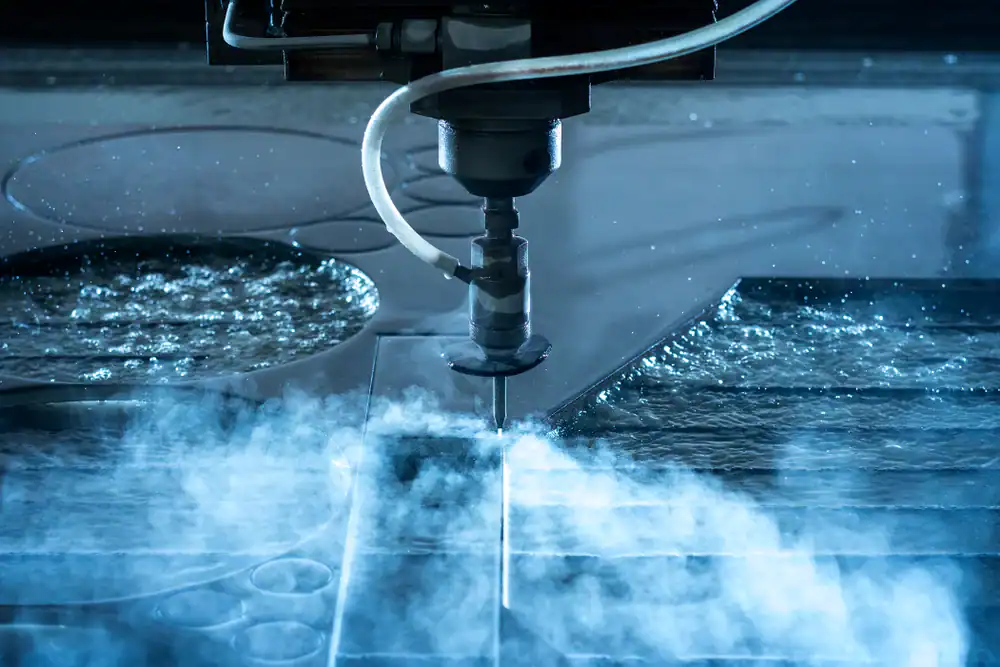
You’re not dealing with the limitations of scoring wheels or the heat risks of laser cutting. Waterjet cutting uses high-pressure water mixed with fine abrasive to slice through glass from 1/16 inch to 2 1/4 inches thick without generating any heat.
That means no thermal stress. No micro-cracks forming along your cut lines. No warping or discoloration that shows up later and forces you to reorder.
The edge quality comes out clean enough that most projects skip secondary finishing entirely. You’re cutting costs on labor and reducing your timeline because there’s no grinding, polishing, or smoothing required after the fact. For architectural glass projects in South Farmingdale, NY, where tolerances matter and aesthetics can’t be compromised, this level of precision changes what’s possible in your design work.
Complex curves, tight inside corners, intricate patterns—waterjet handles them all in a single pass. You’re not limited to straight cuts or simple shapes anymore.
We serve the manufacturers, contractors, architects, and fabricators working throughout South Farmingdale, NY and the broader Long Island industrial corridor. This area is home to some of the region’s most active manufacturing operations, particularly around Farmingdale Industrial Park, and the projects coming out of here demand precision that traditional glass cutting can’t consistently deliver.
We’re not a general fabrication shop trying to do everything. We focus on waterjet cutting because it’s the most versatile, damage-free method for working with glass and other sensitive materials.
Whether you’re an architect specifying custom glass elements for a commercial build, a contractor managing a high-end residential project, or an industrial manufacturer needing prototype parts cut fast, you’re working with a team that understands the stakes. One bad cut can blow a timeline and a budget. We get that, and our process is built around eliminating that risk.
You send us your design file—CAD, DXF, or even a detailed sketch if that’s what you’re working from. We’ll review it with you to confirm dimensions, material specs, and any tolerance requirements specific to your project.
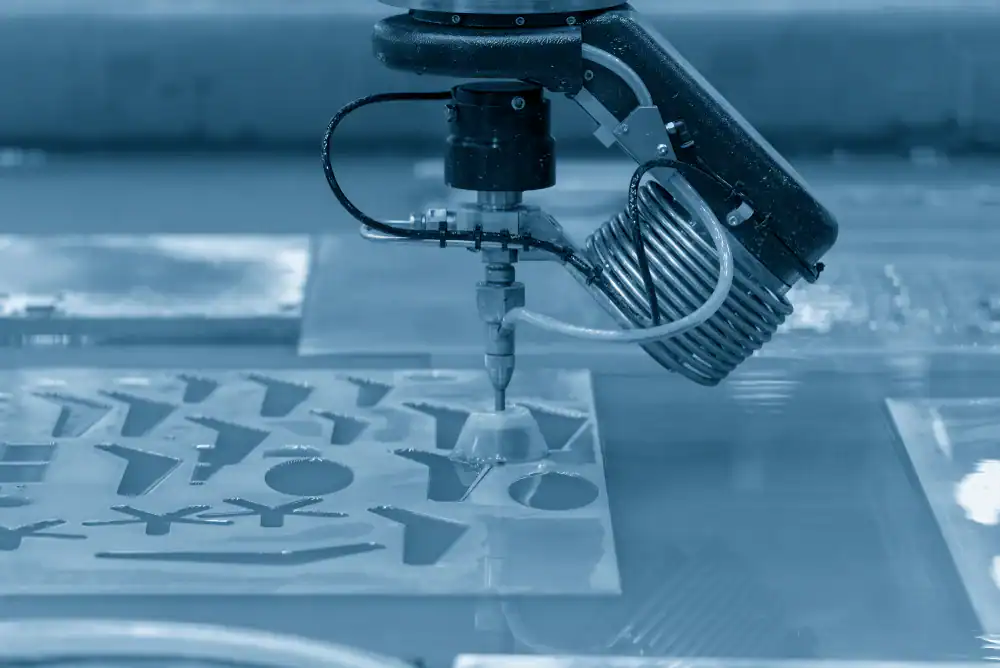
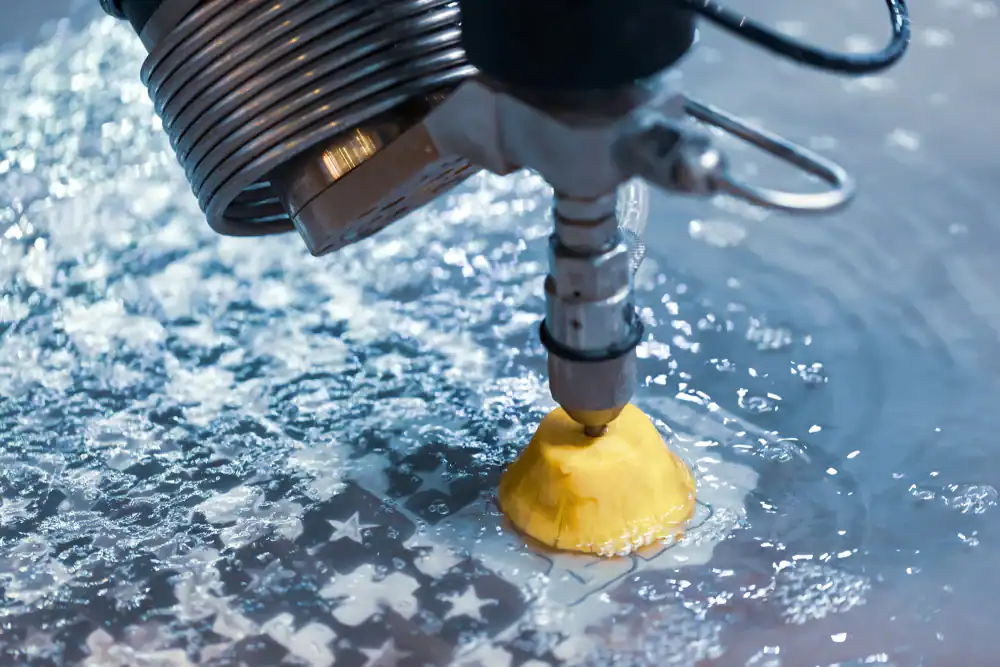
Once we’re aligned, your glass goes onto our CNC waterjet table. The cutting head follows your programmed path with precision down to fractions of a millimeter, using a stream of water and garnet abrasive traveling at speeds up to 90,000 PSI. There’s no blade contact, no heat generation, and no vibration that could cause cracking.
The process is fast compared to traditional methods, but speed doesn’t mean we’re rushing. Each cut is monitored to ensure edge quality and dimensional accuracy. After cutting, your parts come off the table ready to install or integrate into your next production step.
If you need multiple pieces or a prototype before committing to a full run, that’s easy to accommodate. There’s no tooling to fabricate or setup costs that make small batches prohibitively expensive. You get the same precision whether you’re ordering one piece or a hundred.
Ready to get started?
You’re getting precision cutting for architectural glass installations, custom interior design elements, industrial components, and residential applications throughout South Farmingdale, NY. That includes decorative panels, building facades, custom windows, glass countertops, shelving, signage, and artistic installations.
The process handles tempered glass, laminated glass, annealed glass, and specialty glass types without the risk of shattering or edge chipping that comes with mechanical cutting methods. For projects in Long Island’s active construction and manufacturing sectors, this means you can specify complex designs without worrying whether your fabricator can actually execute them.
Architectural firms working on commercial builds around South Farmingdale benefit from the ability to create intricate facade patterns and custom window shapes that differentiate their projects. Contractors managing high-end residential work get access to custom glass elements that used to require overseas fabrication or weeks of lead time.
Industrial manufacturers operating out of the Farmingdale Industrial Park and surrounding areas use our services for everything from equipment glass panels to custom machine guards. The lack of heat-affected zones means your glass maintains its structural integrity and optical clarity, which matters when you’re building something that needs to perform under stress or look flawless under scrutiny.
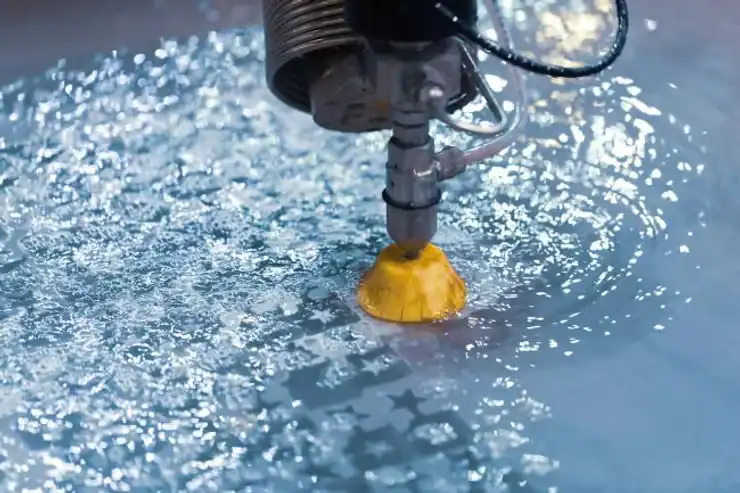
Waterjet cutting works across virtually every glass type you’d specify for architectural, industrial, or residential applications. That includes annealed glass, tempered glass, laminated glass, low-iron glass, mirrored glass, textured glass, and specialty coated glass.
The key advantage is that the cutting process doesn’t alter the glass properties. Tempered glass keeps its strength. Coated glass maintains its finish. Laminated glass stays bonded.
Traditional methods often generate enough heat or vibration to compromise these characteristics, especially with tempered or coated materials. Waterjet eliminates that risk entirely because there’s no thermal input and minimal mechanical stress during the cut. For projects in South Farmingdale, NY where you’re specifying high-performance glass for energy efficiency or safety requirements, this matters—you’re not degrading the material properties you paid for.
Waterjet cutting for glass typically holds tolerances within ±0.1mm, which translates to about ±0.004 inches. That level of precision is tight enough for fine architectural details, intricate mosaics, and custom engravings where even slight variations would be visible.
For context, most architectural glass applications require tolerances in the ±1/16 inch range. We’re working at a fraction of that, which gives you margin for error-free installations and eliminates the gaps or misalignments that create problems during assembly.
The CNC control system guides the cutting head along your programmed path with consistent pressure and speed, so you’re not dealing with the operator variability that affects manual or semi-automated cutting methods. Each piece comes out dimensionally identical to the last, which matters when you’re producing multiple panels that need to fit together seamlessly or match an existing architectural element in a South Farmingdale, NY renovation project.
The edge quality from waterjet cutting is clean enough that most applications don’t require any secondary finishing. You’re getting a smooth, consistent edge that’s free from the micro-chipping and stress fractures common with scoring or mechanical cutting methods.
That said, edge finish does vary slightly based on cutting speed and abrasive flow rate. For applications where the edge will be visible and aesthetic quality is critical—like frameless glass panels or exposed shelving—we can adjust parameters to deliver a near-polished edge right off the machine.
If your project requires a fully polished edge for safety or appearance reasons, the waterjet cut provides an ideal starting point. You’re removing far less material during polishing compared to a mechanically cut edge, which reduces finishing time and cost. For industrial applications where the edge will be captured in a frame or gasket, the as-cut finish is typically more than adequate and saves you the expense of unnecessary post-processing.
Laser cutting generates significant heat, which creates thermal stress in glass. That stress can cause micro-cracks, warping, or outright shattering, especially in thicker materials or when cutting complex shapes with tight curves. You also get a heat-affected zone along the cut edge that can show discoloration or reduced strength.
Waterjet cutting is a cold process. There’s zero heat input, so you’re not introducing thermal stress or altering the glass structure along the cut line. That makes it far more reliable for thicker glass, tempered materials, and intricate patterns where thermal shock would be a deal-breaker.
Laser does have speed advantages on very thin glass with simple shapes, but the trade-off is edge quality and material limitations. For the architectural, industrial, and custom residential projects common in South Farmingdale, NY, waterjet delivers better results across a wider range of applications. You’re not gambling on whether the material will survive the cutting process or whether the edges will hold up long-term.
Turnaround depends on project complexity, material thickness, and current production schedule, but most custom glass waterjet cutting projects in South Farmingdale, NY are completed within a few days to a week. Simple cuts on standard glass thicknesses can often be turned around faster, especially if you’re working from ready-to-cut CAD files.
The advantage of waterjet cutting is that there’s no tooling to fabricate before we start cutting. Traditional methods often require custom jigs, fixtures, or templates that add days or weeks to the timeline before the first cut even happens. With waterjet, we program your design directly into the CNC system and start cutting.
If you’re on a tight deadline—say you’re a contractor managing a commercial build in South Farmingdale with a hard installation date, or an architect who needs prototype samples before finalizing a design—communicate that upfront. We can often prioritize rush projects or break larger orders into phases so you get critical pieces first. The key is getting us your specs early so we can plan production and flag any potential issues before they impact your timeline.
Yes, and that’s one of the biggest advantages over traditional glass cutting methods. There’s no minimum order quantity and no expensive tooling setup that makes small batches cost-prohibitive. Whether you need a single custom piece for a residential project or 500 identical panels for a commercial installation, the per-piece process is the same.
For architects and designers working on one-off custom installations in South Farmingdale, NY, this means you can specify unique glass elements without the budget-killing setup fees that usually come with custom fabrication. For manufacturers running production volumes, you get consistent quality across every piece without the tool wear issues that degrade precision over time with mechanical cutting.
The CNC programming also makes design iterations easy. If you need to tweak dimensions or try a different pattern, we’re adjusting software, not rebuilding physical tooling. That flexibility is valuable during the design phase when you’re still refining details, and it eliminates the risk of being locked into a design because changing it would mean starting the tooling process over from scratch.
Useful Links
Other Services we provide in South Farmingdale