Hear from Our Customers
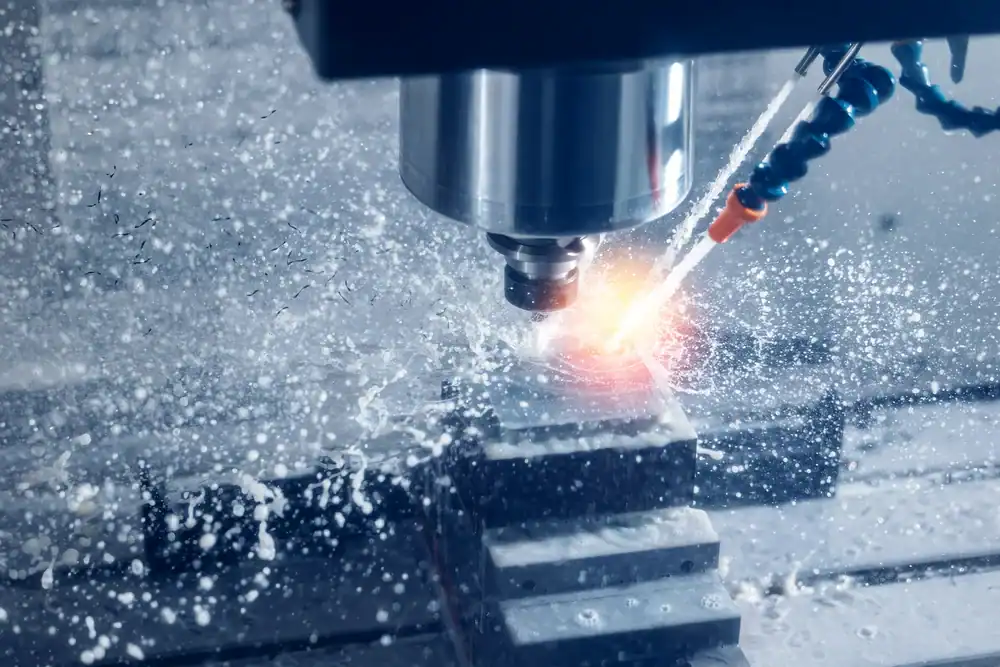
Traditional glass cutting methods score, snap, grind, or burn. Each one introduces stress points that lead to cracks, chips, or complete failure during installation. You’ve probably seen it—a perfect piece ruined at the last step.
Waterjet cutting removes heat from the equation entirely. No thermal stress. No micro-fractures forming along the edge. No wondering if your glass will hold up during tempering or transport.
You get clean edges that fit the first time. Complex curves and intricate patterns that would crack under a scoring wheel come out smooth. Tolerances stay tight—within 0.005 inches—so your architectural glass panels, custom residential pieces, or industrial components install without adjustment or rework.
The process works for tempered glass, laminated glass, double-pane units, and specialty materials. If your project demands precision and your timeline doesn’t allow for do-overs, this is how you cut glass in Southampton, NY.
We’ve been serving architects, contractors, designers, and homeowners across Long Island since the early 2000s. We’re based in West Islip and work throughout the region, including Southampton’s residential estates, commercial builds, and marine industry projects.
Southampton’s coastal environment and high-end construction market demand precision. You’re working with expensive materials on projects where mistakes cost time and money. Our CNC waterjet systems handle that pressure—literally and figuratively.
We’ve cut glass for building facades, custom interior partitions, yacht windows, decorative panels, and one-off residential projects. The work varies, but the standard doesn’t. You bring us your specs, we deliver glass that fits.
You start with a design—CAD file, sketch, or template. We review it with you to confirm dimensions, material type, and edge requirements. If something won’t work structurally or if there’s a more efficient way to achieve your design, we’ll tell you before we cut.
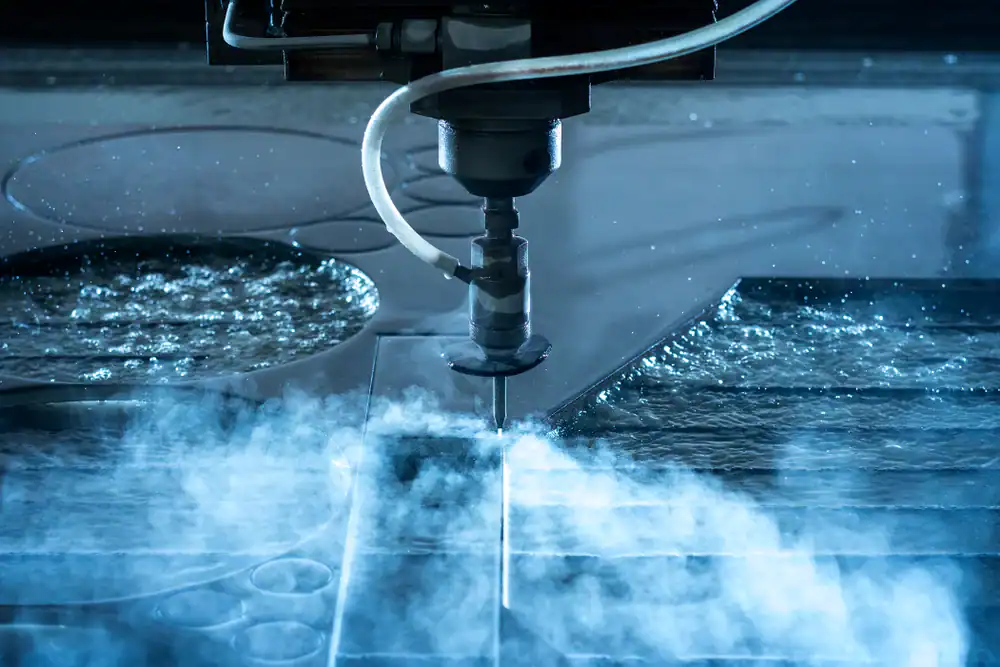
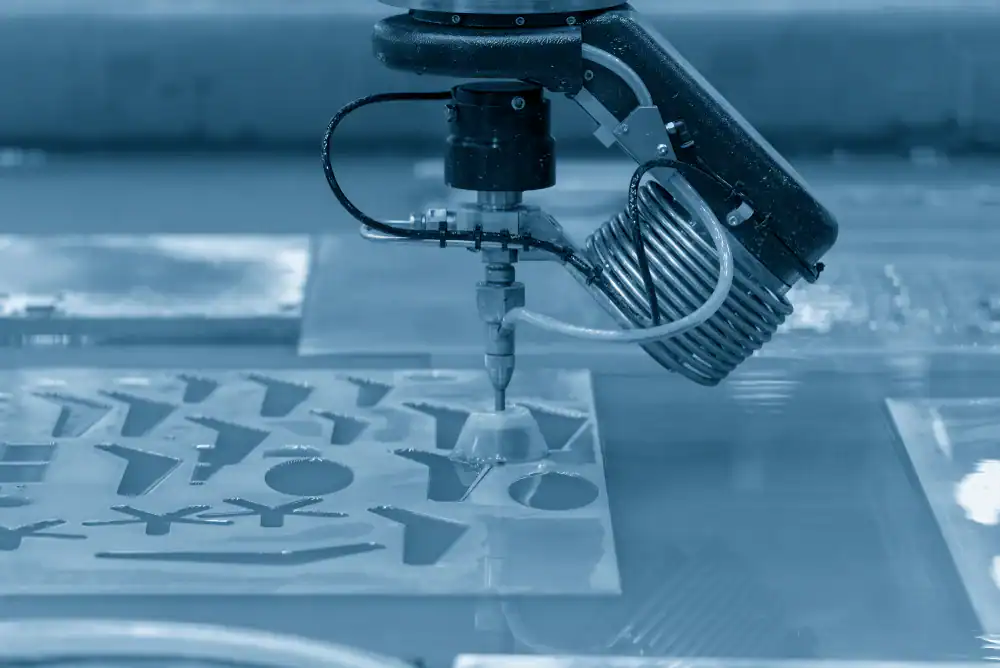
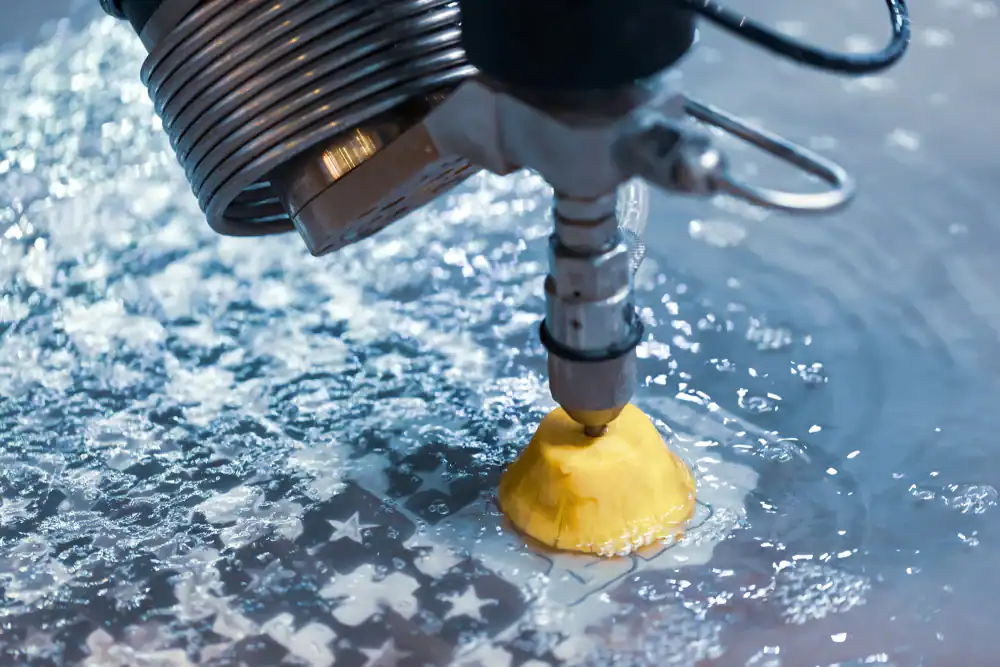
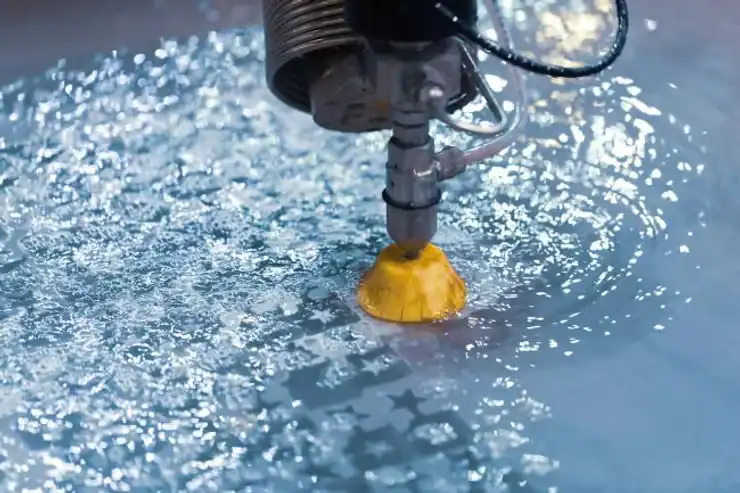
Once the design is finalized, your glass goes onto our CNC waterjet system. A high-pressure stream of water mixed with fine abrasive particles erodes through the material with precision. The stream is thin—less than a millimeter—so there’s minimal waste and maximum accuracy.
The cutting process is fast compared to traditional methods, but we’re not rushing. Speed comes from the technology, not from cutting corners. Your glass moves through in a single pass, with no secondary grinding or polishing needed in most cases.
After cutting, we inspect every piece for dimensional accuracy and edge quality. You receive glass that’s ready to install, with smooth edges and no hidden stress fractures waiting to show up later.
Ready to get started?
Every custom glass waterjet cutting project in Southampton, NY includes material consultation. Not all glass types perform the same under waterjet cutting, and your application might benefit from a specific thickness or composition. We help you choose what works.
You also get design optimization. If your pattern has tight corners or features that could compromise structural integrity, we’ll adjust the design to maintain strength without sacrificing your vision. This matters especially for architectural glass waterjet cutting in Southampton, where building codes and wind loads come into play.
CNC glass waterjet cutting in Southampton means your job runs through computer-controlled equipment. That gives you repeatability if you need multiple identical pieces, and it ensures accuracy across large production runs or single custom cuts.
Southampton’s architecture leans toward high-end residential and commercial spaces—think oceanfront homes, boutique retail, and upscale renovations. Your glass needs to match that standard. Our industrial glass waterjet cutting in Southampton handles everything from structural panels to decorative accents, all with the same attention to edge quality and dimensional precision.
Waterjet cutting works on annealed glass before tempering, not after. Once glass is tempered, it can’t be cut—any attempt will cause it to shatter. That’s true for all cutting methods, not just waterjet.
If you need tempered glass with custom shapes, the cutting happens first, then the glass goes through the tempering process. We cut your design to exact specs, and you send it to a tempering facility afterward. The clean edges from waterjet cutting actually help during tempering because there are fewer stress points to cause failure.
Laminated glass is different. Waterjet can cut through laminated glass, but the process requires adjusting pressure and speed to handle the interlayer without delamination. It’s doable, and we’ve done it for automotive, architectural, and security applications. The key is knowing how the layers will respond and setting up the cut accordingly.
Laser cutting uses focused heat to melt or vaporize material. That works fine for metals and some plastics, but glass doesn’t respond well to localized heating. The heat creates thermal stress, which leads to micro-cracks along the cut edge. Those cracks weaken the glass and often cause it to fail during handling or installation.
Waterjet cutting uses erosion, not heat. The abrasive stream wears away the glass without changing its temperature. No thermal stress means no heat-affected zone and no hidden fractures. The edge quality is cleaner, and the structural integrity stays intact.
Laser cutting also struggles with thicker glass and can’t handle the same range of materials. Waterjet cuts through virtually any glass type and thickness without adjusting the fundamental process. If your project involves complex shapes, tight tolerances, or materials that crack under thermal stress, waterjet is the better option.
Waterjet cutting handles glass as thin as 0.01mm and as thick as several inches, depending on the equipment and pressure settings. For most architectural and residential projects in Southampton, NY, you’re working with glass between 3mm and 25mm thick. That entire range works without issue.
Thinner glass requires lower pressure to avoid cracking from the force of the water stream. Thicker glass needs higher pressure and sometimes multiple passes, but the process stays consistent. The abrasive mixture does the work, and the CNC system controls the speed and pressure to match the material.
The real limitation isn’t thickness—it’s the size of the cutting bed and the weight of the glass. Larger sheets need proper support during cutting to prevent flexing or movement. We handle that with fixtures and supports, but it’s worth mentioning during the design phase if you’re working with oversized panels.
Waterjet cutting costs more per linear foot than scoring and snapping, but you’re comparing two different outcomes. Traditional methods work fine for straight cuts in standard shapes. They fall apart when you need curves, intricate patterns, or tight tolerances.
The cost difference comes from equipment, abrasive materials, and time. But you’re also paying for zero waste from cracked pieces, no secondary finishing to smooth rough edges, and no rework because the cut didn’t match the template. Those hidden costs add up fast with traditional methods.
For residential glass cutting services in Southampton, the projects tend to involve custom work—tabletops, decorative panels, curved windows. You’re already in the custom price range, and waterjet cutting delivers results that justify the cost. For industrial or architectural applications, the precision and repeatability often make waterjet the more economical choice over the life of the project, especially when you factor in reduced breakage and faster installation.
Yes. Waterjet cutting excels at intricate work because the stream is narrow and the process doesn’t rely on mechanical force that could chip brittle edges. You can cut curves, sharp angles, interior cutouts, and detailed patterns that would be nearly impossible with a scoring wheel or saw.
The key is how the abrasive stream erodes the glass. It removes material gradually, which means even delicate features stay intact. There’s no vibration, no blade pressure, and no heat expansion that could cause the glass to crack along a weak point.
Chipping happens in traditional cutting when the tool applies uneven pressure or when the glass snaps unpredictably along the score line. Waterjet eliminates both issues. The CNC system follows your design exactly, and the erosion process produces smooth edges without the micro-chips that weaken the glass. For architectural glass waterjet cutting in Southampton, that means you can specify decorative patterns, logos, or geometric designs without worrying about edge quality or structural compromise.
Cutting time depends on the complexity of your design, the thickness of the glass, and the total linear footage of the cut. A simple rectangular piece might take minutes. An intricate pattern with curves and interior cutouts could take an hour or more.
Waterjet cutting is faster than traditional methods for complex shapes because there’s no tool changeover, no repositioning, and no secondary finishing in most cases. The CNC system runs the entire cut in one pass. Setup time is minimal once your design is programmed.
Turnaround time for your project also includes design review, material prep, and inspection after cutting. For most custom glass waterjet cutting projects in Southampton, NY, you’re looking at a few days from approval to delivery. Rush jobs can move faster if the schedule allows. Production runs with multiple identical pieces benefit from the CNC setup—once the first piece is dialed in, the rest run quickly with consistent results.
Useful Links
Other Services we provide in Southampton