Hear from Our Customers
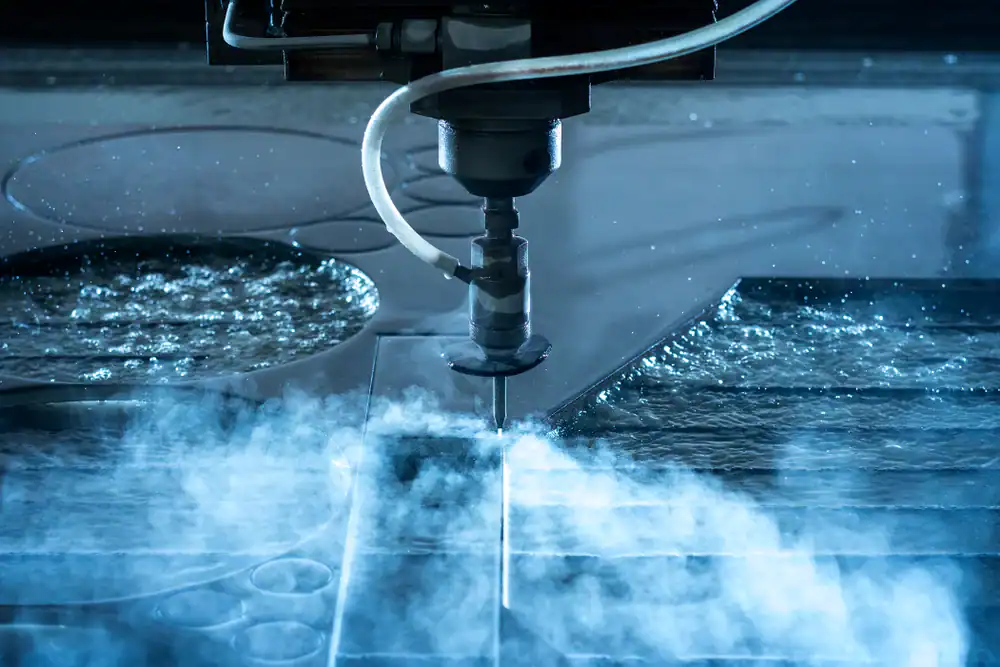
You need glass cut right the first time. No heat-affected zones that cause cracks. No rough edges that require hours of finishing work. No limitations on thickness or design complexity.
CNC glass waterjet cutting in St. James, NY gives you that precision. The process uses high-pressure water mixed with fine abrasive to cut through glass up to 12 inches thick without ever touching it with heat. That means no thermal stress, no micro-fractures, and no warping—just smooth, clean edges ready for installation or assembly.
Whether you’re fabricating architectural panels for a commercial build, creating custom interior glass features, or producing components for industrial applications, waterjet cutting handles intricate curves and tight tolerances that traditional methods can’t touch. You get the exact shape you need with minimal waste, which matters when you’re working with expensive or specialty glass. The narrow kerf—the width of the cut—means more usable material per sheet and fewer rejected pieces.
We serve manufacturers, contractors, and designers throughout St. James, NY and the surrounding Long Island area. We understand the pace of business here—tight deadlines, exacting specs, and clients who expect quality without excuses.
Our facility handles everything from single prototype pieces to production runs, using advanced CNC systems that deliver repeatable accuracy across every cut. St. James has a strong professional community with high standards, and that’s exactly who we built this service for. You’re not calling a national shop that treats your job like a number. You’re working with a team that knows the local market and responds accordingly.
We’ve invested in the equipment and expertise to handle the full range of glass cutting applications—from residential custom work to industrial glass waterjet cutting in St. James, NY for aerospace and automotive components.
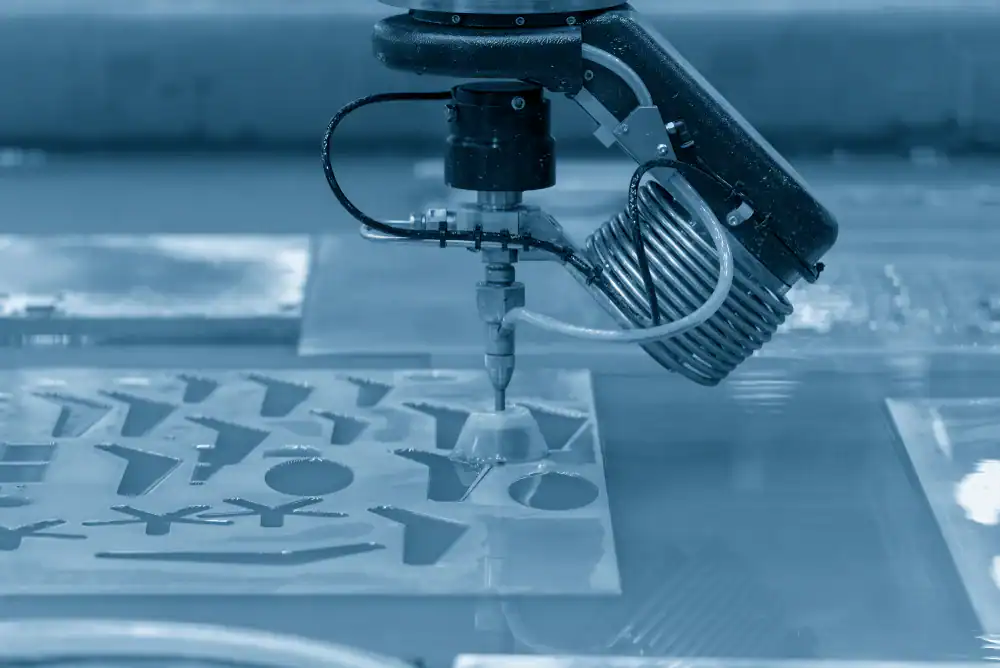
You send us your design file—CAD drawings, DXF, or even a detailed sketch if that’s what you’re working from. We’ll review it for feasibility and flag any potential issues before we start cutting. If your design needs adjustment for structural integrity or manufacturing efficiency, we’ll tell you upfront.
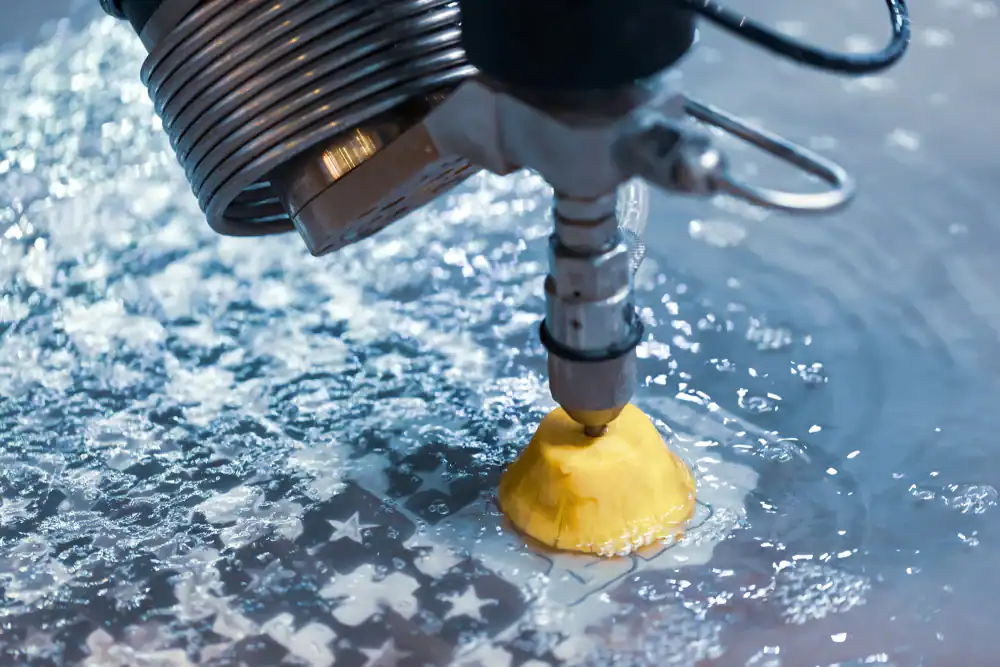
Once the file is programmed into our CNC system, the waterjet head follows the exact path at pressures between 60,000 and 90,000 PSI. The abrasive stream cuts through the glass with precision down to tight tolerances, creating the shapes and contours you specified. There’s no tool wear to worry about and no need to swap equipment between different glass types or thicknesses.
After cutting, we inspect each piece to ensure it meets your specifications. Depending on your needs, the glass is ready to ship as-is or can go through additional finishing if your application requires it. Turnaround depends on complexity and volume, but we prioritize keeping your project moving without sacrificing accuracy.
Ready to get started?
This process handles the full spectrum of glass applications. Architectural glass waterjet cutting in St. James, NY covers everything from decorative panels and building facades to custom windows and interior partitions. If you’re a contractor working on one of the area’s high-end residential or commercial projects, you know that precision and finish quality aren’t negotiable.
For industrial applications, we cut components for automotive glass, aerospace assemblies, electronics housings, and specialized equipment. The ability to cut thick glass without heat damage makes waterjet ideal for applications where structural integrity matters. You’re not introducing stress points that could fail under load or temperature changes.
Custom projects get the same attention—whether that’s one-off art installations, furniture components, or specialty fixtures. St. James has a strong design community, and we’ve worked with local artists and fabricators who need capabilities beyond what traditional glass cutting offers. The technology doesn’t limit your creativity. If you can design it, we can cut it. No etching and breaking. No pattern restrictions. Just accurate execution of whatever shape or detail your project requires.
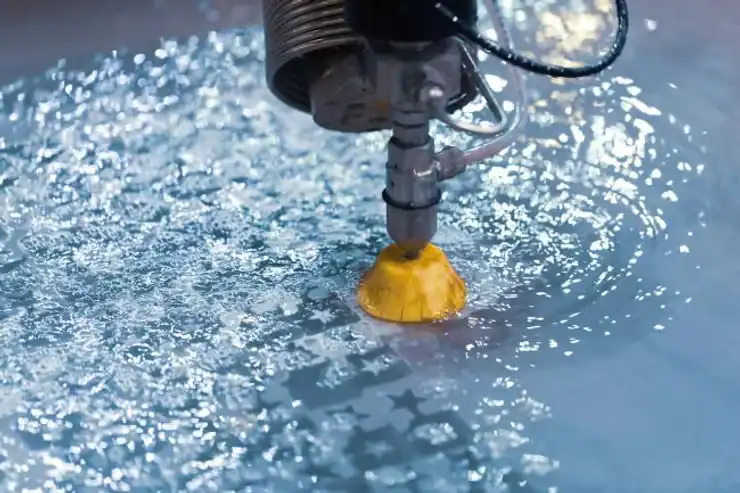
Waterjet cuts virtually any glass type without restriction. That includes standard float glass, tempered glass, laminated glass, low-iron glass, and specialty materials like borosilicate or quartz. The process works equally well on tinted, frosted, or coated glass.
Thickness isn’t a limiting factor the way it is with traditional methods. We regularly cut glass from thin 3mm sheets up to 12 inches thick. Thicker pieces actually benefit more from waterjet because there’s no heat to create internal stress that could cause cracking or delamination.
The key advantage is versatility. You don’t need different tooling or setup for different glass types. One system handles everything, which means faster turnaround and lower costs when you’re working with multiple materials or switching between projects.
Laser cutting uses heat, which creates a heat-affected zone around every cut. That thermal stress can cause micro-fractures in glass, especially in thicker pieces or when cutting intricate patterns with tight curves. You also get edge discoloration and often need secondary grinding or polishing.
Traditional scoring and breaking works for straight cuts and simple shapes, but it’s limited. Complex curves, interior cutouts, and detailed patterns require either hand-cutting—which is slow and inconsistent—or CNC routers that still use mechanical force and generate heat through friction.
Waterjet uses neither heat nor mechanical force. The abrasive stream erodes material without stressing it. You get clean edges that typically don’t require finishing, and you can cut any shape—including sharp internal corners and intricate details—without risk of cracking. For production work or projects with tight tolerances, that reliability matters more than the slight speed advantage lasers might have on simple cuts.
Turnaround depends on three factors: design complexity, material thickness, and production volume. A simple prototype with basic shapes might be ready in a few days. Complex architectural panels with detailed patterns or production runs of multiple pieces take longer.
Cutting speed itself is fairly quick—the machine can handle intricate work faster than you’d expect. The time investment comes from programming, setup, and quality control. We don’t rush through inspection because a crack or dimensional error discovered after installation costs you far more than an extra day of production time.
For St. James, NY projects, local pickup or delivery keeps logistics simple. If you’re on a tight construction schedule or need parts for an assembly line, talk to us about your timeline upfront. We’ll tell you what’s realistic and where we can compress the schedule if needed. Rush capabilities exist for urgent work, but planning ahead always gets you better results.
Waterjet typically produces smooth edges that are ready for most applications without secondary processing. The finish quality depends on cutting speed and abrasive flow rate—variables we adjust based on your requirements.
For architectural or visible applications where aesthetics matter, the edge quality straight off the waterjet is usually acceptable. You’ll see a slightly frosted appearance rather than a polished edge, but it’s uniform and clean without chips or fractures. If your project requires polished edges—like for high-end furniture or display cases—that’s a separate finishing step, but you’re starting from a much better baseline than traditional cutting methods provide.
Industrial applications often don’t require any edge treatment at all. If the glass is going into an assembly or frame where edges aren’t visible, the waterjet finish is perfectly functional. That eliminates an entire process step and the associated cost and time. It’s one of the reasons waterjet is more cost-effective than it initially appears—you’re not paying for finishing work that other cutting methods make necessary.
Yes, and that flexibility is one of the main reasons businesses choose waterjet. For custom work—a single art piece, a prototype, or a specialty component—there’s no tooling cost or minimum order quantity. You pay for the actual cutting time and material, not for setup that only makes sense at volume.
Production runs benefit from CNC precision. Once the program is created, the machine repeats the exact same cut across hundreds or thousands of pieces with consistent accuracy. You’re not dealing with operator variation or tool wear that degrades quality over time. Each piece matches the first.
The economic sweet spot depends on your specific project, but waterjet often makes sense even for mid-sized runs that would be too small for dedicated tooling with other methods. For St. James, NY businesses that need flexibility—maybe you’re doing custom residential work alongside commercial projects—having one cutting method that handles both efficiently matters more than optimizing for only high-volume production.
CAD files work best—DXF, DWG, or AI formats that contain vector paths. Those files translate directly into machine code with precise dimensions and no interpretation required. If you’re working with an architect, engineer, or designer, they can typically export in one of those formats.
PDF files can work if they’re created from vector artwork rather than scanned images, but there’s more room for scaling errors or resolution issues. We’ll verify dimensions before cutting to catch any problems.
If you don’t have CAD files, we can work from detailed drawings with dimensions, or even physical templates for simple shapes. There’s additional programming time involved to create the cut file, but it’s not a barrier. For repeat orders, we keep your programs on file so subsequent runs are faster and cheaper.
The key is clear communication about dimensions, tolerances, and any critical features. A quick conversation before we start programming prevents expensive mistakes and ensures the finished pieces match what you actually need for your project.
Useful Links
Other Services we provide in St. James