Hear from Our Customers
You’re not dealing with straight lines and simple shapes anymore. Your architectural panels need curves. Your custom installations require holes in specific places. Your industrial components can’t afford micro-cracks that show up three weeks after installation.
Traditional glass cutting methods create stress in the material the moment the wheel touches the surface. That stress doesn’t always show up immediately, but it’s there—waiting to become your problem during handling, installation, or worse, after the project is complete.
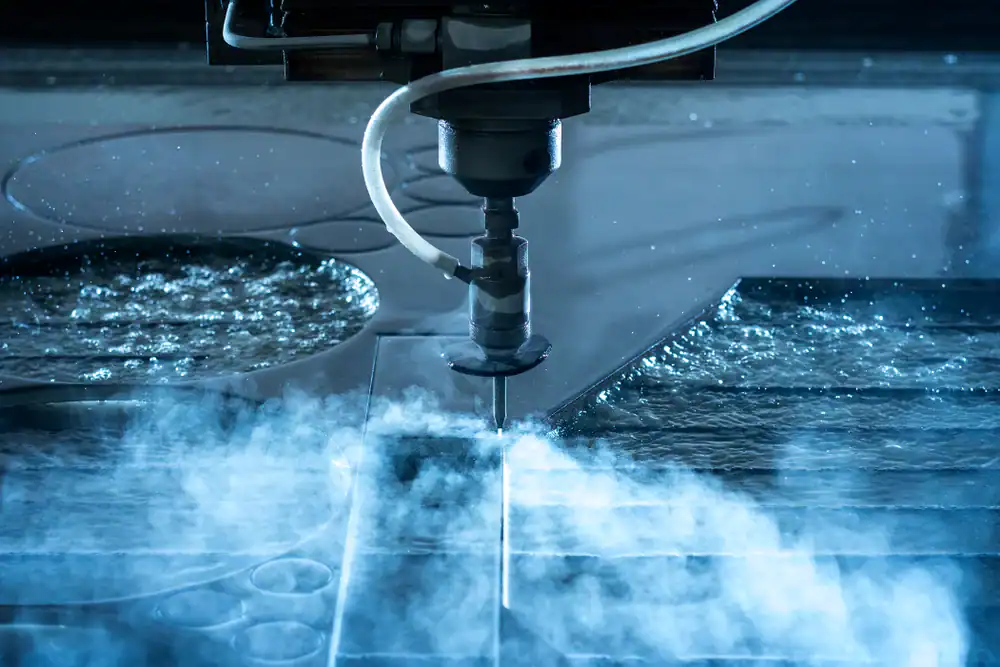
Waterjet cutting uses a high-pressure stream—up to 90,000 psi—mixed with fine abrasive to cut through glass without ever heating it. No thermal expansion. No vibration. No hidden stress patterns that compromise your end product. You get clean edges, intricate patterns, and glass that performs exactly how you need it to.
We serve manufacturers, architects, and fabricators throughout Terryville, NY and the surrounding region. Our in-house design team reviews every file before it goes to the cutting table—not because we don’t trust your specs, but because catching a potential issue before the cut saves you time, material, and the headache of reordering.
We’ve built our process around precision and consistency. Every project runs through CNC-controlled equipment that translates your CAD files into physical cuts measured in thousandths of an inch. Whether you’re ordering one custom piece or 10,000 identical components, the process stays the same.
Terryville’s industrial and architectural sectors demand reliable fabrication partners who understand both the technical requirements and the timelines. We’ve structured our operation to handle both.
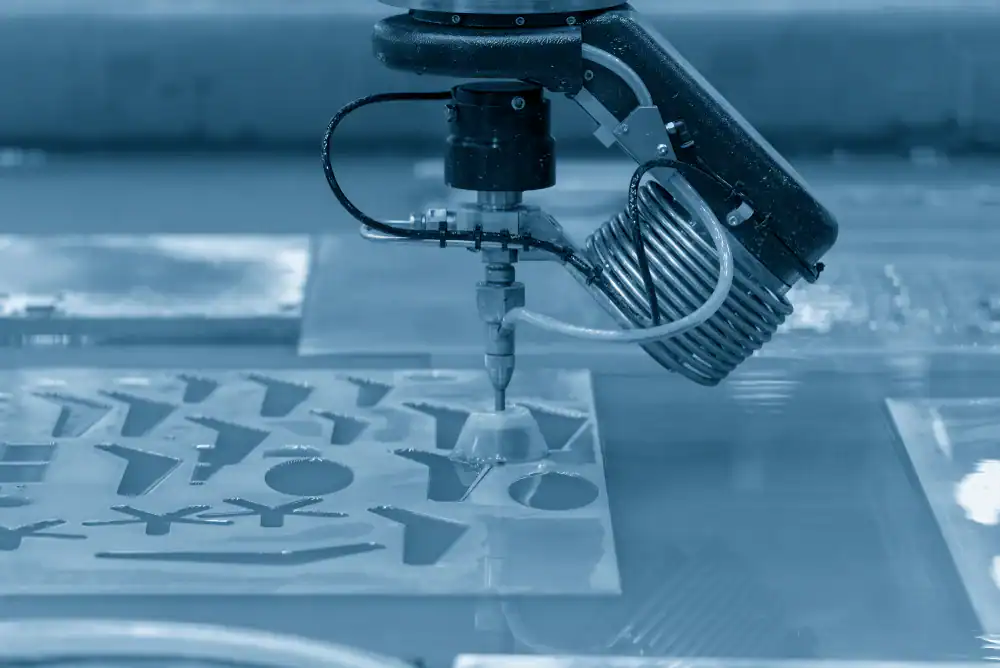
You send us your design file—CAD, DXF, or whatever format your team works in. Our design team opens it, checks for potential issues like tight internal corners or pierce points that could create problems, and flags anything that might not translate well to the physical cut. If something needs adjustment, you’ll know before we start.
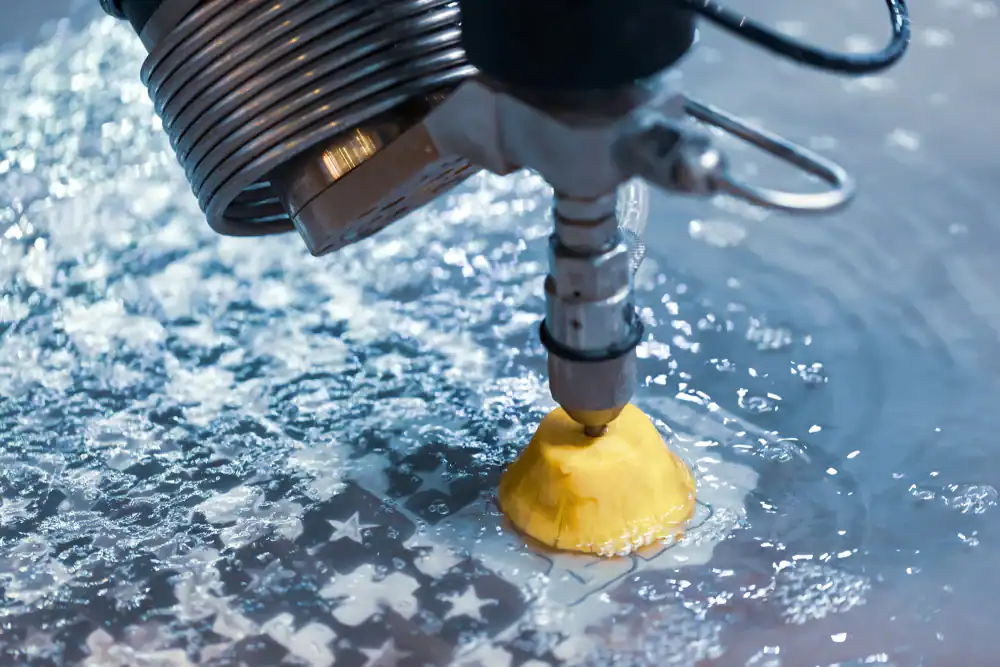
Once the file is confirmed, it goes to our CNC waterjet system. The machine positions the glass, calculates the optimal cutting path, and begins. Water pressurized to 90,000 psi mixes with garnet abrasive and exits through a nozzle thinner than a credit card. The stream moves at three times the speed of sound but never heats the glass.
The cutting process is cold. No heat-affected zones. No thermal expansion. No microfractures forming along the cut line. For thicker glass or laminated materials, the same process applies—the waterjet adjusts pressure and speed based on material thickness, handling everything from standard annealed glass to tough laminated products up to 7 inches thick.
After cutting, most pieces don’t need secondary finishing. The edge quality coming off the waterjet is clean enough for direct installation in many applications. If your project requires additional edge treatment, you’re starting from a significantly better baseline than traditional cutting methods provide.
Ready to get started?
You get cuts that follow your design file exactly. Curves, angles, interior cutouts, complex patterns—the CNC system doesn’t care how complicated the shape is. The thin kerf width means you’re not losing significant material to the cutting process itself, and intricate details stay sharp.
Terryville’s architectural projects increasingly demand custom glass solutions that go beyond standard rectangular panels. Decorative elements, branded installations, and structural glass components all require precision that traditional scoring and breaking methods can’t deliver. Waterjet cutting handles those requirements without the edge chipping or microcracking that compromises both aesthetics and structural integrity.
For industrial applications, you’re getting components that meet your tolerance requirements without the thermal stress that affects performance. Aerospace windows, automotive glass, and specialized industrial panels all benefit from a cutting process that doesn’t introduce heat or vibration into the material. The automated process also means repeatability—part 1 and part 1,000 come out identical.
The process produces minimal waste. The narrow stream means more usable material from each sheet. No toxic emissions. No chemical coolants. Just water, abrasive, and the precision you need to keep your project moving.
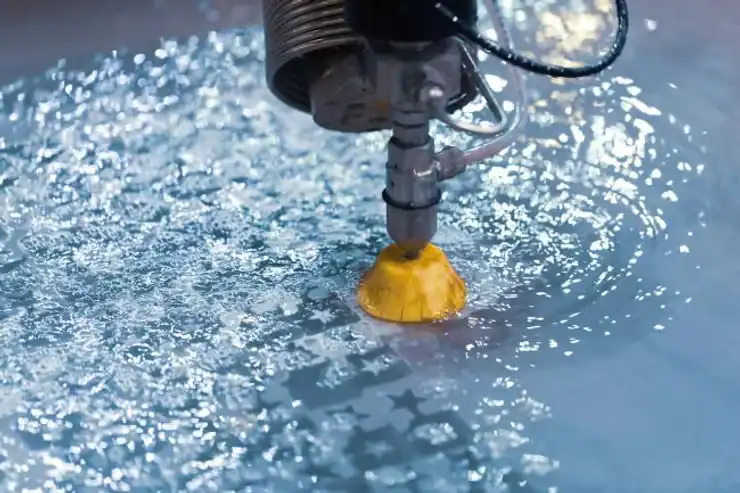
Waterjet cutting handles nearly every glass type you’ll encounter in architectural, industrial, or custom applications. Standard annealed glass cuts cleanly at any thickness. Tempered glass, which is notoriously difficult to cut after the tempering process, can be cut before tempering and then sent for heat treatment. Laminated glass—the kind used in automotive windshields and security applications—cuts without delaminating the layers.
Specialty glass works too. Low-iron glass for high-clarity applications. Textured or patterned glass for decorative installations. Even thick glass blocks up to 7 inches can be processed, though those projects require specific pressure and speed adjustments to prevent cracking during the pierce.
The limitation isn’t the glass type—it’s whether the glass can physically withstand the initial pierce point where the waterjet enters the material. We adjust pressure, abrasive flow, and pierce technique based on the specific glass you’re using. If you’re unsure whether your material will work, send us the specs and we’ll tell you straight whether it’s viable.
Traditional glass cutting uses a carbide or diamond wheel to score the surface, then applies mechanical stress to break the glass along that score line. That breaking action creates microfractures along the edge—some visible, many not. Those microfractures become stress concentrators that make the glass vulnerable to chipping during handling or installation.
Waterjet cutting never scores or breaks the material. The high-pressure abrasive stream erodes the glass particle by particle along the cut path. There’s no mechanical stress applied to the surrounding material. No vibration. No bending force. The glass on either side of the cut line stays in its original stress state.
The result is an edge that’s smooth and free from the microcracking pattern you see with traditional methods. In most cases, the edge quality is good enough to use as-is, without grinding or polishing. If your application requires a specific edge finish—polished, beveled, or seamed—you’re starting from a much better baseline, which means less material removal and faster finishing.
Yes, and that’s one of the main reasons architectural and industrial projects choose waterjet over traditional methods. Interior cutouts, mounting holes, and complex patterns all require the waterjet to pierce the glass at specific points and then cut the desired shape from that pierce.
The challenge is the pierce itself. When the high-pressure stream first contacts the glass, there’s a risk of creating a crater or initiating a crack if the pressure ramps up too quickly. We control that by using a gradual pressure ramp and precise abrasive flow during the pierce sequence. The waterjet starts at lower pressure, breaks through the glass surface, and then increases to full cutting pressure once the stream has penetrated.
Hole size depends on material thickness and glass type, but generally, we can cut holes as small as the width of the waterjet stream itself—around 0.04 inches. For structural integrity, you’ll want larger holes in most applications, but the technical capability is there for tight tolerances. Interior cutouts follow the same principle—the CNC system pierces, cuts the interior shape, then moves to the next feature or continues the exterior cut.
Turnaround depends on three factors: design complexity, material availability, and our current production schedule. Simple cuts on standard glass that we stock can often be completed within a few days. Complex patterns, thick materials, or specialty glass that needs to be ordered will take longer.
Once your file is approved and material is on hand, the actual cutting time is faster than you might expect. CNC waterjet systems run continuously once programmed, and the automated process means we’re not limited by manual operator speed. High-volume runs benefit from this automation—cutting 100 identical pieces doesn’t take 100 times longer than cutting one.
The design review phase is where most projects either speed up or slow down. If your file is clean, dimensioned correctly, and doesn’t have features that will cause problems during cutting, we move directly to production. If there are issues—overlapping lines, dimensions that don’t account for kerf width, or pierce points in vulnerable locations—we’ll need to communicate with you about revisions. Sending a well-prepared file with clear specifications is the single biggest factor in getting your project completed quickly.
The same CNC equipment handles both scenarios. For one-off custom pieces—a unique architectural element, a prototype, or a specialty replacement part—the waterjet cuts exactly what you’ve designed without requiring expensive tooling or setup costs. You’re paying for machine time and material, not for molds or dies that only make sense at high volume.
For production runs, the process scales efficiently. Once the CNC program is created and tested, running additional pieces is a matter of loading material and letting the machine repeat the sequence. We’ve handled orders ranging from single units up to 100,000 pieces, and the quality stays consistent across the entire run because the machine follows the same programmed path every time.
High-volume projects benefit from our ISO 9001:2015 certification, which means documented processes, quality checks, and traceability throughout production. If you’re ordering thousands of components that need to meet specific standards or integrate with other manufactured parts, that consistency matters. The first piece and the last piece come out identical.
Laser cutting heats the material to create the cut. For glass, that means introducing thermal stress into the material—the exact problem waterjet cutting avoids. The heat-affected zone around a laser cut can create internal stresses that make the glass more prone to cracking, especially in thicker materials or complex shapes where heat buildup becomes significant.
Traditional scoring and breaking works fine for straight cuts and simple shapes, but it struggles with curves, interior cutouts, and intricate patterns. Every score line is a potential weak point, and the mechanical breaking process creates microfractures along the edge. If you’re cutting decorative patterns or shapes with tight tolerances, scoring methods don’t provide the precision or edge quality you need.
Waterjet cutting is a cold process. No heat. No thermal expansion. No residual stress in the material. The abrasive stream cuts through glass regardless of thickness, and the CNC control means curves and complex shapes are just as easy as straight lines. You get better edge quality, more design flexibility, and glass that isn’t compromised by the cutting process itself. For projects where quality and precision actually matter, waterjet is the method that delivers.
Useful Links
Other Services we provide in Terryville