Hear from Our Customers
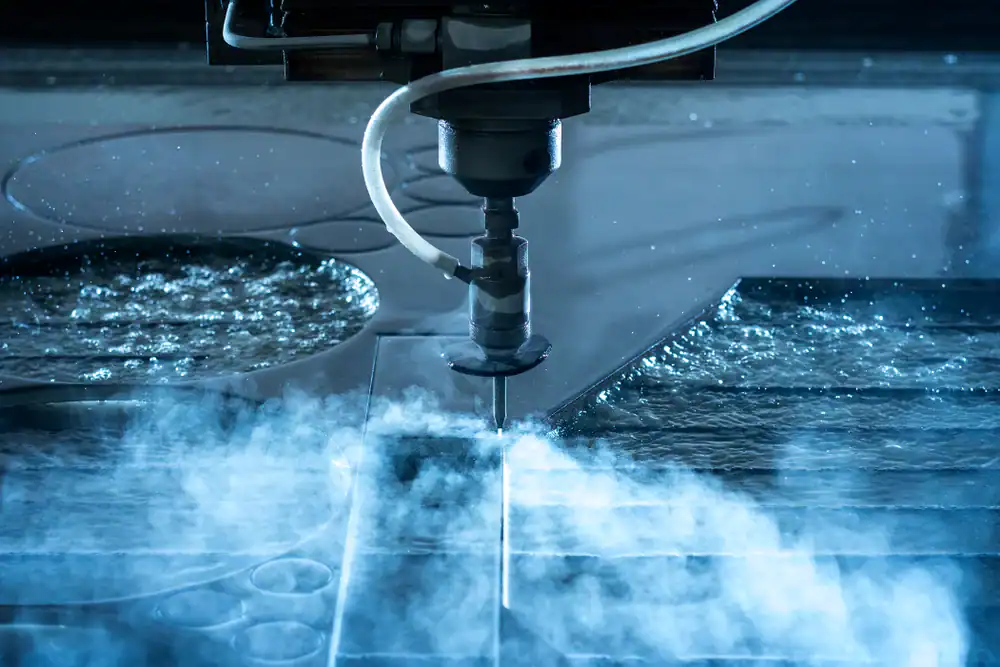
Traditional glass cutting methods leave you dealing with chips, cracks, and edges that need hours of finishing work. Laser cutting creates heat stress that can ruin expensive materials. You’re left managing rework, delays, and frustrated clients.
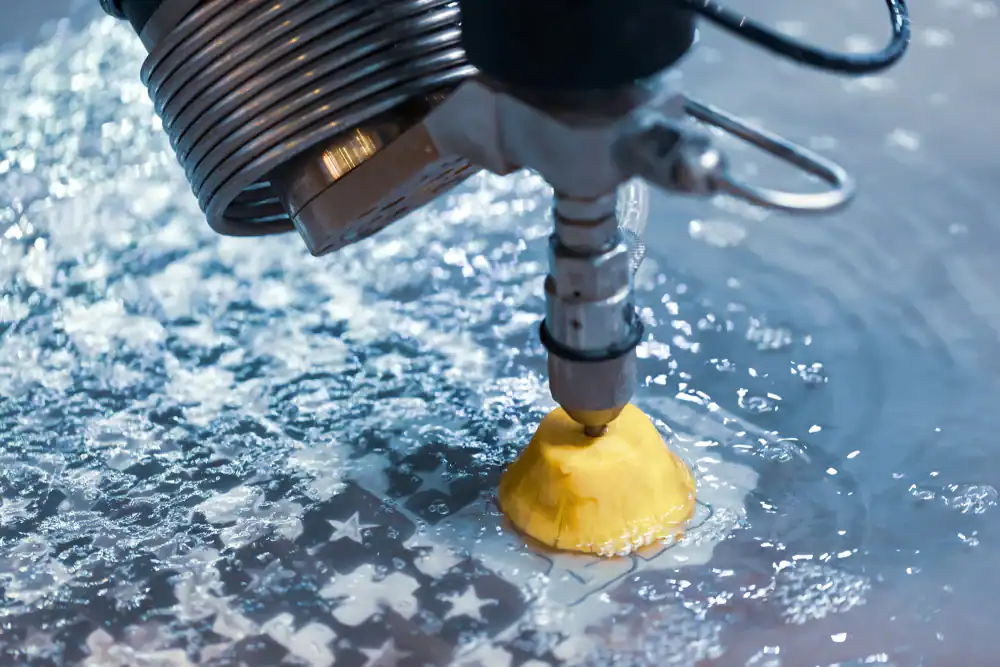
Waterjet cutting changes that equation completely. The process uses high-pressure water mixed with fine abrasive to cut through glass without generating any heat. No thermal stress means no warping, no cracking, no material distortion.
You get edges that are clean and burr-free right off the machine. Tolerances hold at ±0.1mm even on complex curves and tight radiuses. Intricate patterns that would be impossible with traditional methods become straightforward. Your architect’s vision for that custom panel installation? It actually happens the way it was designed.
The process works on laminated glass, tempered glass, and thicknesses from 3mm up to 50mm. One setup handles shapes that would require multiple tools and setups with conventional methods.
We operate in Westbury, NY, serving architects, contractors, and fabricators across Nassau County and Long Island. Our facility handles everything from one-off custom pieces to full production runs.
The Long Island market has always demanded high-quality glass work—from commercial buildouts in the area’s office parks to high-end residential projects in surrounding communities. That standard doesn’t leave room for mediocre cuts or inconsistent results.
Our equipment includes CNC-controlled waterjet systems that maintain precision across every job. You work directly with people who understand material properties, design constraints, and project timelines. No middlemen, no confusion about specifications.
You start by sending your design file—CAD drawings, DXF files, or even detailed sketches work. We review your specifications, material type, thickness, and any edge quality requirements you have.
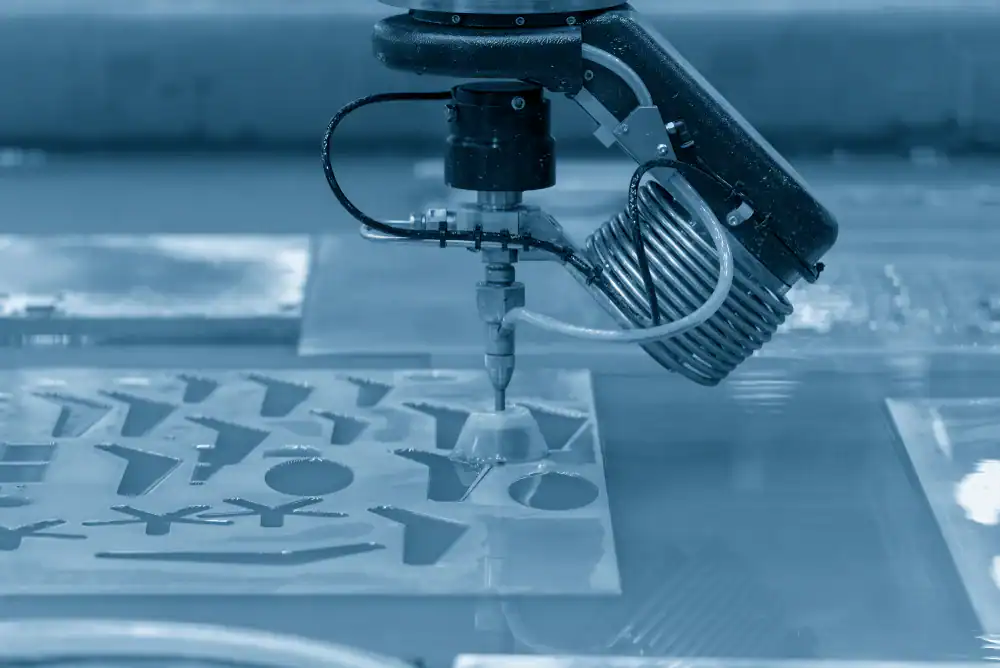
Next comes material setup and programming. Your glass gets secured to the cutting bed, and the CNC system gets programmed with your exact cut paths. The waterjet head positions itself, and cutting begins with a stream of water and garnet abrasive moving at speeds up to three times the speed of sound.
The system follows your design with precision, making turns and curves that would be impossible with mechanical cutting tools. There’s no tool wear changing your tolerances mid-job, no heat building up in the material.
Once cutting finishes, your pieces come off the table ready to use. Most applications don’t need additional edge work. If your project requires polished edges or specific finishes, that happens as a separate step—but the cut itself is clean from the start.
You get exactly what you specified, on the timeline discussed, without the usual drama of rework or rejected pieces.
Ready to get started?
Every custom glass waterjet cutting project in Westbury, NY includes design consultation before cutting starts. You’re not just dropping off material and hoping for the best. We review your files, flag potential issues with cut paths or material choices, and confirm that what you’re asking for is actually achievable.
Material sourcing assistance is available if you need it. Sometimes you know exactly what glass you want; other times you need guidance on whether 6mm or 10mm thickness makes more sense for your application. That conversation happens upfront.
The Long Island construction and design market moves fast, especially during peak building season from April through October. Turnaround times get built around your project schedule, not some arbitrary production calendar. Rush jobs happen when they need to happen.
CNC glass waterjet cutting in Westbury, NY means your tolerances stay consistent whether you’re cutting one piece or one hundred. The same precision applies to decorative panels for a Garden City restaurant as it does to structural glass components for a commercial project in Mineola.
Quality control happens throughout the process, not just at the end. Each piece gets inspected before it leaves our facility.
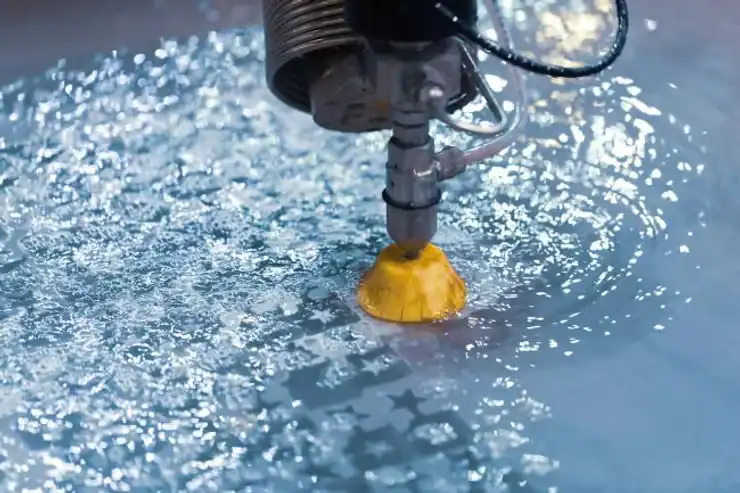
Waterjet cutting handles virtually every type of glass you’ll encounter in architectural, commercial, or industrial applications. That includes standard annealed glass, tempered glass, laminated glass, low-iron glass, mirrored glass, and specialty decorative glass.
Thickness capacity runs from thin 3mm sheets up to 50mm thick glass, which covers the vast majority of commercial applications. Thicker specialty glass up to 150mm is possible with the right equipment setup, though most projects in the Westbury, NY area fall into the standard range.
Laminated glass deserves special mention because it’s notoriously difficult to cut with traditional methods. The multiple layers and interlayer material create problems for mechanical cutting and laser cutting. Waterjet cutting goes through laminated glass cleanly without delamination or edge separation.
Tempered glass is trickier—it needs to be cut before the tempering process because cutting after tempering will cause the glass to shatter. That’s a material property issue, not a limitation of waterjet cutting specifically. The process works perfectly for cutting glass that will be tempered later.
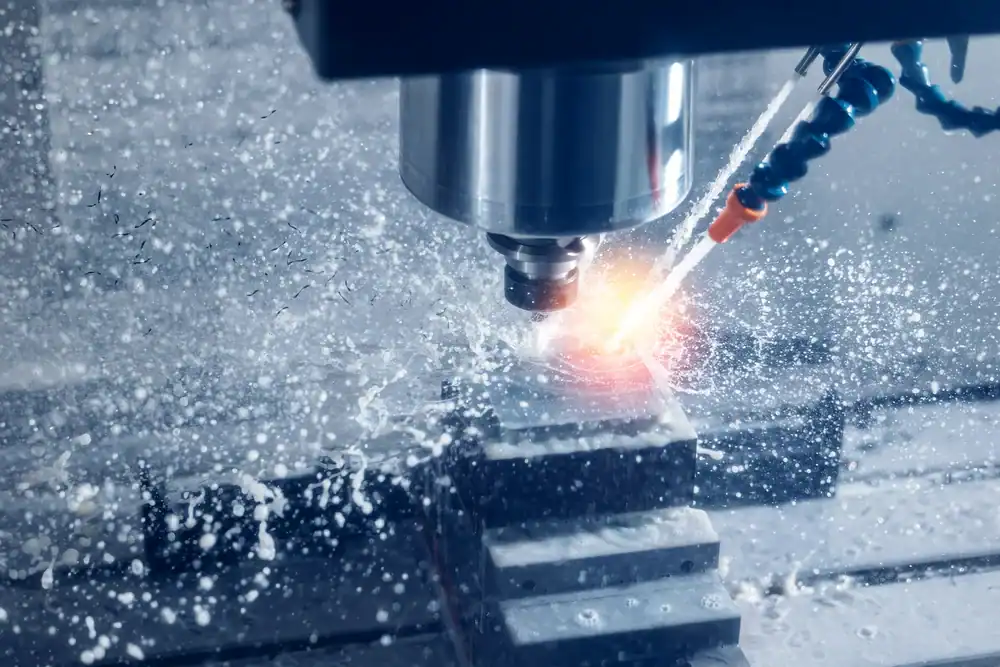
The fundamental difference comes down to heat. Laser cutting uses focused light energy that generates significant heat in the material. Glass doesn’t respond well to localized heating—you get thermal stress, micro-cracking, and a real risk of the piece shattering during or after cutting.
Waterjet cutting uses high-pressure water and abrasive with no heat generation at all. The material stays at room temperature throughout the entire cutting process. That eliminates thermal stress completely, which means no cracking, no warping, and no change to the glass’s structural properties.
Edge quality is another major difference. Laser-cut glass often needs substantial finishing work to achieve a smooth edge. Waterjet-cut edges come off the machine clean and smooth, typically requiring minimal or no additional finishing depending on your application.
Reflective glass and mirrors create specific problems for laser cutting because the reflective surface bounces the laser energy back, causing inconsistent cuts and potential equipment damage. Waterjet cutting doesn’t care about reflectivity—it cuts mirrored glass exactly the same way it cuts standard glass.
For intricate designs with tight curves and complex geometries, waterjet cutting maintains consistent precision throughout the entire cut path. Laser cutting can struggle with certain curve profiles in glass due to heat accumulation.
Turnaround time depends on project complexity, material availability, and current production schedule. A straightforward job with simple geometry and readily available material might be completed in 2-3 business days. More complex projects with intricate cut paths or specialty glass can take 5-7 business days.
Rush service is available when your project timeline demands it. Construction schedules don’t always give you weeks of lead time, especially when you’re dealing with change orders or last-minute design modifications. Communication about your actual deadline matters more than assuming a standard timeline works.
The CNC glass waterjet cutting process itself is relatively fast—the machine can cut complex patterns in minutes once setup is complete. What takes time is the front-end work: reviewing your design files, programming the cut paths, securing and positioning the material, and quality control after cutting.
For commercial projects in Westbury, NY and surrounding Nassau County areas, coordinating delivery timing often matters as much as cutting speed. There’s no point finishing your glass panels a week early if the installation crew isn’t ready for them. That conversation happens during project planning.
Production runs with multiple identical pieces actually become more efficient per piece because setup time gets distributed across the entire run. If you need 50 identical glass panels, the per-piece timeline drops significantly compared to 50 different custom cuts.
Yes, and this is where waterjet cutting really separates itself from traditional glass cutting methods. The cutting stream is extremely narrow—typically 0.020″ to 0.040″ in diameter—which allows for very tight radius curves and intricate interior cutouts that would be impossible with mechanical cutting tools.
CNC control means the cutting head follows your design file with precision that doesn’t drift or accumulate error as the cut progresses. Complex curves maintain the same tolerance as straight cuts. Interior cutouts, notches, and intricate patterns all happen in a single setup without repositioning the material.
Architectural glass waterjet cutting in Westbury, NY frequently involves custom patterns for decorative panels, signage, and interior design elements. The process handles organic curves, geometric patterns, and even text cutouts without the limitations you’d face with traditional scoring and breaking methods.
There’s no practical limit on design complexity from a cutting capability standpoint. The constraints come from material properties and structural requirements—you can’t cut features so small or delicate that the glass itself becomes structurally unsound. But within reasonable design parameters, if you can draw it, waterjet cutting can cut it.
Multiple pieces with identical complex patterns come out exactly the same because the CNC system repeats the exact same programmed movements. You don’t get the variation that comes with manual cutting methods or operator fatigue on repetitive cuts.
Most applications don’t require additional edge work after waterjet cutting. The process produces clean, burr-free edges that are smooth to the touch and visually clean. For many industrial, architectural, and fabrication applications, the as-cut edge quality is perfectly acceptable.
Whether you need additional finishing depends entirely on your specific application and aesthetic requirements. Glass that will be framed or set into channels typically needs no further edge work. Structural glass components where the edge won’t be visible in the final installation are fine as-cut.
Exposed edges in high-end architectural applications might benefit from polishing if you want that perfectly transparent, jewelry-quality edge finish. That’s a separate process that can be done after waterjet cutting, and it’s much easier to achieve on a waterjet-cut edge than on glass cut with traditional methods.
The edge quality from waterjet cutting is consistent across the entire cut path. You don’t get the variation in edge finish that happens with mechanical cutting where tool wear or operator technique affects results. Every inch of cut edge meets the same quality standard.
For projects in Westbury, NY where edge finishing is required, that gets discussed during the design consultation phase. The cutting process and finishing requirements get coordinated so your timeline and budget expectations stay realistic from the start.
Start with your design file if you have one—CAD drawings in DXF or DWG format work best, but PDF drawings with dimensions are usable too. The file should show the exact cut paths, dimensions, and any specific tolerance requirements you have.
Material specifications matter: what type of glass, what thickness, and whether you’re providing the material or need it sourced. If you’re supplying the glass, knowing the sheet size helps with programming and material utilization planning.
Quantity is obviously important—one custom piece prices differently than a production run of 50 identical pieces. If you’re planning multiple phases or repeat orders, mention that upfront because it affects how the job gets programmed and priced.
Edge finish requirements need to be clear. Are as-cut edges acceptable, or do you need polished edges? Are there specific areas that need different edge treatments?
Timeline expectations help structure the quote appropriately. Standard turnaround is one price point; rush service is another. Being honest about your actual deadline—not just asking for rush service because you think it’ll move faster—leads to more accurate pricing.
For industrial glass waterjet cutting projects in Westbury, NY, site delivery requirements or special packaging needs should be mentioned if they apply. The quote should reflect the complete scope, not just the cutting portion.
Useful Links
Other Services we provide in Westbury