
Hear from Our Customers
Traditional marble cutting leaves you with three problems: material you can’t use because the blade overheated and cracked it, designs you can’t execute because the saw won’t turn tight enough, and edges that need hours of finishing work before they’re presentable.
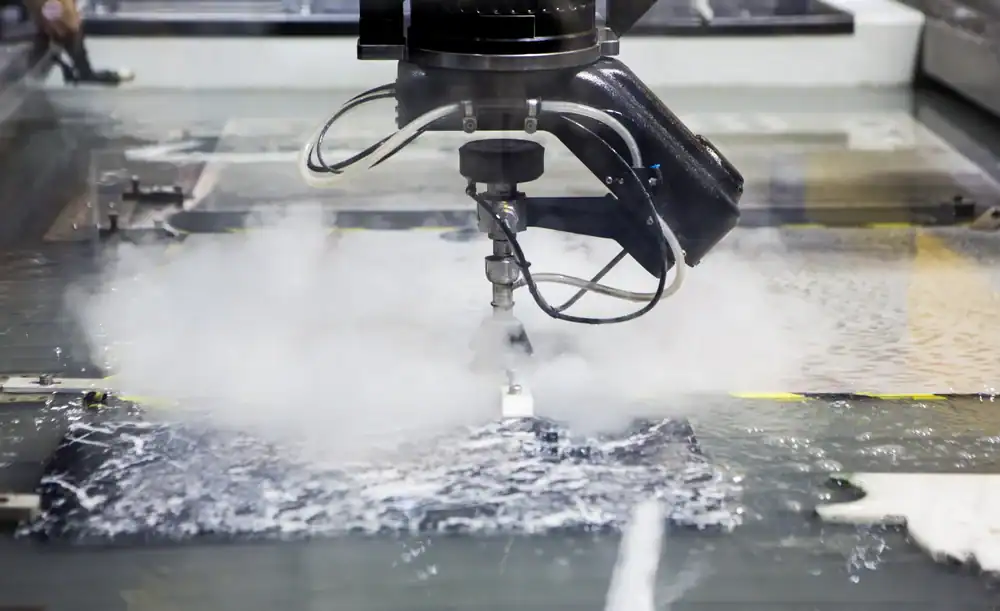
Waterjet changes that. The stream cuts cold, so your marble doesn’t develop stress fractures or discoloration from heat. The cutting head moves in any direction your design requires—curves, angles, intricate inlays—without switching tools or repositioning the slab. And the edge it leaves is smooth enough that most projects skip secondary polishing entirely.
For architects spec’ing custom lobby floors in Coram, NY, that means your medallion design actually looks like the rendering. For contractors working on high-end kitchen renovations, it means the marble island top fits the first time, with cuts so tight you barely see the seam. For fabricators managing multiple projects, it means less material waste eating into your margins and faster turnaround because you’re not fixing mistakes.
We work with architects, designers, contractors, and fabricators across Long Island who need marble cut right. We’re not the cheapest option in Coram, NY, and we’re fine with that. You’re paying for cuts that hold tolerances within 0.001 inch, equipment that doesn’t overheat halfway through your project, and people who understand that “close enough” isn’t acceptable when you’re working with $200-per-square-foot marble.
We’ve spent years serving the Long Island and NYC Metro Area because the market here demands precision. When a designer in Coram needs custom marble inlays for a residential project, or a contractor needs 40 identical countertop pieces cut for a commercial build, the margin for error is zero. That’s what our equipment and process are built around.
You send us your design file—CAD, DXF, or even a detailed sketch if that’s what you’re working from. We review it for feasibility and flag anything that might cause problems before we start cutting. If your design has sections that are too thin to support themselves or curves that will create weak points, you’ll know before we touch your material.
Once the file is programmed, your marble goes on the cutting table. The waterjet stream—a mix of water and fine abrasive moving at up to 60,000 PSI—follows the programmed path with CNC precision. Because there’s no blade generating heat, there’s no risk of thermal cracks or discoloration. The stream is thin enough that we’re cutting away less than an eighth of an inch of material, which means tighter nesting and less waste from your slab.
After cutting, most pieces are ready to install. The edge quality is smooth and consistent, without the chipping or rough spots you’d get from a blade. If your project needs polished edges, we can handle that too, but many custom marble waterjet cutting projects in Coram, NY leave our shop ready to go as-is.
Ready to get started?
You get cuts that follow your design file exactly, whether that’s straight edges for countertops or complex patterns for decorative inlays. The process handles marble from a few millimeters thick up to several inches without changing equipment or technique. If you’re working on a project that requires 50 identical pieces, the fiftieth one matches the first one because the CNC system doesn’t drift or dull like a blade does.
Material waste drops significantly. The narrow cutting stream means we can nest parts closer together on your slab, and because there’s no heat damage, we’re not throwing away pieces that cracked during cutting. For projects in Coram, NY where material cost is a significant line item—luxury residential builds, commercial lobbies, custom architectural elements—that waste reduction matters.
Turnaround is faster than traditional methods because we’re not stopping to change blades, reposition material, or fix errors. The automated system runs continuously once it’s programmed. For contractors managing tight schedules or fabricators juggling multiple client deadlines, that reliability keeps projects moving.
The environmental impact is lower too. Water recycles through the system, there’s no dust cloud requiring ventilation, and we’re not generating the heat and fumes that come with blade cutting. If you’re working on a LEED project or just prefer methods that don’t create unnecessary waste, waterjet fits that requirement.
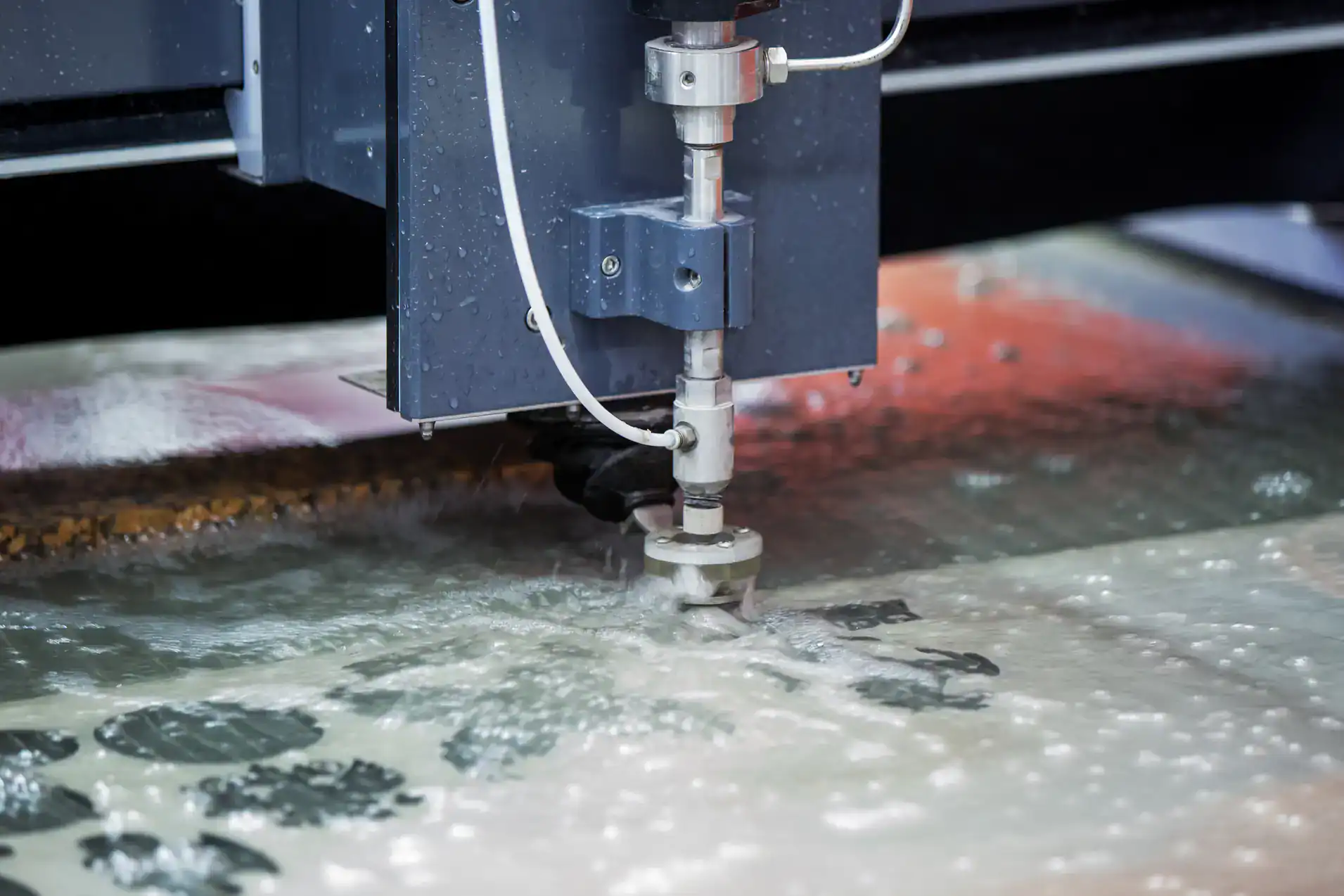
Waterjet is a cold-cutting process. There’s no blade friction generating heat, which means no thermal stress developing in your marble. When traditional saws cut marble, the blade heats up the material along the cut line. Marble expands when heated, then contracts as it cools, and that expansion-contraction cycle creates internal stress that shows up as micro-cracks or full fractures.
With waterjet, the stream stays cold throughout the entire cut. Your marble never experiences temperature change, so it never develops thermal stress. This matters most when you’re cutting intricate patterns or working with marble that has natural veining—the areas where traditional methods are most likely to cause problems.
For projects using high-end marble in Coram, NY, this isn’t just about avoiding visible cracks. It’s about structural integrity. A countertop with internal stress fractures might look fine when it leaves the shop but fail six months after installation when temperature changes or settling cause those hidden cracks to spread.
Our waterjet system holds tolerances within 0.001 inch. In practical terms, if your design calls for a 24-inch circle, you’re getting a 24-inch circle—not 24.03 or 23.97 inches. That level of precision matters when you’re fitting multiple pieces together, creating inlays, or matching architectural specs that don’t have room for “close enough.”
The CNC control system locks in pressure, abrasive flow, and cutting speed, so the fiftieth piece we cut matches the first one. Traditional cutting methods drift as blades dull or operators make micro-adjustments. With waterjet, the computer follows the programmed path exactly, every single time.
This accuracy also means better material utilization. When cuts are precise, we can nest parts closer together on your slab without risking overlap or leaving excessive safety margins. For custom marble waterjet cutting projects in Coram, NY where material cost runs $150-$300 per square foot, that tighter nesting translates directly to cost savings on your material order.
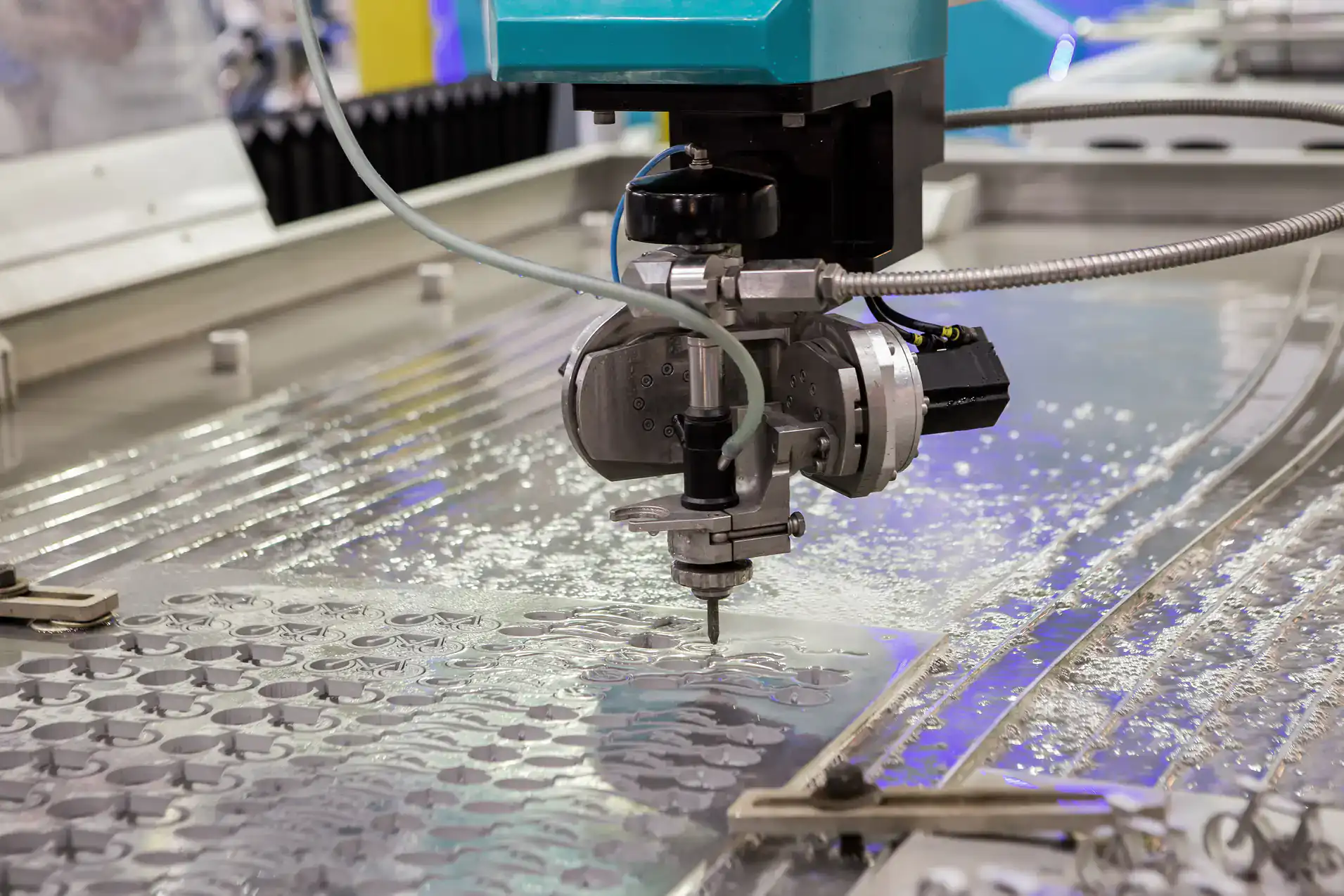
If you can draw it, we can cut it. The cutting head moves in any direction—forward, backward, curves, tight angles—without repositioning your marble or changing tools. We’ve cut circular medallions, octagon patterns, custom borders, decorative inlays, and geometric designs that would be impossible with traditional blade methods.
The limitation isn’t the machine’s capability—it’s the physical properties of marble itself. Very thin sections (under a quarter inch) or extremely delicate points might not have enough structural integrity to survive handling and installation, regardless of how precisely they’re cut. When we review your design file, we’ll flag those concerns before cutting so you can adjust the design or plan for reinforcement.
For precision marble waterjet cutting in Coram, NY, this design flexibility opens up options that weren’t practical before. Architects can spec custom lobby floors with intricate patterns. Designers can create one-of-a-kind kitchen backsplashes. Contractors can deliver the exact vision the client approved, without compromise or substitution.
Significantly less than blade cutting. The waterjet stream is roughly 0.04 inches wide—about the thickness of a credit card. Traditional saw blades remove a quarter inch or more of material with each cut. That difference adds up fast when you’re nesting multiple pieces on a slab.
Beyond the narrow kerf, waterjet eliminates waste from heat damage. Blade cutting generates enough heat to crack or discolor sections of marble, especially near the cut line. Those damaged sections get thrown out. With waterjet’s cold-cutting process, the only material you lose is what the stream removes—nothing gets ruined by thermal stress.
For a typical kitchen countertop project using premium marble, that waste reduction can save 15-20% of your material cost. On commercial projects requiring multiple slabs, the savings scale up accordingly. Industrial marble waterjet cutting in Coram, NY makes expensive materials more economical because you’re actually using what you buy instead of throwing away damaged sections.
Most don’t. The waterjet produces a smooth, satin-like finish that’s ready for installation in many applications. You’re not dealing with the rough, chipped edges that blade cutting leaves behind. The edge quality is consistent along the entire cut because there’s no blade deflection or dulling affecting the finish.
Whether you need additional polishing depends on your project requirements and aesthetic preferences. Countertops and other surfaces where people will touch the edge often get a final polish for that glass-smooth feel. Decorative inlays, wall installations, and architectural elements typically go straight from waterjet to installation without additional edge work.
This matters for project timelines and labor costs. When you’re not scheduling secondary finishing for every piece, projects move faster. For contractors managing multiple installations across Coram, NY, that time savings means crews can move to the next job sooner. For fabricators, it means lower labor costs per piece and higher throughput through your shop.
Waterjet handles marble from a few millimeters up to several inches thick without changing the process or equipment. The same system that cuts a quarter-inch decorative tile cuts a three-inch countertop edge. You’re not limited by blade depth or tool capacity.
Thicker material takes longer to cut because the stream needs more time to penetrate through the full depth, but the quality and precision remain consistent regardless of thickness. A two-inch slab gets the same edge finish and dimensional accuracy as a half-inch tile. This versatility matters when your project mixes different thicknesses—countertops with decorative inlays, for example, or architectural elements combining thin accent pieces with thick structural sections.
For CNC marble cutting projects in Coram, NY, this thickness range means you’re not constrained by equipment limitations when designing or spec’ing marble elements. If the design calls for thick material, waterjet handles it. If you need thin decorative pieces, same system. You’re making decisions based on design and structural requirements, not cutting method limitations.
Useful Links
Other Services we provide in Coram