Hear from Our Customers
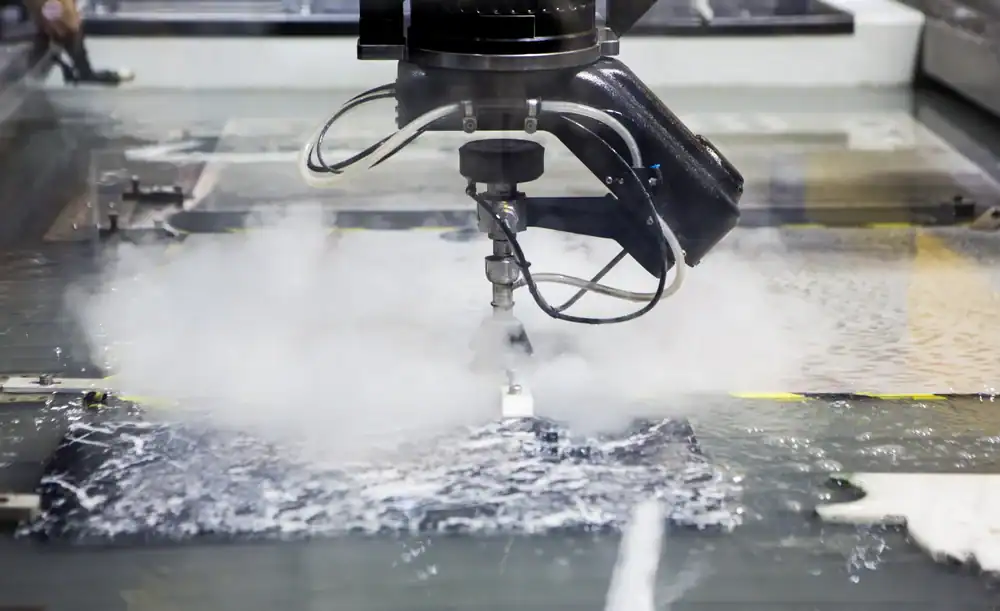
Traditional cutting methods leave you dealing with chipped edges, heat-affected zones, and material that needs extensive finishing work. That eats into your timeline and budget before installation even starts.
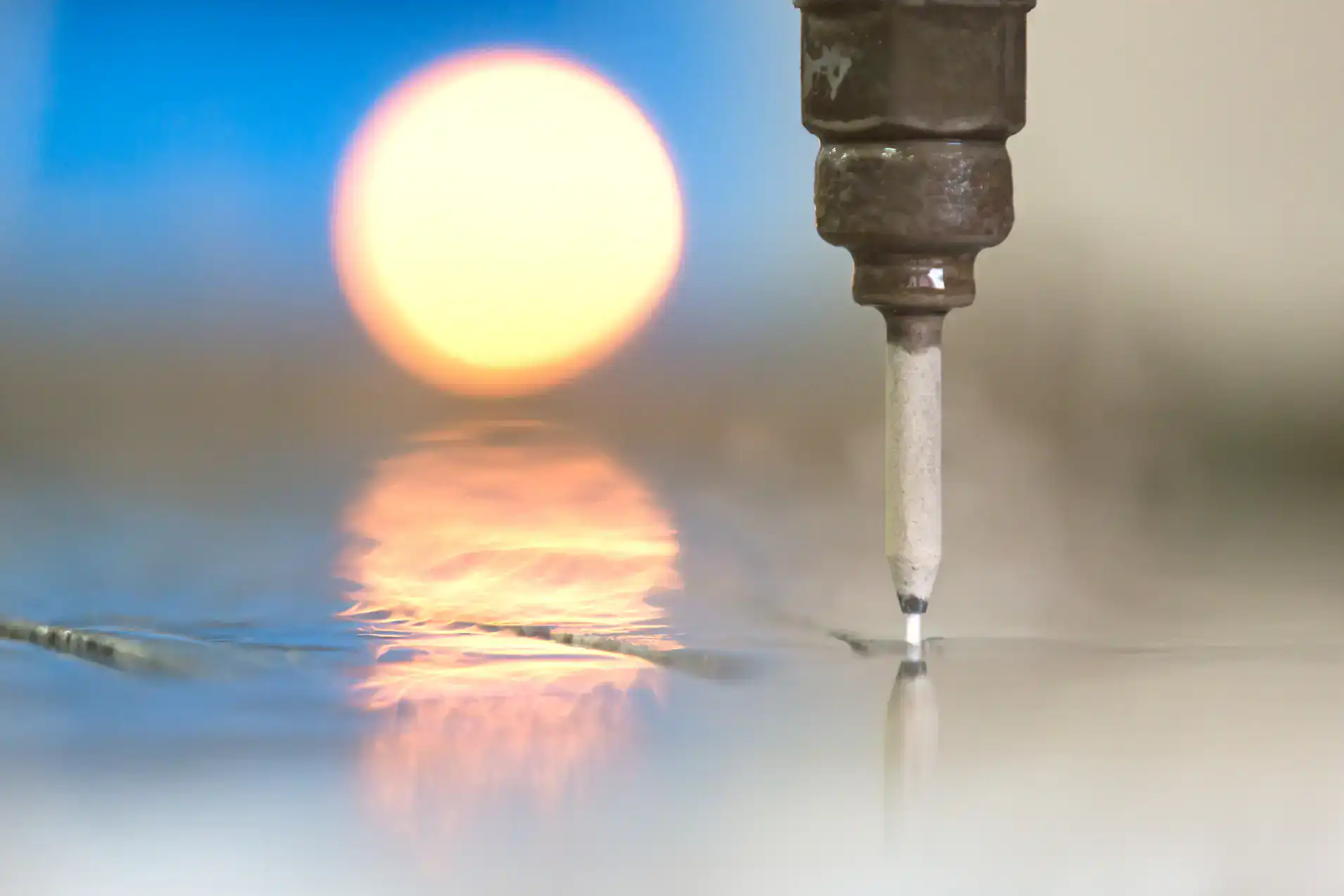
Waterjet technology cuts through marble using high-pressure water and abrasive—no blades, no heat, no structural compromise. You get smooth edges that require minimal finishing, complex geometries that would be impossible with traditional methods, and cuts accurate to ±0.005 inches.
The difference shows up in your installation. Tight grout lines. Seamless patterns. Intricate inlays that actually align. Whether you’re fabricating custom countertops, architectural panels, or decorative elements for high-end residential projects in Deer Park, NY, the precision matters when your reputation is attached to the finished product.
Material waste drops by up to 30% compared to saw cutting. Processing time for complex patterns runs about 40% faster. Those aren’t marketing claims—that’s what cold-cutting automation delivers when you’re working with expensive stone.
We serve the Deer Park, NY market with CNC waterjet cutting designed for professionals who can’t afford mistakes. Architects working on Long Island’s growing residential market need fabricators who understand design intent. Contractors managing tight schedules need turnaround times they can actually plan around.
The local construction market is active—Governor Hochul’s $23.2 billion infrastructure budget is pushing projects forward across New York, and Deer Park’s median property value of $543,500 means homeowners are investing in premium materials. That creates demand for precision fabrication that doesn’t waste expensive marble or delay project timelines.
We handle granite, marble, quartz, and other stone materials using waterjet systems operating above 40,000 PSI. You bring the design file or template, we deliver cut pieces ready for installation.
Start with your design. CAD files, templates, or detailed sketches all work. If you need consultation on optimizing cuts for material efficiency or structural integrity, that conversation happens before we touch the stone.
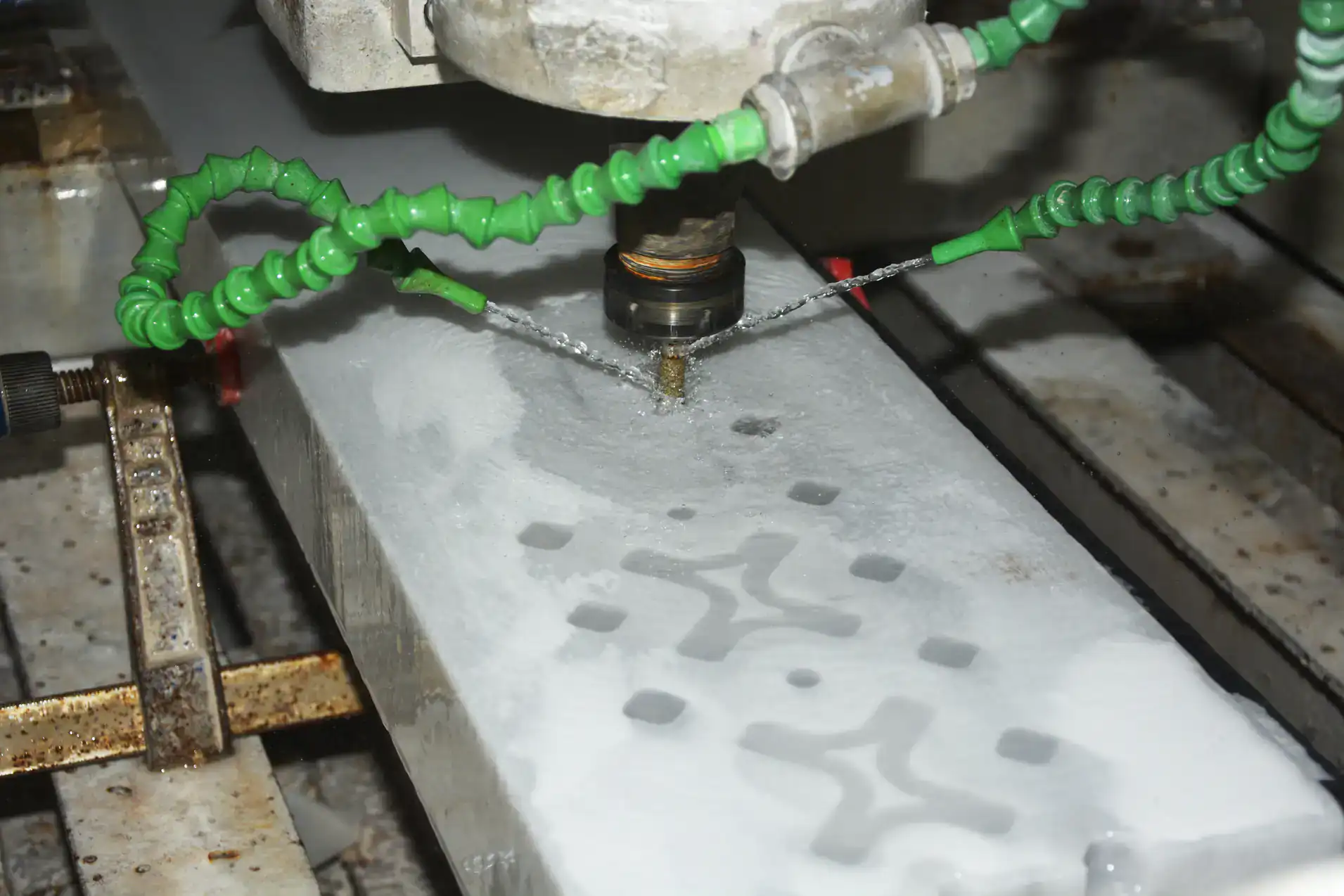
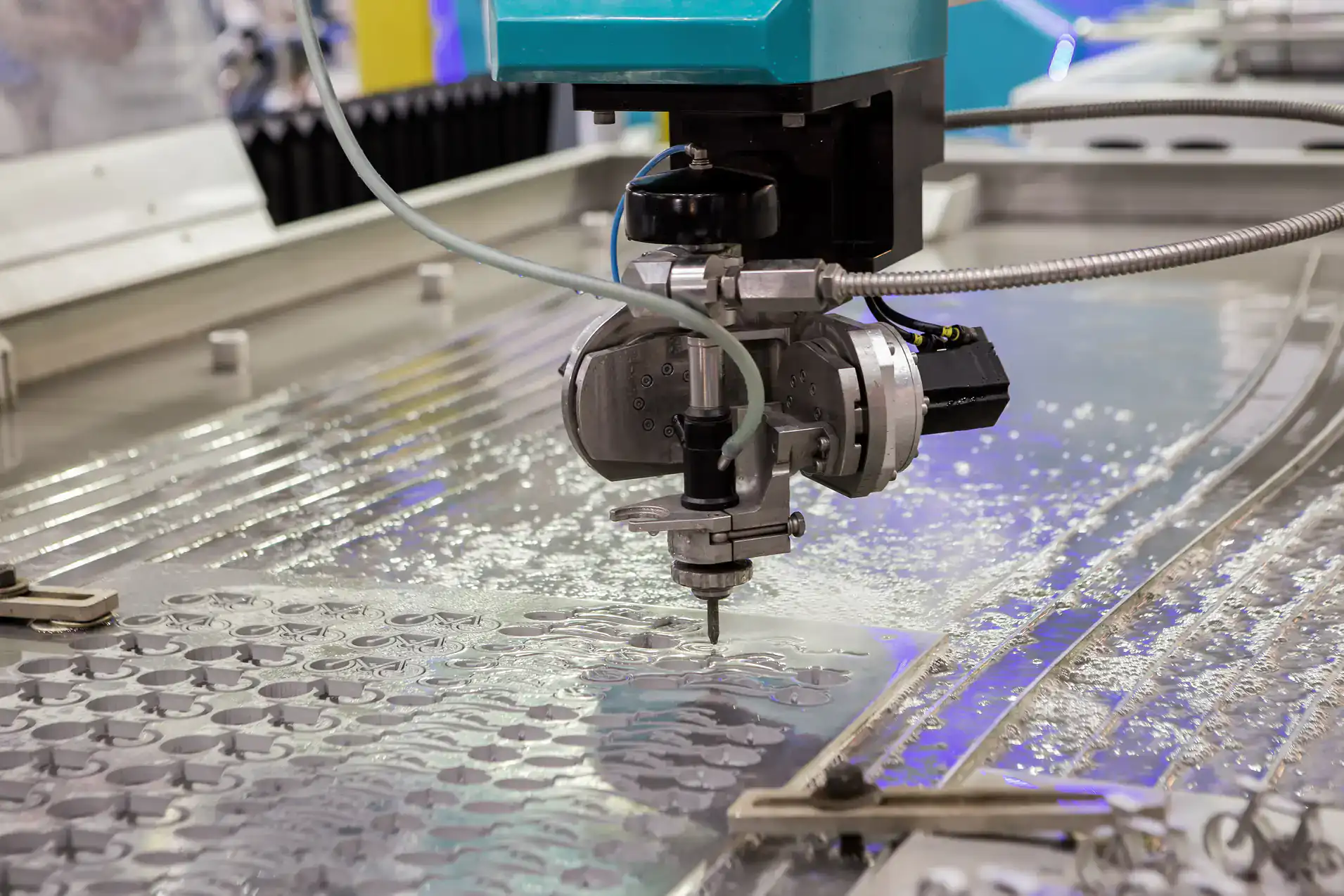
Once the design is finalized, programming the CNC system takes your specifications and translates them into precise cutting paths. The waterjet streams a mixture of water and garnet abrasive at pressures exceeding 40,000 PSI, cutting through marble without generating heat or vibration.
Complex curves, tight inside corners, intricate inlays—the system handles geometries that would require multiple setups and tools with traditional methods. Because there’s no mechanical force or thermal stress, the marble’s natural properties stay intact. No micro-cracks forming along cut lines. No discoloration from heat exposure.
After cutting, edges come off the machine smooth enough that many applications need minimal finishing. That saves you labor hours and gets pieces to the job site faster. For projects requiring multiple identical pieces, the CNC system delivers repeatable accuracy across the entire run.
Ready to get started?
Precision matters when you’re working with marble that costs hundreds per square foot. Custom marble waterjet cutting in Deer Park, NY means you’re getting accuracy within ±0.005 inches—tight enough for seamless pattern matching and clean grout lines that don’t require field adjustments.
Edge quality coming off the waterjet is substantially better than saw cutting. Less secondary finishing means less labor cost and faster turnaround. For architectural elements where exposed edges are part of the design, that quality difference is visible in the final installation.
Material consultation is part of the process. Different marble varieties have different characteristics—veining patterns, density variations, brittleness. Knowing how your specific material will respond to cutting helps optimize the design before fabrication starts. That prevents expensive surprises when you’re halfway through a project.
Long Island’s design trends are leaning into biophilic elements and natural materials. Waterjet cutting enables the intricate organic patterns and custom geometries that high-end residential and commercial projects in Deer Park demand. You’re not limited to straight cuts and simple shapes—if you can design it, waterjet can cut it.
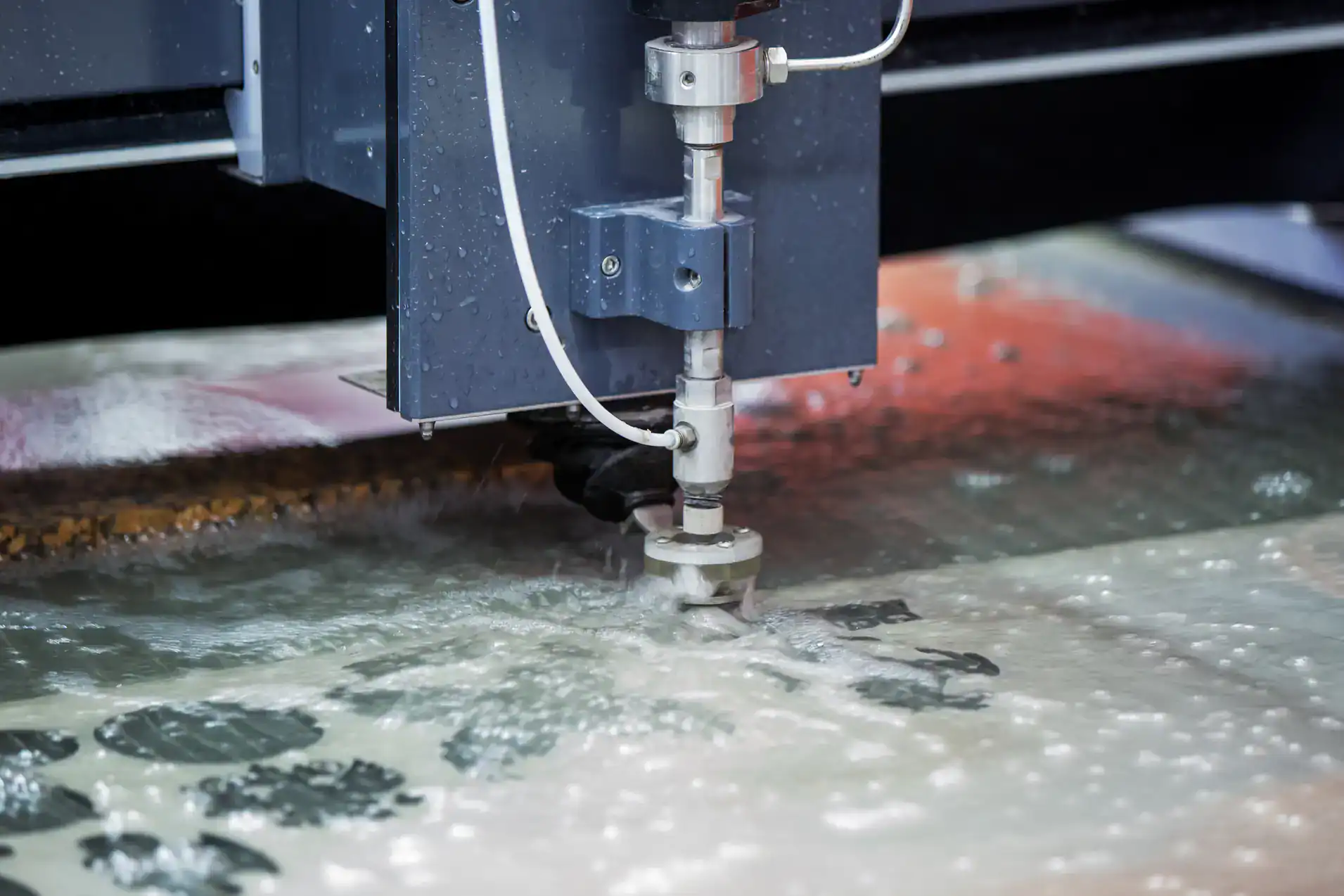
Waterjet cutting uses high-pressure water mixed with abrasive particles to cut through marble without generating heat. Traditional saw blades create friction, which produces heat that can cause micro-cracks, discoloration, and structural stress in the stone.
The edge quality difference is significant. Saw cutting typically leaves rough edges that require grinding, polishing, and finishing work. Waterjet edges come off the machine much smoother, often requiring minimal secondary processing depending on the application.
For complex shapes, saw cutting requires multiple setups, specialized blades, and skilled operators making manual adjustments. Waterjet systems follow programmed paths with CNC precision, handling curves, inside corners, and intricate patterns in a single setup. That reduces labor time and eliminates the cumulative errors that happen with multiple tool changes.
Material waste is another factor. Saw blades have width—typically 1/8 inch or more—which becomes wasted material on every cut. Waterjet streams are much narrower, around 0.03 to 0.04 inches, which means more usable material from each slab. On expensive marble, that difference adds up quickly.
Yes. Waterjet systems are CNC-controlled, which means they follow programmed cutting paths with precision that manual methods can’t match. Complex curves, tight radiuses, intricate inlays, and detailed patterns are all within capability.
The limitation isn’t the technology—it’s the design file. If you can draw it in CAD or provide detailed templates, the waterjet can cut it. Inside corners can be cut as tight as the kerf width allows, typically around 0.03 inches. That opens up design possibilities that would be impractical or impossible with traditional cutting methods.
For projects requiring pattern matching across multiple pieces, CNC automation ensures consistency. Each piece comes out identical to the programmed specifications, which matters when you’re creating installations where alignment and symmetry are critical to the design intent.
Architects working on high-end projects in Deer Park, NY are increasingly specifying waterjet-cut elements because the technology supports the intricate, organic designs that contemporary residential and commercial spaces demand. You’re not constrained by what’s easy to cut—you can specify what the design actually needs.
Turnaround depends on project complexity, material availability, and current production schedule. Simple cuts on standard materials can often be completed within a few days. Complex designs requiring detailed programming or multiple setups take longer.
The advantage of waterjet cutting is that once programming is complete, the actual cutting process is faster than traditional methods for complex shapes. Studies show waterjet can reduce processing time by up to 40% for intricate patterns compared to manual fabrication methods.
For contractors managing construction schedules in Deer Park, NY, the key is communication upfront. Providing design files early, confirming material specifications, and discussing any potential complications before fabrication starts prevent delays. Rush jobs are sometimes possible depending on shop capacity, but planning ahead gives you better control over your project timeline.
If you’re working on a phased project requiring multiple cutting runs, establishing the workflow and specifications during the first phase makes subsequent runs faster and more predictable. That consistency matters when you’re coordinating with other trades and managing client expectations.
Waterjet cutting works on virtually all marble varieties, as well as granite, quartz, limestone, and other natural and engineered stone. The process is material-agnostic—it cuts through density and hardness variations without the limitations that affect blade-based methods.
Different marble types do have different characteristics that affect fabrication. Heavily veined marble requires attention to vein orientation to prevent structural weak points. Softer marble varieties may need adjusted cutting parameters to prevent edge chipping. Brittle stone benefits from waterjet’s cold-cutting approach since there’s no mechanical stress or vibration.
Material consultation before cutting starts helps identify these variables. If you’re working with an unusual marble variety or a material with known fabrication challenges, discussing those factors upfront prevents problems during production.
For fabricators and contractors in Deer Park, NY sourcing stone from different suppliers, waterjet cutting provides consistency across material types. You’re not limited to working with only the marble varieties that cut well with traditional methods—you can specify based on aesthetics and design requirements, knowing the fabrication process can handle it.
CAD files in DXF or DWG format work best for CNC programming. These vector-based files provide the precise measurements and geometry needed for accurate cutting. PDF files with dimensions can work for simpler projects, though CAD files eliminate potential measurement interpretation errors.
If you don’t have CAD files, detailed templates or dimensioned drawings are the next option. The more specific your documentation, the more accurate the programming and final cuts will be. For complex designs, it’s worth having the conversation about design optimization before finalizing specifications.
Material specifications matter too. Knowing the exact marble type, slab dimensions, and thickness helps with programming and material handling. If there are specific vein patterns or visual elements that need to be positioned in certain ways, that information should be communicated upfront.
For architects and designers working on custom projects in Deer Park, NY, early collaboration on fabrication details prevents redesigns later. If a specified design has elements that would be structurally weak or difficult to install, identifying those issues during the design phase—not after cutting—saves time and material costs.
Waterjet cutting reduces waste through narrower kerf width and better nesting efficiency. The cutting stream is typically 0.03 to 0.04 inches wide, compared to saw blades that remove 1/8 inch or more of material with each cut. On a slab with multiple cuts, that difference compounds quickly.
CNC programming allows for optimized nesting—arranging cut pieces on the slab to maximize usable material and minimize scrap. Software can calculate the most efficient layout before cutting starts, something that’s harder to achieve with manual layout methods.
For expensive marble running $50 to $200+ per square foot, waste reduction directly impacts project costs. Industry data shows waterjet cutting can reduce overall material waste by up to 30% compared to traditional methods. On a large project, that translates to significant cost savings.
The precision also reduces waste from mistakes. When cuts are accurate within thousandths of an inch, you’re not remaking pieces that don’t fit properly. For contractors and fabricators in Deer Park, NY working on projects where budgets are tight and timelines are fixed, that reliability matters as much as the material savings.
Useful Links
Other Services we provide in Deer Park