Hear from Our Customers
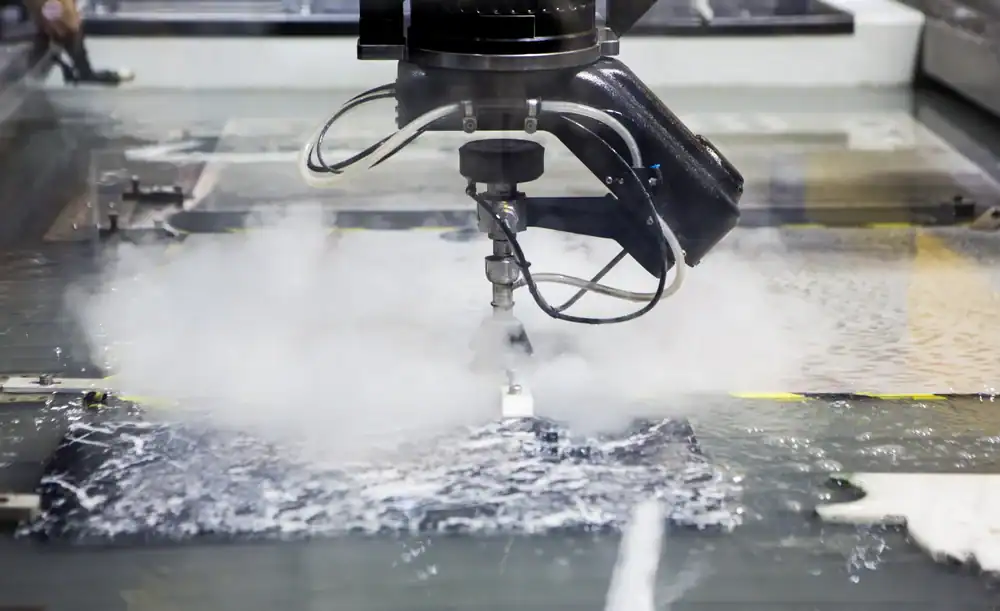
When you’re working with marble—whether it’s a custom countertop, a mosaic inlay, or architectural panels—the cutting method matters more than most people realize. Traditional saws generate heat. That heat can cause micro-fractures, discoloration, and edge damage that shows up later.
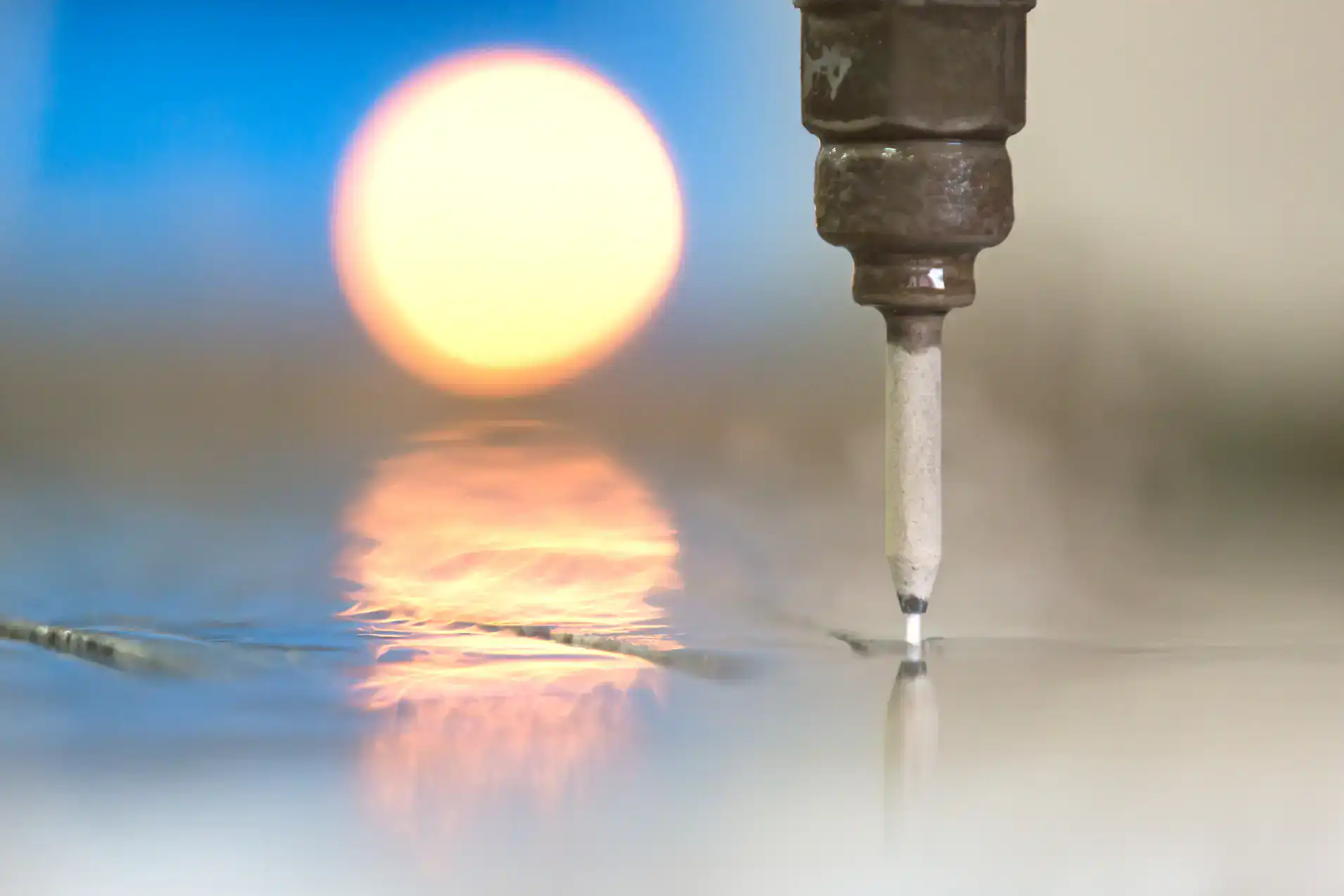
Waterjet cutting doesn’t touch your marble with anything but water and abrasive. No blades. No heat. No vibration that stresses the stone.
What that means for you is smooth, burr-free edges that often don’t need secondary polishing. It means you can execute tight radiuses, intricate patterns, and complex geometries without worrying about whether the stone will crack mid-cut. And because the cutting stream is so fine, you’re not wasting material on wide kerfs—you’re getting more usable pieces per slab, which directly impacts your bottom line if you’re a fabricator or helps you stay on budget if you’re a homeowner or designer.
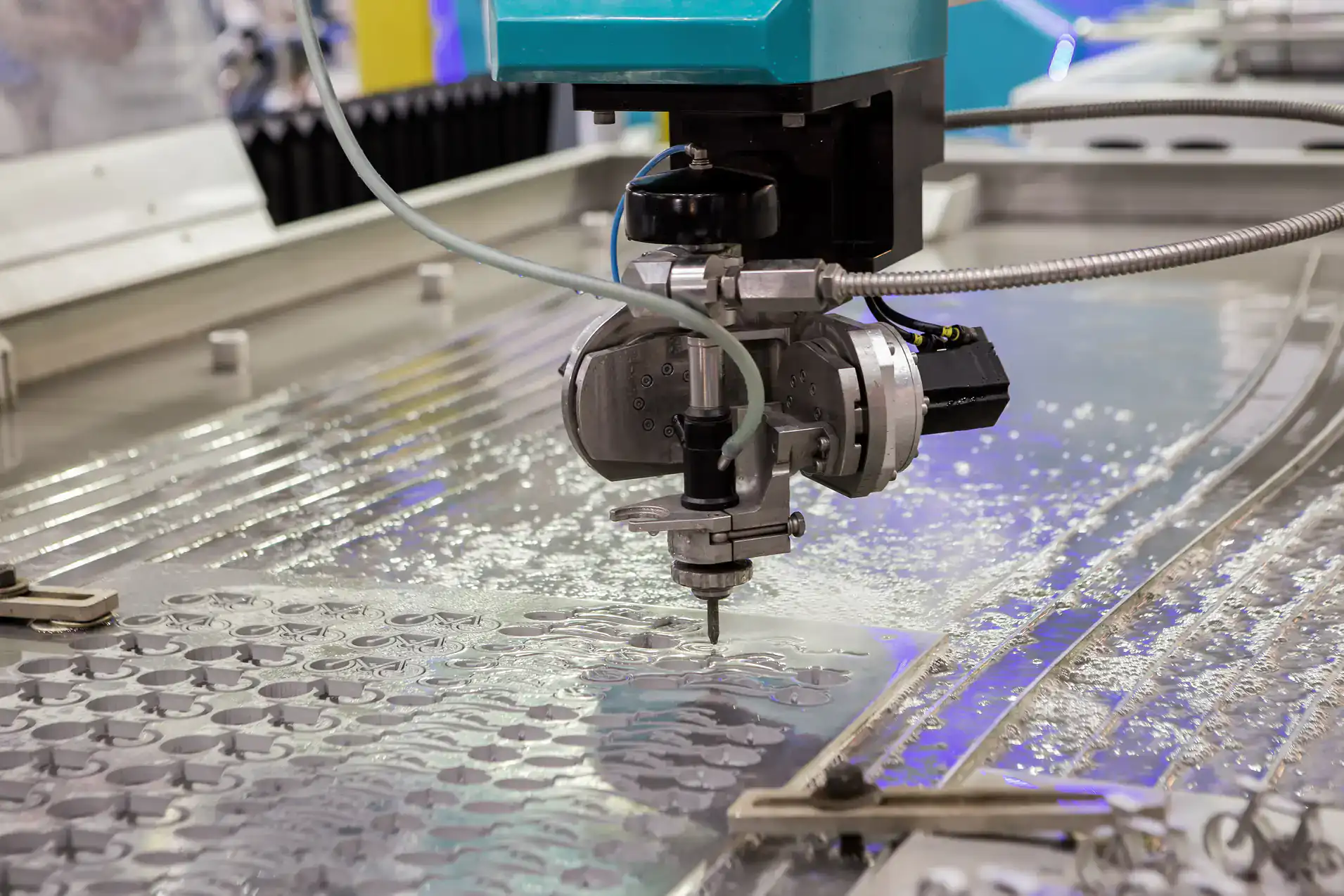
We operate out of East Islip, NY, serving architects, designers, contractors, and homeowners across Long Island. We run a Flow Mach 500 CNC system, which means your cuts are controlled directly from CAD files—no guesswork, no manual adjustments that introduce error.
Long Island has a competitive stone fabrication market. Quality matters here. So does turnaround time.
We’ve built our reputation on handling the jobs that require actual precision—the kind where a quarter-inch off ruins the entire piece. If you’re restoring a historic property in Suffolk County, fabricating custom furniture, or designing a waterfall countertop for a client in Nassau County, you need a shop that understands both the material and the technology. That’s what we do.
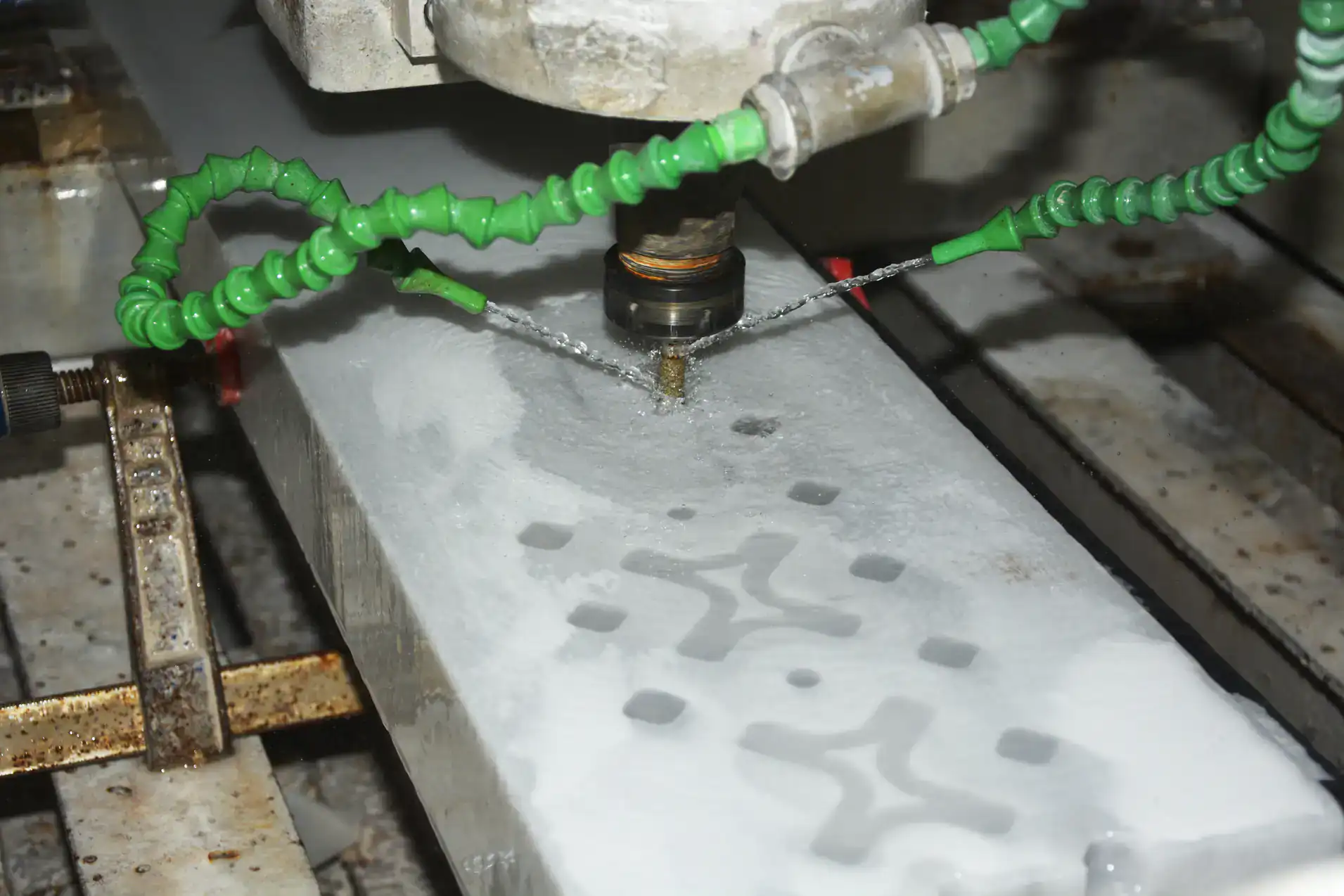
You start by sending us your design file—or we can help you create one if you’re working from a sketch or concept. Our system reads CAD files directly, so if you’ve already got drawings from your architect or designer, we can usually work with those.
Once the file is loaded, we program the CNC waterjet to follow the exact path you need. The machine uses a high-pressure stream of water mixed with garnet abrasive to cut through the marble. Because it’s a cold process, there’s no heat-affected zone. The stone doesn’t expand, contract, or discolor.
During the cut, the waterjet stream is focused on a very small area—so small that it eliminates the kind of surface stress you’d get from a spinning blade. That’s why you don’t see cracking, even on complex curves or tight inside corners. After the cut, your marble comes off the table with a smooth, satin-like edge. Depending on your application, that edge might be ready to install as-is, or it might just need a light polish instead of a full finishing process.
Ready to get started?
If you’re fabricating countertops, we can cut sink cutouts, edge profiles, and seams with tight tolerances. If you’re a designer working on a custom mosaic or medallion, we can execute the intricate patterns that make your concept stand out. Restoration projects often require matching existing profiles or cutting replacement pieces that fit historical specs—waterjet gives you that level of control.
For commercial projects in East Islip, NY and across Long Island—hotels, restaurants, retail spaces—we handle large-format panels, decorative screens, and architectural elements. The system can cut marble up to 12 inches thick, and because it’s CNC-controlled, repeatability is built in. If you need multiples of the same part, they’ll all match.
We also work with fabricators who need overflow support or don’t have waterjet capability in-house. You send us the material and the file, we cut it to spec, and you get it back ready to install. No need to invest in equipment or training—just access to the technology when you need it.
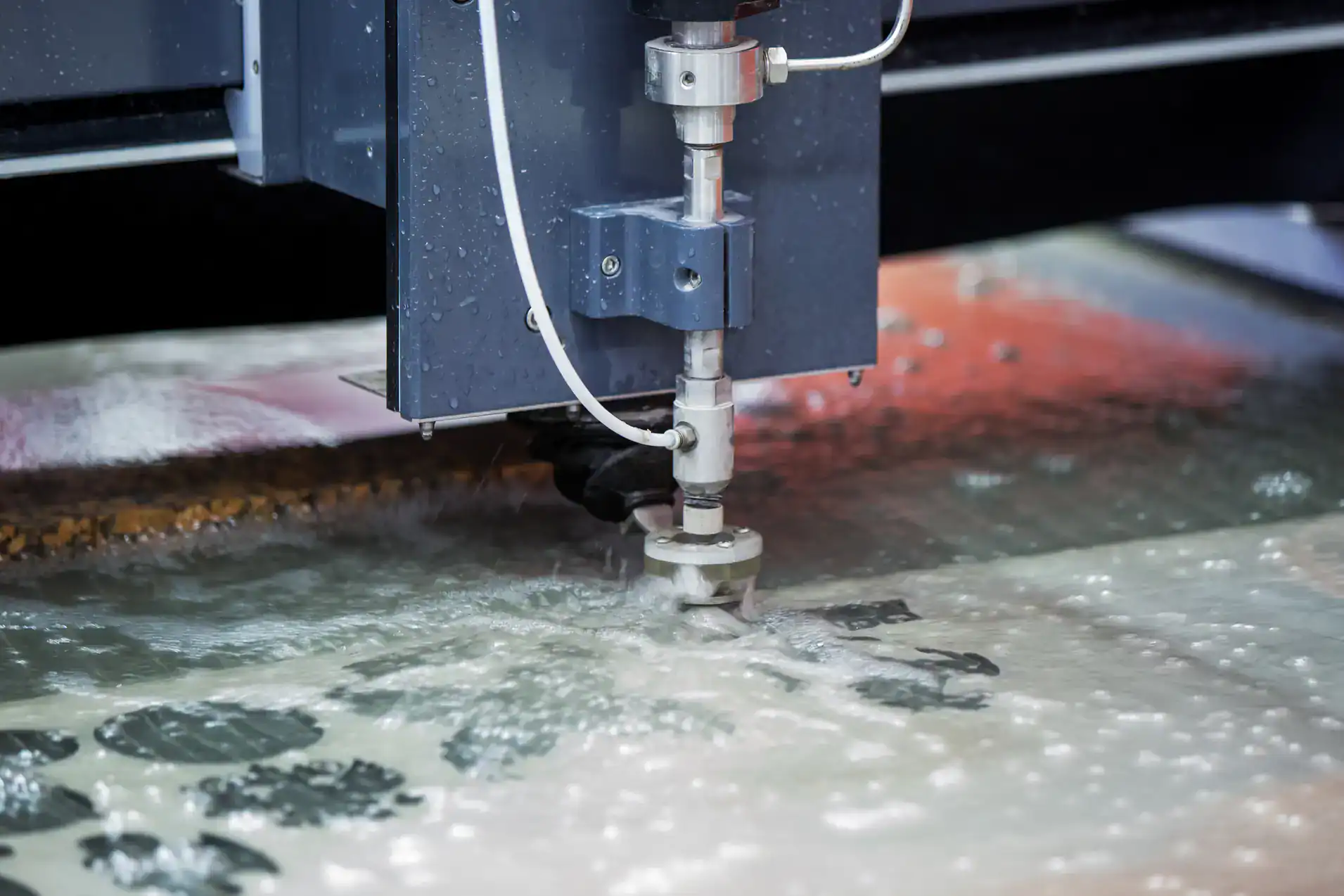
No. Waterjet cutting is a cold process, meaning there’s no heat generated during the cut. Heat is what causes most cracking and stress fractures in stone—especially with traditional saws that use spinning blades.
The waterjet stream is also highly focused, which eliminates the kind of broad surface stress that leads to cracking. Even if your marble has natural veining or inclusions, the waterjet can navigate those areas without causing the stone to split or chip.
That said, marble is a natural material, and some slabs have existing fissures or weak points that aren’t always visible. We inspect material before cutting and can often route around problem areas if we spot them. But in general, waterjet is the safest cutting method for preserving the integrity of your marble.
Our Flow Mach 500 CNC system can hold tolerances within a few thousandths of an inch. That’s tight enough for parts that need to fit together with minimal gaps—think mosaic tiles, inlay work, or countertop seams.
Because the system is computer-controlled and reads directly from CAD files, there’s no manual measuring or marking involved. You draw it, we cut it exactly as designed. That level of precision also means you can execute complex curves, sharp inside corners, and intricate patterns that would be nearly impossible with a traditional saw.
If you’re working on a project where fit and finish matter—like a waterfall countertop edge or a custom furniture piece—waterjet gives you the accuracy you need without the risk of human error.
Yes. If you can draw it in a CAD program, we can cut it. Waterjet excels at intricate work—medallions, borders, geometric patterns, custom inlays, decorative screens. The cutting stream is extremely fine, so it can navigate tight radiuses and detailed shapes without breaking or chipping the stone.
This is especially useful for designers and architects who want to create one-of-a-kind installations. Traditional cutting methods limit your design options because they can’t handle complexity without risking the material. Waterjet removes that limitation.
We’ve cut everything from simple circular cutouts to multi-piece mosaics with dozens of individual components. As long as the design is structurally sound and the marble can support it, we can execute it.
It depends on your application and your aesthetic preference. Waterjet cutting produces a smooth, satin-like edge finish that’s often acceptable for installations where the edge won’t be highly visible—like underneath a countertop overhang or along a seam.
For exposed edges—like the front of a countertop or the perimeter of a tabletop—you’ll probably want to polish the edge to match the surface finish of the marble. But here’s the key difference: waterjet edges require far less polishing than edges cut with a traditional saw. You’re not fixing damage or smoothing out rough spots. You’re just bringing the finish up to the level you want.
That saves time and labor, which saves you money. In some cases, depending on the project, you might skip polishing entirely and leave the waterjet edge as-is. It’s clean, it’s smooth, and it doesn’t have the burrs or chipping you’d see from other methods.
Very little. The waterjet stream creates a kerf—the width of the cut—that’s typically around 0.03 to 0.04 inches. Compare that to a traditional saw blade, which can be 0.125 inches or more. That difference adds up fast, especially when you’re nesting multiple parts on a single slab.
Tighter kerfs mean you can fit more pieces onto each slab, which reduces waste and lowers your material cost. For fabricators, that directly impacts profitability. For homeowners or designers working with expensive marble, it means you’re getting more usable material out of every square foot you purchase.
We also optimize the cutting layout before we start. If you’re cutting multiple parts, we’ll arrange them on the slab in a way that minimizes scrap. It’s part of the service—you shouldn’t have to pay for material you’re not using.
We work with standard CAD file formats—DXF and DWG are the most common. If you’re working with an architect or designer, they can usually export files in one of those formats. If you’ve got a PDF or a sketch, we can often convert it or redraw it in CAD for you.
The key is that the design needs to be dimensionally accurate. If you’re sending us a file, make sure it’s drawn to scale and includes all the details—curves, holes, cutouts, edge profiles. The more complete the file, the faster we can get your job into production.
If you’re not sure whether your file will work, send it over and we’ll take a look. We’d rather catch any issues up front than have to stop mid-job because something doesn’t translate correctly.
Useful Links
Other Services we provide in East Islip