Hear from Our Customers
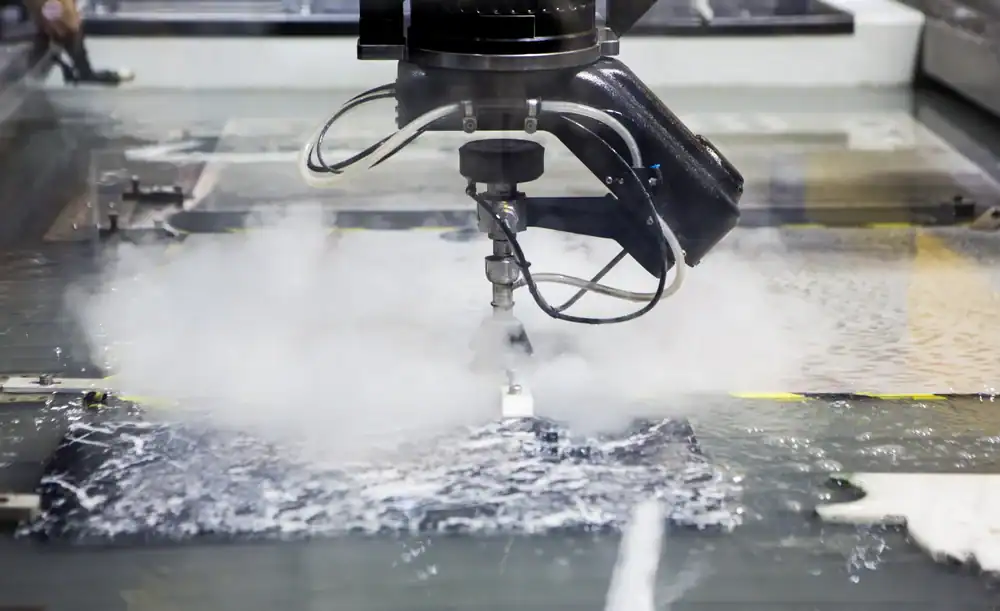
You’re not cutting marble because it’s easy. You’re doing it because the project demands it—and traditional saws leave you with heat cracks, chipped edges, and hours of grinding to fix what shouldn’t have been broken in the first place.
Waterjet cutting removes all of that. No heat means no thermal stress fractures in your stone. No blade contact means no chipping along your cut line. What you get is an edge smooth enough that most projects skip secondary polishing entirely.
The accuracy sits at ±0.005 inches, which matters when you’re fitting inlays, matching seams, or working with architects who actually check dimensions. If your design includes curves, cutouts, or patterns that would normally require multiple tool changes and setup time, waterjet handles it in one pass. You send the CAD file, and the machine follows it exactly.
This is what changes timelines. Less rework, fewer ruined pieces, and no waiting on blade replacements or wondering if the next cut will crack.
We operate a Flow Mach 500—a CNC-controlled system that reads directly from your CAD files. That means what you design is what gets cut, without interpretation errors or manual adjustments that introduce mistakes.
We work with architects, contractors, designers, and fabricators across East Meadow, NY who need marble cut right the first time. The area has a strong demand for high-end residential and commercial stonework, and the margin for error is slim when you’re dealing with natural materials that cost what marble costs.
Our process is straightforward. You bring the design and material specs, we handle the cutting, and you get parts that fit without forcing them. No upselling, no runarounds—just the cut you asked for.
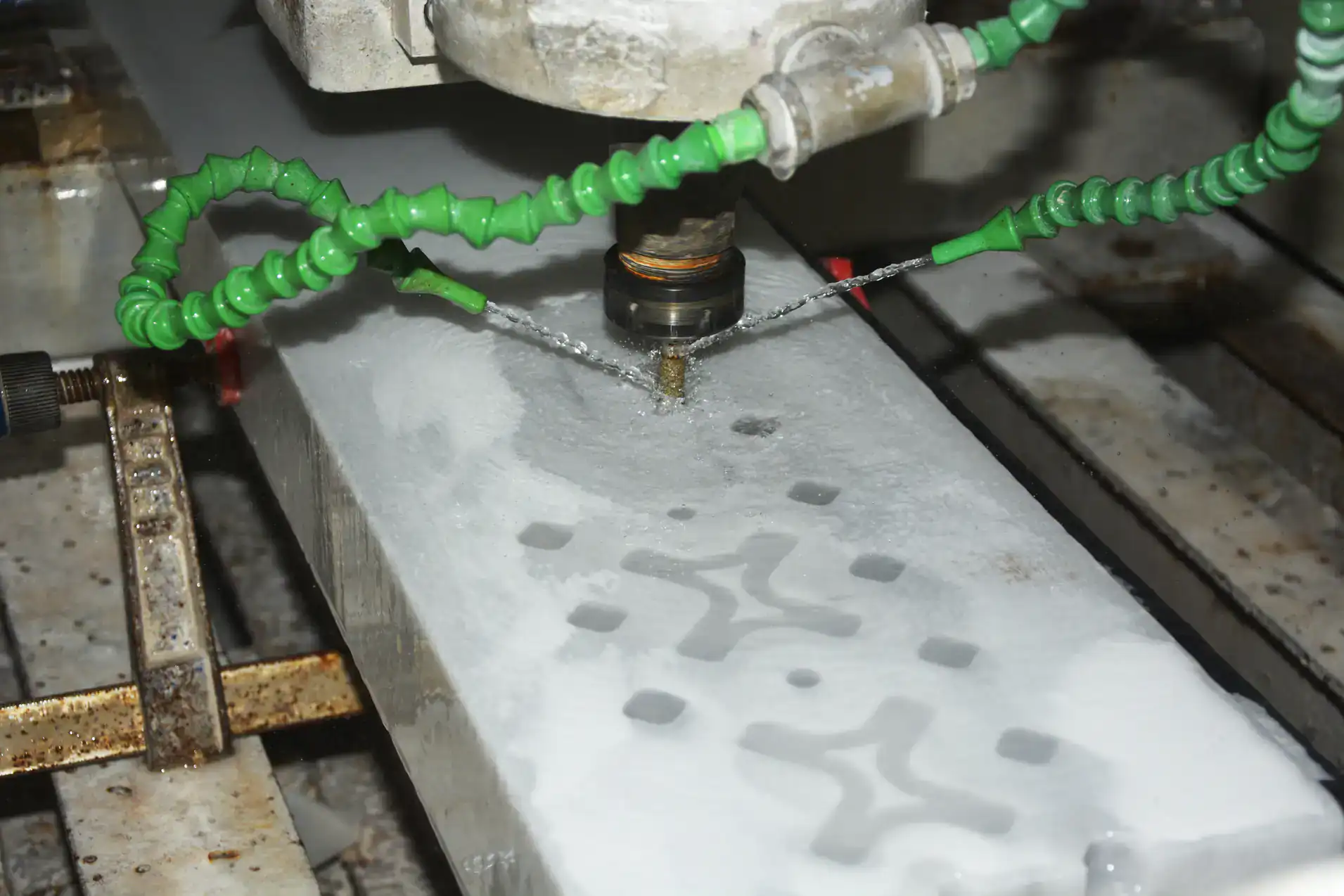
You start by sending us your design file—DXF, DWG, or most CAD formats work. If you don’t have a file yet, our design team can create one based on your specs or templates. This is where we confirm dimensions, material thickness, and any edge requirements before the machine ever turns on.
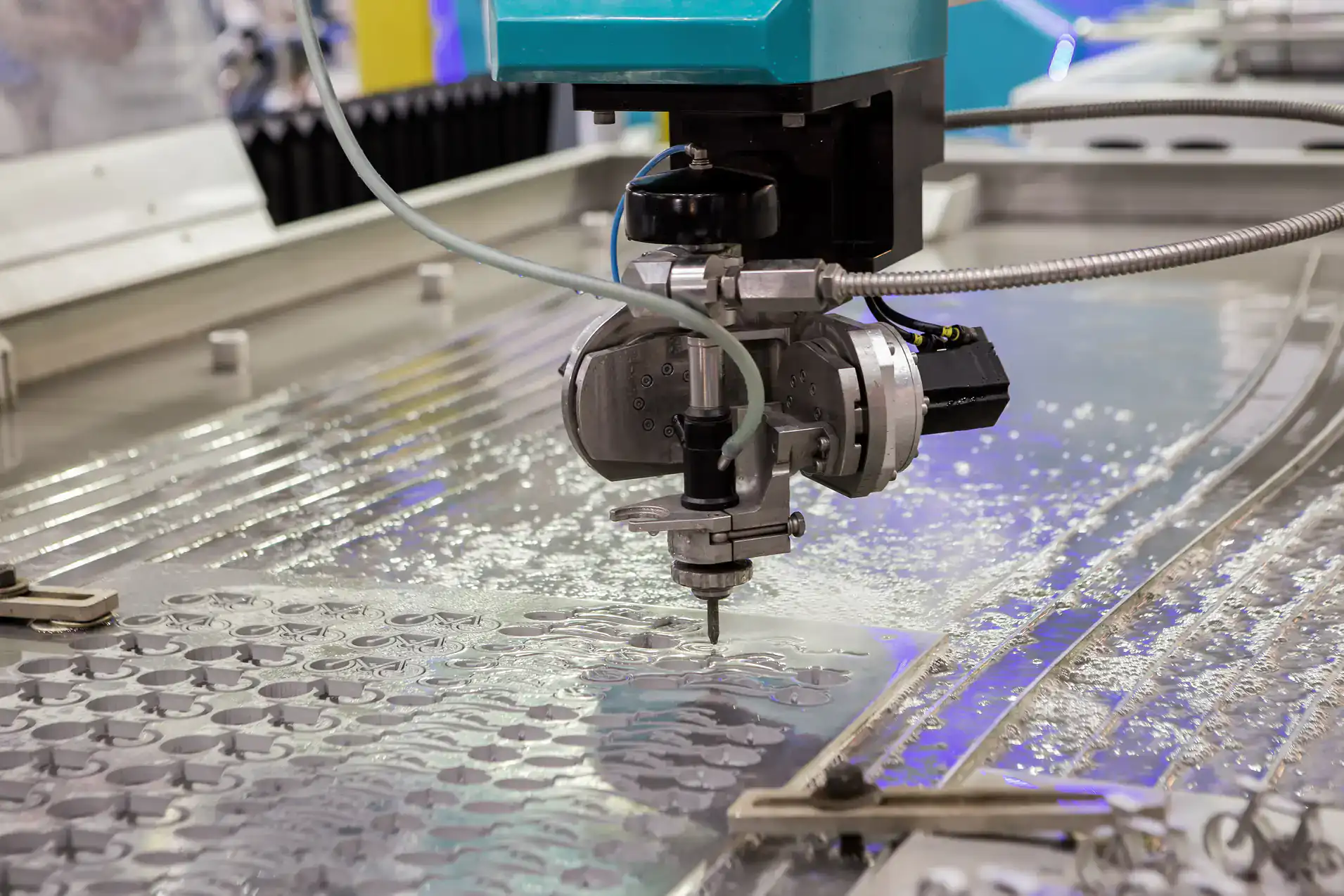
Once the file is locked in, it goes straight into the CNC system. The waterjet uses a high-pressure stream mixed with fine abrasive to cut through marble without generating heat. There’s no blade dulling, no burn marks, and no need to pause mid-cut to swap tools. The machine follows your design exactly, whether that’s a straight edge or a pattern with dozens of curves.
After cutting, the edges come out smooth—often smooth enough to use as-is, depending on your application. If you need a polished finish, you’re starting from a much better surface than you’d get from a saw. There’s no grinding down rough spots or trying to salvage an edge that chipped during the cut.
Turnaround depends on complexity and quantity, but because waterjet doesn’t require tool changes or setup adjustments between cuts, most jobs move faster than traditional methods. You’re not waiting on blade replacements or dealing with downtime from overheated equipment.
Ready to get started?
You get design consultation before any cutting starts. If your file has tolerance issues or features that won’t translate well to marble, we’ll flag them early. That saves you from ordering material twice or trying to make a flawed design work on-site.
The cutting itself handles material up to 12 inches thick, which covers most architectural and countertop applications in East Meadow, NY. Whether you’re fabricating for a high-end kitchen remodel in one of the area’s established neighborhoods or cutting custom panels for a commercial lobby, the process stays consistent. Tight nesting of parts also reduces waste, which matters when you’re working with expensive slabs.
You also get edge quality that reduces your finishing time. Many contractors in the East Meadow area are used to spending hours grinding down saw-cut edges. Waterjet edges come off the machine near-polished, and in cases where you’re installing pieces that won’t be highly visible, you can often use them as-cut.
We also handle complex geometries without charging you for multiple setups. Bevels, angles, interior cutouts, and radius corners all happen in the same program. If your project involves matching multiple pieces with tight seams—like a marble mosaic or a countertop with an undermount sink—the precision here makes installation faster and cleaner.
Yes, and that’s one of the main reasons fabricators and designers choose waterjet over saws or routers. Traditional cutting tools create vibration and pressure points that can fracture marble, especially when you’re working with thin sections or detailed patterns.
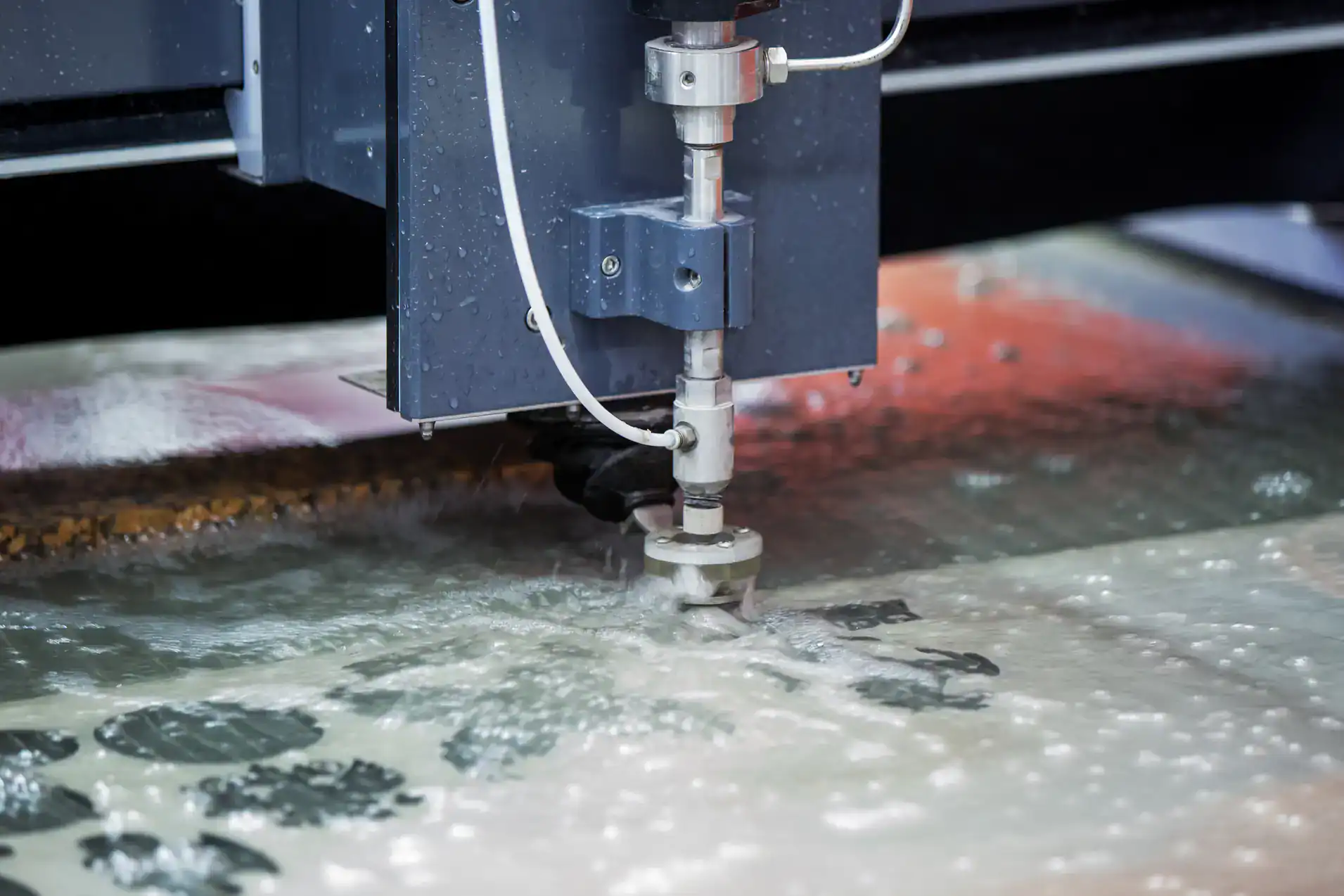
Waterjet cutting uses a focused stream of water and abrasive, so there’s no physical force pressing against the stone. The cut happens through erosion, not impact. That means even delicate inlays, tight curves, and small interior cutouts stay intact.
This matters most when you’re doing custom work—like marble medallions, decorative panels, or countertops with integrated designs. A saw would require multiple passes, increasing the chance of a crack with each one. Waterjet does it in a single pass, following your CAD file exactly. You don’t lose pieces to breakage, and you don’t spend time trying to salvage a cut that went wrong.
Not usually. The edge quality coming off a waterjet is significantly smoother than what you’d get from a saw blade. In many cases, especially for pieces that won’t be in direct sightlines or high-touch areas, the edge is usable as-cut.
The abrasive stream creates a finish that’s closer to a honed surface than a rough saw cut. If your project requires a polished edge—like a countertop or a visible panel—you’re starting from a much better baseline. That cuts your finishing time down considerably, sometimes by half or more compared to cleaning up a blade-cut edge.
For architectural installations in East Meadow, NY, where seams and edges are often scrutinized, this edge quality makes a difference. You’re not trying to blend out chatter marks or smooth over chips. The cut is clean from the start, which makes the final finish faster and more consistent across all your pieces.
No. Waterjet is a cold cutting process, which is one of its biggest advantages over saws and lasers. Traditional methods generate friction and heat, and that heat can create micro-cracks in marble that you won’t see immediately but that can cause failures later—especially in high-traffic or temperature-variable environments.
Marble is a natural stone with internal stresses and veining that react poorly to thermal shock. When you introduce heat during cutting, you’re changing the stone’s structure at a microscopic level. That weakens it. Waterjet avoids this entirely because the water keeps everything cool throughout the cut.
This is especially important if you’re working on restoration projects or high-end installations where the marble needs to last decades without cracking or discoloring. The stone retains its original strength and appearance because nothing in the cutting process alters its properties. You’re not trading precision for durability—you get both.
Waterjet cutting delivers accuracy within ±0.005 inches, which is tight enough for almost any architectural or fabrication application. If you’re fitting marble panels with gasket-tight seams, creating inlays that need to lock together without gaps, or matching pieces across a large installation, that level of precision matters.
CNC control means the machine follows your CAD file exactly, with no drift or operator error. If your design calls for a 10-inch radius curve, you get a 10-inch radius curve. If you need multiple identical pieces, they’ll match each other within those same tight tolerances.
This is critical in East Meadow, NY projects where you’re working with architects or designers who actually measure. When panels don’t fit on-site, it costs time and money to fix—or worse, you’re reordering material. Waterjet eliminates that risk because the cuts are repeatable and accurate from the first piece to the last.
Waterjet handles marble up to 12 inches thick without issue, and it can go thicker if needed. Most countertops, wall panels, and architectural elements fall well within that range, so you’re covered for the majority of residential and commercial applications.
Thickness doesn’t slow the process down the way it does with saws, where thicker material means more blade wear and slower feed rates. Waterjet maintains consistent speed and quality regardless of how thick the slab is. You’re not compromising on edge finish or accuracy just because you’re cutting through more material.
For contractors and fabricators in East Meadow, NY working on high-end projects, this means you can source the material thickness that’s right for the job without worrying whether your cutting method can handle it. Whether it’s a standard 3cm countertop or a custom 6-inch architectural panel, the process stays the same and the results stay consistent.
The per-cut cost might be slightly higher, but the total project cost is usually lower. Here’s why: waterjet produces less waste because you can nest parts tighter on the slab. You’re not losing material to wide saw kerfs or large safety margins.
You also save on labor. There’s no secondary grinding to fix rough edges or repair chips. There’s no downtime for blade changes or equipment cool-down. And you’re not scrapping pieces that cracked during cutting, which is a real cost when you’re working with marble that runs hundreds of dollars per square foot.
When you factor in material savings, reduced finishing time, and fewer ruined pieces, waterjet often comes out ahead—especially on complex or high-value projects. For East Meadow, NY jobs where the material cost is significant and the timeline is tight, that math works in your favor. You’re paying for precision that saves you money on the back end.
Useful Links
Other Services we provide in East Meadow