Hear from Our Customers
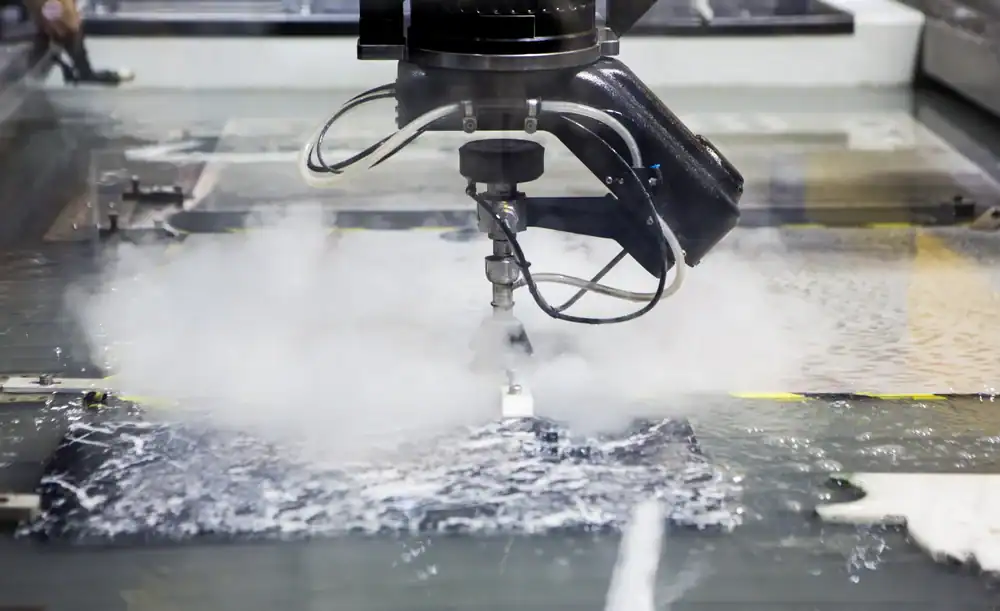
Traditional cutting methods generate heat. That heat creates micro-fractures you can’t see until the piece is installed and the damage shows. Waterjet cutting uses high-pressure water and natural abrasive to cut through marble without any thermal stress.
You get edges that are smooth enough to reduce finishing time by half. Complex patterns that would take days with a blade get completed in hours. Intricate inlays, custom medallions, and detailed borders come out exactly as designed because the system follows your CAD file with accuracy down to 0.005 inches.
The material waste drops significantly too. When you’re working with expensive marble slabs, a kerf width that’s 40% narrower than traditional methods means more usable material from every piece. That’s not just cost savings—it’s better project economics from start to finish.
We operate a Flow Mach 500 system that reads directly from your CAD drawings. You send the file, we program the machine, and the cutting head follows your specifications without interpretation errors or manual adjustments that introduce variation.
We work with architects, designers, and contractors throughout East Northport, NY who need custom marble elements that fit the first time. The Long Island market has high standards for stone work, and projects here don’t have room for re-cuts or delays caused by imprecise fabrication.
Our shop in West Islip handles everything from single custom pieces to full production runs. The process stays consistent whether you need one intricate panel or fifty identical components.
You start by sending your design file—DXF, DWG, or other CAD formats work fine. We review the file to confirm the design is optimized for waterjet cutting and check for any potential issues with the material or cut path.
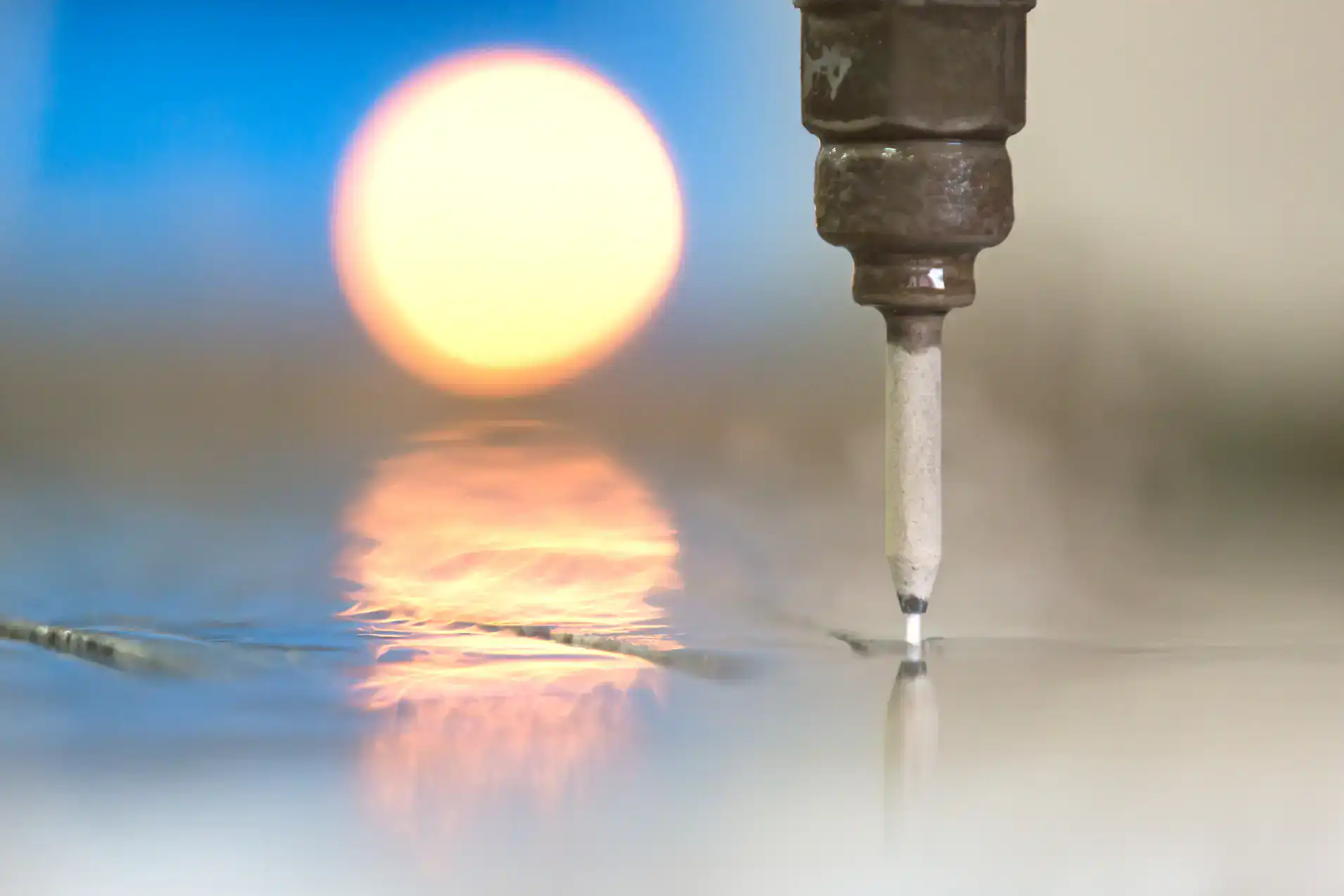
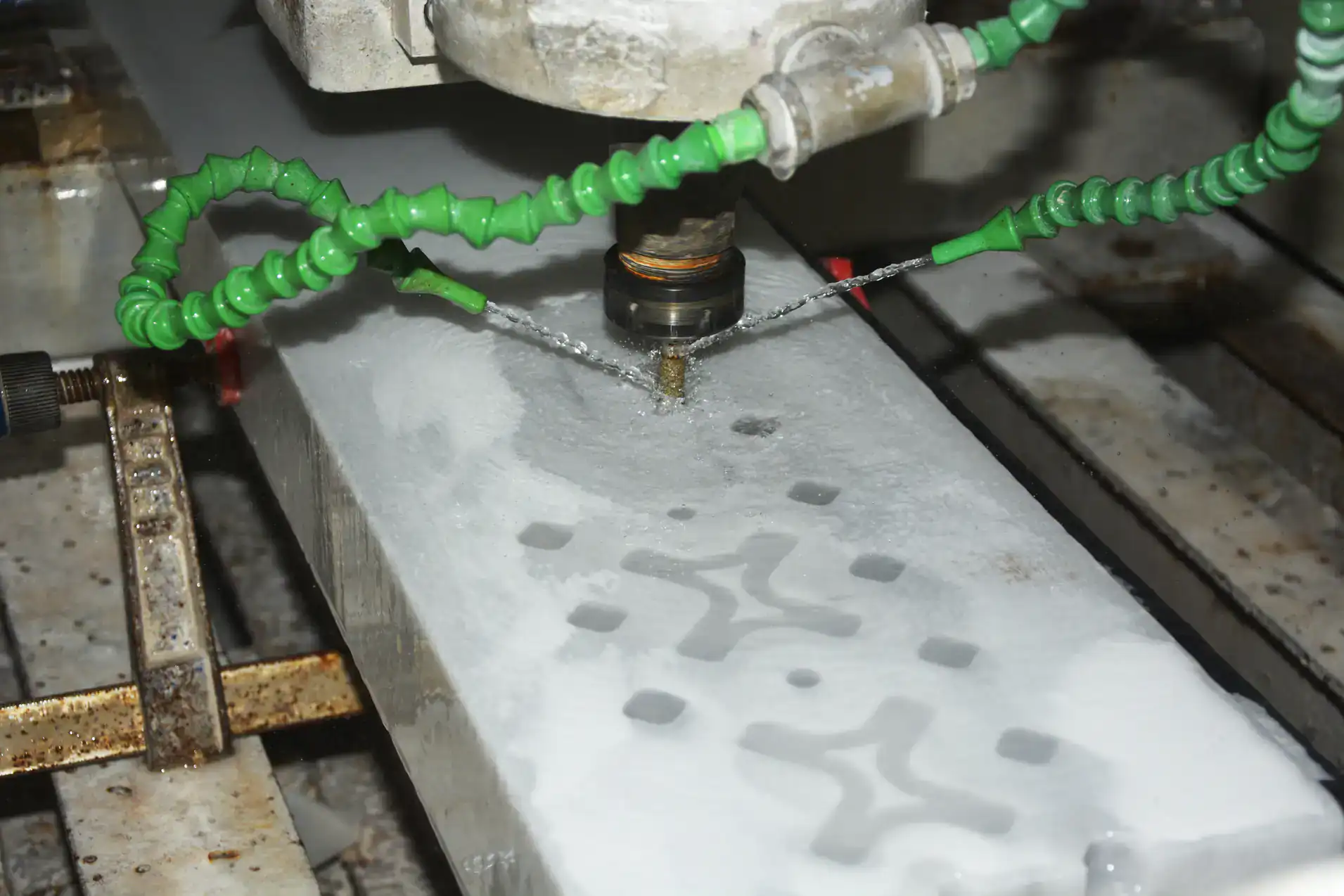
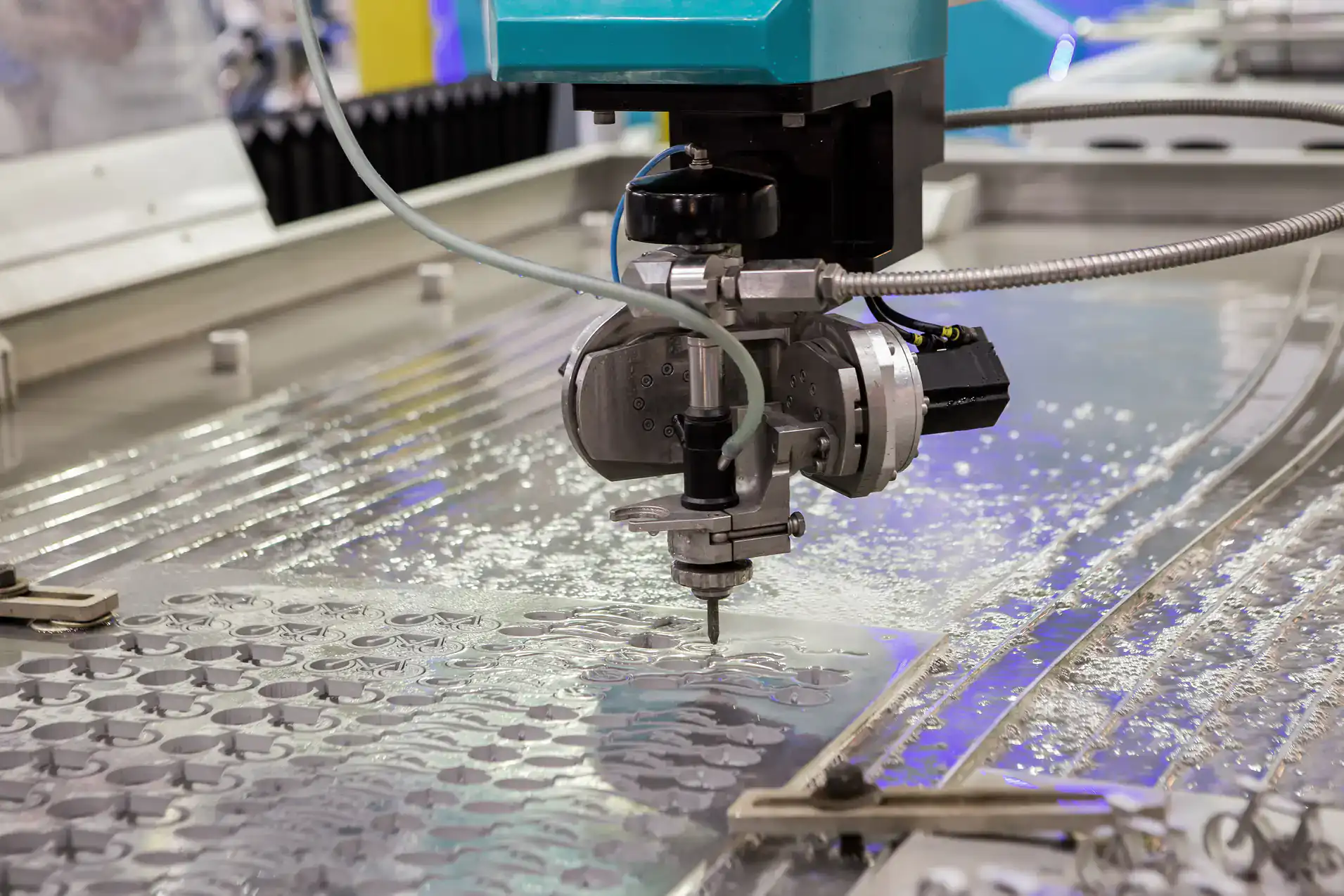
Once the file is approved, we load your marble slab onto the cutting bed and secure it. The CNC system positions the cutting head based on your design coordinates. High-pressure water mixed with garnet abrasive flows through a nozzle that’s typically 0.010 to 0.015 inches in diameter.
The cutting head moves along the programmed path at speeds that vary based on material thickness and detail complexity. Straight cuts move faster. Tight curves and intricate patterns slow down to maintain precision. The system adjusts pressure and abrasive flow automatically to keep the cut quality consistent from start to finish.
After cutting, the edges are smooth and clean. Depending on your project requirements, pieces may need minimal finishing or can go straight to installation.
Ready to get started?
The service covers design consultation, file preparation, material handling, and precision cutting. If your design needs adjustments for optimal cutting or structural integrity, we’ll flag those issues before we start.
East Northport has a strong residential and commercial construction market with projects that demand high-end finishes. Marble installations here often involve custom backsplashes, fireplace surrounds, flooring medallions, and architectural accents that require exact dimensions and clean edges. Waterjet cutting handles all of these applications without the limitations you’d face with blade-based methods.
Material thickness capacity goes up to 120mm for standard cuts. Thicker pieces require pressure adjustments and slower cutting speeds, but the system handles them without issue. You can specify edge quality requirements—some projects need polished edges, others work fine with the as-cut finish that comes off the machine.
We also provide material consultation if you’re selecting marble for a specific application. Not all marble varieties cut the same way, and some have characteristics that affect how they respond to waterjet cutting.
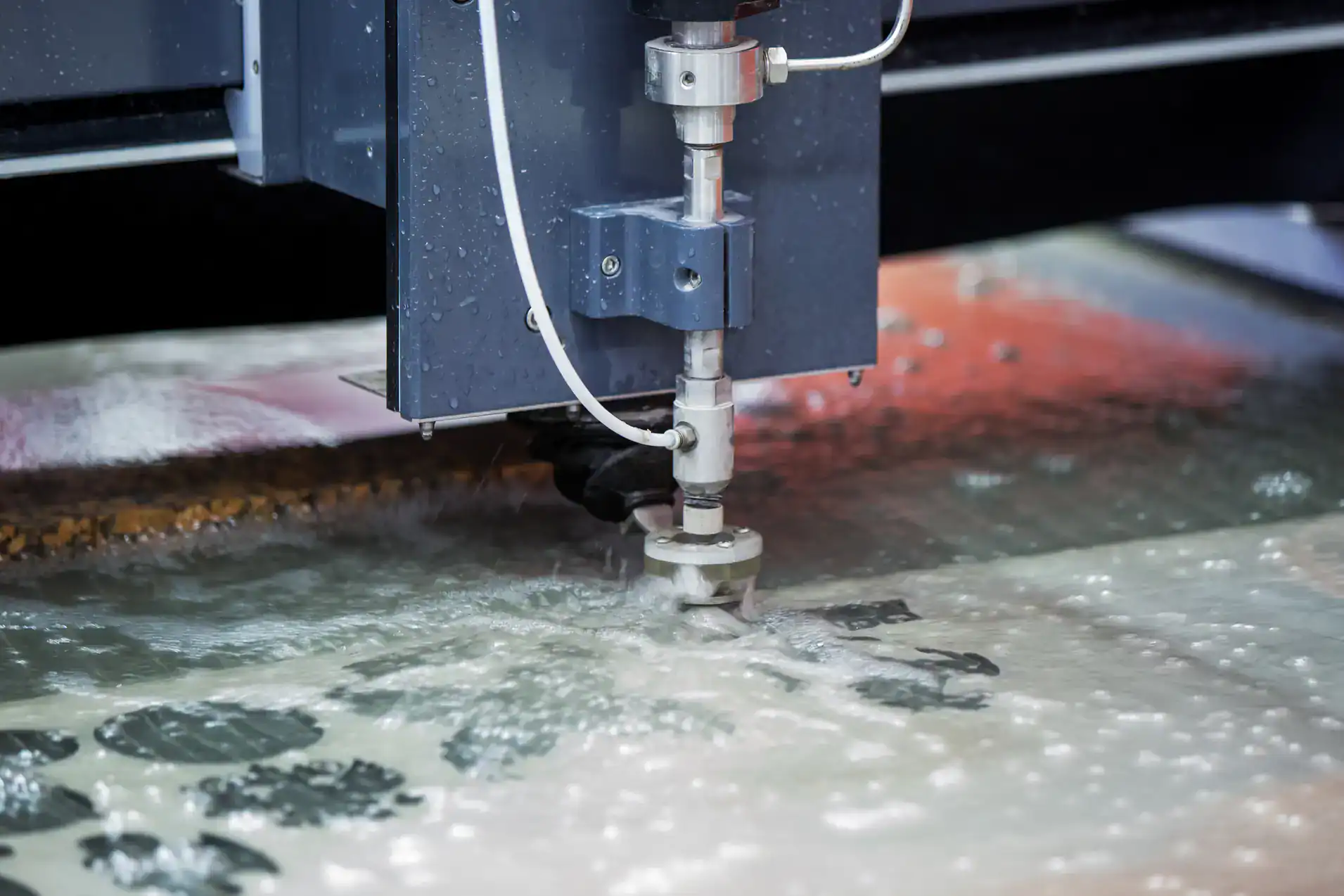
The cutting process uses cold water and abrasive instead of heat-generating tools. Traditional saws create friction that heats the material and causes thermal expansion. When marble heats unevenly, internal stresses build up and create micro-fractures that can propagate into visible cracks later.
Waterjet cutting eliminates that thermal stress entirely. The water stays cold throughout the process, so the marble never experiences temperature changes that would compromise its structure. The abrasive does the actual cutting by eroding the material in a controlled stream.
The other advantage is how the system handles delicate areas. When cutting near edges or creating narrow sections, blade-based methods can create vibration that chips the material. Waterjet cutting applies force in a narrow, focused stream without vibration, so even thin sections and sharp corners come out intact.
The Flow Mach 500 system maintains tolerances within ±0.005 inches under normal cutting conditions. That’s five thousandths of an inch—tight enough for pieces that need to fit together with minimal gaps or for inlay work where precision determines whether the design looks professional or sloppy.
Accuracy depends partly on material characteristics. Marble with consistent density cuts more predictably than material with significant variation in hardness. Thicker slabs require slower cutting speeds to maintain precision, but the system compensates automatically based on programmed parameters.
The CNC control is what makes this level of accuracy repeatable. Once the design is programmed, every piece comes out identical. If you need fifty matching components, the fiftieth one will match the first one within those same tolerances. That consistency is difficult to achieve with manual cutting methods where operator variation affects results.
Waterjet cutting typically reduces waste by 25-30% compared to blade-based methods. The difference comes from kerf width—the amount of material removed during cutting. A waterjet stream is significantly narrower than a saw blade, so less material gets turned into dust with each cut.
For expensive marble slabs, that difference adds up quickly. If you’re cutting multiple pieces from a single slab, the narrower kerf means you can fit more components into the available material. Complex nesting of parts becomes more efficient because you’re not losing as much material between pieces.
The precision also reduces waste from errors. When cuts come out wrong with traditional methods, you’ve lost material and time. Waterjet cutting follows the programmed path exactly, so mistakes from operator error or tool drift don’t happen. The first cut is accurate, which means you’re not re-cutting pieces or scrapping material that didn’t come out right.
Standard waterjet systems handle marble up to 120mm thick, which covers most countertop applications. The typical countertop slab runs between 20mm and 30mm, well within the system’s capacity. Thicker pieces just require slower cutting speeds and adjusted abrasive flow rates.
The advantage for countertop fabrication is how cleanly the system cuts sink openings, edge profiles, and corner details. Traditional methods often require multiple tools and finishing steps to get edges smooth. Waterjet cutting produces edges that need minimal finishing, which speeds up the fabrication process.
For complex countertop designs with integrated drainboards, decorative inlays, or custom edge treatments, waterjet cutting handles all of those details in a single setup. You’re not moving the slab between different tools or risking damage from multiple handling steps. The cutting head follows the complete design path and produces a finished piece ready for final edge treatment and installation.
Waterjet cutting works with essentially all marble varieties, but some characteristics affect cutting speed and edge quality. Dense, consistent marble like Carrara or Calacatta cuts cleanly at standard speeds. Marble with significant veining or variation in density may require speed adjustments to prevent edge chipping along vein boundaries.
Softer marble varieties cut faster but may produce slightly rougher edges that need more finishing. Harder marble takes longer to cut but typically produces smoother as-cut edges. The system handles both types—it’s just a matter of adjusting parameters for optimal results with each material.
The real limitation isn’t the marble type but the slab condition. Marble with existing cracks or structural weaknesses can fail during cutting regardless of the method used. We inspect material before cutting and flag any issues that might cause problems. If a slab has hidden fractures or weak areas, it’s better to know before we start cutting rather than discovering the problem mid-process.
Cutting time depends on design complexity, material thickness, and total cut length. A simple rectangular piece with straight cuts might take fifteen minutes. An intricate medallion with detailed curves and patterns could take several hours. The system doesn’t rush—it maintains precision throughout the entire cut path.
For project planning purposes, most custom marble pieces take between one and four hours of actual cutting time. That doesn’t include setup, material handling, or any finishing work. Complex architectural elements with multiple components may require a full day or more depending on the scope.
The speed advantage shows up in overall project timelines. Traditional cutting methods might produce individual cuts faster, but they require more setup changes, tool switches, and finishing steps. Waterjet cutting handles complex designs in a single setup with minimal post-processing, so the total time from design file to finished piece is often shorter even though the cutting itself takes longer.
Useful Links
Other Services we provide in East Northport