Hear from Our Customers
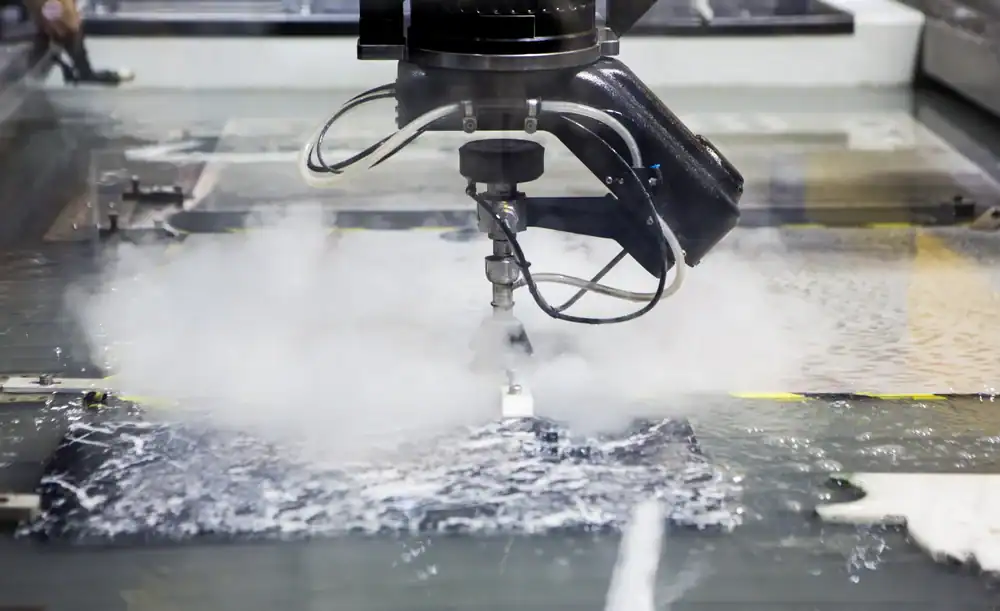
Your marble arrives exactly as designed. No heat means no discoloration, no micro-cracks, no warping. The cuts hold tolerances within five-thousandths of an inch, so inlays fit the first time and edges align without gaps.
You also keep more of the material you paid for. Traditional saws generate wider cuts and more waste. Waterjet cutting uses a narrow stream that maximizes usable stone, which matters when you’re working with expensive marble slabs.
The process handles complexity that would break saw blades or require multiple setups. Curves, angles, medallions, intricate borders—waterjet cuts them in one pass from your CAD file. That means faster turnaround and fewer chances for error between design and installation.
We operate in a market where details matter. Great Neck homeowners invest in quality—the median home here was built in 1952, and renovations aren’t about cutting corners. They’re about getting it right.
We run CNC-controlled waterjet systems that translate your design files into physical cuts without interpretation errors. You’re not dealing with hand-guided tools or operators eyeballing measurements. The machine follows the program, and the program follows your specifications.
That level of control matters when you’re installing custom flooring in a historic home or fabricating a marble feature wall where every piece needs to align. We’ve handled projects across residential renovations, commercial installations, and architectural restoration work throughout Great Neck and the surrounding area.
You start by sending us your design. CAD files work best, but we can work from detailed drawings or templates. We review dimensions, material type, and any special requirements like edge finishing or through-holes.
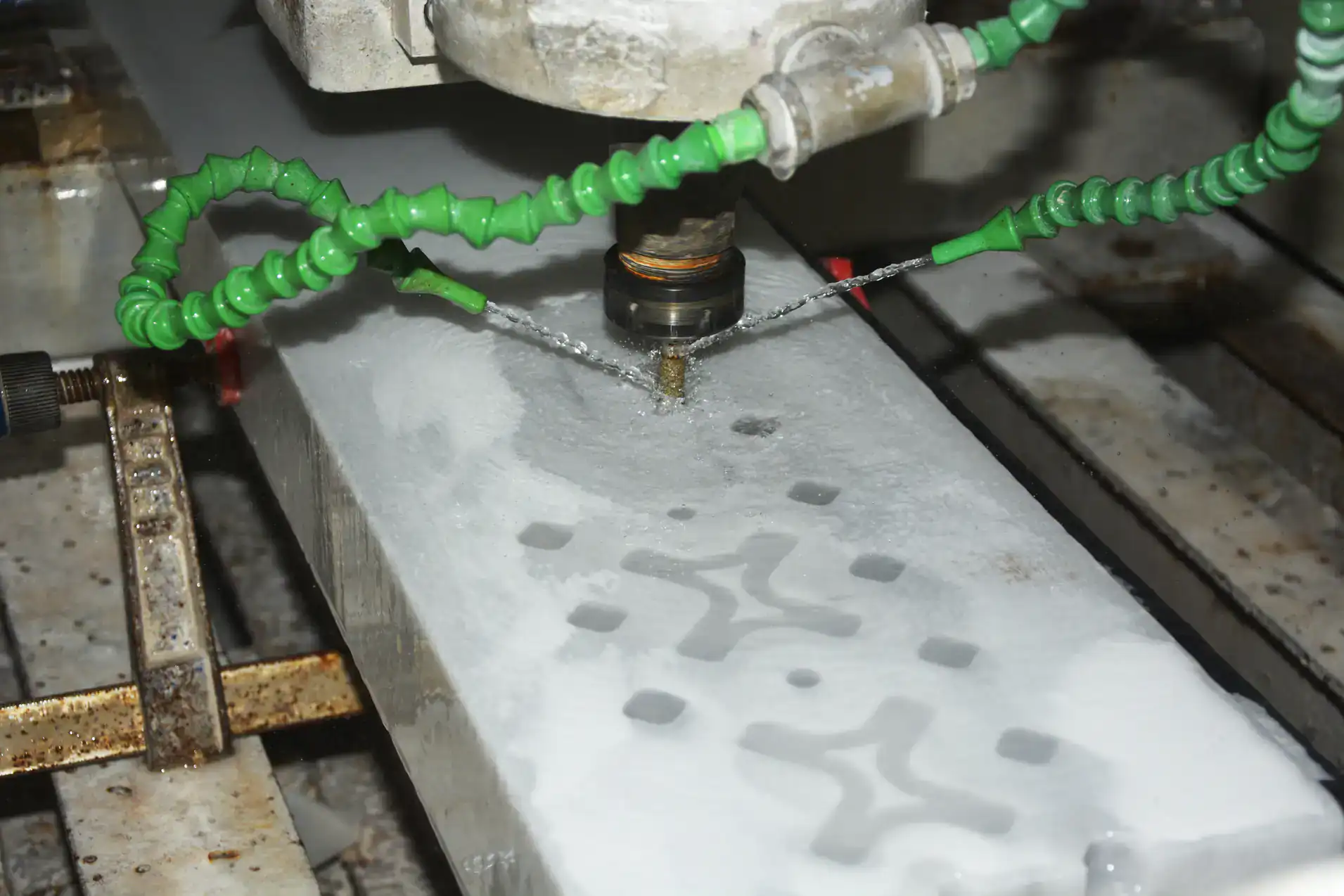
Once the design is confirmed, we program the waterjet system. The CNC controller maps out the cutting path, optimizes material usage, and sets pressure parameters based on your marble’s density and thickness. Then we secure your slab and start the cut.
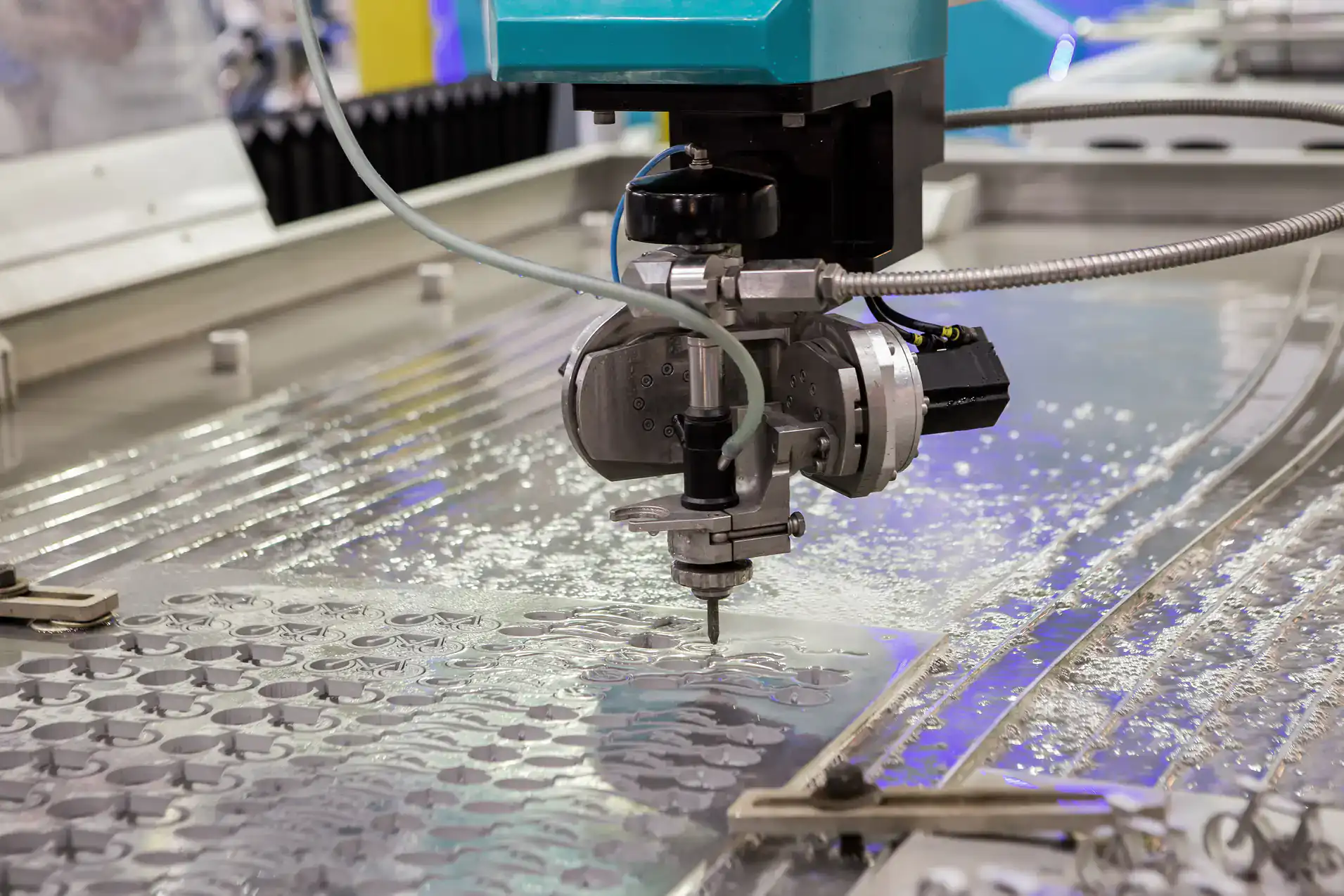
The waterjet stream—a mix of water and fine abrasive garnet—cuts through the marble without applying heat or mechanical force that could fracture the stone. For complex patterns, the system makes multiple passes, adjusting depth and speed automatically. When cutting finishes, your pieces come off the table ready for installation or final edge treatment, depending on your specs.
You get parts that match your design file exactly. No surprises during installation, no field adjustments because something’s off by an eighth of an inch.
Ready to get started?
You get design consultation before cutting starts. We review your files, flag potential issues, and suggest optimizations that could save material or improve structural integrity. That conversation happens before we touch your marble.
The cutting itself uses computer-controlled precision. Every curve, angle, and straight edge gets cut to tolerances that traditional methods can’t match. We handle marble in various thicknesses, from delicate 3/8-inch tiles to substantial 2-inch slabs for countertops and architectural features.
Great Neck’s housing stock includes plenty of pre-war homes and mid-century construction where original details matter. When you’re matching existing marble or creating custom inlays for a renovation, you need cuts that fit without forcing or shimming. Waterjet accuracy makes that possible.
We also handle production runs for commercial projects—multiple identical pieces cut from the same program file, ensuring consistency across an entire installation. Whether you’re doing one custom piece or fifty matching panels, the process scales without losing precision.
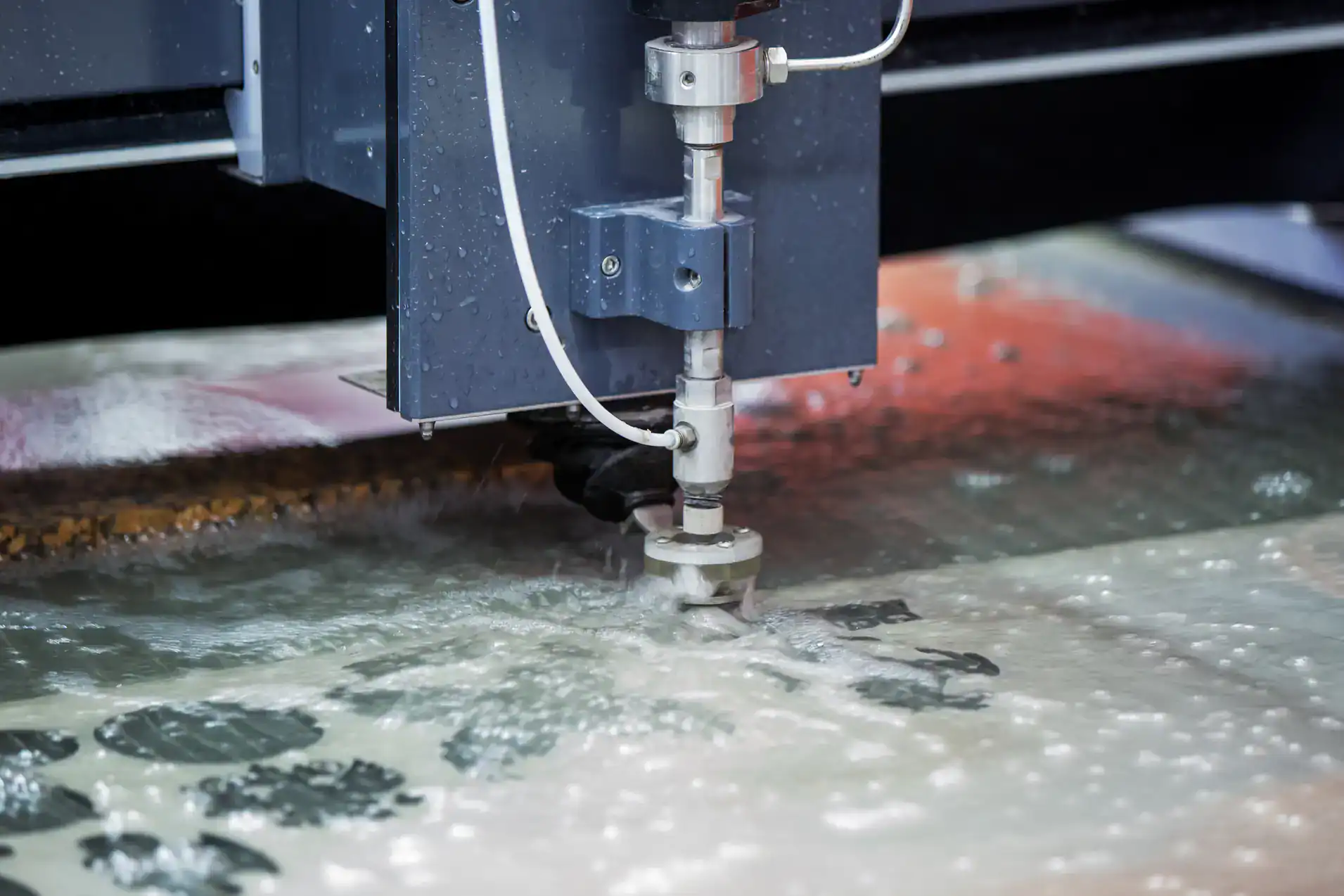
Waterjet cutting doesn’t generate heat, which means your marble won’t develop stress fractures or discoloration along the cut line. Traditional saws create friction, and that friction produces heat that can damage the stone’s crystalline structure—especially problematic with veined or layered marble varieties.
The cutting width also differs significantly. Saw blades remove material as they cut, creating a kerf that wastes stone and limits how closely you can nest multiple pieces. Waterjet streams are narrow, typically under a sixteenth of an inch, so you lose less material and can fit more pieces from a single slab.
Accuracy is the bigger difference. Saws require operator skill and steady hands. Waterjet systems follow programmed paths with CNC precision, holding tolerances that manual cutting can’t achieve. When you’re creating inlays or matching pieces that need to align perfectly, that precision eliminates the gaps and misalignments that come from cumulative small errors in hand-guided cuts.
Yes, and that’s where waterjet technology really separates from traditional methods. The cutting stream can navigate curves with radii as tight as the nozzle diameter allows—typically down to about an eighth of an inch for standard setups. That means you can cut scrollwork, medallions, and complex geometric patterns that would require multiple tool changes or specialized bits with conventional equipment.
The process also handles internal cutouts without edge access. Need a marble panel with decorative openings in the center? Waterjet pierces through and cuts the interior shape without needing to start from an edge. Traditional saws would require drilling starter holes and careful maneuvering that increases the risk of cracking.
For projects in Great Neck where architectural details define the aesthetic—think Art Deco inlays or custom backsplashes with intricate borders—waterjet cutting translates your design directly into the stone. What you draw is what you get, without simplifying curves or compromising details because the cutting method can’t handle them.
We handle marble from thin 3/8-inch tiles up to thick 6-inch architectural slabs. The process adjusts pressure, abrasive flow, and cutting speed based on material thickness, so thicker stone just takes longer—it doesn’t require different equipment or compromise quality.
Thin marble presents challenges for traditional cutting because it’s fragile and prone to cracking under mechanical stress. Waterjet cutting applies no physical force to the stone, just erosion from the water stream, so delicate pieces stay intact. That matters when you’re working with expensive imported marble where breaking a piece means reordering and waiting for replacement material.
Thick slabs need consistent cutting depth to avoid tapered edges or incomplete cuts. CNC control maintains steady pressure and speed throughout the cut, so a 2-inch countertop edge comes out perpendicular and smooth from top to bottom. You’re not dealing with blade deflection or operator fatigue that can affect quality on long cuts through dense stone.
The edge quality depends on cutting speed and abrasive flow rate. For most applications, waterjet-cut marble comes off the table with edges smooth enough for installation without additional grinding or polishing. You’ll see a slightly textured surface—not polished, but clean and uniform.
If your project requires polished edges—like exposed countertop sides or decorative panels where the edge is visible—that finishing happens after cutting. But the waterjet edge provides a better starting point than saw-cut marble, which often has chatter marks, burn spots, or uneven surfaces from blade deflection. Less cleanup means less labor and faster turnaround.
For applications where edges won’t be visible—tile installations with grout joints, inlays that sit flush with surrounding material, or pieces that butt against other surfaces—waterjet edges often work as-cut. That eliminates a finishing step entirely and reduces your project timeline. When you’re coordinating contractors and trying to keep a renovation on schedule, cutting out unnecessary steps matters.
Waterjet cutting typically reduces waste by 20-30% compared to traditional saw cutting, depending on your design complexity and how efficiently pieces can be nested on the slab. The narrow cutting stream removes minimal material, and CNC programming optimizes part placement to maximize usable stone from each slab.
For custom projects using premium marble—where material costs can run hundreds of dollars per square foot—that waste reduction translates directly to cost savings. You’re paying for less stone to get the same finished pieces, and you’re not throwing away expensive material that got turned into sawdust.
The process also reduces breakage waste. Traditional cutting methods apply mechanical stress that can fracture marble, especially near edges or in thin sections. Waterjet’s cold-cutting process eliminates that stress, so pieces that would crack under a saw blade come out intact. For projects in Great Neck where you’re often working with high-end imported marble, reducing breakage means fewer delays waiting for replacement material and lower overall project costs.
A CAD file gives us the most accurate starting point—DXF or DWG formats work best. Those files translate directly into cutting programs without interpretation errors. If you’re working with an architect or designer, they can usually provide files in the right format.
If you don’t have CAD files, detailed drawings with precise dimensions work. We need actual measurements, not scaled sketches, and clear indication of which edges need to be cut versus which might be natural slab edges you want to preserve. Photos help too, especially if you’re matching existing work or trying to achieve a specific aesthetic.
We also need to know your marble type and thickness. Different marble varieties have different densities and internal structures, which affect cutting parameters. Carrara cuts differently than Calacatta, and both cut differently than darker varieties like Nero Marquina. Thickness determines cutting speed and whether we need multiple passes. The more specific you can be about material, the more accurately we can quote timeline and cost before starting your project.
Useful Links
Other Services we provide in Great Neck