Hear from Our Customers
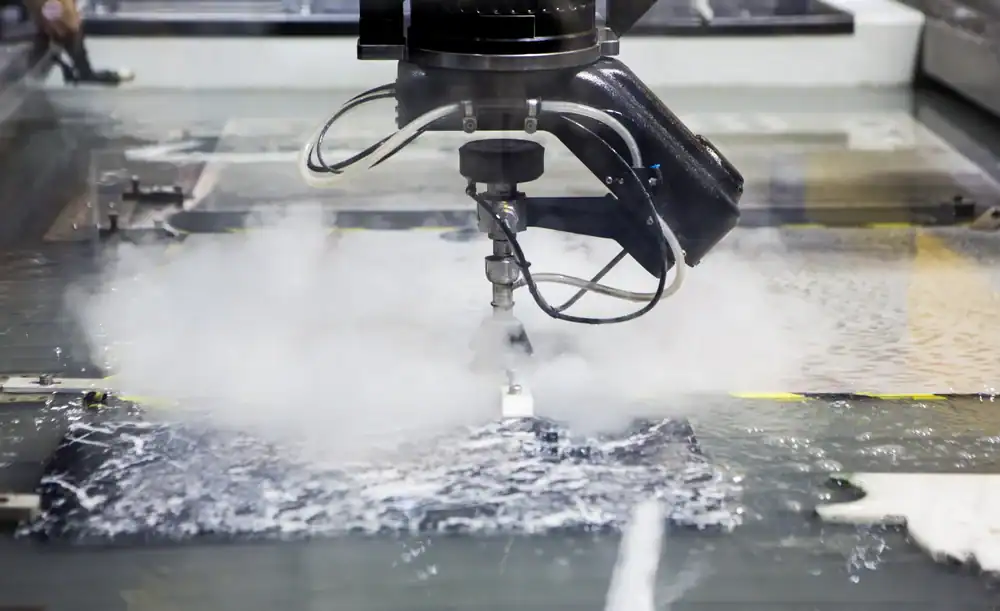
Your project timeline tightens when cuts come back wrong. A cracked slab means reordering material, pushing back installation, and explaining delays to clients who don’t care about your fabrication problems.
Precision marble waterjet cutting in Hauppauge, NY eliminates that risk. The cold-cutting process doesn’t generate heat, so there’s no thermal stress causing microcracks in your marble. You’re working with a kerf width under 1mm, which means more usable material from every slab and less money disappearing into your dumpster.
Complex curves and intricate inlays that would take hours with traditional methods get completed faster. The edge quality comes out smooth enough that you’re cutting secondary finishing time significantly. When architects and designers specify tight tolerances, you can actually meet them without holding your breath during installation.
We operate out of West Islip, serving contractors, architects, and fabricators throughout Long Island and the greater New York tri-state area. We run four Flow waterjet systems, including the Mach500, with pressure capabilities ranging from 40,000 to 87,000 psi.
The equipment matters because precision isn’t negotiable when you’re working with expensive marble slabs. Our CNC marble cutting systems handle everything from thin decorative pieces to substantial slabs, maintaining tolerances up to ±0.005 inches across complex geometries.
Hauppauge’s commercial and residential construction market demands quick turnarounds without sacrificing accuracy. We’ve built our operation around that reality, processing projects for the design and construction community that needs reliable fabrication without the drama.
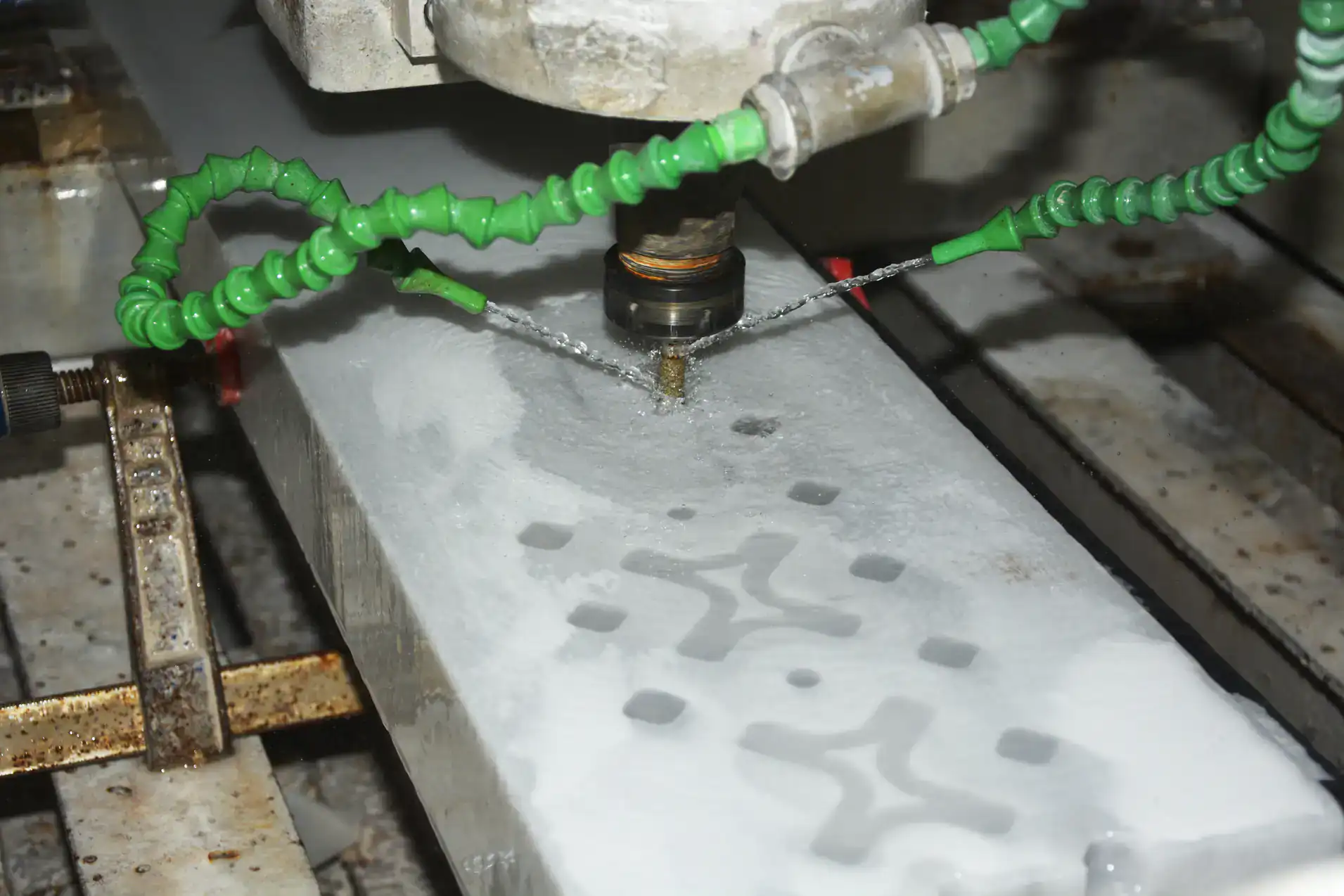
You send us your design file—DXF, DWG, or whatever format your designer works in. We review it for any potential issues with the marble you’ve selected, flagging anything that might cause problems before we start cutting.
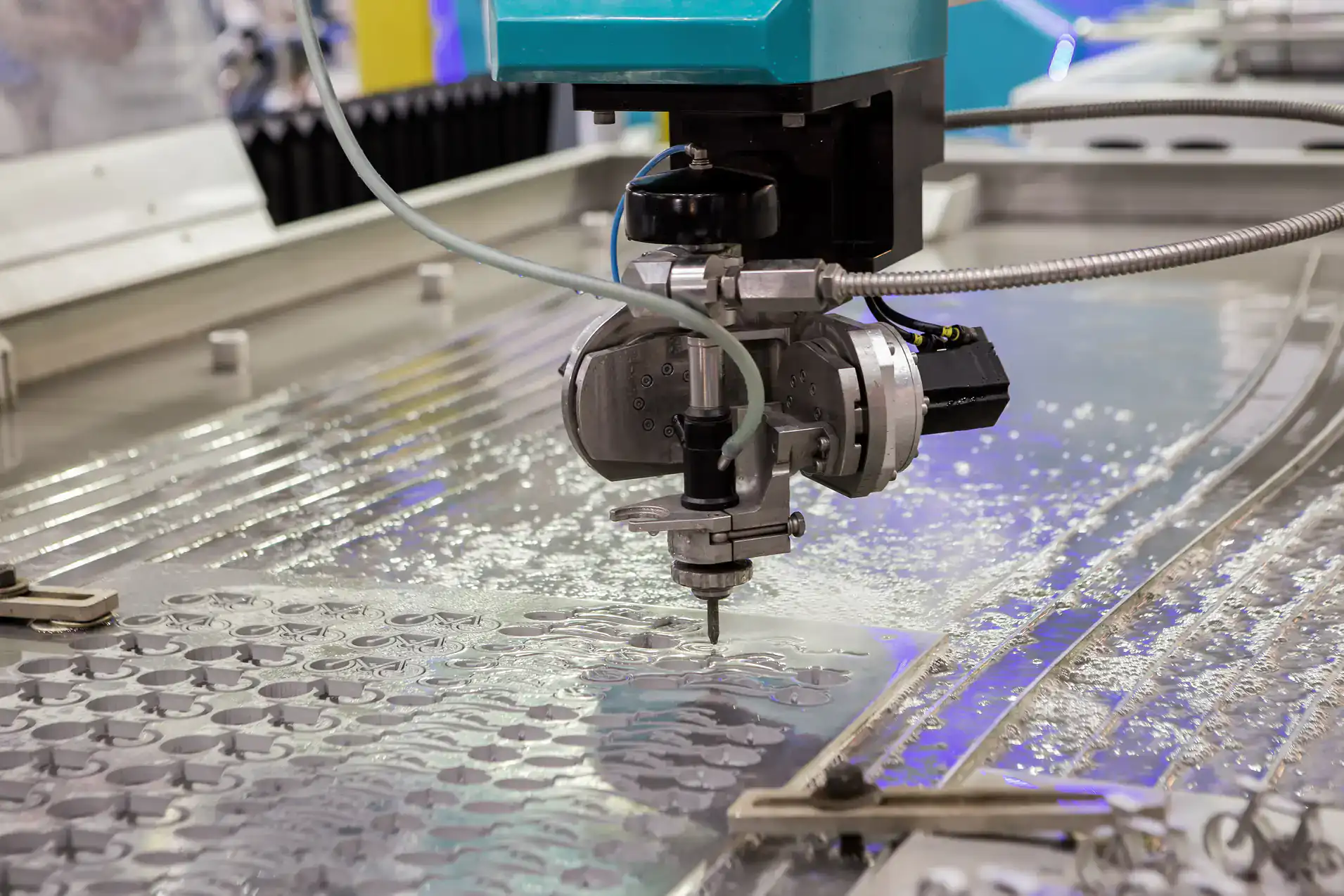
Once the file is dialed in, we load your marble slab and program the CNC system. The waterjet uses a high-pressure stream mixed with abrasive garnet to cut through the marble without generating any heat. No heat means no thermal stress, no microcracks, and no surprises when you go to install.
The cutting process itself is automated, so there’s no tool changes and no operator error affecting your tolerances. For complex patterns with multiple cuts, the system handles it all in one setup. When your pieces come off the table, edges are smooth and dimensions are exact. You’re not spending extra time on finishing work or worrying whether everything will fit together on site.
Ready to get started?
The Long Island market runs on tight deadlines and tighter budgets. Custom marble waterjet cutting in Hauppauge, NY gives you capabilities that traditional cutting methods can’t match—intricate inlays for high-end residential projects in the North Shore, architectural elements for commercial builds in Melville and Farmingdale, and restoration work that requires matching historical details exactly.
You’re getting cuts accurate to 0.1mm, which matters when you’re fabricating pieces that need to fit together seamlessly. The narrow kerf width means you’re pulling 20-30% more usable material from each slab compared to traditional sawing methods. On expensive marble, that difference pays for itself quickly.
The cold-cutting process protects the structural integrity of your marble. There’s no heat-affected zone, no micro-fractures forming that will cause problems months after installation. For projects where appearance matters—and let’s be honest, that’s every marble project—the surface stays pristine without discoloration or stress marks.
Waterjet technology handles varying thicknesses without requiring different tooling or setup changes. Whether you’re cutting 10mm decorative panels or 50mm countertop slabs, the process stays consistent. That flexibility matters when you’re managing multiple projects with different specifications.
Marble cracks during cutting because of thermal stress and physical pressure. Traditional saw blades generate significant heat from friction, and that heat creates expansion in the marble. When the material cools, it contracts unevenly, forming microcracks that can propagate into full breaks.
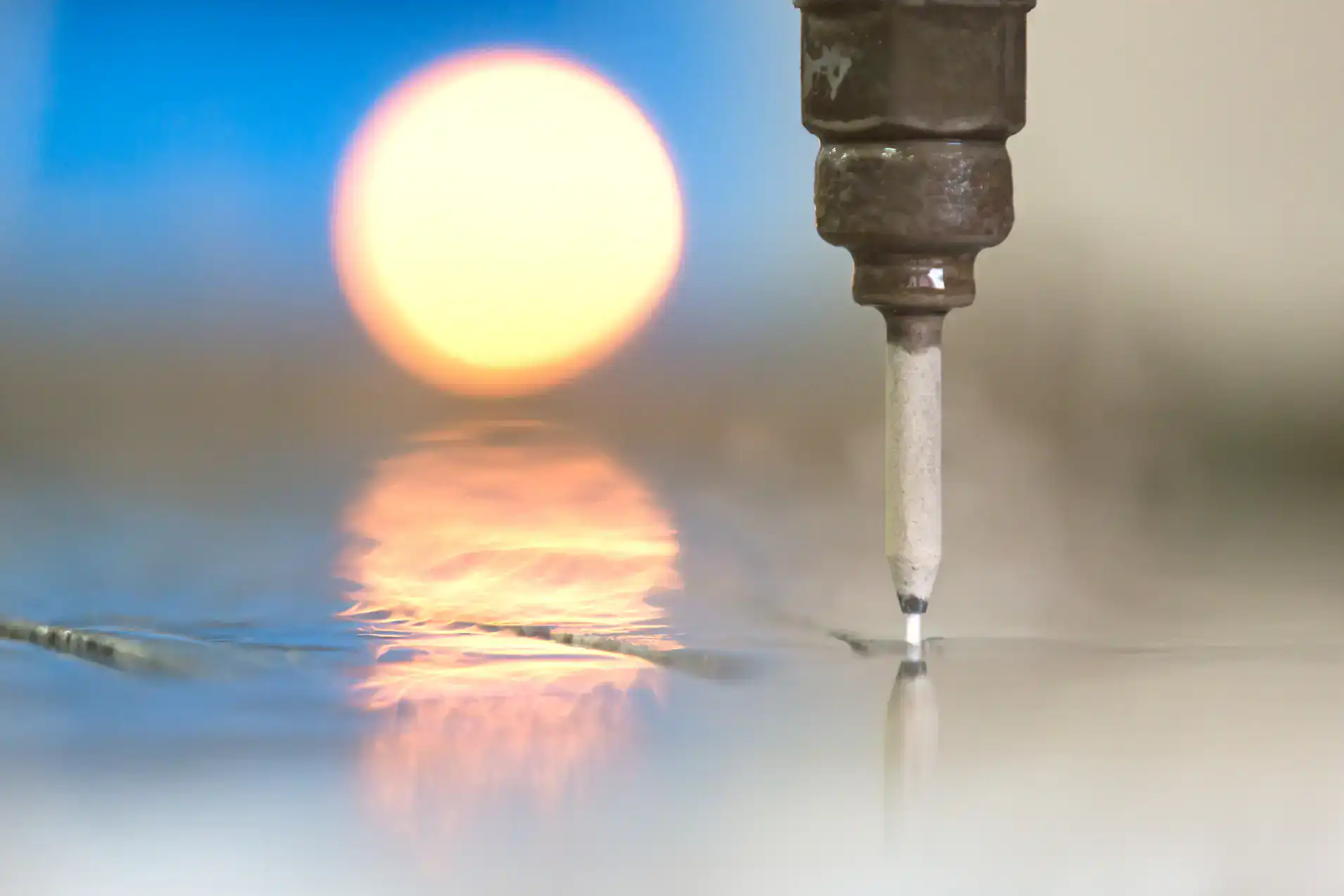
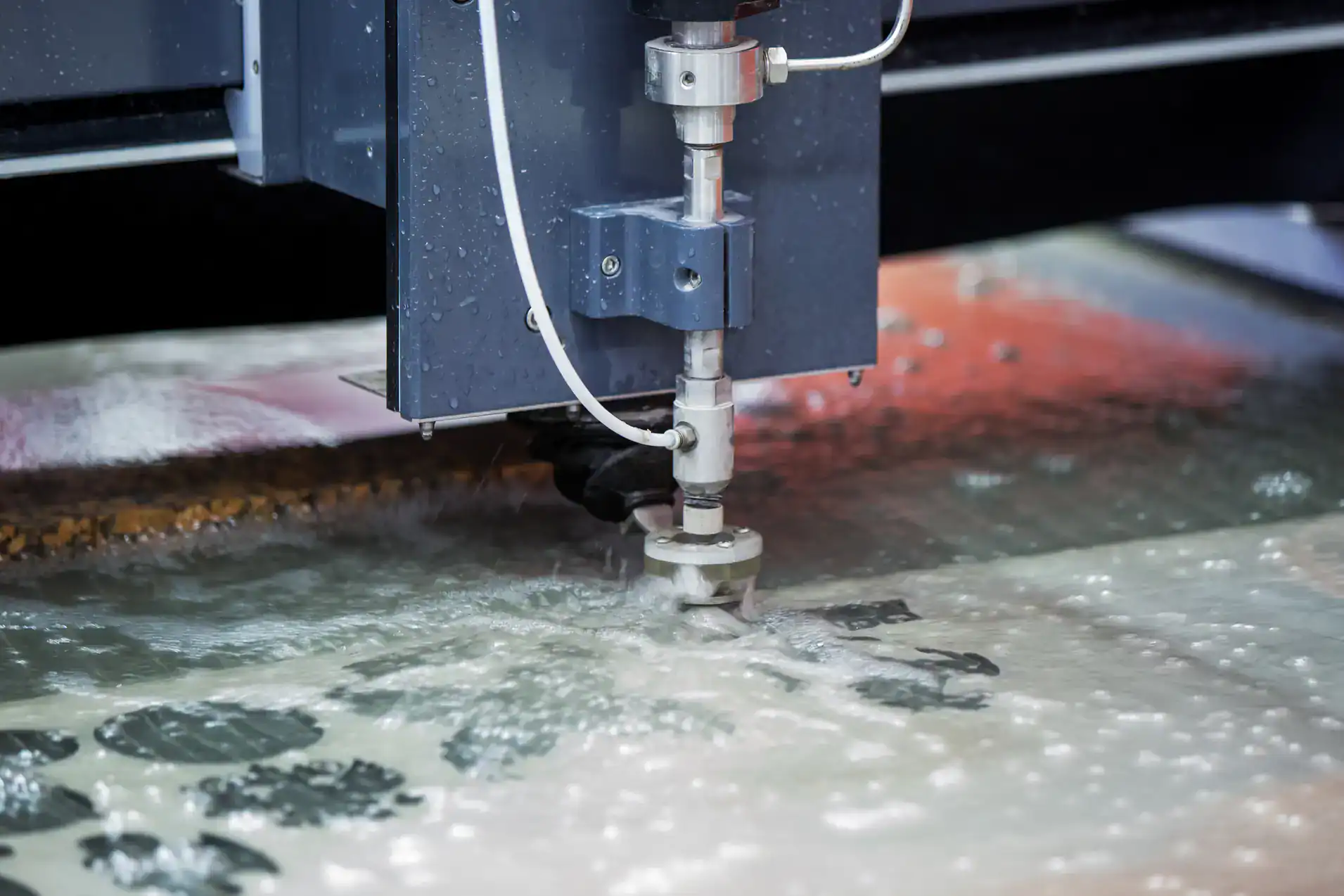
Waterjet cutting uses a high-pressure stream of water mixed with abrasive garnet. There’s no blade contact, no friction, and no heat generation. The cutting happens at ambient temperature, so your marble never experiences thermal stress. This is especially important for marble with natural veining, where existing weaknesses can turn into cracks under heat and pressure.
The process also eliminates the vibration and physical force that comes with blade cutting. You’re essentially eroding the material away in a controlled manner rather than forcing a blade through it. For delicate or highly figured marble, this makes the difference between a clean cut and a ruined slab.
Our CNC marble cutting systems hold tolerances up to ±0.005 inches (about 0.127mm) across the entire cut path. That level of accuracy stays consistent whether you’re cutting straight lines or complex curves with multiple direction changes.
For context, that tolerance is tight enough for precision inlay work where multiple pieces need to fit together with minimal gaps. If you’re fabricating a marble floor medallion with intricate patterns, each piece will mate up without requiring excessive grinding or shimming during installation.
The tolerance holds across different marble thicknesses and densities because the waterjet process is controlled by CNC programming, not operator skill or tool wear. There’s no blade deflection, no dulling cutting edges, and no accumulated error from tool changes. The first piece cut matches the last piece cut, which matters when you’re running production quantities or need to match pieces fabricated weeks apart.
The kerf width on waterjet cutting runs less than 1mm—typically around 0.8mm to 0.9mm depending on the abrasive and pressure settings. Compare that to a diamond blade at 2mm to 3mm kerf, and you’re looking at 60-70% less material lost per cut.
On a full marble slab with multiple pieces being nested together, that narrow kerf translates to 20-30% more usable yield. For expensive marble varieties running $50-$100 per square foot, you’re saving real money on every slab. If you’re cutting 20 slabs for a commercial project, that waste reduction can cover the cost of an additional slab or two.
The narrow kerf also gives you more flexibility in nesting parts efficiently. You can pack pieces closer together on the slab, maximizing the usable area. With traditional sawing, you need wider spacing to account for the blade kerf and potential chipping, which eats up material that could otherwise be used for smaller accent pieces or trim.
Our waterjet systems cut any shape you can draw in a CAD file. There’s no limitation on curves, angles, or directional changes because there’s no physical tool that needs to be repositioned. The cutting stream follows the programmed path exactly, whether that’s a simple rectangle or a complex arabesque pattern with dozens of curves.
For architectural work, this means you can execute detailed inlays, custom borders, and geometric patterns that would be extremely difficult or impossible with traditional methods. Interior designers specifying Art Deco patterns or Islamic geometric designs can actually get them fabricated accurately instead of settling for simplified versions.
The system also handles piercing and internal cutouts without any issue. If your design calls for a marble panel with multiple openings or a countertop with an integrated drain board pattern, it’s all done in one setup. You’re not moving the piece between different machines or trying to coordinate multiple fabrication methods.
Waterjet cutting processes complex patterns 40-45% faster than traditional methods when you factor in the complete workflow. The speed advantage comes from several areas: no tool changes between different cut types, no repositioning the workpiece for different operations, and minimal secondary finishing required.
A traditional approach to cutting an intricate marble pattern might involve rough cutting on a bridge saw, detail work with hand tools or routers, and extensive polishing to clean up rough edges. Each step requires setup time, skilled labor, and quality control checks. Waterjet handles all the cutting in one automated operation.
The edge quality coming off the waterjet is smooth enough that you’re eliminating or drastically reducing grinding and polishing time. For many applications, the cut edge is installation-ready. When you do need additional finishing, you’re talking about light touch-up work rather than heavy material removal. That time savings compounds across every piece in your project, and it means you can commit to tighter delivery schedules without stressing your production capacity.
We work with standard CAD formats: DXF and DWG files are the most common and translate directly into our CNC programming. If your architect or designer is working in AutoCAD, Revit, or similar professional design software, their files will work without conversion issues.
For simpler projects, we can also work from PDF drawings or even hand sketches, though CAD files eliminate potential interpretation errors. The more precise your source file, the faster we can move from design to cutting. If there are any questions about dimensions, tolerances, or design intent, we’ll flag them before starting fabrication.
We’ll review your file for any potential issues specific to marble cutting—things like minimum feature sizes, corner radii that might cause stress concentrations, or cut sequences that could affect material stability during fabrication. This pre-production review catches problems while they’re still easy to fix, not after you’ve got a cracked slab and a delayed project schedule.
Useful Links
Other Services we provide in Hauppauge