Hear from Our Customers
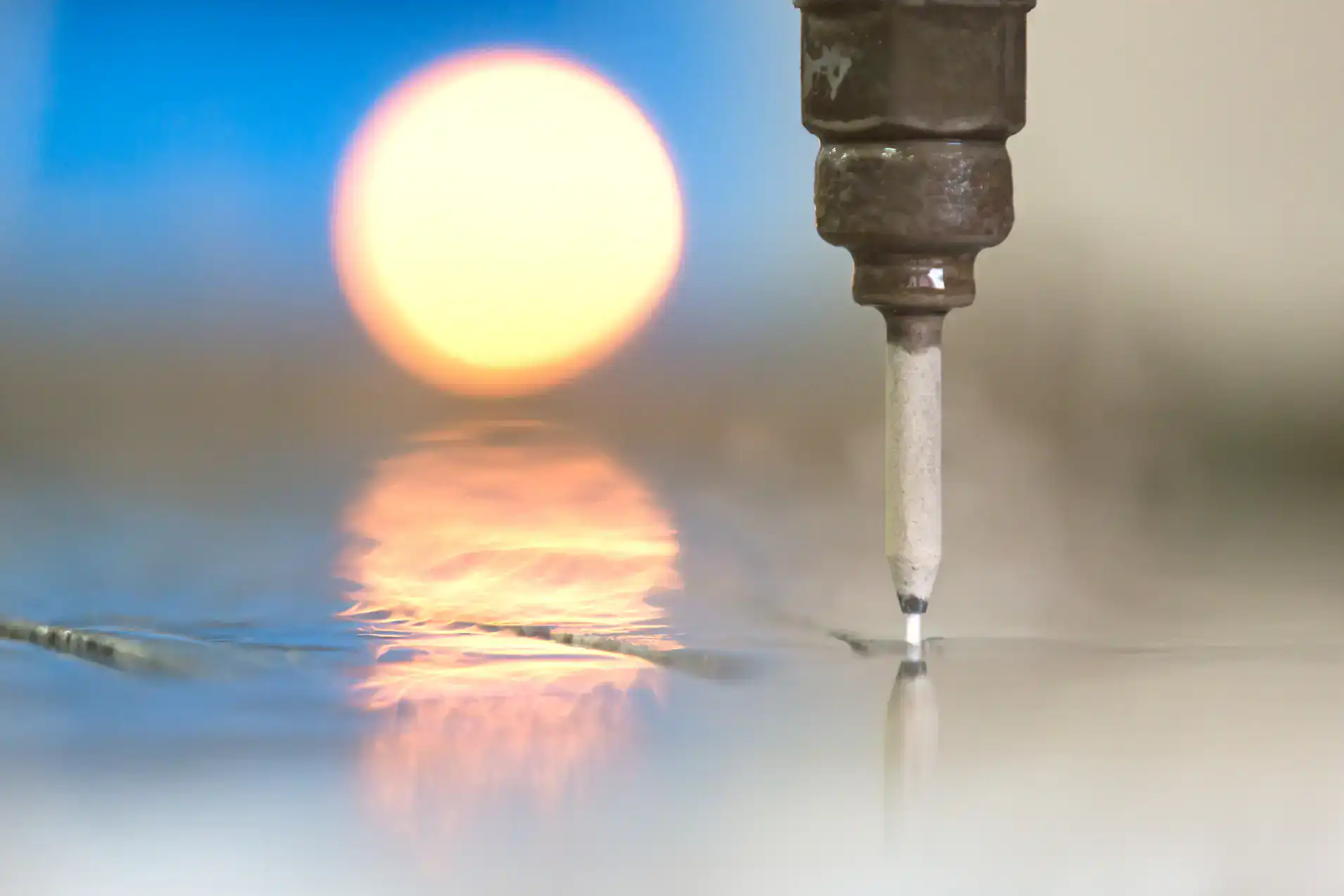
You’re working with marble because you want something exceptional. The veining, the finish, the way light hits the surface—it all matters. But getting from slab to installed piece without compromising that quality? That’s where most cutting methods fall short.
Traditional saws generate heat. Heat creates microfractures you might not see immediately, but your client will notice when a crack appears six months later. Blades vibrate, which means chipping on edges that should be clean. And when you’re working with intricate patterns—inlays, medallions, custom borders—those limitations become deal-breakers.
Waterjet cutting in Huntington, NY removes those constraints entirely. The stream cuts cold, so there’s no thermal stress weakening the stone. You get accuracy within 0.1mm, which means your corners actually meet and your curves flow exactly as designed. The edges come off the table smooth enough that you’re cutting down on finishing time, sometimes eliminating it completely.
This matters when you’re fabricating for high-end residential projects in Huntington, where the average home sale tops $989,000 and clients expect flawless execution. One ruined slab isn’t just material cost—it’s timeline delays, client conversations you don’t want to have, and profit margin disappearing.
We operate out of West Islip, serving architects, designers, contractors, and fabricators across Long Island. We’re not a massive production facility trying to push volume. We’re set up to handle the projects that require actual precision—the custom work where standard cutting methods create more problems than they solve.
Our equipment runs at 60,000 PSI with real-time monitoring, which means consistent cuts whether you’re on piece one or piece fifty. We work directly with you on material consultation and design execution, so what you’re envisioning actually translates to what gets fabricated.
Huntington’s construction market moves fast, especially with the residential demand we’re seeing. You need a fabrication partner who understands that your timeline matters and that mistakes aren’t an option when you’re working on projects in this price range.
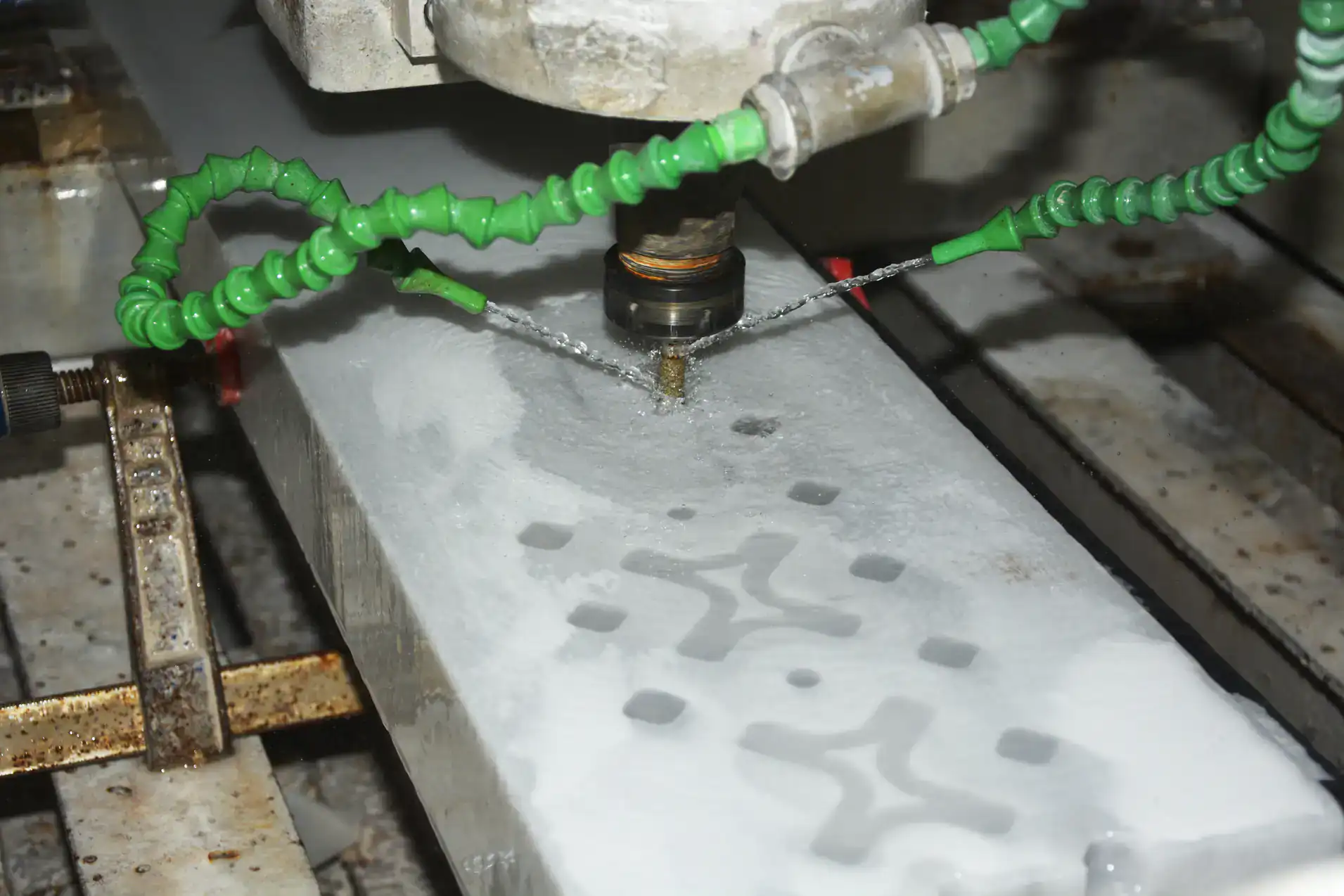
You send us your design file—CAD, DXF, whatever format you’re working in. If you’re still sketching it out, that’s fine too. We’ll help translate your concept into a cuttable file and flag any potential issues before we touch the material.
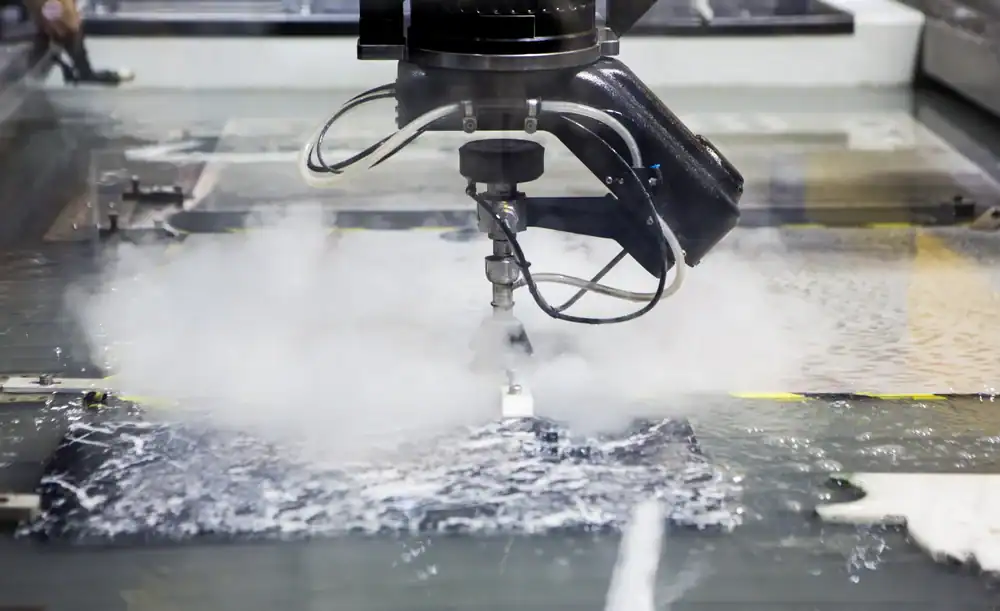
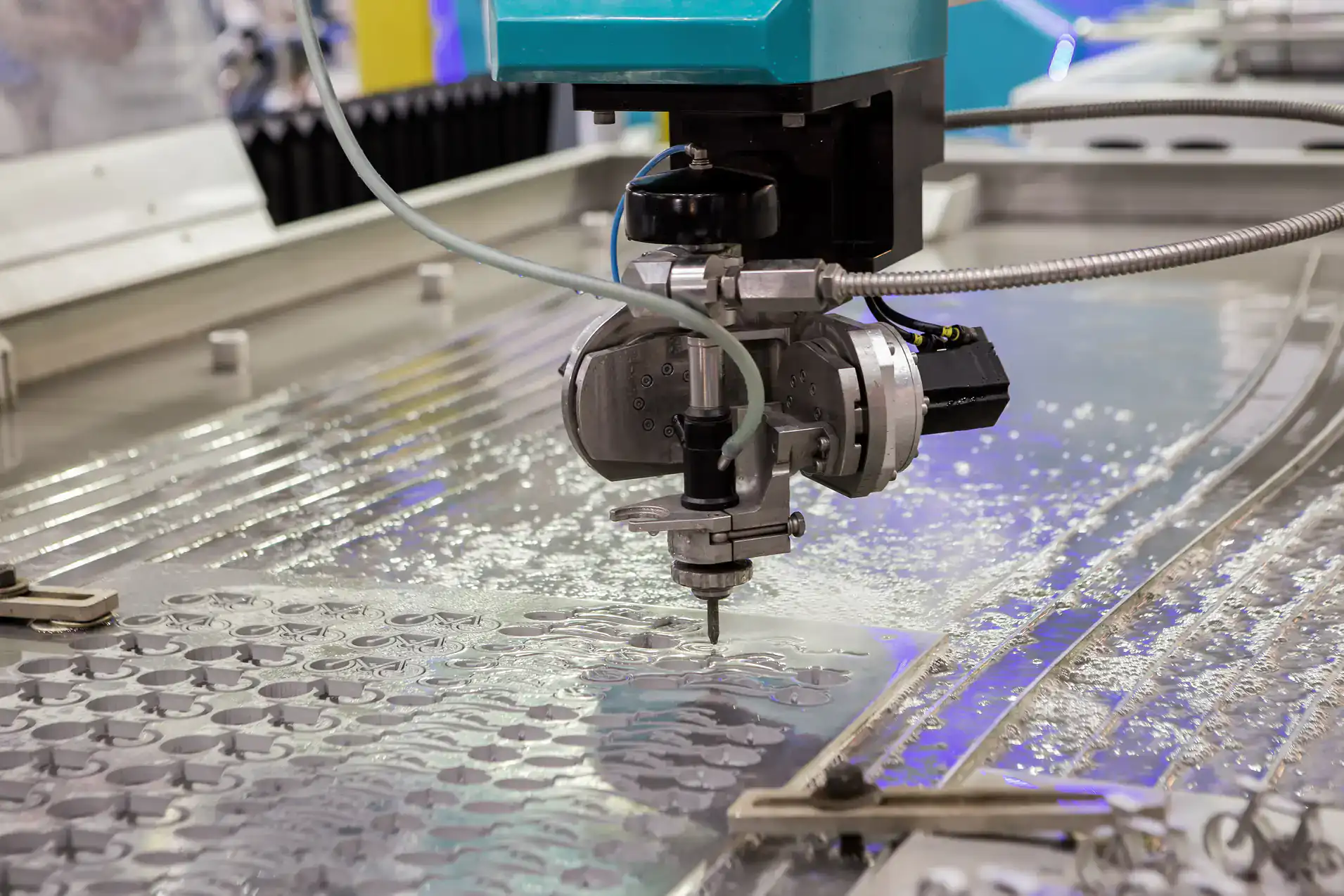
Once the file is dialed in, we program the waterjet system with your exact specifications. The cutting head follows your design path with a high-pressure stream of water and garnet abrasive. No blades making contact, no heat building up, no vibration rattling through the stone. Just controlled material removal that follows your lines precisely.
For thicker pieces—we’re talking up to 12 inches—the process takes longer, but the accuracy holds. For detailed work like inlays or mosaic patterns, we’re making cuts that would be nearly impossible with traditional methods. The stream width is narrow enough that you’re not losing significant material to kerf, which matters when you’re maximizing yield from expensive slabs.
After cutting, the edges come off clean. Depending on your finish requirements, you might need minimal edge work, or you might be ready to install. We can consult on what makes sense for your specific application.
Ready to get started?
This isn’t just about making cuts. It’s about what becomes possible when you’re not constrained by traditional tooling limitations. You can execute circular inlays, octagon patterns, custom borders, full murals—designs that would require multiple setups and tool changes on a CNC router, all done in a single program run.
The cold-cutting process means you’re not introducing stress into the material. Marble with natural veining or existing fissures doesn’t fracture under the cutting pressure the way it might with blade contact. The structural integrity stays intact, which matters for longevity and for passing inspection on commercial projects.
In Huntington’s market, where you’re competing for high-value residential and commercial work, the quality of your fabrication separates you from contractors cutting corners. When an architect specifies a complex marble installation for a kitchen or entryway, you need to deliver exactly what was designed—not a simplified version because your fabricator couldn’t execute the cuts.
Material utilization improves too. Tighter nesting of parts, less waste from mistakes, better yield per slab. On large projects, that adds up to real cost savings that either improve your margin or make your bid more competitive.
Yes, and that’s specifically where waterjet outperforms other methods. If you can draw it, we can cut it—that’s not marketing speak, it’s how the technology actually works.
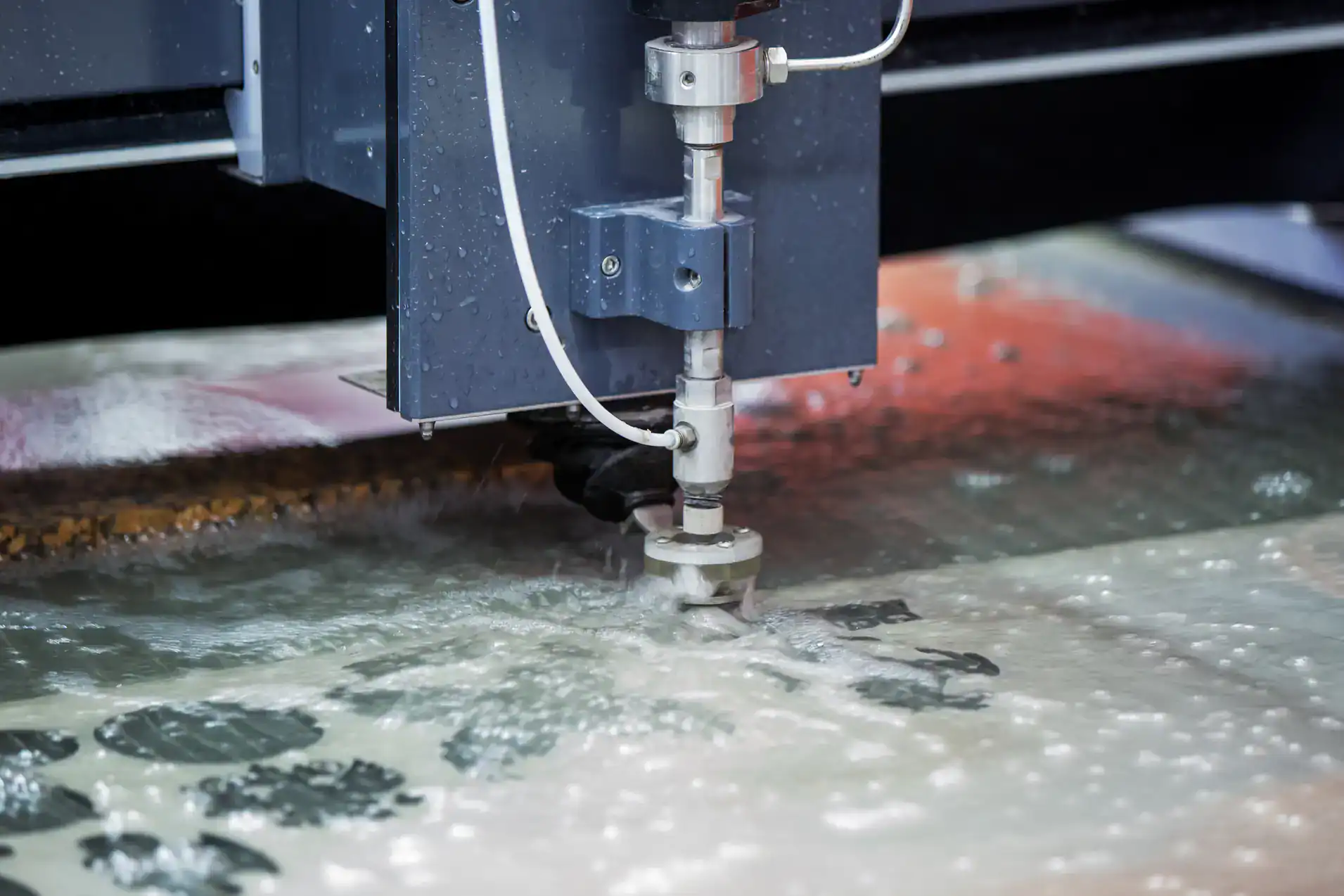
The cutting stream is narrow and computer-controlled, so it follows your design path exactly. Tight radius curves, sharp internal corners, interlocking patterns—none of that requires special tooling or multiple setups. You program it once and the system executes it precisely. This is why waterjet has become the go-to method for custom marble medallions, decorative inlays, and mosaic work where traditional sawing just can’t deliver the detail.
For context, we’re talking about accuracy within a tenth of a millimeter. That level of precision means your pattern pieces fit together the way they’re supposed to, without gaps or misalignment that you’re trying to hide with grout or caulk.
The difference comes down to heat and contact force. Traditional cutting methods—whether it’s a bridge saw or a CNC router with diamond tooling—generate friction. Friction creates heat, and heat creates thermal stress in the stone. Marble expands microscopically, then contracts as it cools, and that cycle introduces internal stress that can lead to cracking, especially near existing veining or natural fissures.
Waterjet cutting is a cold process. The water stream removes material through erosion, not friction, so there’s no heat transfer into the stone. The marble stays at ambient temperature throughout the entire cutting process. This eliminates thermal stress completely, which is why you can cut through areas with veining or natural weaknesses without propagating cracks.
The other factor is vibration. Spinning blades create vibration that transfers through the material, which can cause chipping on edges or microfractures that aren’t immediately visible. Waterjet cutting doesn’t involve any tool contact with the stone—it’s just the water stream doing the work—so there’s no vibration to worry about.
We regularly cut marble up to 12 inches thick, and the system can handle even thicker material if your project requires it. Accuracy doesn’t degrade with thickness—it’s one of the key advantages of waterjet over other methods.
Here’s why: the cutting stream maintains its focus and pressure through the entire depth of the material. Unlike a saw blade that might deflect slightly on thick cuts, or a router bit that can wander, the waterjet stream travels in a straight line from entry to exit. Your cut edges stay perpendicular (or at whatever angle you’ve programmed), and your dimensional accuracy holds regardless of material thickness.
Thicker cuts do take longer—you’re removing more material, so the cutting head travels slower to maintain quality. But you’re not sacrificing precision for thickness. This matters when you’re fabricating thick marble countertops, substantial architectural elements, or monument work where dimensional consistency through the full thickness is critical.
That depends on your application and finish requirements, but in most cases, you’re looking at significantly less finishing work than you’d need after traditional cutting. The edges come off the waterjet table smooth—not polished, but smooth enough that you’re often just doing a light honing or polishing pass rather than aggressive grinding to remove saw marks or chipping.
For applications where the cut edge won’t be visible—like pieces that will be grouted together or edges that get covered by trim—you might not need any finishing at all. The waterjet edge quality is clean enough to install as-cut. For exposed edges that need a polished finish, you’re starting from a much better baseline than you would with saw-cut edges, which cuts your finishing time substantially.
Some fabricators find they can eliminate entire steps in their process. If you’re currently cutting, then grinding, then honing, then polishing, waterjet might let you skip straight to honing or even polishing depending on the edge profile you need. That’s labor time saved, which either speeds up your project timeline or frees up your team for other work.
Actually, it’s the opposite. Waterjet cutting typically improves material utilization compared to traditional methods, sometimes significantly. The cutting stream is narrow—usually around 0.03 to 0.04 inches—so the kerf (the width of material removed during cutting) is minimal. Compare that to a bridge saw blade at 0.125 inches or wider, and you’re removing substantially less material per cut.
That narrow kerf means you can nest parts closer together when you’re cutting multiple pieces from a single slab. The space savings add up quickly, especially on projects with numerous smaller pieces or intricate shapes. Better nesting means you’re getting more usable pieces per slab, which directly impacts your material cost.
The other factor is mistakes. When you’re cutting with precision that holds within 0.1mm, you’re not re-cutting pieces because they came out wrong. You’re not dealing with cracked pieces that have to be scrapped. The first cut is the final cut, which eliminates the material waste that comes from fabrication errors. On expensive marble slabs, avoiding even one mistake can justify the entire cutting cost.
At minimum, we need to know what you’re trying to create and what material you’re working with. If you have design files—CAD drawings, DXF files, even detailed sketches with dimensions—that’s ideal. We can work from those directly to program the cutting paths.
If you’re earlier in the design process, we can consult on what’s feasible and help translate your concept into a workable fabrication plan. Sometimes designs that look great on paper need small adjustments for practical fabrication, and it’s better to identify those before we start cutting. We’ll also discuss material selection if you haven’t already sourced your marble, since different marble types have different characteristics that can affect cutting approach.
For the actual cutting, you can either supply the material or we can help source it. We’ll need to know your timeline, quantity, and any specific finish requirements for the edges. If this is part of a larger project with multiple components, we’ll coordinate the sequencing so everything arrives when you need it. The more context you give us about the end application, the better we can optimize the fabrication approach.
Useful Links
Other Services we provide in Huntington