
Hear from Our Customers
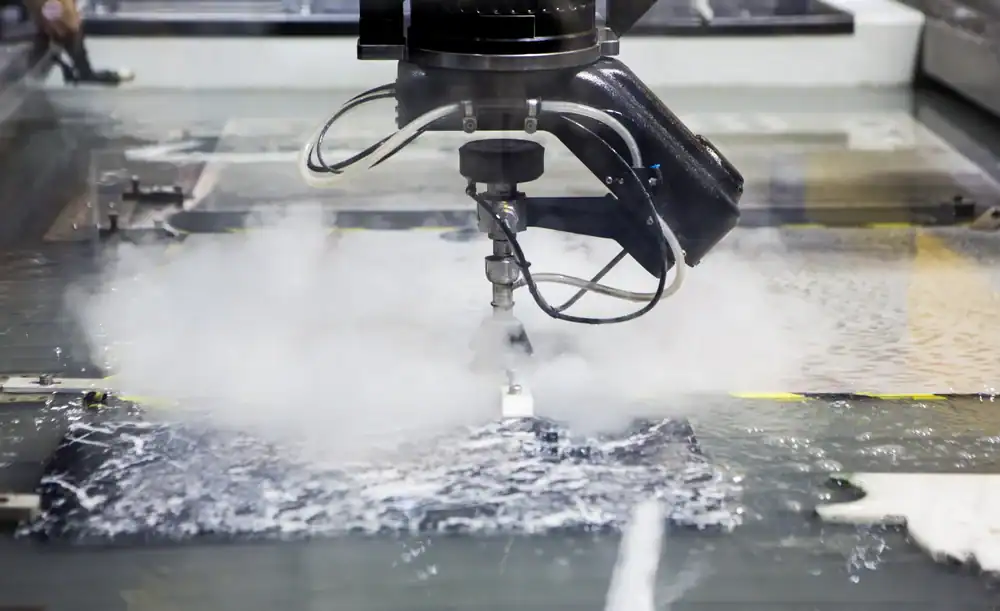
Traditional cutting methods put expensive marble at risk. Blades get dull, heat creates microcracks, and one mistake can cost you thousands in wasted material. You’re left dealing with delays, rework, and explaining cost overruns to clients who expected better.
Precision marble waterjet cutting in Lindenhurst, NY eliminates those risks entirely. The cold cutting process means no thermal stress, no structural damage, and no compromised integrity. You get cuts accurate to 0.1mm, which means your intricate patterns actually look like the design you approved.
The kerf width is minimal, so you’re not throwing away 30% of a $5,000 slab because the blade ate through it. Your material goes further. Your budget stretches. Your project stays on schedule because there’s no rework, no waiting for replacement pieces, and no explaining why the marble cracked during fabrication.
Computer-controlled operation means the tenth piece looks identical to the first. That consistency matters when you’re installing large-scale projects where even slight variations become glaringly obvious once everything’s in place.
We operate out of West Islip, serving architects, contractors, and fabricators throughout Lindenhurst, NY and the broader Long Island market. This isn’t a region where mediocre work gets a pass. The concentration of high-end residential and commercial projects here means your reputation lives or dies on the quality of every installation.
We’ve built our operation around one reality: marble is expensive, and mistakes are costly. That’s why every project gets the same computer-controlled precision, whether you’re cutting a single custom piece or processing 200 identical components for a hotel lobby.
The Long Island market has plenty of stone yards and fabricators. What you need is a cutting operation that understands the difference between “close enough” and “exact.” That’s what our CNC marble cutting in Lindenhurst, NY provides—repeatability, accuracy, and zero compromise on quality because your clients certainly won’t compromise on their expectations.
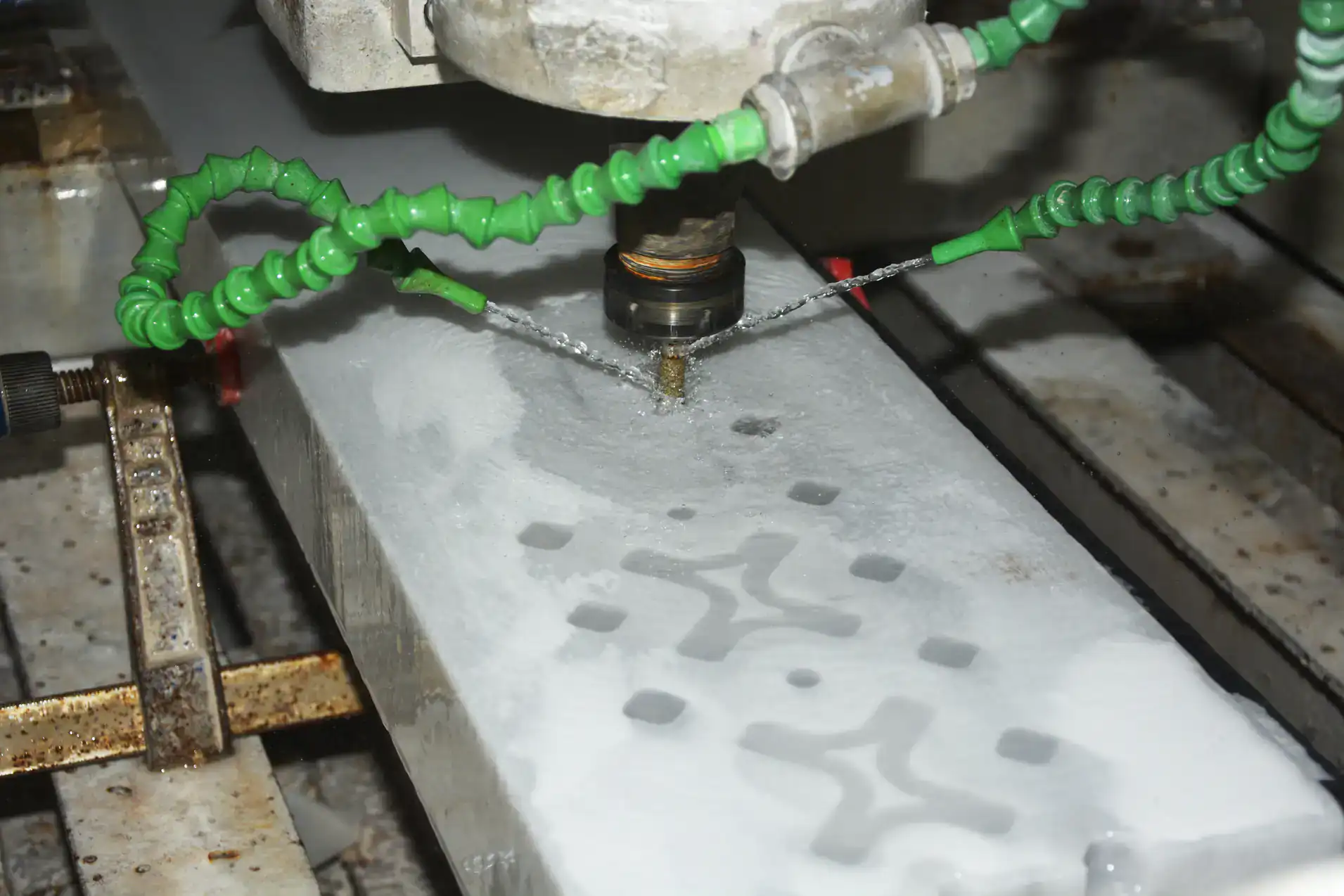
You send us your design file or specifications. If you’re working from a hand sketch or concept, we can help translate that into a cutting program. The design gets loaded into our CNC system, which controls the waterjet with precision you can’t achieve manually.
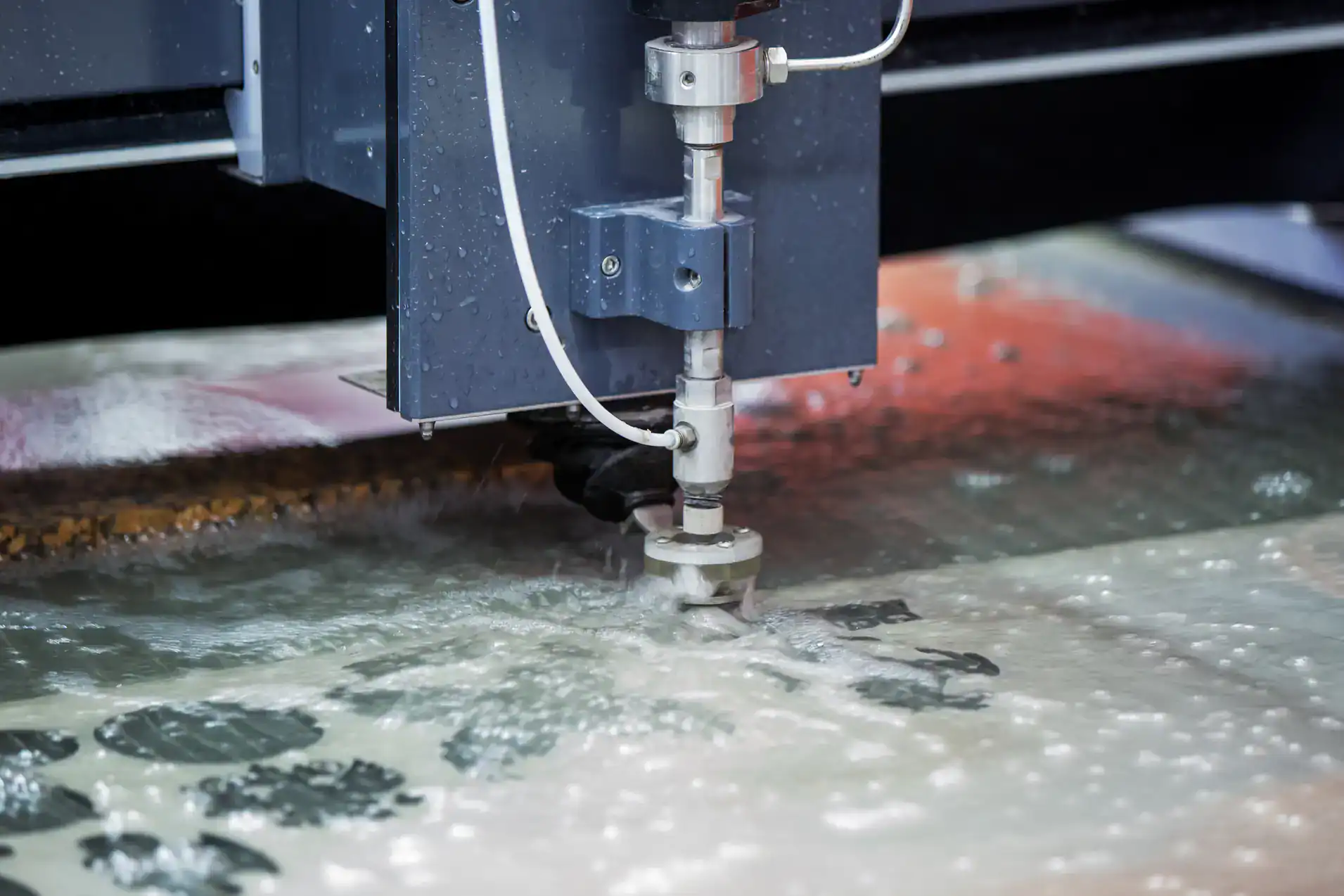
The cutting head uses a high-pressure stream of water mixed with abrasive garnet. This cuts through marble up to 12 inches thick without generating heat. No heat means no thermal expansion, no stress fractures, and no change to the stone’s internal structure. The marble that comes off our table is the same marble that went on—just shaped exactly how you need it.
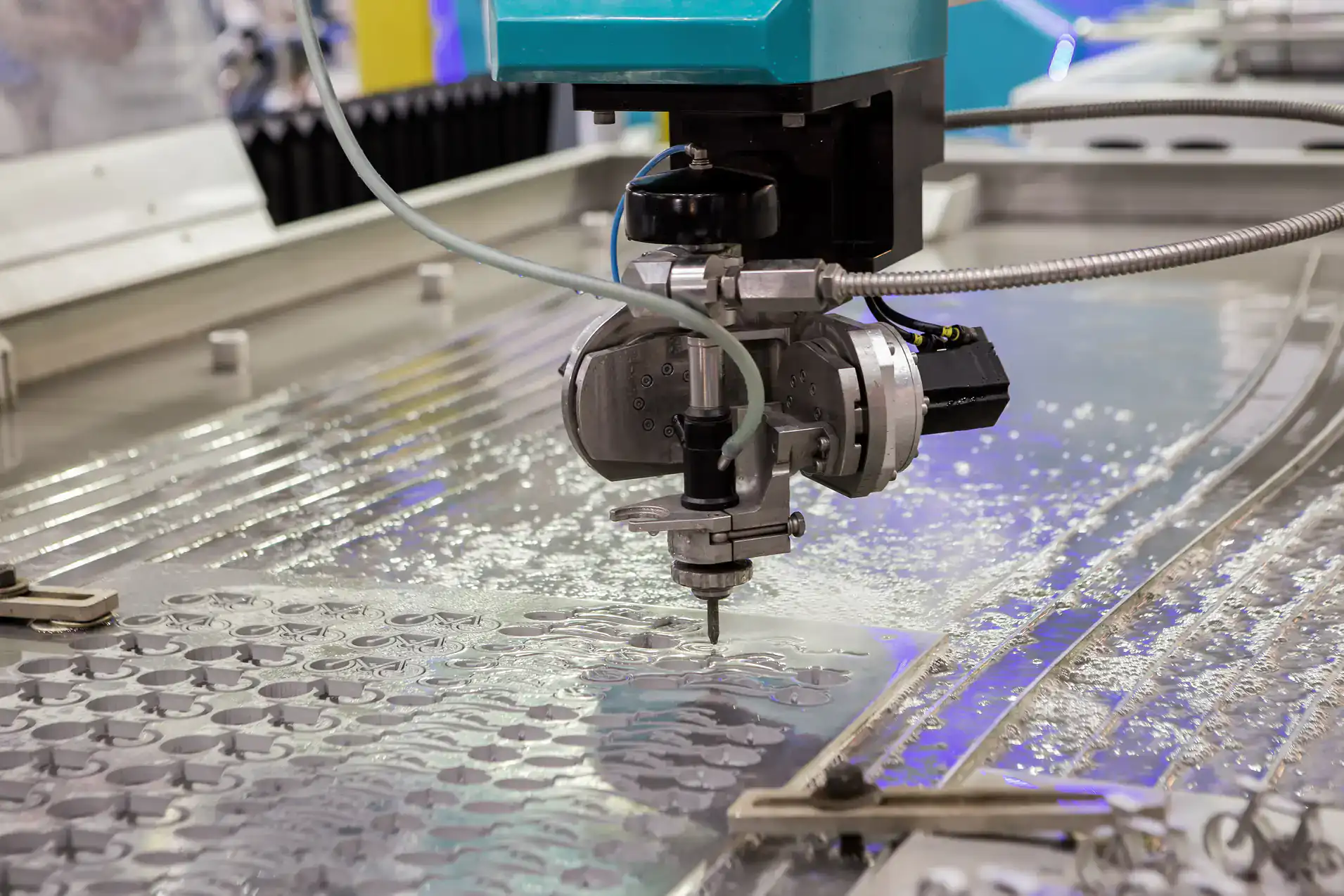
Because the process is computer-controlled, we can cut complex curves, tight radiuses, and intricate inlays that would be nearly impossible with traditional methods. If your design includes a pattern with dozens of identical elements, each one comes out exactly the same. No variation, no “that one’s close enough,” no compromises.
The edges come off smooth enough that secondary finishing is minimal or unnecessary, depending on your application. That saves you time and labor costs on the back end. You’re not paying someone to spend hours grinding and polishing edges that should have been clean from the start.
Ready to get started?
Our industrial marble waterjet cutting in Lindenhurst, NY handles everything from simple straight cuts to elaborate medallion designs, stone rugs, borders, and murals. If you can draw it, our waterjet can cut it. That’s not marketing speak—it’s the reality of CNC-controlled cutting that follows your design file with zero deviation.
You’re working in a market where Long Island inventory includes over 200,000 slabs across 2,000 color variations. That selection means nothing if your cutting method can’t handle the material without damaging it. Our waterjet cutting works across all marble types—soft or hard, thick or thin, domestic or imported. The process adapts to the material, not the other way around.
For contractors managing commercial projects in Lindenhurst, the speed matters as much as the accuracy. Our waterjet cutting processes complex patterns 40% faster than traditional methods. When you’re coordinating multiple trades and facing penalty clauses for delays, that time savings is the difference between profit and problems.
The environmental side is cleaner too. Minimal dust production means better working conditions and easier cleanup. Water gets recycled through the system, and energy consumption runs lower than traditional cutting methods. That might not be your primary concern, but it’s worth knowing when clients ask about sustainable practices.
No. The cold cutting process eliminates the risk of thermal stress that causes cracking with blade-based methods.
Traditional saws generate significant heat from friction. That heat causes the marble to expand microscopically during cutting, then contract as it cools. This thermal cycling creates internal stress that leads to microcracks—sometimes immediately visible, sometimes showing up weeks later after installation. Either way, you’re dealing with failed material and angry clients.
Our waterjet cutting uses high-pressure water mixed with abrasive garnet. There’s no friction, no heat, and no thermal stress. The stone’s internal structure remains completely unchanged. The marble retains its original strength and appearance because nothing in the cutting process compromises it. This is especially important for large architectural installations where structural integrity can’t be questioned.
You’ll see up to 30% less waste compared to traditional blade cutting, which directly impacts your material costs on every project.
The kerf width—the amount of material removed during cutting—is significantly narrower with waterjet technology. A typical saw blade removes 1/8 inch or more of material with every cut. Our waterjet cutting removes a fraction of that. When you’re working with marble slabs that cost thousands of dollars, that difference adds up quickly.
For complex patterns with multiple cuts, the savings compound. You can nest pieces more efficiently, maximize usable material from each slab, and reduce the amount of expensive stone that ends up as scrap. On large commercial projects, this material efficiency can reduce overall costs by 25% when you factor in less waste, reduced labor for finishing, and fewer rejected pieces due to cutting errors.
Yes. If your design includes curves, radiuses, inlays, or patterns with fine detail, our waterjet cutting handles it without limitation.
Traditional cutting methods struggle with anything beyond straight lines and gentle curves. Tight radiuses require multiple passes, specialized blades, and skilled operators who still can’t guarantee consistency across multiple pieces. Complex inlay work often requires hand finishing that introduces variation and increases labor costs dramatically.
Our CNC marble cutting in Lindenhurst, NY follows your design file exactly. The cutting head can navigate curves as tight as the material thickness allows, execute sharp corners without overcut, and reproduce intricate patterns with identical precision across hundreds of pieces. Medallion designs, octagon patterns, custom borders, and decorative murals that would take days with traditional methods get completed in hours—with better accuracy and zero variation between pieces.
Our waterjet cutting reduces processing time by approximately 40% for complex patterns, which keeps your project schedule on track and reduces labor costs.
Traditional cutting requires multiple setups, tool changes, and manual adjustments throughout the process. Each change introduces potential for error and adds time. Complex designs might require multiple cutting methods—saw for straight cuts, router for curves, hand tools for detail work. Every transition is another opportunity for mistakes and delays.
Our waterjet cutting handles the entire job in one setup. The design loads into the CNC system, the material gets positioned once, and the cutting head completes everything without stopping for tool changes or manual adjustments. This single-setup approach eliminates the coordination headaches of moving pieces between different cutting stations and reduces handling that can lead to damage. For contractors in Lindenhurst managing tight schedules, this speed and simplicity means fewer delays and more predictable project completion.
Our waterjet systems cut through marble up to 12 inches thick at full speed, with capability for even greater thickness when needed.
Most architectural and design applications use marble between 3/4 inch and 2 inches thick. Our waterjet cutting handles this range without any adjustment to speed or quality. The cutting stream maintains consistent pressure and abrasive flow regardless of thickness, which means a 2-inch slab gets the same clean edges and precise dimensions as a 3/4-inch piece.
For specialized applications requiring thicker material—structural elements, custom furniture, or artistic installations—our waterjet cutting extends well beyond 12 inches. The process simply takes longer as the stream needs more time to penetrate deeper material. But the quality remains consistent, and you avoid the limitations of blade-based methods that struggle with thick stock or require multiple passes that compromise edge quality and dimensional accuracy.
Minimal finishing is needed. The edges come off smooth enough for many applications to use as-is, which saves significant labor time and cost.
Traditional saw cutting leaves rough edges with visible blade marks that require grinding, sanding, and polishing before installation. That finishing work is labor-intensive, time-consuming, and adds cost to every project. For large installations with dozens or hundreds of cut pieces, the finishing labor can exceed the cutting cost.
Our waterjet cutting produces smooth edges with minimal roughness. Depending on your application and aesthetic requirements, many pieces need no additional finishing at all. When finishing is required for specific applications, it’s light work—a quick pass with fine abrasive rather than aggressive grinding to remove deep blade marks. This reduction in secondary finishing translates directly to lower labor costs and faster project completion, especially on commercial installations where time is money.
Useful Links
Other Services we provide in Lindenhurst