Hear from Our Customers
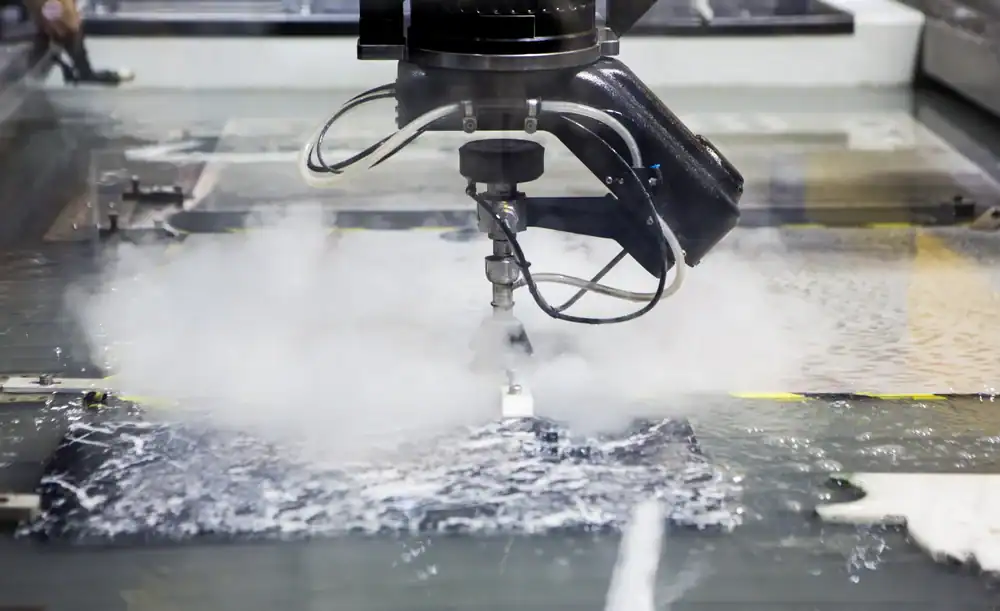
Your marble arrives exactly as designed. No heat discoloration. No microfractures. No structural compromise.
The cold-cutting process preserves the stone’s natural properties while delivering edge quality that requires minimal finishing. That means faster installation, lower labor costs, and results that match your CAD design down to the millimeter.
You’re working with architects and designers who specify increasingly complex patterns, intricate inlays, and non-traditional shapes. Waterjet cutting handles what traditional saws and manual techniques can’t—internal cutouts, sharp angles, curves that flow seamlessly. The technology cuts at any angle, creating designs that were previously impossible or prohibitively expensive.
This translates to real project advantages. Reduced material waste by up to 30% compared to traditional cutting. Faster turnaround on complex designs. And the confidence that what you specified is exactly what you’ll install.
We serve architects, designers, and contractors throughout Melville and Long Island with CNC marble cutting that meets the demands of high-end commercial and residential projects. We’re equipped with Flow Mach 500 technology—CNC-controlled systems that cut directly from your CAD files.
Melville’s mix of corporate headquarters, luxury residential developments, and historic properties creates unique demands. You need a fabricator who understands both modern design language and the precision required for restoration work. We handle both.
Our process keeps you at the center. From initial consultation through final fabrication, you get material guidance, design feasibility feedback, and cutting that matches your specifications. No surprises. No rework.
You send us your CAD design or work with our team to create one. We review the file for feasibility, material requirements, and any potential issues before cutting begins.
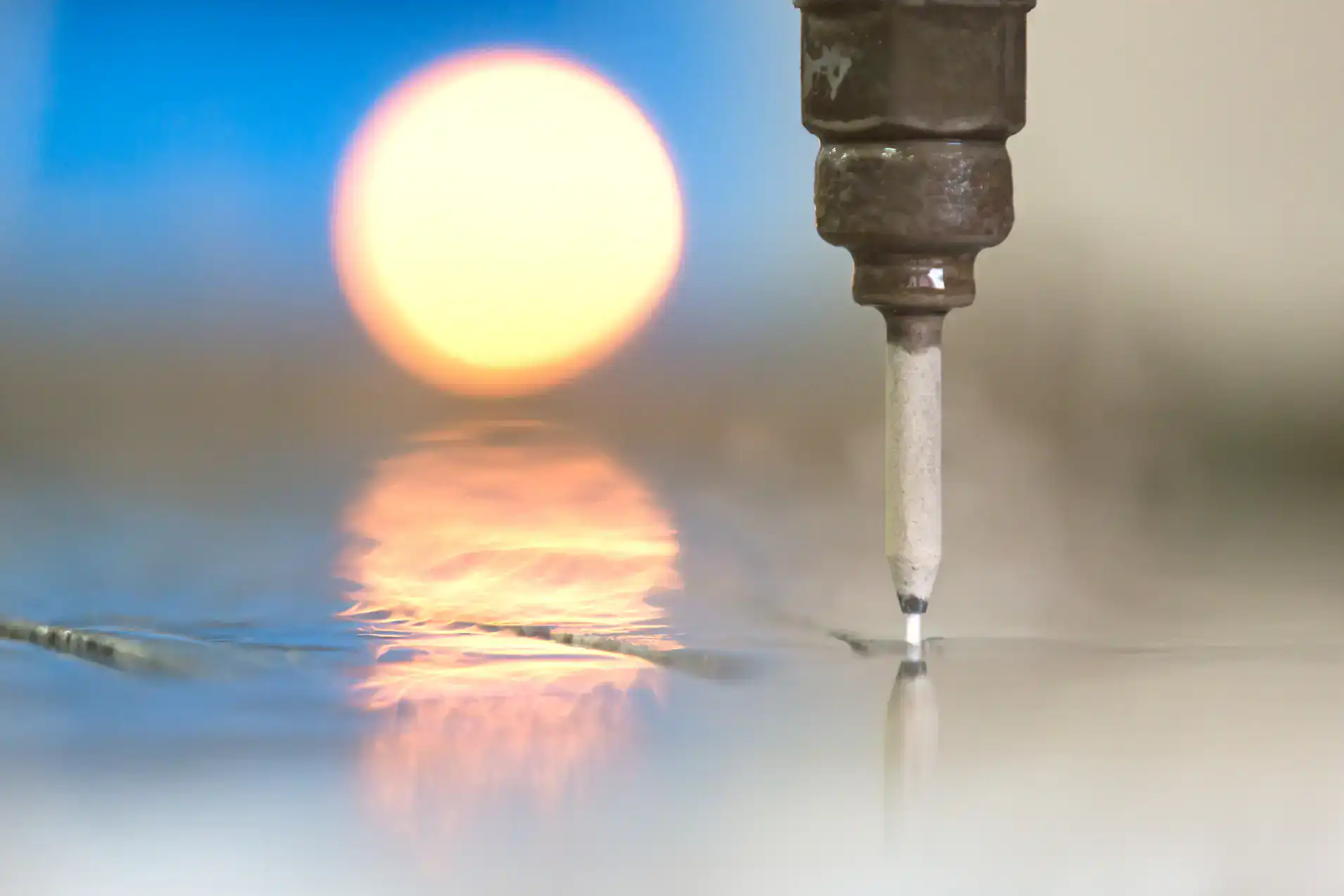
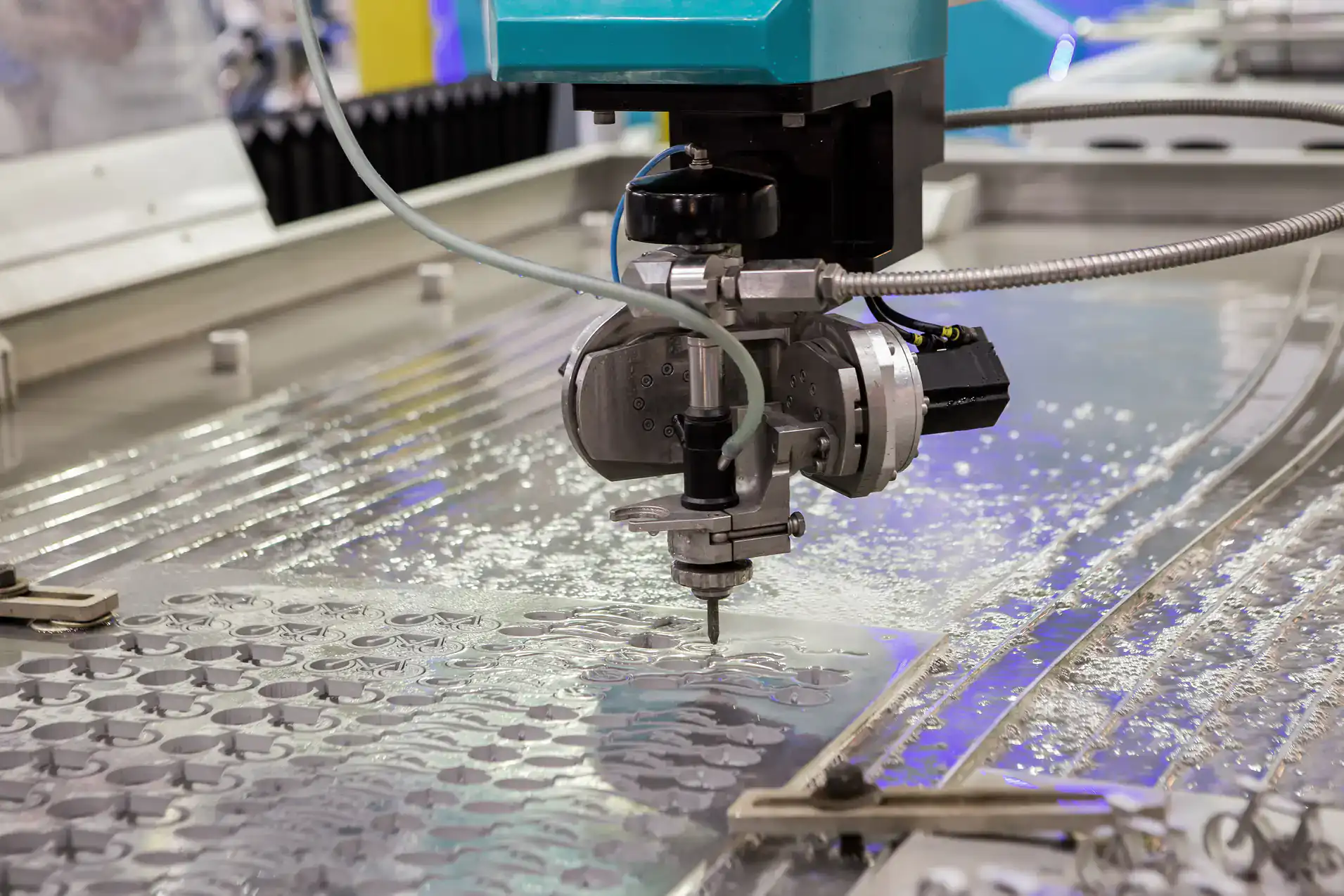
Your design loads directly into our CNC-controlled Flow waterjet system. The machine follows your specifications exactly—no manual interpretation, no operator variance. A high-pressure stream of water mixed with abrasive garnet cuts through the marble at speeds up to 60,000 PSI.
Because there’s no heat involved, the marble’s structural integrity stays intact. No thermal stress. No heat-affected zones. The stone that arrives on your job site performs exactly as engineered stone should.
After cutting, edges come off the machine smooth enough that many applications require no additional finishing. For projects that need it, minimal edge work brings pieces to final spec. You receive marble components ready for installation, cut to tolerances that ensure perfect fits and seamless joints.
Ready to get started?
You get full-spectrum service from consultation through fabrication. That starts with material guidance—which marble types work best for your application, how different stones respond to waterjet cutting, and what to expect in terms of finish and durability.
Design consultation comes next. We review your CAD files for cuttability, identify potential issues before they become problems, and suggest modifications that maintain your design intent while improving fabrication efficiency. This is where projects save time and money.
The cutting itself uses CNC-controlled precision. Your marble gets cut exactly as designed, with accuracy that traditional methods can’t match. For Long Island’s luxury residential market and Melville’s corporate office developments, this level of precision matters. Lobby installations, custom countertops, decorative wall elements—they all require cuts that fit perfectly the first time.
You also get realistic project timelines. Waterjet cutting reduces completion time significantly compared to traditional methods, but we don’t overpromise. You’ll know when to expect your materials, and we deliver on that schedule.
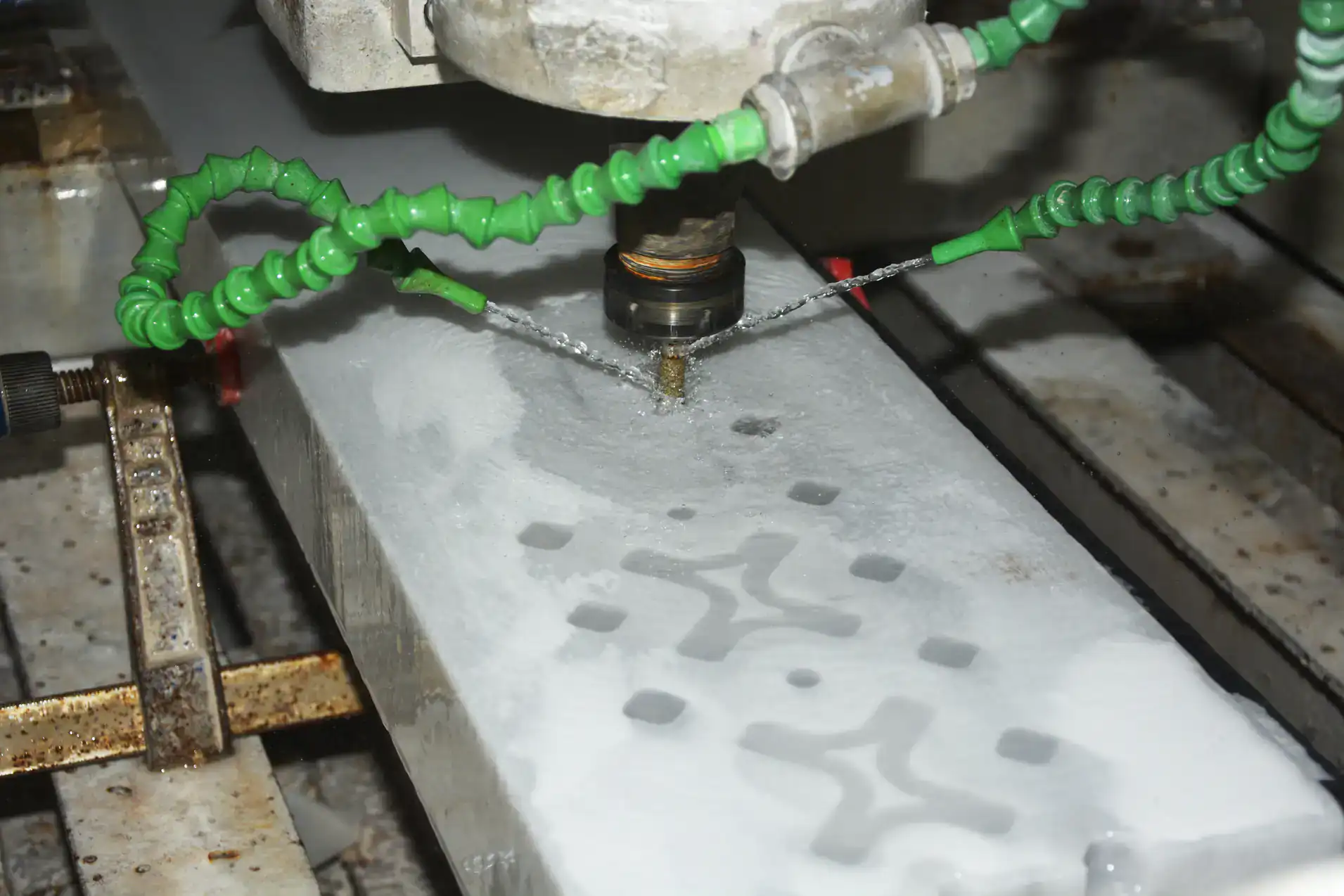
Traditional marble cutting uses diamond-blade saws that generate significant heat and vibration. That heat can cause discoloration in certain marble types, and the vibration creates microfractures that compromise structural integrity over time.
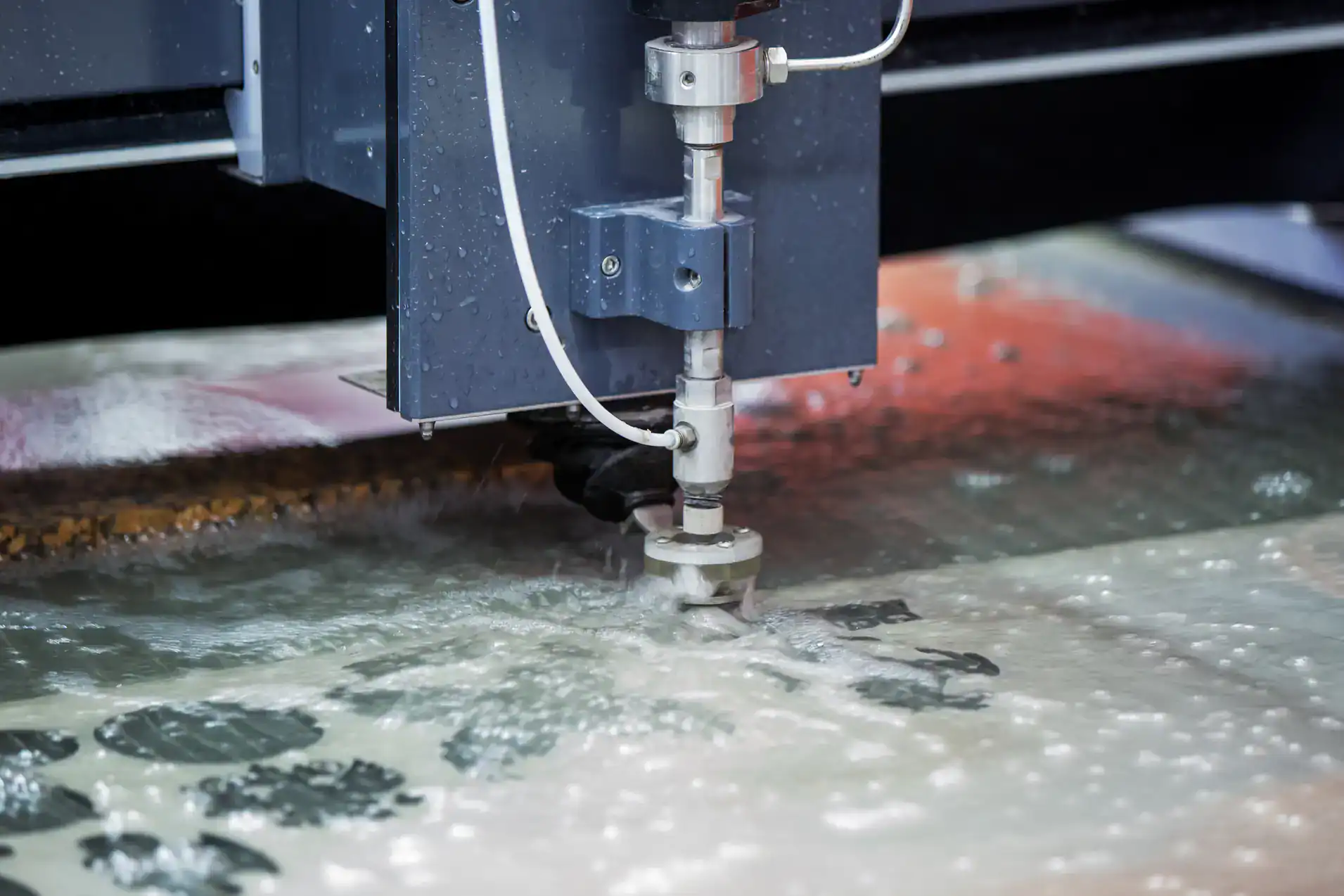
Waterjet cutting uses a cold process—high-pressure water mixed with abrasive garnet. No heat means no discoloration, no thermal stress, and no heat-affected zones that weaken the stone. The marble’s natural properties stay intact.
The practical difference shows up in edge quality and design capability. Waterjet-cut edges come off the machine smoother, often requiring minimal finishing. And the technology handles complex shapes, internal cutouts, and intricate patterns that would require multiple setups and specialized tooling with traditional methods. You get better results in less time, with less material waste.
Waterjet cutting excels at projects that demand precision and complexity. Architectural installations with intricate inlays, custom mosaic patterns, and decorative elements benefit most. The technology handles tight tolerances required for seamless installations in high-visibility applications.
Countertops with complex edge profiles, integrated drain boards, or custom cutouts for fixtures get cleaner results than traditional fabrication methods. Furniture components—table tops with inlay work, decorative panels, custom bases—come out with the precision needed for fine furniture applications.
Restoration projects see significant advantages. When you’re matching existing marble work in historic properties, waterjet cutting replicates original patterns and profiles with accuracy that hand-cutting can’t match. For Melville’s mix of modern corporate spaces and established residential properties, this capability matters. You can execute contemporary designs and historically accurate restoration work with the same equipment.
CNC waterjet cutting delivers tolerances as tight as ±0.005 inches. That’s roughly the thickness of a human hair. For context, traditional cutting methods typically achieve ±0.030 inches at best.
This level of accuracy matters when you’re installing marble components that need to fit together seamlessly. Countertop miters that don’t align create visible gaps and weak joints. Mosaic pieces that vary by even a few thousandths throw off entire patterns. Architectural elements that don’t fit precisely require field modifications that add labor costs and compromise design intent.
CNC control eliminates operator variance. The machine cuts your design exactly as specified in the CAD file, every single time. When you’re fabricating multiple identical pieces or components that must fit together precisely, this consistency is what makes the project work. You’re not hoping for a skilled operator to nail the cut—you’re getting programmed precision that doesn’t vary piece to piece.
Waterjet cutting reduces material waste by up to 30% compared to traditional methods. The narrow kerf width—the material removed during cutting—means more usable marble from each slab. CNC programming optimizes cut paths to maximize material usage and minimize scrap.
The process itself uses water and garnet abrasive. No toxic chemicals, no harmful fumes, no hazardous waste. The water and spent garnet are safe for standard disposal and don’t burden the environment. Many fabricators recycle the garnet for non-cutting applications.
For projects where material cost is significant—and with marble, it usually is—this efficiency translates directly to your bottom line. You’re buying less raw material to produce the same finished components. The environmental benefit is real, but the financial advantage is what most contractors and designers notice first. Less waste means lower material costs and reduced disposal expenses.
Waterjet cutting typically reduces project completion time by 40-45% for complex designs. Simple straight cuts might not show dramatic time savings, but projects with curves, internal cutouts, or intricate patterns see significant advantages.
Traditional methods require multiple setups, tool changes, and often hand-finishing work that adds days to fabrication schedules. Waterjet cutting handles complex geometries in a single setup. The machine cuts internal holes, sharp corners, and flowing curves without stopping to change tools or reposition the material.
The time savings compound across the project. Faster fabrication means earlier delivery. Cleaner edges mean less finishing work before installation. Better accuracy means fewer field modifications during installation. For projects on tight schedules—commercial renovations with hard opening dates, residential projects coordinating multiple trades—this timeline compression matters. You’re not just saving time in fabrication; you’re reducing risk across the entire project schedule.
Start with your CAD files in DXF or DWG format. These give us exact dimensions and geometry, which drives accurate pricing. If you don’t have CAD files yet, detailed drawings with dimensions work—we can create the CAD files as part of the service.
Specify your marble type if you’ve already selected it. Different marbles have different hardness levels and cutting characteristics that affect processing time. If you haven’t chosen a marble yet, describe your application and aesthetic goals. We can recommend materials that work well for your specific use case.
Include quantity, timeline requirements, and any edge finishing or special handling needs. A single custom piece prices differently than production runs of identical components. Rush timelines affect scheduling and pricing. Edge finishing requirements—polished, honed, or as-cut—change the scope of work.
The more detail you provide upfront, the more accurate the quote. We’d rather ask clarifying questions during quoting than surprise you with changes later. Most quotes turn around within 24-48 hours once we have complete information.
Useful Links
Other Services we provide in Melville