Hear from Our Customers
You’re working with expensive marble. The last thing you need is cracking from heat, rough edges that require rework, or a cutting method that can’t handle the complexity of your design.
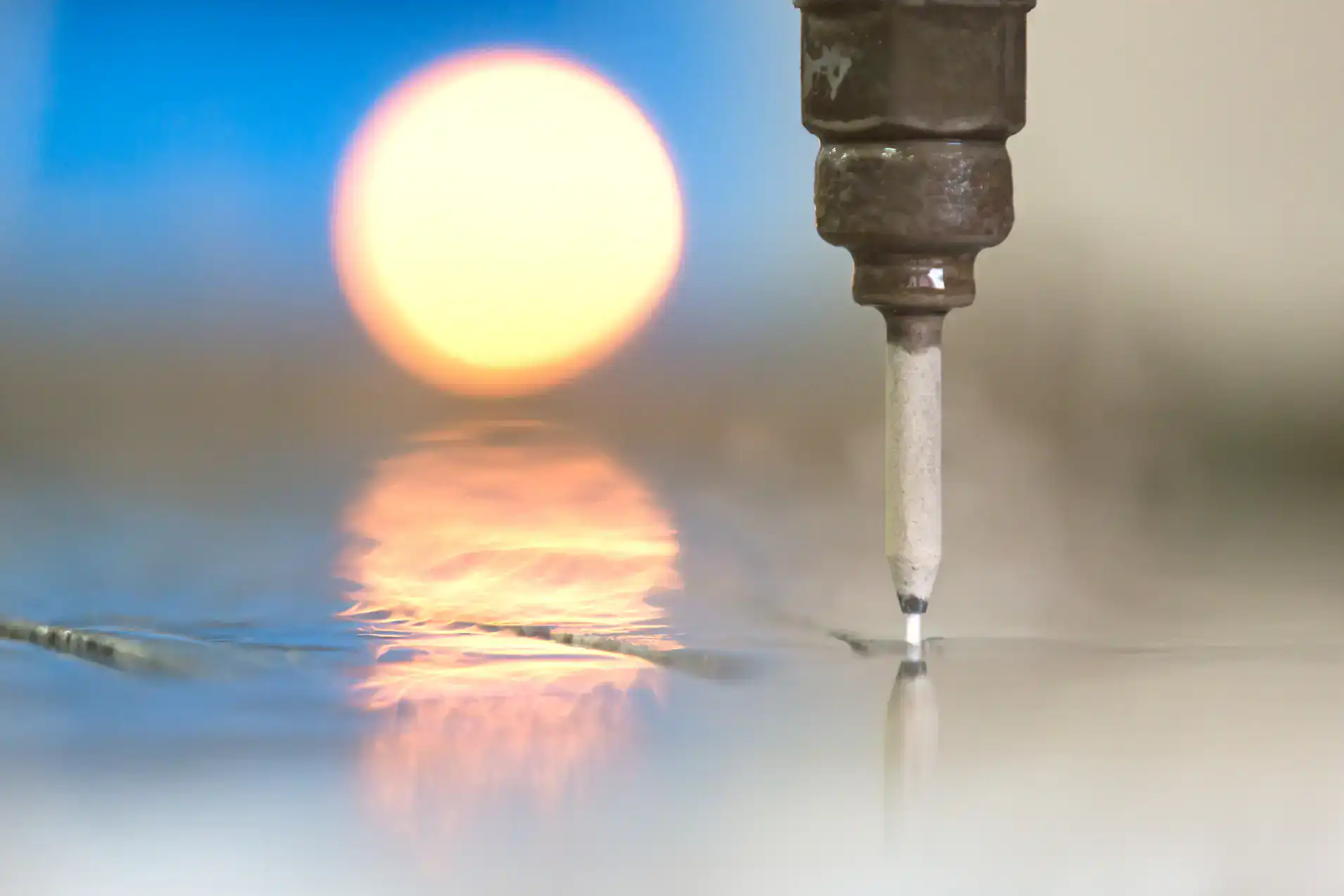
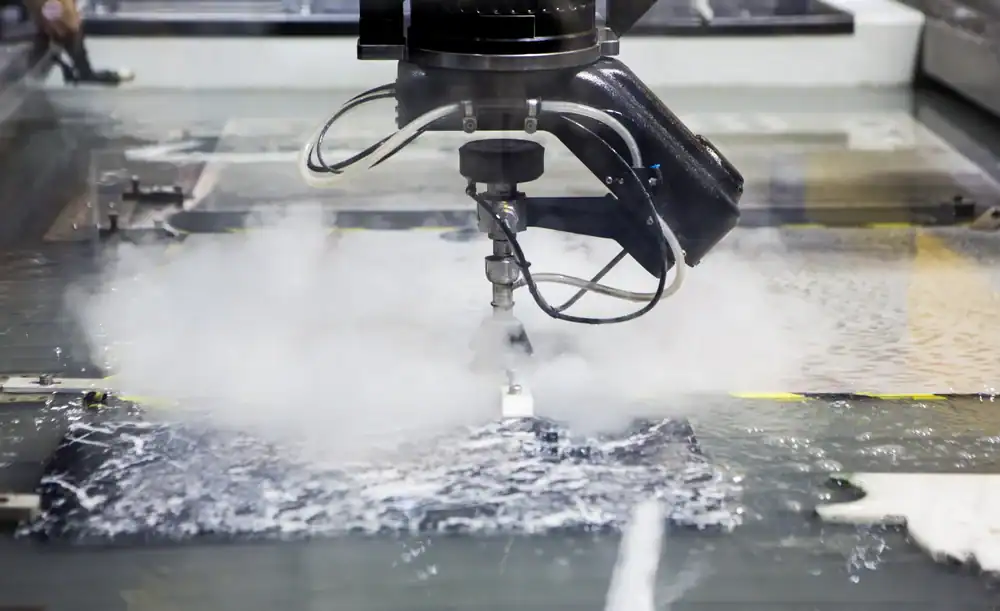
Waterjet cutting uses high-pressure water mixed with fine abrasives to slice through marble without generating heat. That means no thermal stress, no cracking, and no compromised structural integrity. The cuts come out smooth and burr-free, so you’re not stuck with secondary finishing work or delays.
If your project calls for medallions, inlays, curved edges, or intricate patterns, waterjet handles it. The technology follows your CAD file or template with tight tolerances, so what you designed is what you get. No guessing. No approximations.
You also get better material yield. Waterjet cutting is precise enough to maximize every slab, which matters when you’re working with premium stone. Less waste means you’re not throwing money away on offcuts that can’t be used.
We serve architects, designers, contractors, and homeowners throughout Mount Sinai, NY with precision marble cutting services. We work with the kind of high-end residential and commercial projects common in this area—where details matter and mistakes aren’t an option.
Mount Sinai’s real estate market reflects a community that values quality craftsmanship. When you’re investing in custom marble work for a luxury home or commercial space, you need a fabrication partner who understands both the material and the expectations.
We use CNC-controlled waterjet systems that deliver consistent, repeatable results across projects of any scale. Whether you’re a homeowner planning a kitchen renovation or a contractor managing a multi-unit build, you get the same level of precision and attention.
You start by providing your design—whether that’s a CAD file, a template, or detailed measurements. We review the specs to confirm feasibility and optimize the cutting path for your specific marble type and thickness.
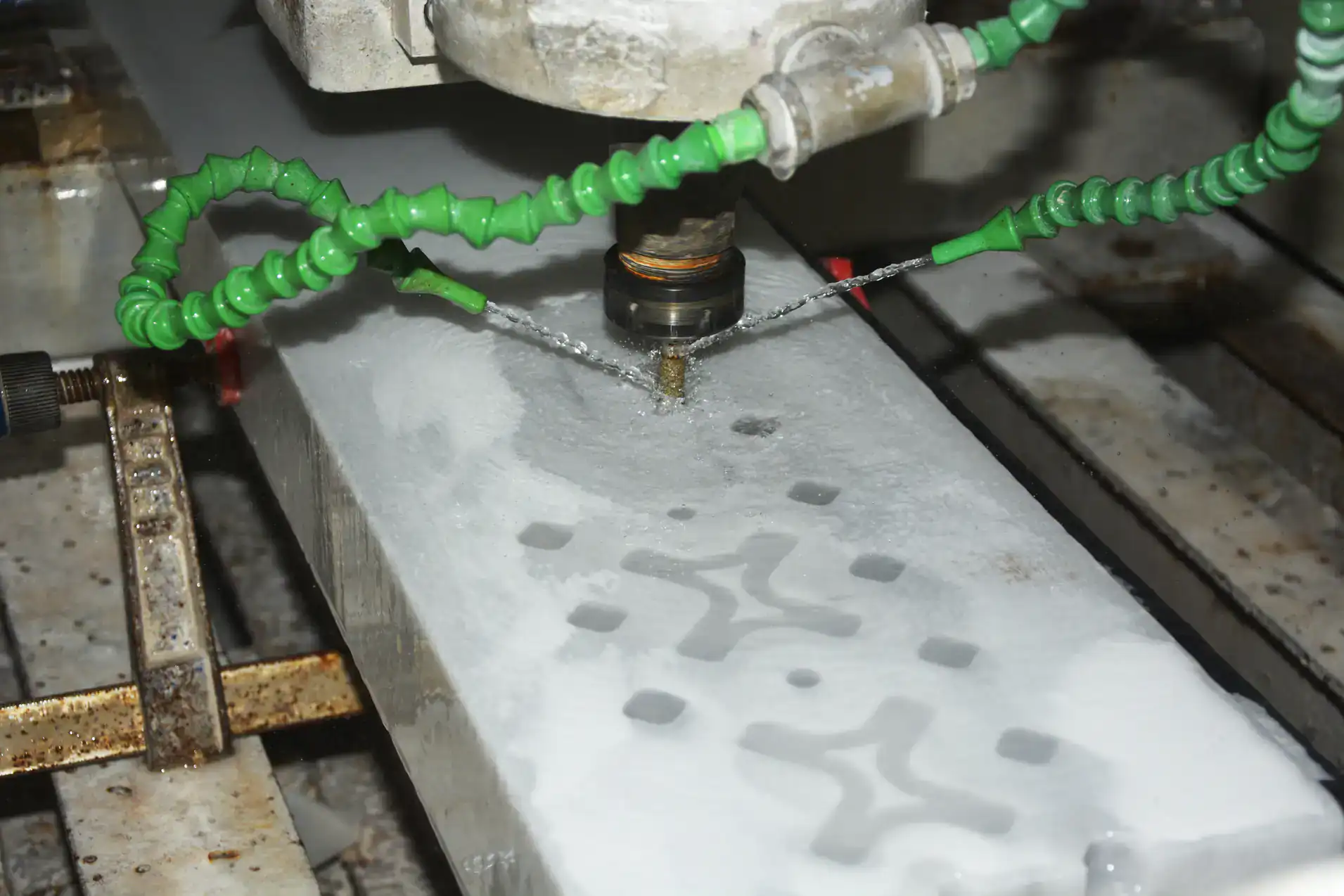
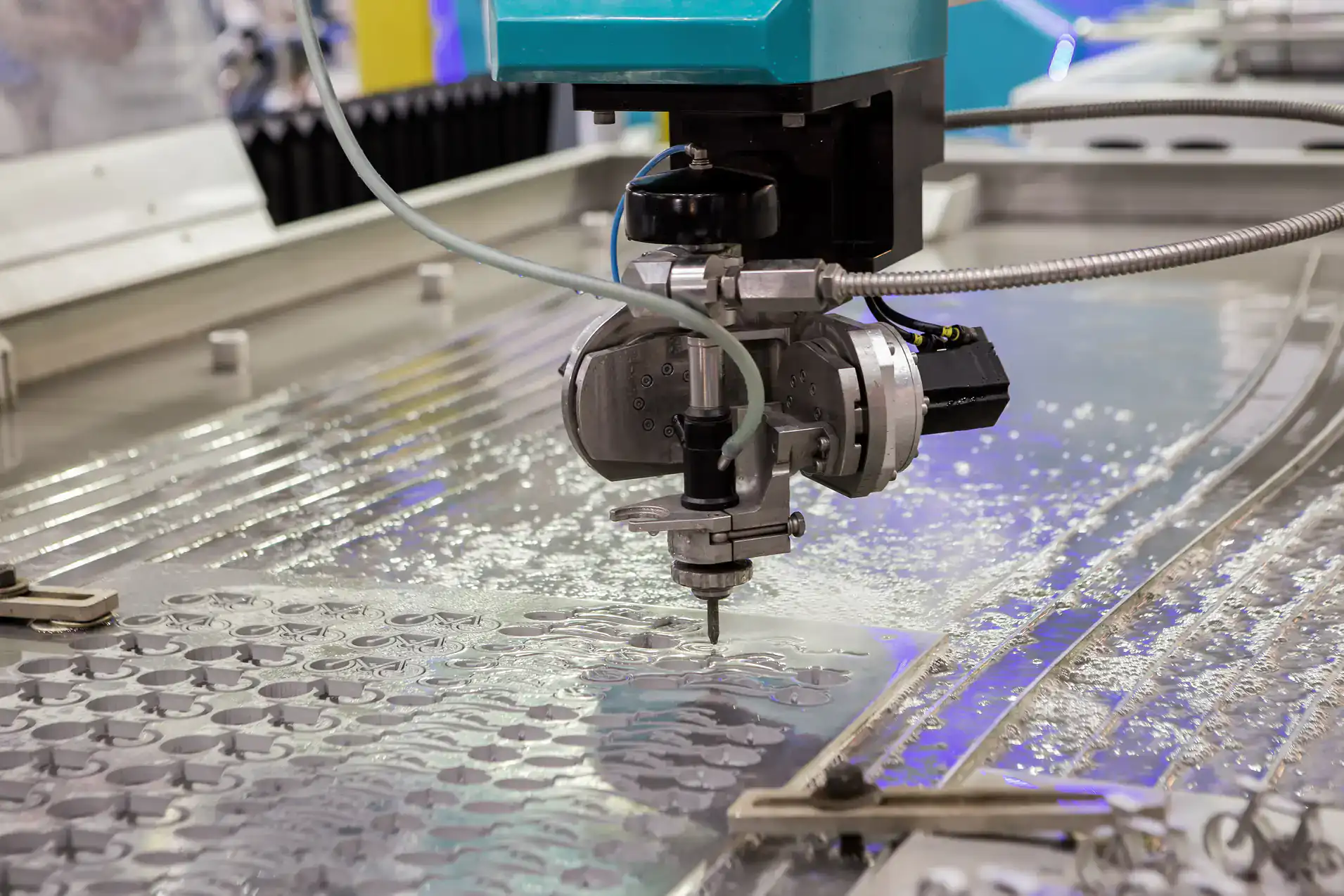
Once the file is programmed into the CNC system, the waterjet begins cutting. A high-pressure stream of water mixed with garnet abrasive erodes the marble along your exact design path. The process is cold, so there’s no heat-affected zone and no risk of thermal cracking. The system can cut through 12 inches of stone or more, handling even thick slabs without issue.
After cutting, the edges are smooth and clean. Depending on your project requirements, the pieces may be ready to install as-is, or we can discuss any additional finishing you need. There’s no dust generation during the process, and the water is recirculated, so the operation stays clean and environmentally responsible.
You receive marble components that fit your specifications exactly, with edges that don’t need extensive rework and tolerances tight enough for precision installations. The turnaround depends on project complexity, but the process itself is efficient compared to traditional cutting methods that require multiple tool changes and secondary operations.
Ready to get started?
Waterjet cutting handles marble of virtually any thickness. If you’re working with standard countertop material or architectural slabs several inches thick, the technology adapts. The cutting speed adjusts based on material density and thickness, but the precision stays consistent.
You can specify intricate patterns—curves, angles, cutouts for fixtures, decorative inlays, or complex geometric designs. The waterjet follows your design file with tolerances measured in thousandths of an inch. That level of accuracy matters when you’re fitting marble into existing spaces or creating multi-piece installations that need to align perfectly.
Mount Sinai’s design trends lean toward custom, high-end finishes. Homeowners here aren’t looking for cookie-cutter solutions. Waterjet cutting supports that by enabling one-off custom pieces without the cost penalties you’d see with traditional fabrication methods. Whether it’s a fireplace surround, a kitchen island with integrated design elements, or architectural features for a commercial lobby, the process accommodates custom work at production-level efficiency.
The environmental profile is cleaner than traditional cutting. No hazardous dust, no chemical coolants, and water recycling throughout the process. For projects pursuing green building standards or simply aiming to minimize environmental impact, waterjet cutting aligns with those goals.
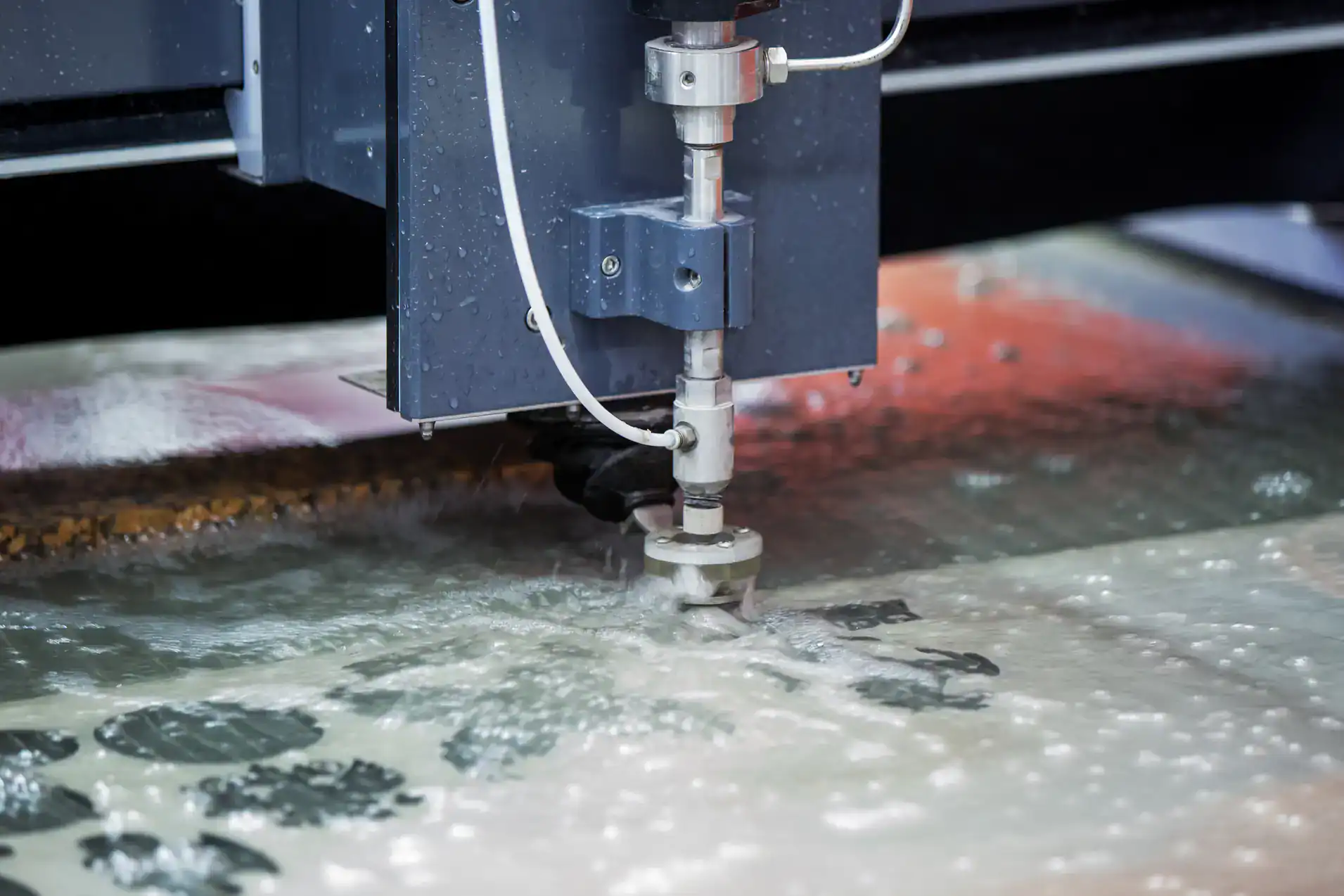
Yes. Waterjet cutting is a cold-cutting process, meaning it doesn’t generate heat that could cause thermal stress or cracking in the marble.
Traditional cutting methods like saws or grinders create friction and heat. When marble heats up unevenly during cutting, internal stresses can cause cracks—either immediately or later as the stone settles. Waterjet avoids this entirely by using high-pressure water and abrasive to erode the material rather than mechanically forcing a blade through it.
This makes waterjet ideal for intricate designs where you’re cutting close to edges, creating thin sections, or working with marble that has natural veining or inclusions. The stone stays structurally sound throughout the process. You’re not risking expensive material on a cut that might fail halfway through.
Our waterjet systems can hold tolerances within a few thousandths of an inch, depending on material thickness and design complexity.
For most architectural and design applications, that level of precision means your marble pieces fit exactly as specified. If you’re creating a multi-piece installation—like a floor medallion or a countertop with integrated design elements—the components align without gaps or mismatches.
The CNC control system follows your design file directly, so there’s no manual interpretation or approximation. What you draw is what gets cut. This consistency matters when you’re fabricating multiple identical pieces or when your design requires tight fits with other materials like metal inlays or glass inserts.
No. Waterjet cutting is a wet process, so dust isn’t generated during cutting.
The water stream that cuts the marble also suppresses any particles that would otherwise become airborne. This is a significant advantage over dry cutting methods, which create clouds of fine marble dust that pose respiratory hazards and require extensive containment and cleanup.
The cutting area stays relatively clean, and the water used in the process is typically recirculated through a filtration system. Any marble particles are captured in the water tank as sediment, which can be disposed of safely. For indoor fabrication environments or job sites with strict cleanliness requirements, waterjet cutting minimizes disruption and health risks compared to traditional methods.
Our waterjet systems can cut marble up to 12 inches thick at production speeds, and even thicker material is possible with adjusted parameters.
Most architectural marble applications use material between 3/4 inch and 3 inches thick, which waterjet handles easily. If you’re working with thicker slabs for structural elements, sculptures, or specialty architectural features, the technology scales up without requiring different equipment or processes.
Thicker material does take longer to cut because the waterjet stream needs more time to penetrate the full depth, but the quality and precision remain consistent. You’re not limited by blade depth or tool capacity the way you would be with saws or routers.
Waterjet cutting uses a narrow kerf—the width of material removed during cutting—which means less marble is lost to the cutting process itself.
Traditional saw blades can remove a quarter inch or more of material with each cut. When you’re working with expensive marble and making multiple cuts on a single slab, that waste adds up quickly. Waterjet cutting uses a stream that’s typically less than a tenth of an inch wide, so you lose far less material.
The precision of waterjet also allows for tighter nesting of parts on a slab. You can position multiple pieces closer together because you’re not accounting for blade width, tool approach angles, or the need for extra clearance. This optimization means you get more usable pieces from each slab, which directly reduces your material costs on any project.
In most cases, waterjet-cut edges are smooth enough to use as-is, though some applications may call for polishing or specific edge profiles.
The quality of the cut edge depends on cutting speed and abrasive flow rate. For applications where the cut edge will be visible—like a countertop edge or a decorative panel—you can specify a slower cutting speed that produces a smoother finish right off the machine. This finish is often adequate for installations where the edge will be seen but not touched frequently.
If your design requires a polished edge or a specific profile like a bullnose or ogee, those finishing steps happen after waterjet cutting. But the edge coming off the waterjet is already straight and true, so finishing work is minimal compared to edges cut with methods that leave chipping, burning, or irregularities that need extensive correction.
Useful Links
Other Services we provide in Mount Sinai