Hear from Our Customers
You’re not looking at another fabricator who promises precision and delivers close enough. You need cuts that fit the first time because your client’s timeline doesn’t have room for do-overs, and your material budget doesn’t cover mistakes.
Custom marble waterjet cutting in North Amityville means your intricate inlays come out clean. Your radius cuts match the template. Your edge profiles don’t need an hour of hand-finishing because the machine already did the work.
When you’re working with Calacatta that costs $85 per square foot, or you’ve got a restoration project where the marble needs to match 1920s detailing, you can’t afford to guess. The waterjet reads your CAD file and follows it exactly. No blade deflection. No thermal stress that cracks along the veining. Just cold water and garnet doing what saws can’t.
We work with architects, contractors, and stone fabricators across Long Island who need precision marble waterjet cutting in North Amityville that doesn’t require a second pass. We’re not a retail showroom. We’re the shop you call when the design is complicated and the material is expensive.
Long Island’s luxury residential market and commercial renovation projects don’t leave room for approximation. When you’re fabricating marble countertops for a Dix Hills kitchen remodel or cutting custom medallions for a Huntington lobby restoration, the tolerance matters. We run CNC-controlled waterjet systems that hold ±0.003-inch accuracy across the full sheet.
You send the file. We program the machine. The marble comes out matching what you drew.
You start by sending us your design file—DXF, DWG, or PDF with dimensions. If you’re working from a template or a hand sketch, that works too. We’ll convert it into a CNC program that the waterjet can read.
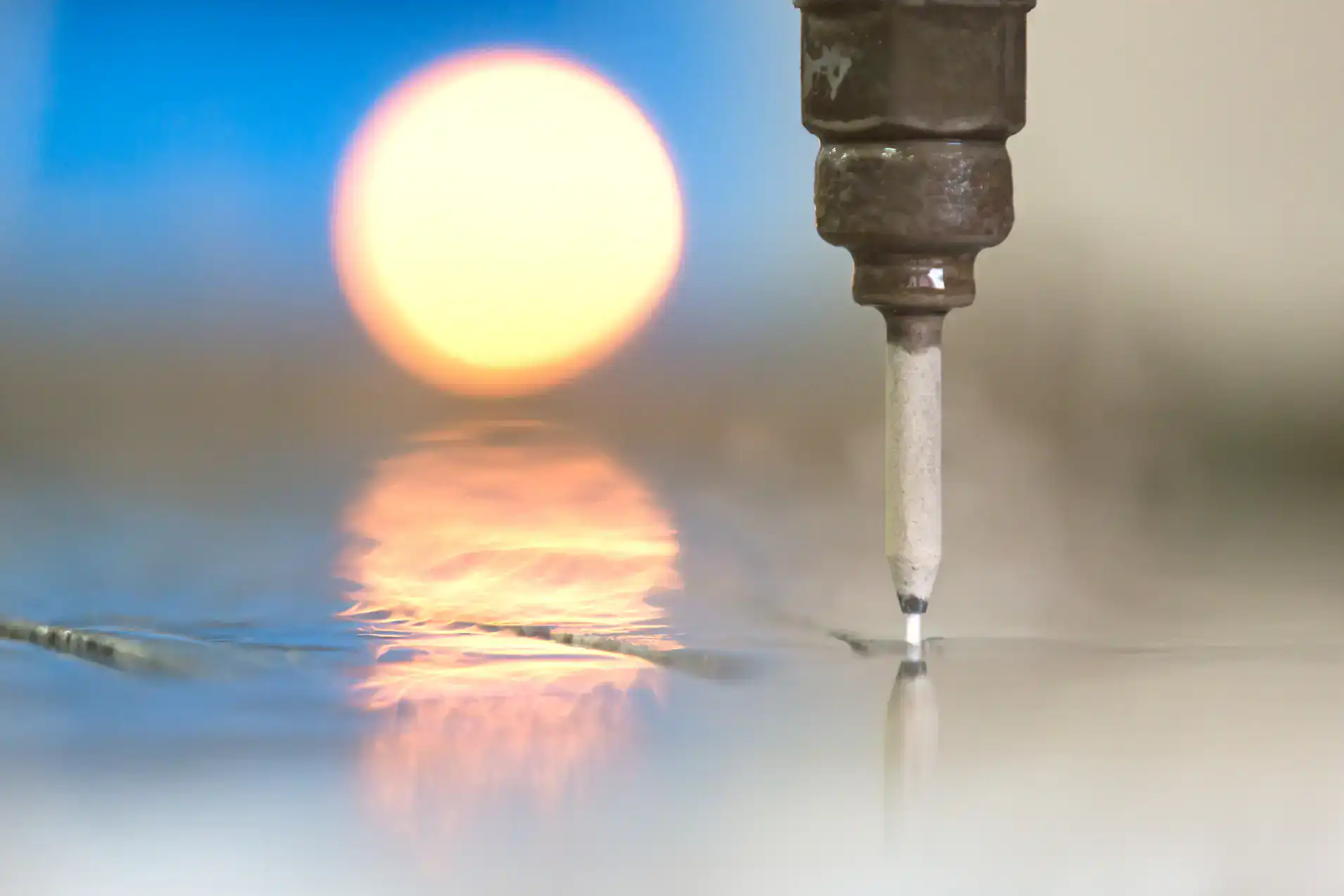
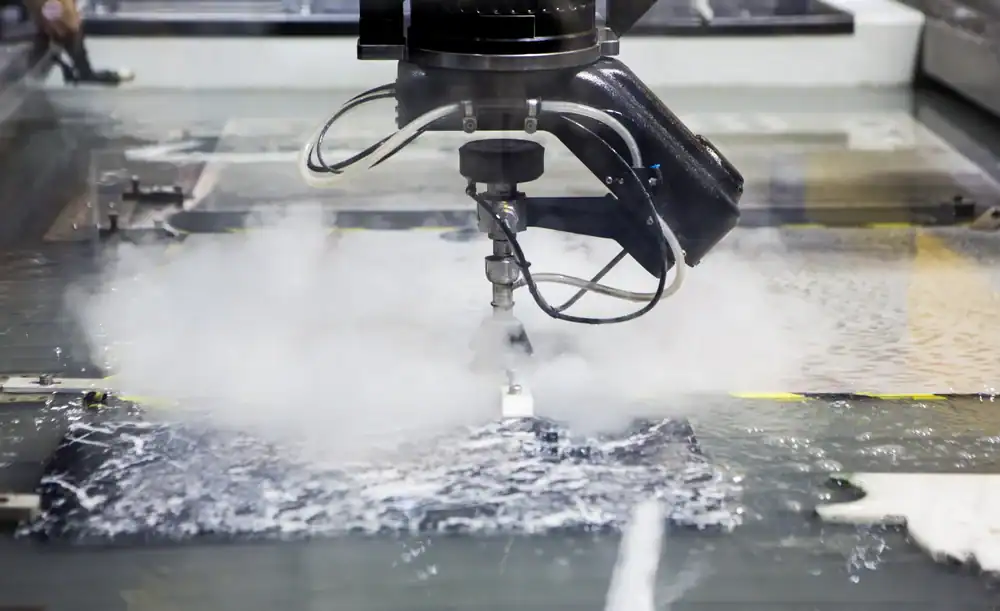
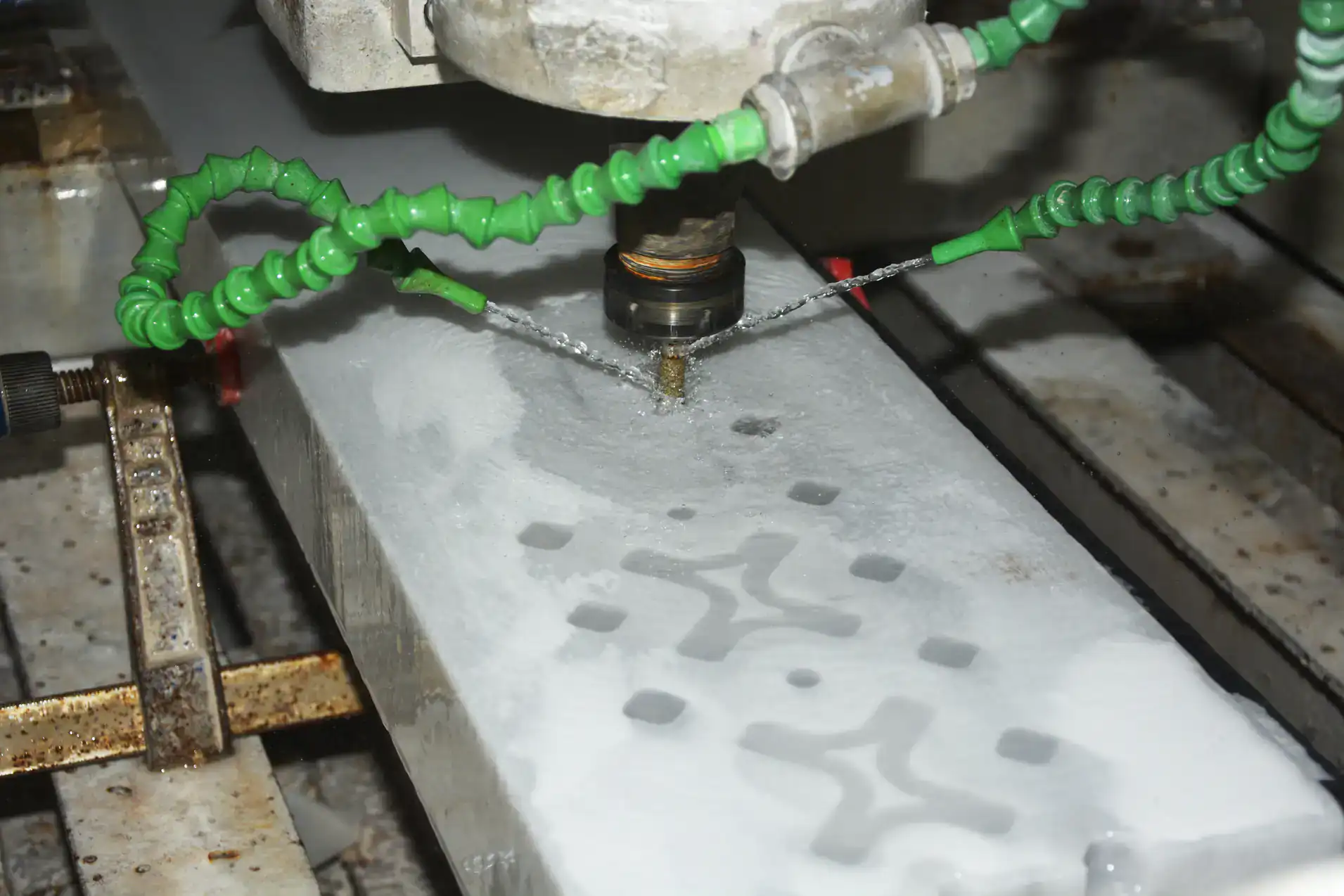
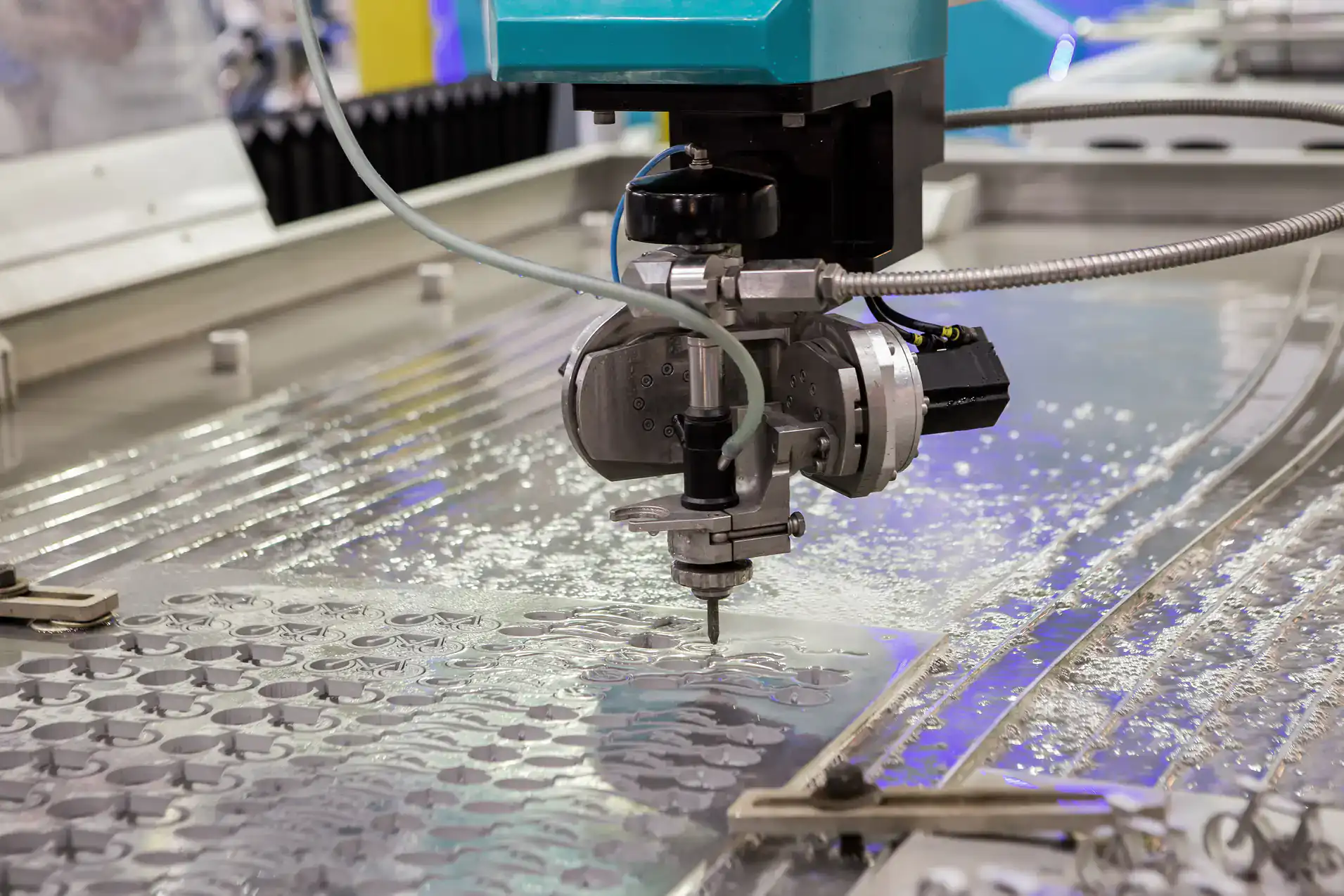
Once the file is programmed, we load your marble slab onto the cutting bed and secure it. The waterjet head moves into position, and a stream of water mixed with garnet abrasive starts cutting at 60,000 PSI. It’s cold cutting, so there’s no heat warping the stone or creating microfractures along the veins.
The machine follows your design exactly. Curves, angles, interior cutouts—it handles all of it in one pass. When the cut is done, you get a finished edge that’s clean enough to install without heavy grinding. Most projects are ready within a few days, depending on complexity and size. If you’re on a tight schedule, we can prioritize turnaround.
Ready to get started?
CNC marble cutting in North Amityville gives you access to cuts that traditional saws can’t handle. Interior cutouts for sink openings, tight-radius curves for custom furniture, intricate inlay patterns for flooring—all of it gets done without switching tools or setups.
The process doesn’t generate heat, which means your marble doesn’t develop stress cracks or discoloration along the cut line. That matters when you’re working with white Carrara or heavily veined Statuario where any thermal damage shows up immediately. You also don’t deal with chipping on the exit side of the cut, which saves hours of edge polishing.
Material waste drops significantly because the waterjet cutting stream is only 0.04 inches wide. You can nest multiple pieces on one slab and maximize yield. For contractors managing budgets on high-end residential projects across Nassau County, that difference adds up quickly. Less waste means lower material costs and fewer change orders when the client wants to add a detail mid-project.
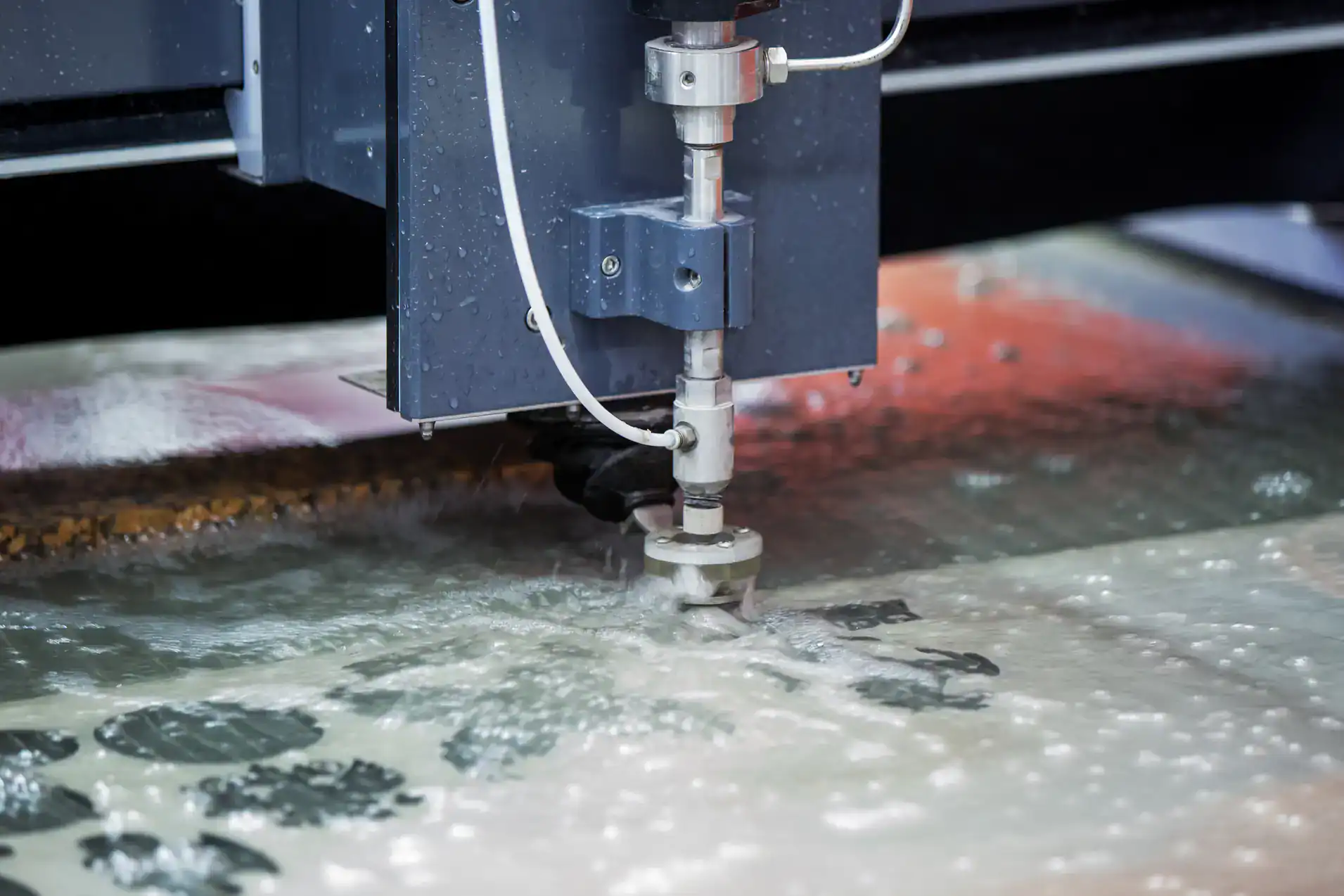
Waterjet cutting holds tolerances down to ±0.003 inches, which is significantly tighter than what you’ll get from a bridge saw or handheld grinder. Traditional saws can deflect when they hit hard veining or dense sections of the marble, and that deflection shows up as a wavy edge or an off-dimension cut.
Waterjet doesn’t have that problem because there’s no physical blade to deflect. The cutting stream stays consistent across the entire path, whether you’re cutting through soft calcite or a quartz-heavy vein. That’s why it works for jobs where fit matters—like when you’re installing marble wainscoting panels that need to align perfectly, or cutting countertop sections that butt together without a visible seam.
If your project requires tight inside corners or detailed patterns, waterjet is the only method that can deliver that level of detail without hand-carving. You’re not going to get a 0.25-inch radius corner with a circular saw blade.
No. Waterjet is a cold-cutting process, so it doesn’t generate the heat that causes thermal shock or microfractures in natural stone. When you cut marble with a diamond blade, friction creates heat that can cause the stone to crack along existing veins or create new stress points that show up later during installation.
Waterjet eliminates that risk entirely. The cutting happens at ambient temperature, which means the structural integrity of the marble stays intact. That’s critical when you’re working with marble that already has natural fissures or heavy veining—materials that are more prone to cracking under thermal or mechanical stress.
You also don’t get the subsurface damage that happens with saw blades. Blades can create microcracks below the visible surface that weaken the stone over time. Waterjet cutting leaves a clean edge with no hidden damage, which is why it’s the preferred method for high-value installations where longevity matters.
Waterjet handles any project where precision, detail, or material cost makes traditional cutting risky. That includes custom countertops with integrated drainboards, intricate floor medallions, wall panels with relief patterns, and architectural elements like column caps or balustrades that need exact dimensions.
It’s especially useful for restoration work where you’re matching existing marble that’s no longer in production. If you need to replicate a 1930s floor pattern or cut replacement panels for a historic building, waterjet lets you work from a template or rubbing and reproduce the original design exactly. You’re not guessing with a handheld saw and hoping it’s close.
Commercial projects benefit too—lobby feature walls, reception desk tops, elevator surrounds. Anywhere the design calls for curves, angles, or cutouts that would take hours to template and cut by hand. Waterjet does it faster and more accurately, which keeps your labor costs down and your schedule on track.
The cutting stream is about 0.04 inches wide, compared to a saw blade that’s typically 0.125 inches or wider. That difference means you can fit more pieces onto a single slab and reduce the amount of material that ends up as scrap. On a full slab of marble, that can translate to an extra countertop section or a few more floor tiles.
For high-cost materials like book-matched Calacatta or rare Statuario, that waste reduction has a direct impact on your project budget. If you’re paying $80 to $100 per square foot for material, every inch you save matters. Waterjet also allows for tighter nesting of irregular shapes, so you’re not left with large unusable remnants.
The precision of waterjet cutting also means fewer rejected pieces due to dimensional errors. When cuts come out right the first time, you’re not scrapping slabs because they don’t fit. That reliability reduces your overall material spend and keeps your project on budget.
Turnaround depends on the complexity of the design and the size of the job, but most projects are completed within three to five business days from the time we receive your file and material. Simple cuts—straight edges, basic shapes—can often be done faster. Complex designs with multiple interior cutouts, tight curves, or detailed inlay work take longer because the machine needs more time to follow the path accurately.
If you’re on a tight deadline, we can prioritize your job to meet your schedule. That’s common for contractors working on renovation projects with fixed completion dates or architects coordinating installations with other trades. The key is getting us your design file early so we can program the machine and plan the cutting sequence.
Compared to traditional methods that require templating, multiple setups, and hand-finishing, waterjet is faster overall. You’re not waiting for a fabricator to make templates, cut rough blanks, and then spend hours grinding edges to match your specs. The waterjet does it all in one pass.
Waterjet cuts through marble up to six inches thick without any issue. The cutting stream maintains consistent pressure and abrasive flow regardless of material thickness, so you get the same edge quality on a two-inch countertop slab as you do on a quarter-inch tile.
Thicker material does take longer to cut because the waterjet needs to penetrate deeper, but the process doesn’t change. There’s no need to flip the slab or make multiple passes like you would with a saw that has limited blade depth. The waterjet goes straight through in one continuous cut.
That capability is useful when you’re fabricating heavy-duty applications like marble treads for staircases, thick vanity tops, or structural elements that need to support weight. You’re not limited by tool capacity, and you don’t have to worry about the cut wandering or angling as it goes deeper into the material.
Useful Links
Other Services we provide in North Amityville