Hear from Our Customers
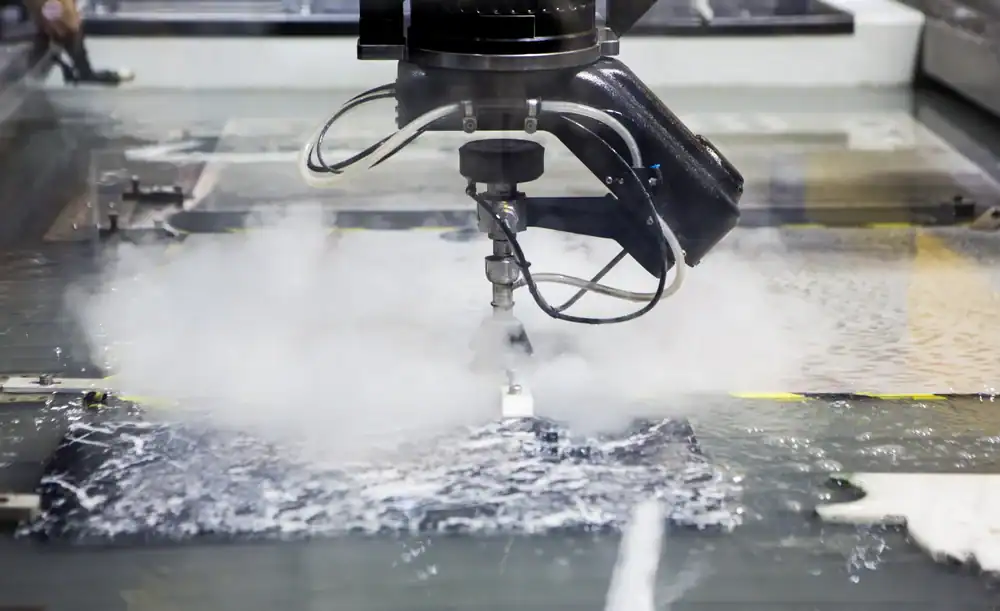
You’re looking at cuts accurate to within 0.005 inches. That’s the difference between a marble inlay that fits perfectly on the first try and one that needs shimming, filling, or scrapping entirely.
Traditional blade cutting heats the stone. That heat creates microfractures you won’t see until installation—or worse, six months later. Our waterjet cutting in North Babylon uses high-pressure water and abrasive, not friction. Your marble stays cold throughout the entire process.
Complex curves that would take hours with a wet saw get done in minutes. Internal cutouts for sinks, drains, or decorative patterns happen without multiple tool changes or hand-finishing. The edge comes off the machine smooth, not chipped.
If you’re working with expensive marble—Calacatta, Statuario, book-matched slabs—waste matters. Waterjet cutting removes about 0.04 inches of material per pass. A diamond blade removes three times that, turning your $200-per-square-foot marble into dust. You save material, which means you save money on every project.
Tri-State Waterjet has served architects, fabricators, and construction companies across Long Island and the tri-state area for over a decade. We’re not a startup figuring out tolerances on your dime.
North Babylon sits in the middle of a strong residential and commercial construction market. You’ve got high-end homes in Babylon Village, commercial projects in Deer Park, and restoration work throughout Suffolk County. That means marble work—countertops, wall cladding, decorative inlays, custom furniture—and it means you need a cutting service that understands both the material and the deadlines.
Our equipment handles slabs up to 13 feet by 6.5 feet. We work from your CAD files, hand sketches, or templates. You get the same precision whether you’re ordering one custom piece or fifty identical cuts for a hotel lobby.
You send us your design file—DXF, DWG, or even a PDF with dimensions. If you don’t have a digital file, we can work from a template or marked-up drawing. Our team reviews it for any potential issues: inside corners that are too tight, edges that might chip during handling, dimensions that don’t account for seam placement.
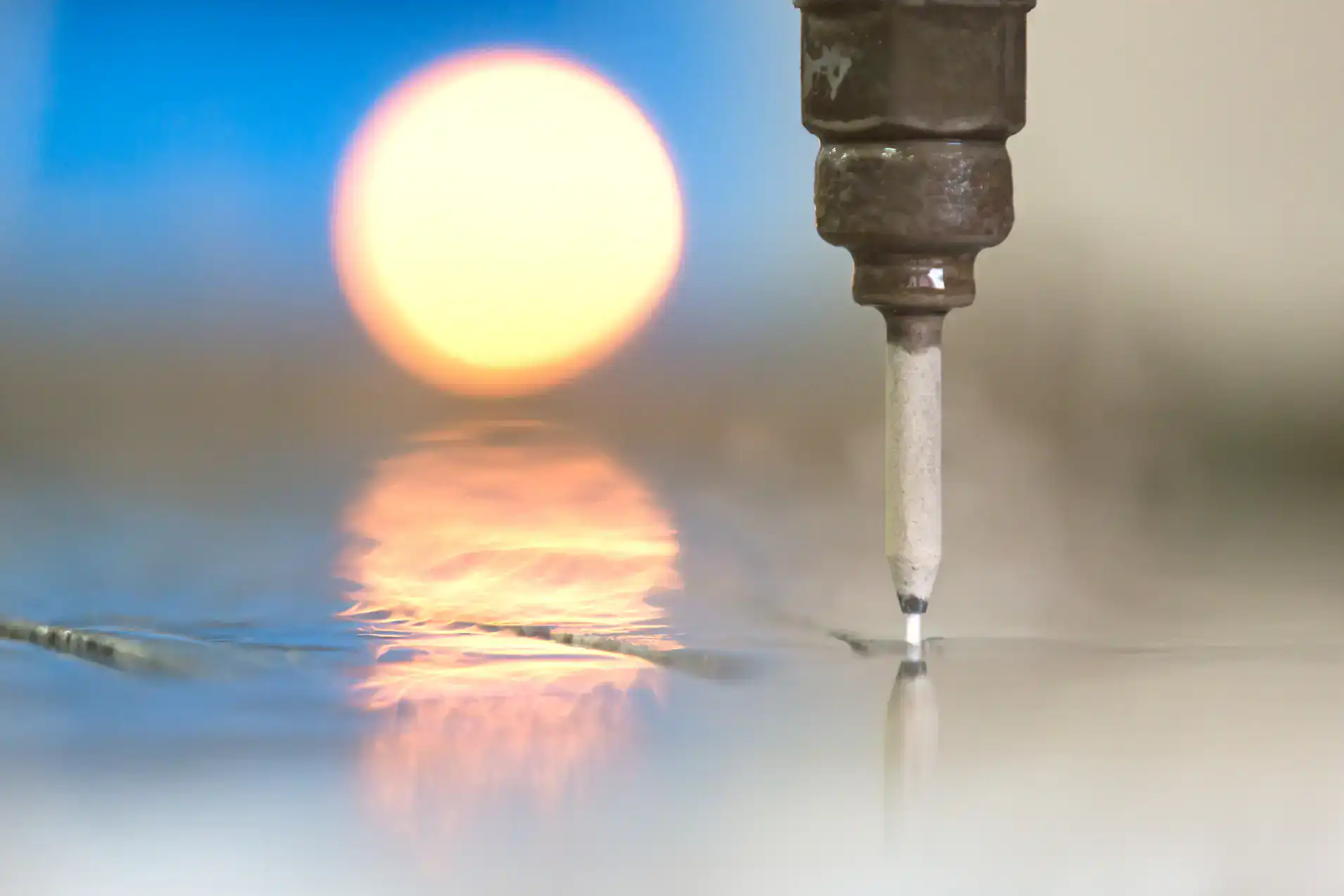
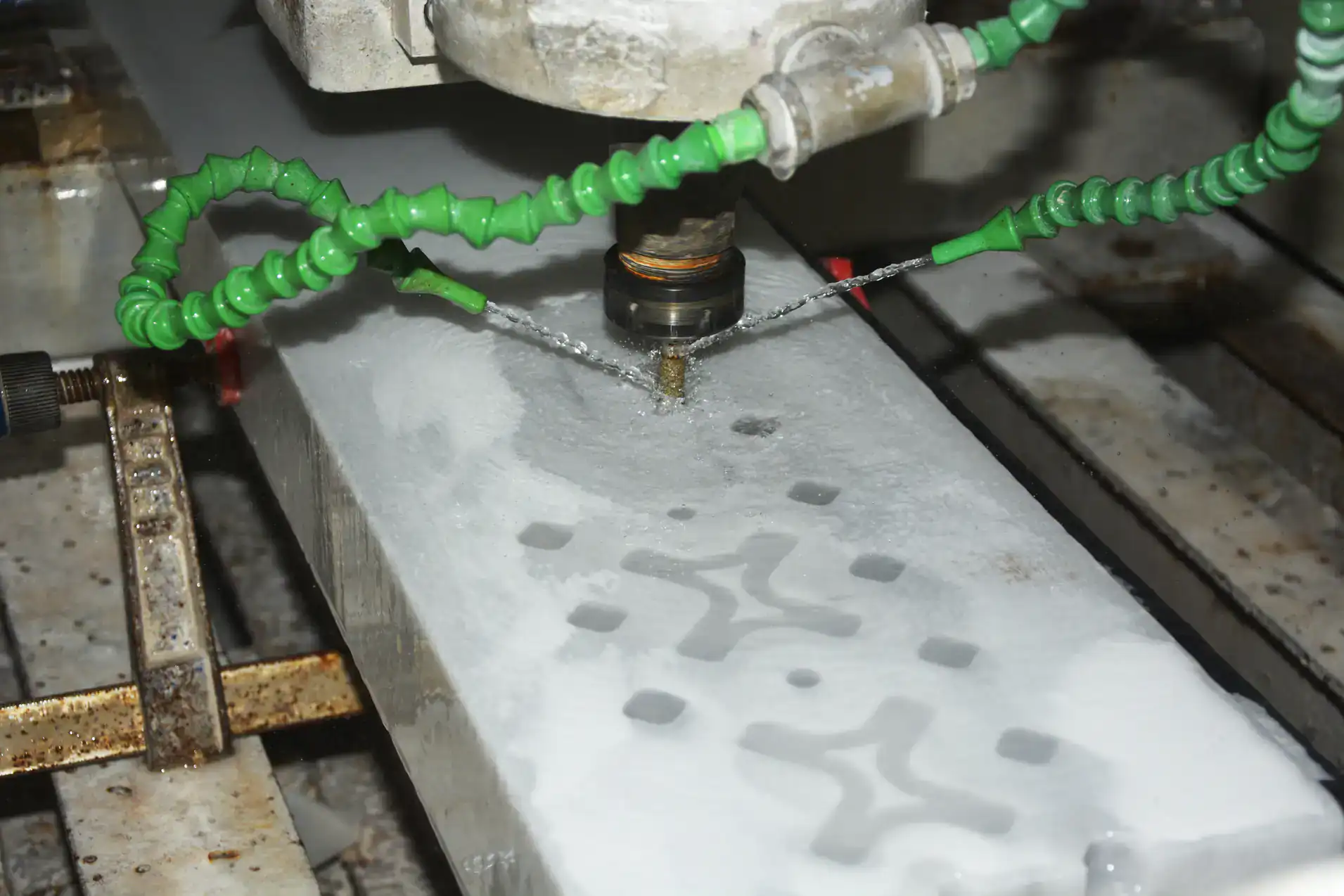
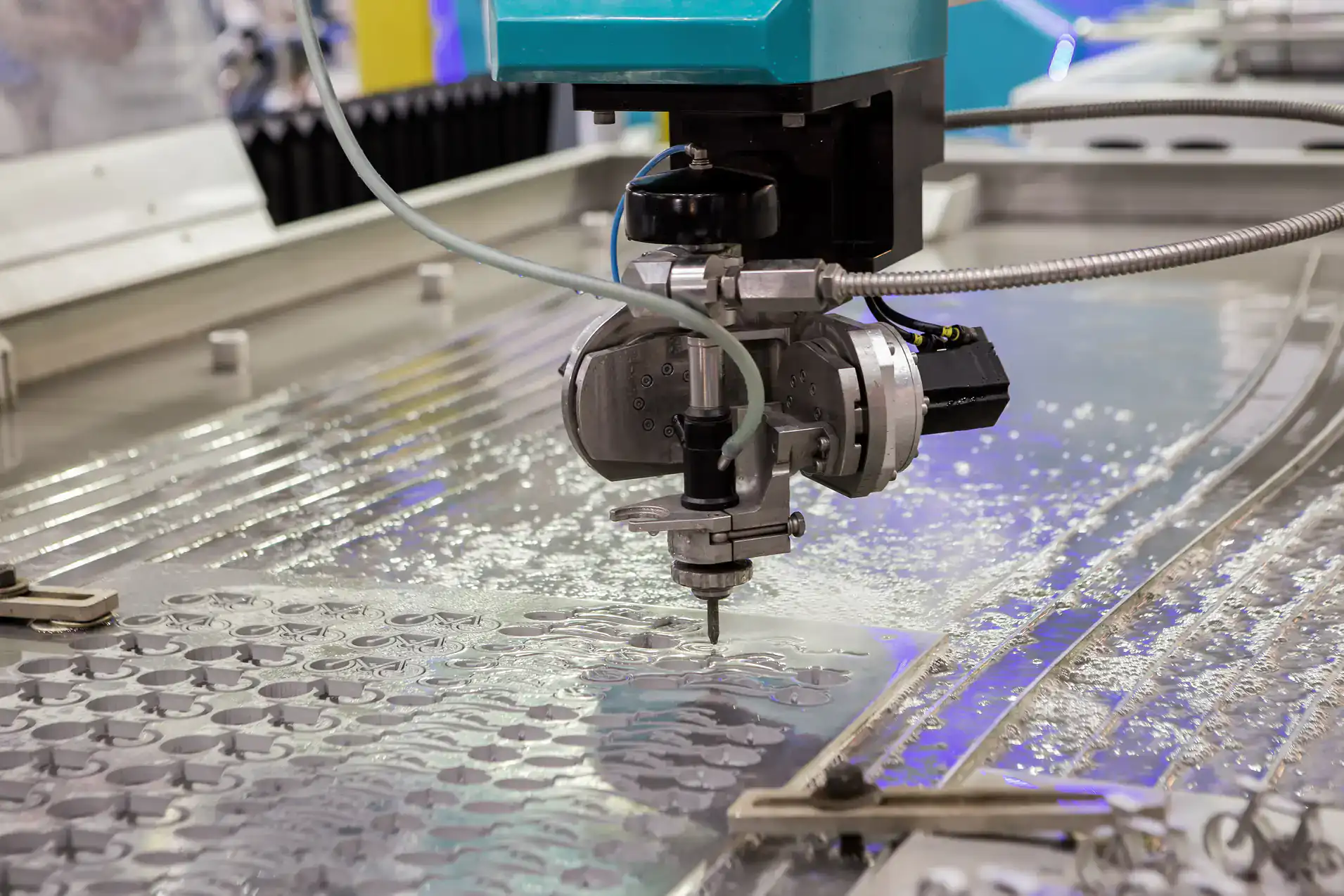
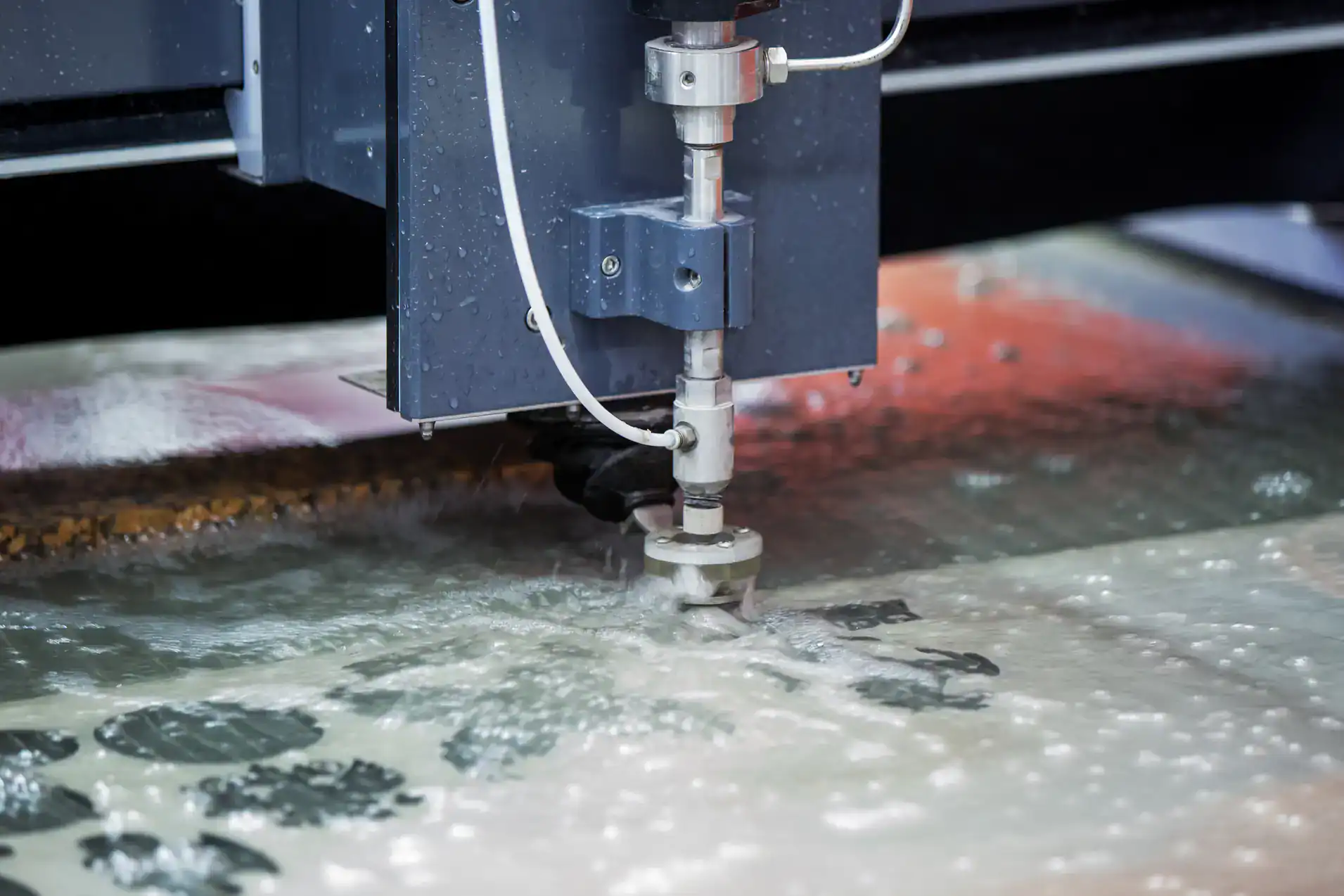
Once the file is approved, we load your marble slab onto the cutting table and secure it. The waterjet nozzle uses a stream of water mixed with garnet abrasive, pressurized to around 60,000 PSI. It cuts through marble like a laser through paper, but without any heat.
The CNC system follows your design path exactly. Curves, angles, interior cutouts—it’s all programmed. You’re not relying on someone’s steady hand with a grinder. The machine doesn’t get tired, doesn’t second-guess a line, and doesn’t round off a corner because it’s easier.
After cutting, we rinse the piece and inspect it against your specs. If you need multiple identical pieces, we run them back-to-back with the same program. Every piece matches. You get consistent results whether it’s the first cut or the fiftieth.
Ready to get started?
You get design review before we cut. That means someone with fabrication experience looks at your file and flags anything that might cause problems during installation. We’re not just running the machine—we’re thinking through how that piece gets handled, transported, and installed.
Waterjet cutting works for more than countertops. We cut marble floor medallions, wall panels, fireplace surrounds, furniture inlays, shower niches, and decorative screens. If you’re doing restoration work on older homes in North Babylon or Babylon Village, we can replicate intricate Victorian-era patterns that would be nearly impossible to cut by hand.
Long Island’s design market leans toward both classic elegance and modern minimalism. That means you’re seeing requests for everything from traditional ogee edges to geometric patterns with sharp angles. Waterjet handles both. The same machine that cuts a flowing arabesque can cut a grid of perfect squares.
Turnaround depends on complexity and schedule, but most single-piece custom cuts are done within a few days. Larger production runs get scheduled based on your installation timeline. If you’re coordinating with other trades and need cuts delivered on a specific date, we work with that.
Yes. Waterjet cuts marble up to 6 inches thick without creating the stress fractures you’d get from blade cutting or routing.
Thick slabs are where waterjet really separates itself from traditional methods. A circular saw or router generates friction, which generates heat, which creates expansion in the stone. That expansion is uneven—hotter at the cut line, cooler an inch away. The stone wants to move, but it’s locked in place. That’s when you get microfractures or, in worst cases, a crack that runs through the entire slab.
Waterjet doesn’t generate heat. The water actually cools the stone during cutting. There’s no thermal expansion, no internal stress, no risk of fracture from the cutting process itself. You’re mechanically eroding the stone with abrasive particles, not forcing a blade through it.
This matters most when you’re working with book-matched slabs or rare marble varieties. A crack in a $3,000 slab isn’t just a material loss—it’s a project delay, a client conversation, and a hit to your margin.
We hold tolerances to ±0.005 inches on most cuts. That’s about the thickness of two sheets of paper.
For context, most tile installations work with 1/8-inch grout lines. Cabinet tolerances are usually ±1/16 inch. When you’re cutting marble inlays, edge profiles, or pieces that need to fit against existing stone, that 0.005-inch tolerance is the difference between a clean fit and a visible gap.
The precision comes from CNC control. The cutting head follows a programmed path that doesn’t drift, doesn’t waver, and doesn’t depend on operator steadiness. If you need ten identical pieces, the tenth piece matches the first within those same tolerances.
This level of precision also means less hand-finishing. You’re not grinding down high spots or filling gaps with epoxy. The piece comes off the table ready for installation, which saves labor on your end.
Anything with curves, interior cutouts, or tight tolerances. Waterjet excels where traditional tools struggle or fail.
Floor medallions are a perfect example. You’re cutting concentric circles, radiating patterns, maybe some leaf or scroll details. Doing that with a wet saw means dozens of straight cuts and hours of hand-grinding to smooth the curves. Waterjet cuts the entire pattern in one setup, with smooth edges that need minimal finishing.
Kitchen islands with integrated cutting boards, trivets, or decorative inlays also benefit. You’re cutting a recess with exact depth control and clean corners. Sink cutouts in marble vanities—especially undermount sinks with tight radius corners—come out cleaner and faster than router templates.
Architectural work is where waterjet really shines. Wall panels with geometric patterns, privacy screens with repeating motifs, column caps with detailed profiles. If you’re doing commercial lobbies, hotel bathrooms, or high-end residential projects in the North Babylon area, waterjet gives you design flexibility that blade cutting simply can’t match.
Waterjet handles edge profiling, but it depends on the profile complexity and your finishing requirements.
Simple edges—straight cuts, bevels, basic chamfers—come off the waterjet ready to install. You might hit them with a polishing pad if you want a high-gloss finish, but the edge is smooth and consistent.
Complex profiles like ogee, bullnose, or dupont edges are typically better suited for a CNC router with diamond tooling after the main slab is cut. Waterjet can rough out these profiles, but achieving that polished, rolled edge usually requires a secondary process.
Where waterjet really helps with edges is on curved or irregular shapes. If you’re cutting a freeform countertop edge, a serpentine bar top, or a radius corner, waterjet gives you that smooth curve without the faceting you’d get from straight cuts. You’re starting with a much better edge, which means less hand-work to finish it.
For projects where the edge is going to be hidden—under a cabinet lip, behind trim, or against a wall—waterjet edges are often finish-ready with no additional work.
Waterjet typically costs more per linear foot than straight blade cuts, but less overall when you factor in waste, labor, and design complexity.
A straight 8-foot cut on a countertop slab costs roughly the same whether you use a bridge saw or waterjet. But the moment you add curves, angles, or interior cutouts, traditional methods require multiple setups, tool changes, and hand-finishing. That labor adds up fast.
Waterjet cuts complex shapes in one setup with minimal hand-finishing. You’re paying for machine time, but you’re saving on labor hours. For most custom projects, that trade-off works in your favor—especially when you’re paying skilled fabricators $40-60 per hour.
Material waste is the other cost factor. Waterjet removes about 0.04 inches of material per cut. A 10-inch diamond blade removes 0.125 inches—that’s three times as much marble turned into slurry. On a $200-per-square-foot slab, that waste adds up quickly. You’re also reducing the risk of a ruined slab from heat cracks or blade chatter, which can cost you the entire piece.
For production runs—say, fifty identical marble tiles with a decorative cutout—waterjet becomes significantly more cost-effective because you’re programming once and running the same cut repeatedly with zero variation.
Yes. We cut marble, granite, limestone, slate, travertine, and engineered stone without changing tooling or setup.
This matters when you’re doing projects that mix materials—a marble countertop with a granite backsplash, a limestone floor with marble inlay borders, or a bathroom with marble walls and slate shower pan. You’re not coordinating between multiple fabricators or dealing with different cutting methods that produce different edge qualities.
The waterjet process is the same regardless of stone hardness. Marble cuts faster than granite because it’s softer, but the precision and edge quality remain consistent. We can cut a delicate marble inlay and a thick granite threshold in the same day without recalibrating equipment.
This also gives you more design flexibility. If you want to combine contrasting stones in a single piece—say, a white Carrara marble field with black granite accent strips—waterjet cuts both materials to exactly the same dimensions. The pieces fit together without gaps or misalignment.
For contractors and designers working on high-end projects in North Babylon, this means fewer vendors, simpler coordination, and consistent quality across all stone elements in the project.
Useful Links
Other Services we provide in North Babylon