Hear from Our Customers
You’re working with expensive marble. One bad cut means starting over, eating the cost, and explaining delays to your client.
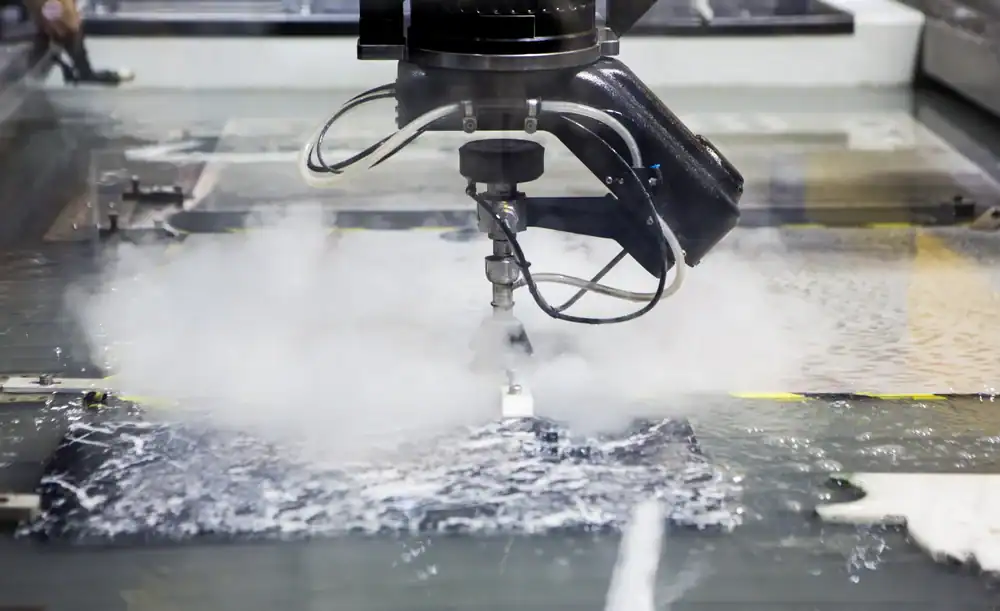
Waterjet cutting removes that risk entirely. The process uses 60,000 PSI water pressure to slice through marble without generating heat, vibration, or mechanical stress. That means no cracking along veins, no chipping at edges, and no heat-affected zones that weaken the stone.
You get smooth, burr-free edges straight off the machine. Most projects don’t need secondary finishing, which saves you time and keeps your timeline intact. Whether you’re cutting countertops with precise sink cutouts, creating custom inlays, or fabricating decorative medallions, the cut comes out right the first time.
The kerf—the width of the cut—measures just 0.030″ to 0.040″. That tight tolerance lets you nest parts closer together and maximize every slab. Less waste means you’re not throwing money away on scrap.
We’ve served fabricators, contractors, and designers across North Valley Stream, NY and the surrounding tri-state area for over a decade. Our OMAX 55100 system handles everything from thin decorative tiles to 12-inch-thick slabs.
We run an ISO 9001:2015 certified quality program, which means every cut is traceable and every part meets spec. You’re not dealing with a shop that just bought a machine last year—we’ve been doing this long enough to know what works and what doesn’t.
North Valley Stream sits in a dense commercial corridor where speed matters. We understand that your project timelines don’t have room for delays, which is why we offer emergency turnaround when you need it. You send us your file, we cut it, and you pick it up or we deliver—no drama.
You start by sending us your design file—DXF, DWG, or even a detailed sketch if that’s what you have. We review it to confirm dimensions, tolerances, and any special requirements like radius edges or hole placements.
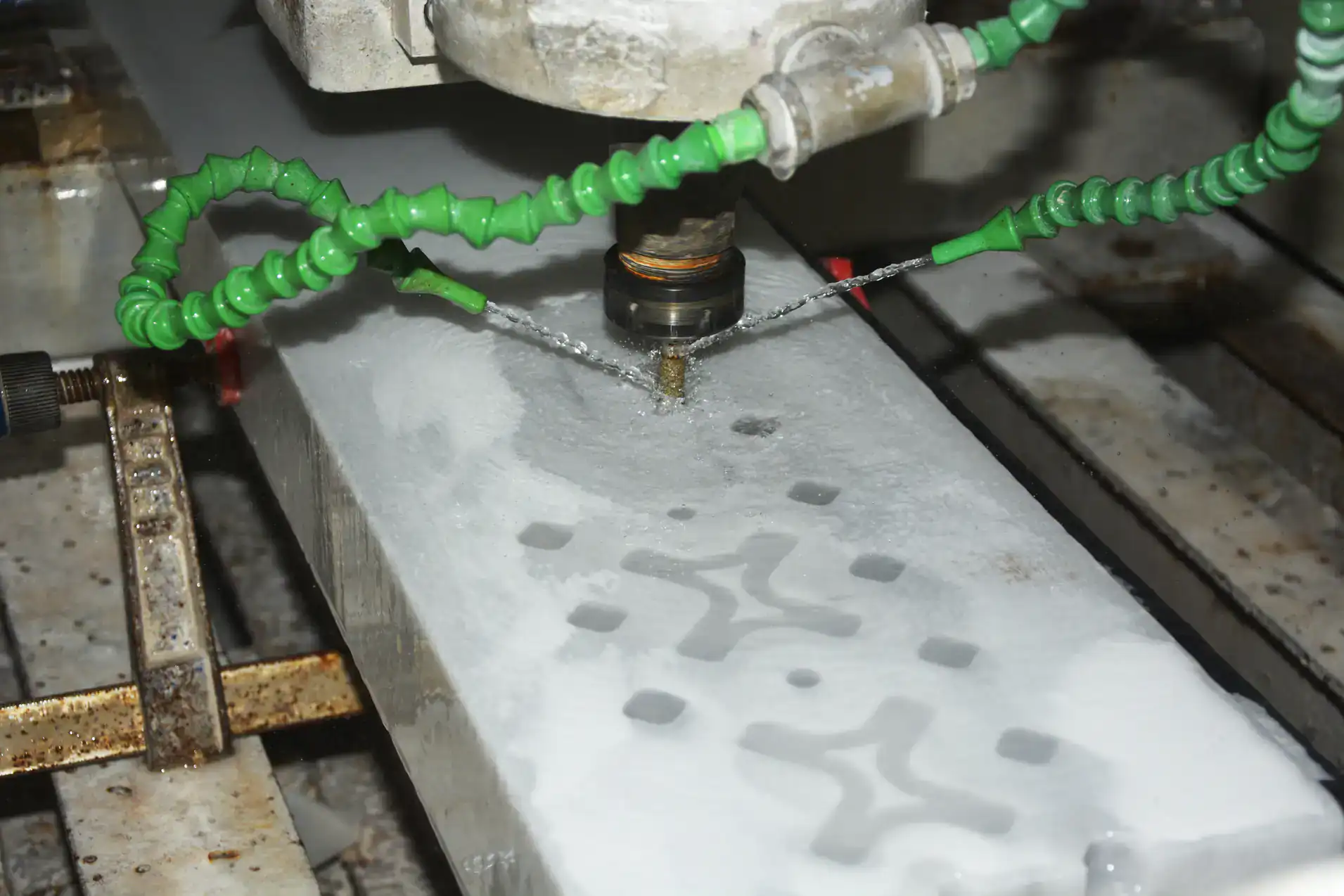
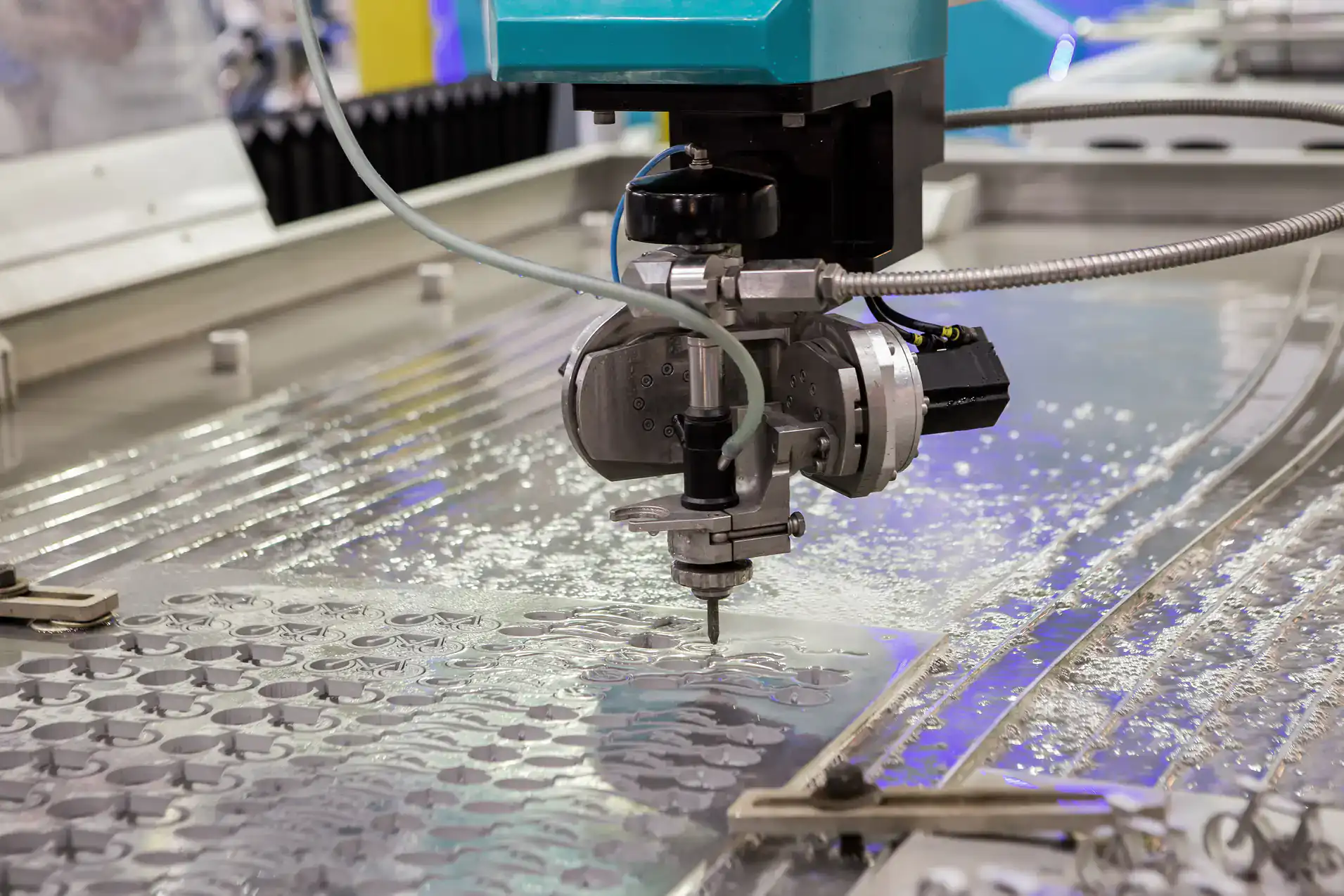
Once the file is dialed in, we load your marble onto the cutting bed and secure it. The waterjet nozzle follows the programmed path with CNC precision, mixing water and garnet abrasive to cut through the stone. There’s no blade, no heat, and no vibration—just focused pressure doing the work.
After cutting, we inspect each piece to ensure it matches your specs. If you need multiple identical parts, we can nest them efficiently to reduce material waste. Most projects are ready within a few days, but we can expedite if your schedule demands it.
You get parts that fit right, edges that don’t need grinding, and material usage that doesn’t leave you with a pile of expensive scrap. That’s the process.
Ready to get started?
Every marble waterjet cutting project in North Valley Stream, NY includes file review and optimization before we start cutting. If your design has tolerance issues or nesting inefficiencies, we’ll flag them and suggest adjustments that save you material and money.
You get access to our OMAX 55100 system, which delivers tolerances of +/- 0.001 inch on standard cuts. That level of accuracy matters when you’re fitting inlays, aligning borders, or creating multi-piece installations where gaps show.
We handle marble in thicknesses up to 12 inches, and we can go thicker if your project requires it—though cutting speed decreases as thickness increases. Whether you’re fabricating countertops, fireplace surrounds, or custom architectural elements, the machine handles it without stressing the stone.
North Valley Stream’s design and construction market demands fast turnaround and reliable quality. We deliver both. You also get the option for emergency service when a project can’t wait, plus delivery coordination if you’d rather not make the trip.
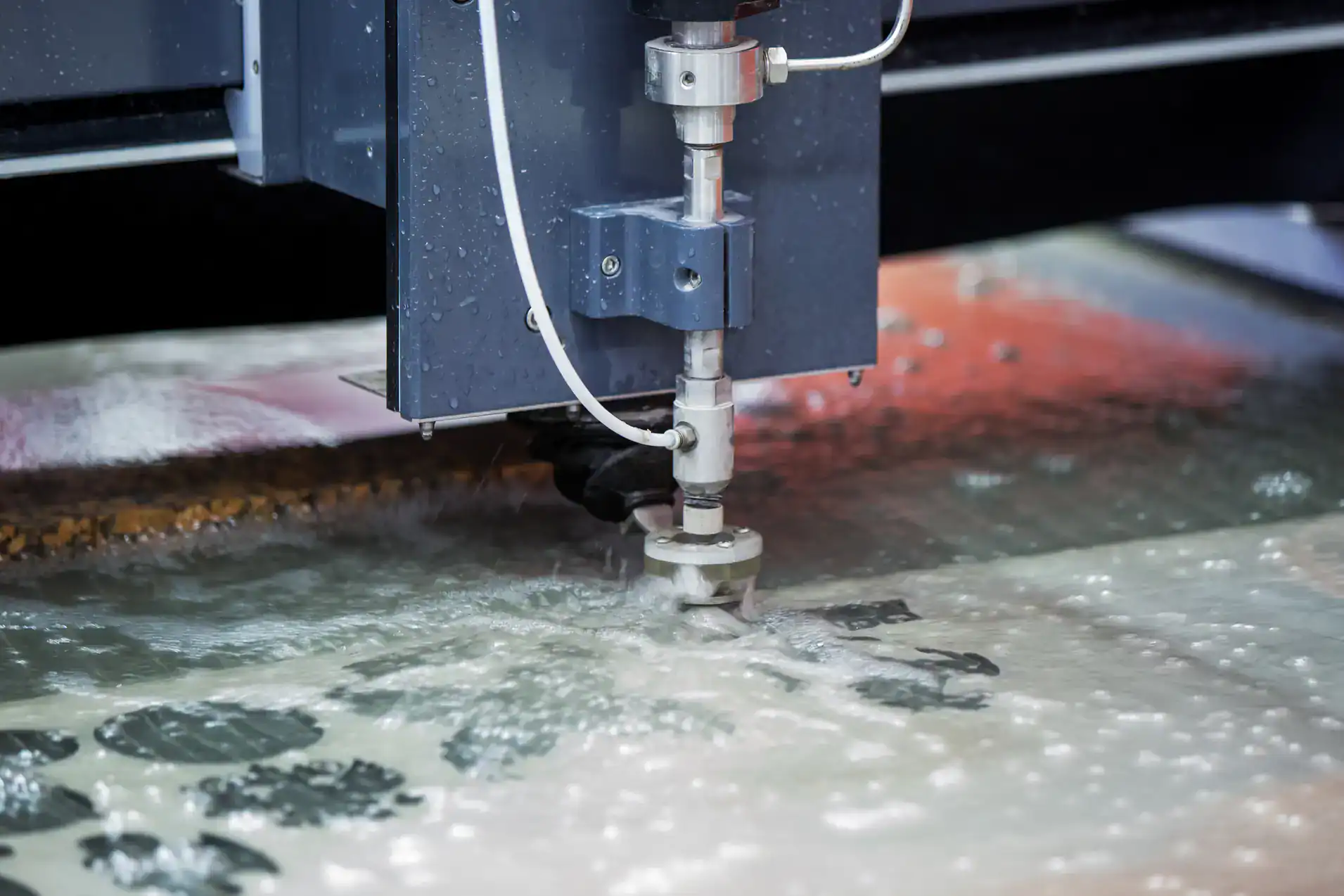
Yes, and that’s one of the biggest advantages over traditional cutting methods. Waterjet cutting uses focused water pressure instead of mechanical force, which means there’s no vibration, no blade contact, and no structural stress on the marble.
Marble naturally contains veining and weak points that can crack under pressure or heat. Saw blades generate both. Waterjet cutting eliminates those risks entirely because the process is cold and non-contact. The water beam cuts through the stone without transferring lateral force, so even delicate or highly detailed patterns come out intact.
You can cut tight radiuses, sharp internal corners, and complex curves without worrying about fractures. If you’re creating medallions, decorative borders, or custom inlays with fine detail, waterjet handles it without compromise. The stone stays stable throughout the entire process, and you don’t lose pieces to stress cracks or chipping.
Saw cutting works for straight lines and basic shapes, but it struggles with precision, generates heat, and often chips the edges. Waterjet cutting gives you tighter tolerances, cleaner edges, and the ability to cut curves or holes without switching tools.
When you’re cutting sink openings or faucet holes in marble countertops, a saw requires multiple passes, careful measuring, and often leaves rough edges that need grinding. Waterjet cuts those openings in one pass with smooth, finished edges. You skip the secondary work, which saves labor time and keeps the project moving.
Heat is another issue. Saw blades generate friction, and that heat can cause microfractures in marble, especially near cut edges. Waterjet cutting is a cold process—no heat, no thermal stress, no weakened zones. The structural integrity of the marble stays intact, which matters for long-term durability.
You also get better material utilization. The narrow kerf of a waterjet (around 0.030″) means less waste compared to saw blades that remove more material with each pass. If you’re working with expensive marble, that difference adds up quickly.
We work with DXF and DWG files, which are standard CAD formats that most designers and fabricators already use. If you’re working with an architect or designer, they can export directly from AutoCAD, SolidWorks, or similar programs.
If you don’t have a CAD file, we can work from detailed sketches or measurements. You provide the dimensions, hole placements, and any radius or curve details, and we’ll build the file for you. That said, a clean CAD file speeds up the process and reduces the chance of miscommunication.
Before we start cutting, we review the file to check for tolerance issues, nesting efficiency, and any design elements that might cause problems during fabrication. If something looks off—like a radius that’s too tight or a dimension that doesn’t match standard material sizes—we’ll reach out and suggest adjustments. It’s easier to fix a file than to recut a slab.
Once the file is approved, it goes straight to the CNC system. The machine follows the programmed path exactly, so what you design is what you get. No guesswork, no manual adjustments, no variance between parts.
Waterjet cutting handles marble up to 12 inches thick at normal cutting speeds, and we can go thicker if your project requires it. The tradeoff is speed—thicker material takes longer to cut because the water jet needs more time to penetrate and maintain a clean kerf.
For most countertop and architectural work, you’re dealing with material between 3/4 inch and 2 inches thick. Waterjet cuts that range quickly and cleanly without any issue. If you’re working with thicker slabs for structural elements, custom furniture, or specialty installations, the process still works—it just requires more time per linear foot.
Thickness doesn’t affect edge quality. Whether you’re cutting 1 inch or 10 inches, you still get smooth, burr-free edges with tight tolerances. The water pressure stays consistent throughout the cut, so there’s no degradation in quality as the jet moves through thicker material.
If you’re unsure whether your material thickness will work for your timeline, send us the specs. We can give you an accurate estimate for cutting time and let you know if there are any adjustments worth making to speed things up.
No—waterjet cutting actually minimizes waste better than most traditional methods. The kerf measures just 0.030″ to 0.040″, which is significantly narrower than saw blades. That tight cutting width means you can nest parts closer together and get more usable pieces from each slab.
When you’re working with expensive marble, material waste directly impacts your budget. Waterjet cutting lets you common-line cut, which means two parts can share a single cut line. You’re not leaving wide gaps between pieces or losing material to thick blade kerfs. Every inch of the slab gets used more efficiently.
The precision of CNC waterjet cutting also reduces scrap from mistakes. Because the machine follows a programmed path with tolerances of +/- 0.001 inch, you don’t end up with miscut parts that have to be scrapped and recut. The first piece comes out right, which means you’re not wasting material on trial runs or corrections.
If you’re fabricating multiple identical parts, we can optimize the nesting layout to maximize yield. You tell us how many pieces you need, and we’ll arrange them on the slab in a way that minimizes leftover scrap. That’s material savings you can actually measure.
Yes, and it’s often the safest method available. Marble with heavy veining or natural fissures is vulnerable to cracking when you use mechanical cutting methods that generate vibration or apply lateral force. Waterjet cutting avoids both of those issues entirely.
The process uses water pressure, not physical contact, to cut through the stone. There’s no blade pushing against the marble, no vibration traveling through the slab, and no heat causing expansion or contraction. The water jet simply erodes material along the programmed path without stressing the surrounding stone.
That makes waterjet ideal for cutting marble with visible veins, color variations, or areas where the stone is naturally weaker. You can cut right through those sections without worrying about fractures spreading from the cut line. The stone stays intact, and the veining often becomes a design feature rather than a liability.
If you’re working with high-value marble where every slab counts, waterjet cutting protects your investment. You’re not gambling on whether a saw blade will catch a vein the wrong way or whether vibration will open up a hidden fissure. The cut happens cleanly, and the marble comes off the table in one piece.
Useful Links
Other Services we provide in North Valley Stream