
Hear from Our Customers
You’re working with expensive material. Every inch matters, and mistakes aren’t in the budget.
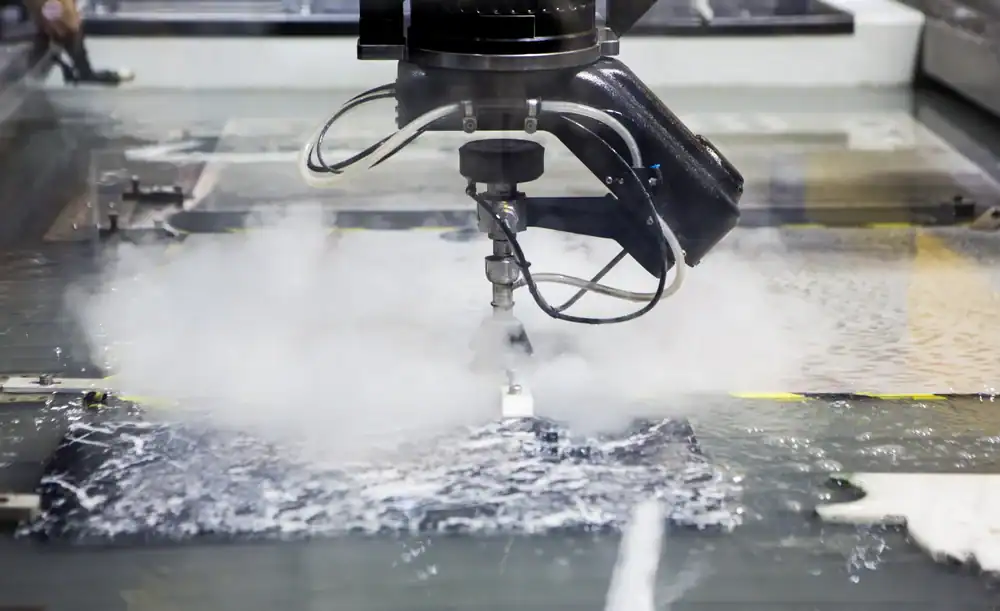
Custom marble waterjet cutting in Plainview, NY means your countertops, inlays, medallions, and architectural elements get cut once and cut right. No heat zones weakening the stone. No blade marks requiring hours of finishing work. No stress fractures from mechanical cutting that show up weeks later.
The waterjet stream is thinner than traditional saw blades, which means less material waste and tighter nesting of complex shapes. If you’re fabricating high-end residential kitchens, commercial lobbies, or custom furniture pieces, you’re getting finished edges straight off the machine. That’s less labor, faster turnaround, and material savings that actually show up in your bottom line.
Architects and designers bring us CAD files with intricate curves, tight radiuses, and multi-piece patterns. We run them through our CNC-controlled system, and what comes off the table matches the drawing. That’s the difference between precision marble waterjet cutting and hoping a blade cut gets close enough.
We operate out of West Islip, serving contractors, designers, and fabricators throughout Plainview, NY and the surrounding area. We’re equipped with Flow Mach 500 CNC waterjet systems that cut directly from your CAD files.
Plainview sits in the heart of Nassau County, where residential renovations and commercial buildouts demand both speed and precision. You’re not looking for someone who “does their best.” You need a shop that understands material costs, project timelines, and what happens when cuts don’t match templates.
We’ve built our reputation on delivering what we promise: accurate cuts, clean edges, and turnaround times that keep your projects moving. No overselling, no surprises. Just marble waterjet cutting done right.
You send us your design file—DXF, DWG, or most CAD formats work. If you’re working from templates or hand sketches, we can convert those into production-ready drawings. This is where we catch potential issues: material thickness requirements, edge clearances, or nesting opportunities that save you money.
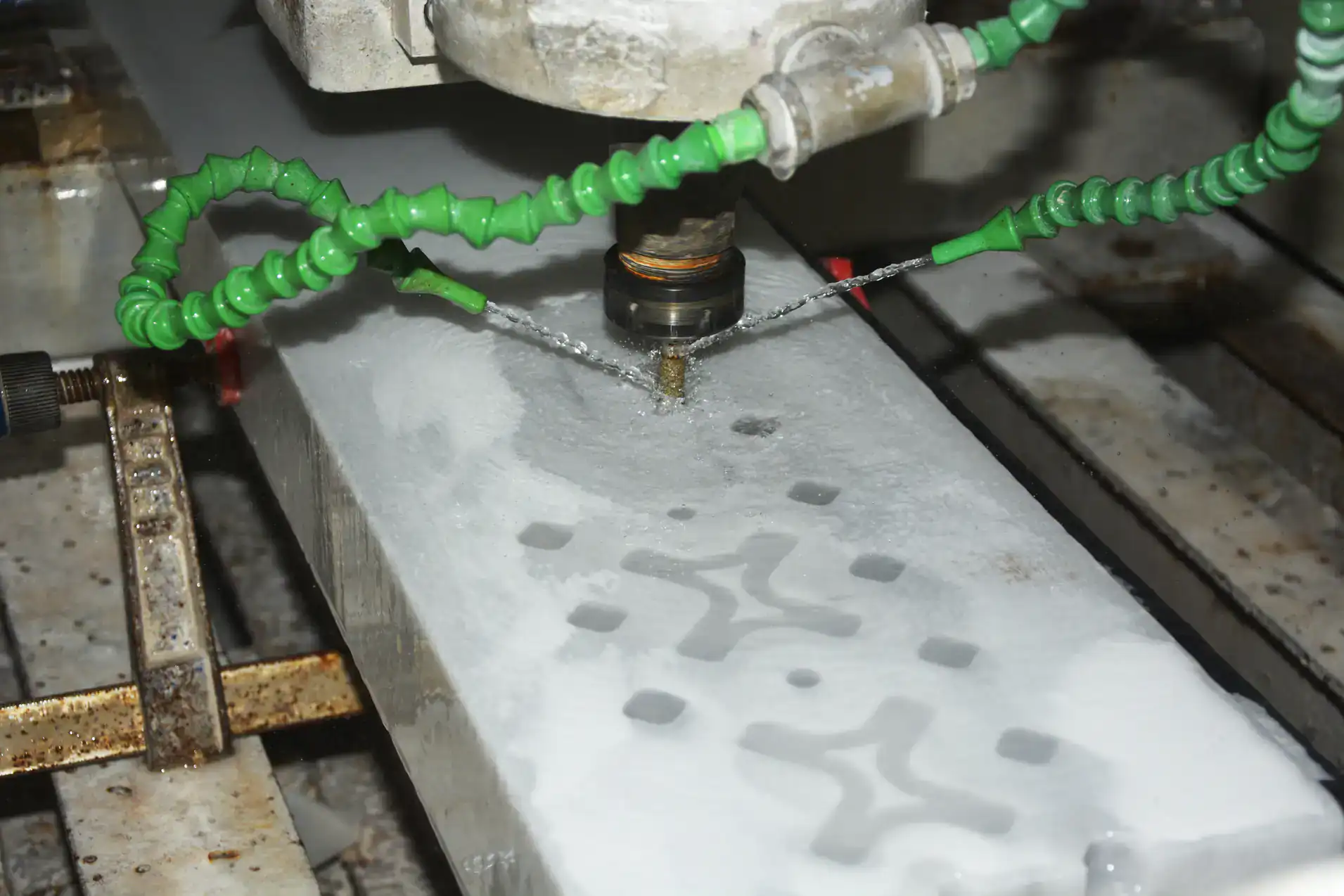
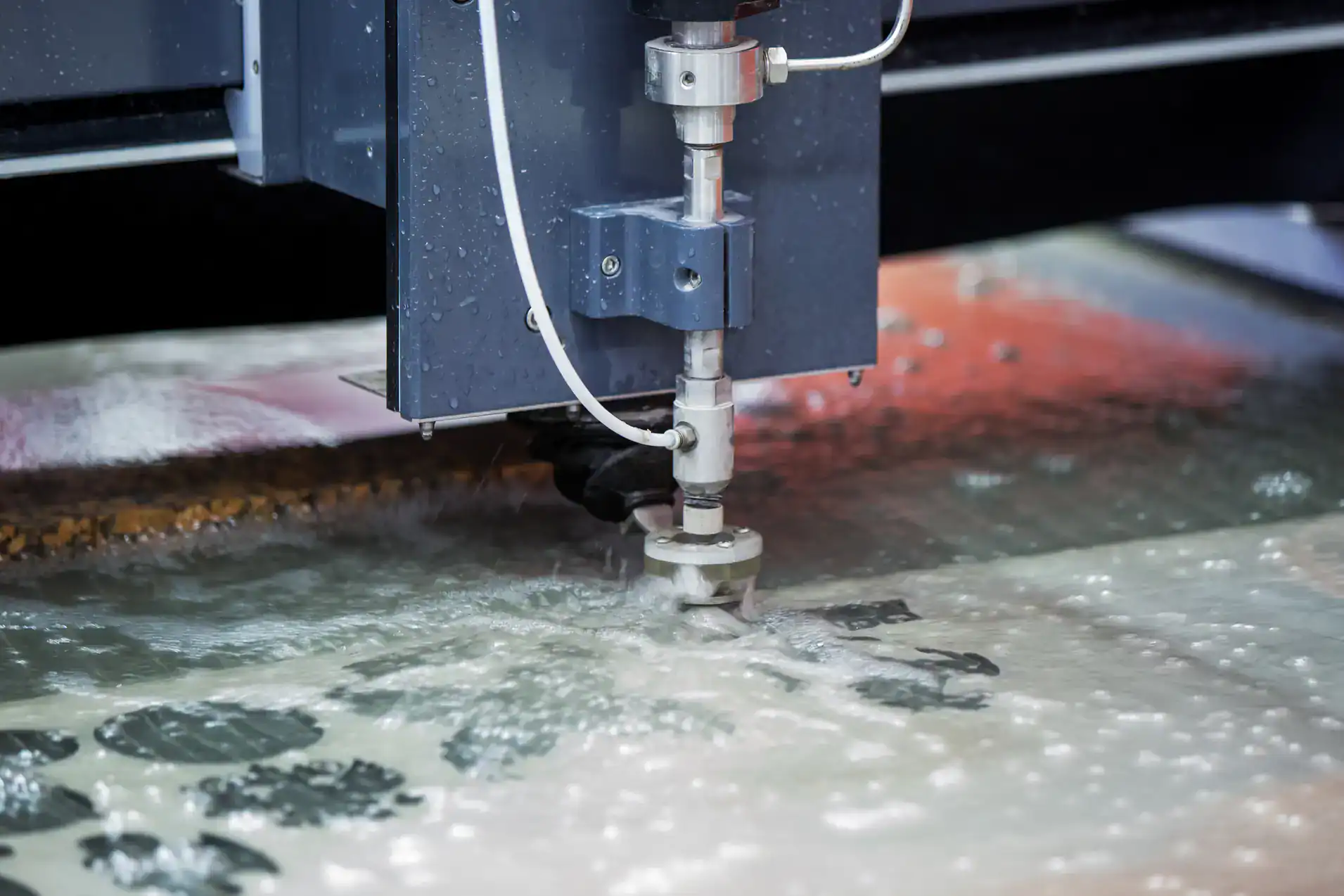
Once the file is programmed, it goes straight to the CNC controller. The waterjet head follows your design with a high-pressure stream mixing water and garnet abrasive. There’s no blade deflection, no heat buildup, no vibration that shifts the cut line. The stream stays focused on a tiny spot, which is how we handle tight inside corners and intricate details that would crack under mechanical stress.
Depending on thickness, most marble cuts happen in a single pass. Thinner materials move faster. Thicker slabs—up to 12 inches—take more time but still deliver the same edge quality. What you get back is ready for installation or requires minimal touch-up, depending on your specs.
We’re not polishing or sealing here. That’s your call based on the project. But the cut itself? That’s handled. Clean, accurate, and matching what you sent us.
Ready to get started?
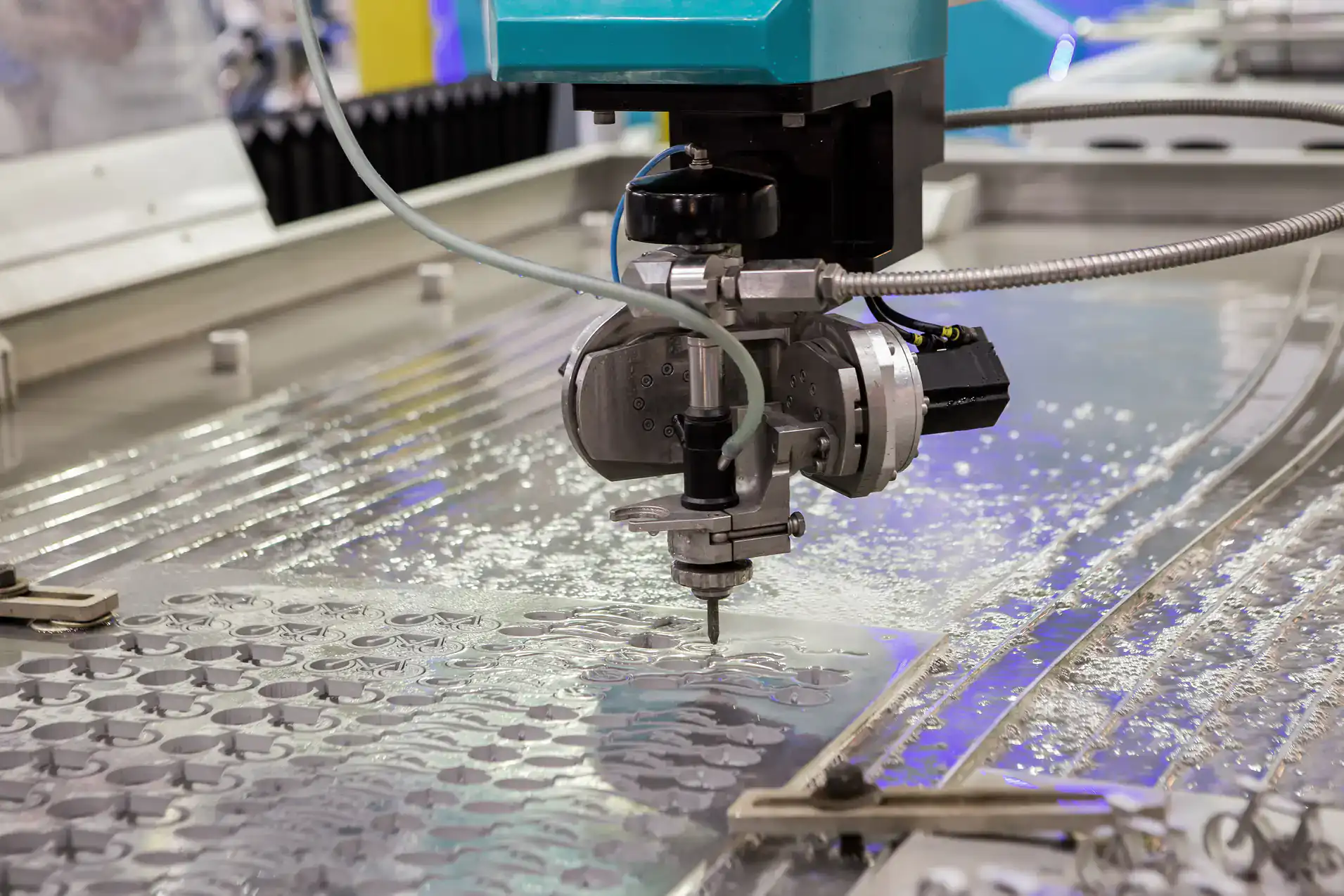
Industrial marble waterjet cutting in Plainview, NY covers more than straight cuts. You’re getting complex geometries—curves, radiuses, cutouts for sinks and fixtures, inlay channels, and multi-piece assemblies that fit together without gaps.
Plainview’s construction market leans heavily on high-end residential and commercial work. That means marble isn’t just countertops. It’s fireplace surrounds, lobby floors, custom furniture insets, and decorative wall panels. Waterjet handles all of it because there’s no mechanical force trying to push through the stone. The abrasive stream erodes material away, which eliminates chipping on edges and cracking through veining.
Material conservation matters when you’re working with premium marble. Narrower kerf widths mean more usable material per slab. Better nesting means fewer offcuts that end up as scrap. If you’re running multiple pieces from one slab, that efficiency adds up fast.
Edge quality is another factor. Waterjet produces smooth, burr-free cuts that often go straight to installation. Compare that to saw cuts that need grinding, polishing, and multiple finishing passes. You’re saving labor hours and keeping projects on schedule, which matters when you’re coordinating with other trades on a jobsite.
Yes. Waterjet systems cut marble up to 12 inches thick without generating heat or applying lateral force—the two main causes of cracking during fabrication.
Traditional saws create friction, which builds heat and causes thermal expansion in the stone. That expansion leads to microfractures, especially in marble with pronounced veining or natural fissures. Waterjet uses a focused stream of water and abrasive that erodes material away. There’s no blade contact, no vibration, and no heat-affected zone.
Thick slabs take longer to cut because the stream needs more time to penetrate, but the process stays consistent. The result is a clean cut without internal stress or surface damage. If you’re fabricating heavy countertops, structural panels, or monument pieces, waterjet gives you the thickness capacity without the cracking risk that comes with mechanical methods.
Waterjet delivers tighter tolerances, zero heat damage, and eliminates most secondary finishing. Diamond saws are faster on straight cuts but struggle with curves and intricate shapes.
Saws work well for rough dimensioning and straight cuts where edge quality isn’t critical. But once you need radiuses, inside corners, or detailed patterns, blades become a liability. They deflect under pressure, leave chatter marks, and require extensive grinding to achieve a finished edge.
Waterjet cuts are CNC-controlled from your CAD file, so accuracy stays within thousandths of an inch across the entire piece. The edge comes off smooth enough that many installations skip polishing altogether, depending on the application. You’re also avoiding dust generation, which is a significant factor if you’re cutting in an enclosed shop or need to meet air quality standards. Waterjet produces minimal airborne particulate compared to dry or wet saw cutting.
We work directly with DXF, DWG, and most standard CAD formats. If you’re using design software like AutoCAD, SolidWorks, or Rhino, your files transfer straight to our CNC system.
Don’t have a CAD file? We can work from PDF drawings, hand sketches, or physical templates. Our design team converts those into production files and sends you a proof before cutting starts. This is where we verify dimensions, check for potential issues like tight tolerances near edges, and optimize material layout to reduce waste.
The CNC controller reads your file and translates it into machine paths. That’s how we maintain accuracy—there’s no manual tracing or operator interpretation. What you draw is what gets cut. If you’re running repeat jobs or need multiple pieces from the same design, we keep your files on record so reorders are fast and consistent.
Absolutely. Waterjet excels at intricate inlay work because the narrow kerf width and CNC precision allow tight-fitting pieces without gaps.
Inlays require two things: accurate cuts on both the base material and the inset piece, and edges that fit together cleanly. Waterjet delivers both. The abrasive stream is roughly 0.03 inches wide, which is significantly thinner than saw blades. That means less material removal and tighter tolerances between mating parts.
Decorative patterns—medallions, borders, geometric designs—are programmed directly from your artwork. The CNC system follows every curve and angle without the limitations of rotary tools or manual cutting. You’re not limited to simple shapes or straight lines. If you can draw it, waterjet can cut it. That opens up design possibilities for custom flooring, wall art, furniture insets, and architectural features that would be impractical or impossible with traditional methods.
Cut time depends on material thickness, design complexity, and total square footage. A simple countertop with sink cutouts might take a few hours. Intricate multi-piece inlays or thick architectural panels take longer.
Thinner marble—up to 2 inches—cuts faster because the waterjet stream penetrates quickly. Thicker slabs slow down the process, but the trade-off is zero heat damage and no risk of cracking. Complex designs with tight curves, small inside radiuses, or detailed patterns also add time because the CNC system slows down to maintain accuracy through intricate sections.
Turnaround time from file submission to finished parts typically runs a few days, depending on our production schedule and your project size. Rush jobs are possible if you’re up against a deadline. The key is getting us your files early so we can review them, confirm material specs, and schedule your cut without delays. Most projects stay on track because waterjet eliminates the secondary finishing that eats up time with traditional cutting methods.
Waterjet costs more per linear foot of cut, but you’re saving on material waste, labor finishing, and rework from mistakes. The total project cost often ends up lower.
Traditional cutting seems cheaper upfront because saw time is fast and straightforward. But that’s before you factor in grinding, polishing, and fixing edges that chipped or cracked during cutting. Waterjet produces a finished edge in one pass, which cuts labor hours significantly.
Material savings matter too. Narrower kerf widths mean more usable material per slab, and better nesting efficiency reduces scrap. If you’re working with premium marble, those savings add up fast. Then there’s the cost of mistakes. A bad saw cut on expensive material means replacing the entire piece. Waterjet’s CNC accuracy eliminates most of that risk because cuts match your design file exactly. You’re paying for precision, speed, and reliability—not just the cut itself.
Useful Links
Other Services we provide in Plainview