
Hear from Our Customers
Traditional marble cutting creates problems you’ve dealt with before. Saw blades generate heat that causes micro-fractures. Manual methods produce inconsistent edges that require hours of finishing work. One miscalculation ruins a $3,000 slab.
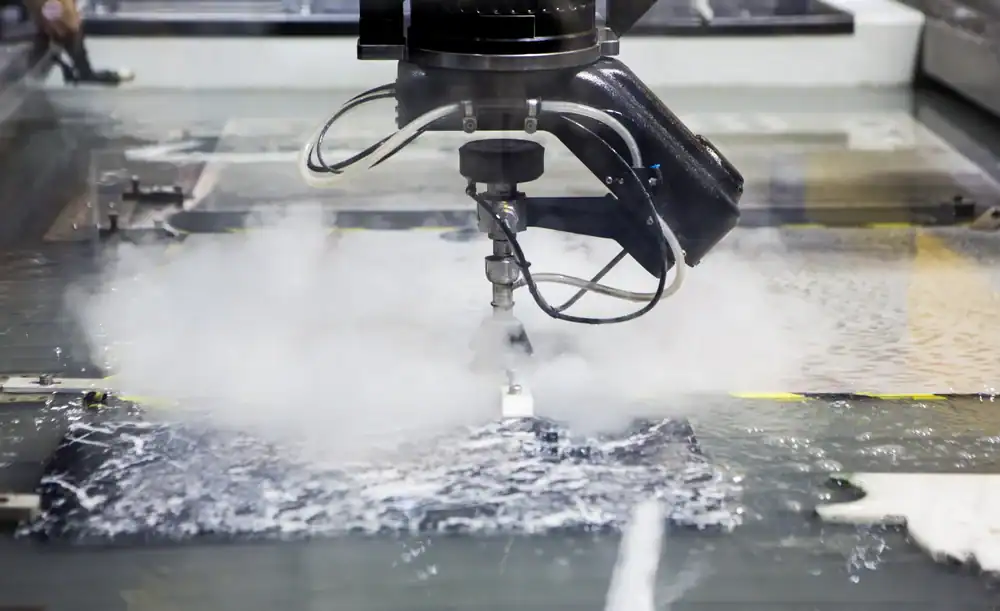
Waterjet cutting removes those variables entirely. The process uses pressurized water mixed with fine abrasive particles to cut through marble without generating any heat. No thermal stress means no cracking, even on delicate veining or thin sections. The kerf width is minimal, so you’re not losing material to wide blade cuts.
You get clean edges that don’t need secondary polishing. Intricate patterns that would be impossible with traditional methods become straightforward. Tolerances hold to 0.001″ across the entire piece, which matters when you’re installing countertops, inlays, or architectural features where gaps show immediately.
The difference shows up in your final installation. Pieces fit together precisely. Edges align without grinding or shimming. Your client sees finished work that looks exactly like the rendering you showed them.
We’ve been serving Roosevelt, NY and the broader Long Island area for over 20 years. We’ve cut marble for residential renovations in Garden City, commercial lobbies in Hempstead, and custom furniture pieces for designers throughout Nassau County.
Roosevelt’s mix of residential properties and commercial spaces creates specific demands. Historic homes need restoration work that matches original marble details. New construction projects require modern design elements with tight installation timelines. We’ve handled both, repeatedly.
Our facility uses high-performance CNC waterjet equipment that handles marble slabs up to 12 inches thick. You work directly with technicians who understand material properties and can spot potential issues before cutting begins. That experience prevents costly mistakes and keeps your project moving forward.
The process starts with your design file. If you’re working from drawings or templates, we convert those into CAD format for the CNC system. This step includes reviewing the design for any cuts that might create stress points or require special handling based on the marble’s veining pattern.
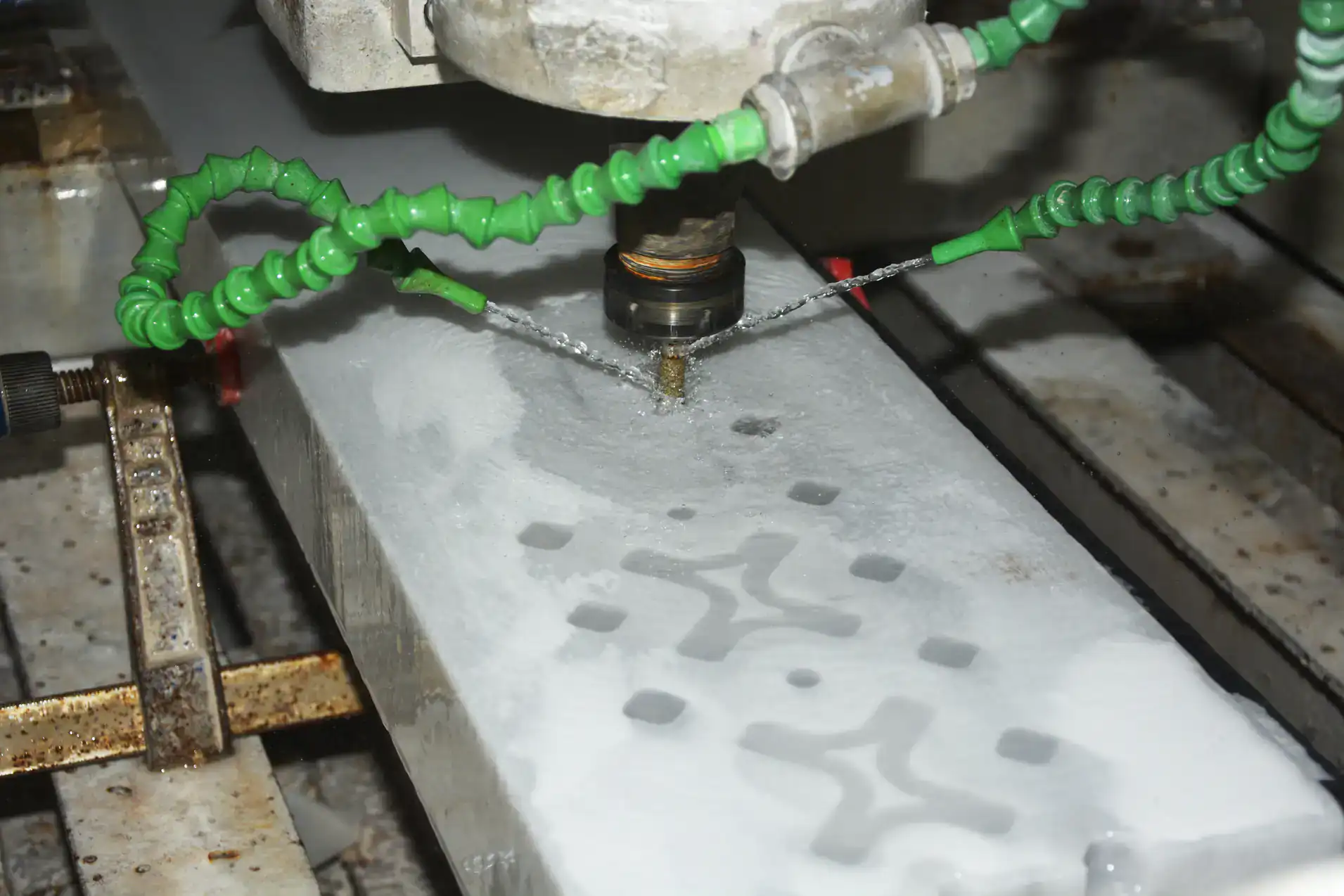
Once the file is programmed, we position your marble slab on the cutting bed and secure it to prevent any movement during cutting. The waterjet head moves along the programmed path, cutting through the marble with a stream of water pressurized to nearly 60,000 PSI mixed with garnet abrasive. The cutting happens underwater in a catch tank, which contains the abrasive and prevents any dust.
For complex designs with interior cutouts or tight corners, the system adjusts pressure and speed automatically to maintain edge quality throughout the cut. Thicker sections get slower passes. Delicate areas receive modified pressure to prevent chipping at exit points.
After cutting, we inspect dimensions and edges. Most pieces come off the table ready for installation. If you need specific edge profiles or surface finishes, we coordinate that work before delivery. You receive marble components that fit your project specifications without requiring additional fabrication on your end.
Ready to get started?
Every custom marble waterjet cutting project in Roosevelt, NY includes material consultation before we start. Marble varies significantly in hardness, veining patterns, and internal stress. We assess your specific slab and flag any characteristics that affect cutting strategy. That prevents surprises halfway through the job.
You get dimensional accuracy that holds across the entire piece. Countertop sections align at seams without gaps. Inlay components fit into recesses without forcing. Architectural panels mount flush against walls. This precision matters particularly in Roosevelt’s older buildings where existing structures aren’t perfectly square.
The process produces minimal waste compared to traditional cutting methods. Thin kerf width means parts can be nested closely on the slab. For projects using expensive marble varieties, that material efficiency translates directly to cost savings. You’re paying for finished components, not scrap.
Edge quality comes standard without additional finishing charges. The waterjet produces smooth, uniform edges that don’t require grinding or polishing for most applications. If your design needs specific edge profiles, we handle that as part of the service rather than sending pieces out for secondary processing.
Roosevelt’s construction market includes everything from historic restorations on East Clinton Avenue to modern commercial builds near the Roosevelt Field area. We’ve cut marble for both contexts and understand the different requirements each project type demands.
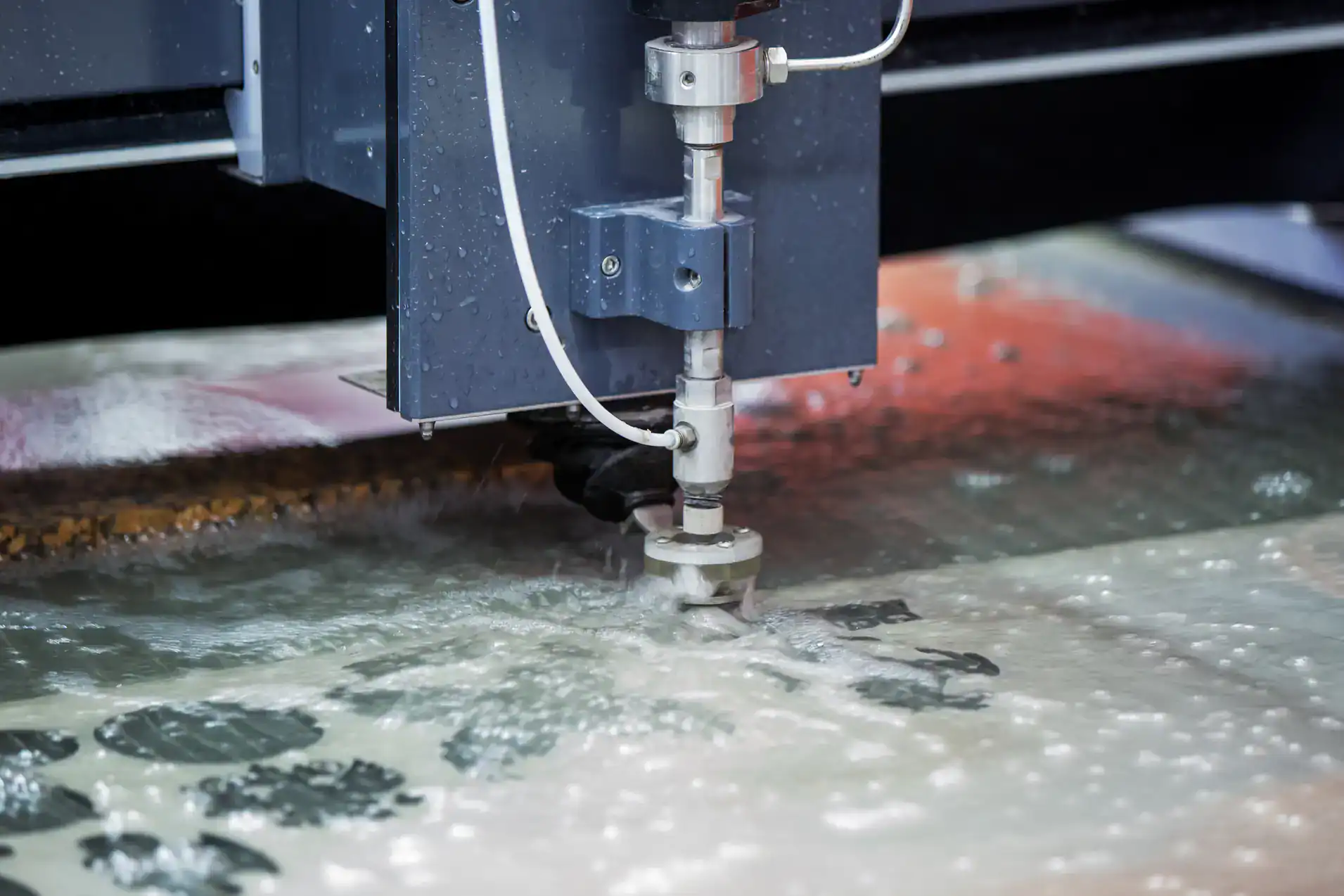
Our waterjet systems cut marble efficiently up to 12 inches thick, and we’ve successfully cut certain marble types even thicker when projects require it. Most residential and commercial applications use marble between 3/4 inch and 2 inches thick, which the waterjet handles without any issues.
Thickness affects cutting speed but not quality. A 3/4 inch countertop section cuts faster than a 3 inch architectural panel, but both achieve the same edge quality and dimensional accuracy. The waterjet maintains consistent pressure throughout the cut depth, so you don’t get the tapered edges or rough spots that sometimes occur with saw blades on thick material.
For ultra-thin marble veneers in the 3-5mm range that are becoming popular in modern architecture, waterjet cutting is actually one of the few methods that works reliably. Traditional saws create too much vibration and crack thin material. The waterjet’s focused pressure cuts cleanly without mechanical stress that would fracture delicate pieces.
Cracking happens when cutting methods introduce heat or mechanical stress into the marble. Saw blades generate friction heat that creates thermal expansion in the cut area. As the material cools, internal stresses cause micro-fractures that either show immediately or appear later as the piece settles. Mechanical cutting also creates vibration that propagates through the slab, particularly problematic in marble with existing natural fissures.
Waterjet cutting is a cold process. The water stream doesn’t generate heat, so there’s no thermal expansion or stress. The cutting action is erosion rather than mechanical force—the abrasive particles in the water stream wear away material without creating the lateral forces that cause cracking.
This matters especially for marble with prominent veining or natural variations in density. Those features create weak points where cracks typically start with traditional methods. The waterjet cuts through varying densities without changing its approach, maintaining the same focused pressure whether it’s cutting through a solid section or crossing a vein. You can cut intricate patterns right up to edges or create interior cutouts without worrying about stress fractures radiating from corners.
Our system cuts details down to tolerances of 0.001 inches, which is significantly tighter than what traditional marble cutting achieves. In practical terms, this means you can create intricate inlay patterns, precise geometric designs, or complex curves that would be extremely difficult or impossible with saw blades.
For interior cutouts like sink openings or decorative patterns, the waterjet cuts sharp internal corners without the radius limitations of router bits or saw blades. If your design includes tight corner geometry, the system handles it without requiring relief cuts or compromises to the design. This capability is particularly valuable for custom furniture pieces or architectural features where the design intent depends on precise details.
Text, logos, and decorative elements can be cut directly into marble with clean edges. The narrow kerf width means fine details don’t get lost to wide blade cuts. We’ve cut everything from simple geometric patterns for floor inlays to complex custom designs for feature walls. If you can draw it in CAD, we can cut it in marble.
Most waterjet-cut marble edges come off the table ready to use without additional finishing. The cutting process produces smooth, uniform edges that are clean enough for installation in applications where the edge will be visible. This is different from saw-cut edges, which typically need grinding and polishing to remove blade marks and achieve a finished appearance.
The edge quality depends partly on your application requirements. For countertop edges that will be highly visible, you might want a specific profile like a bullnose or ogee, which we can coordinate as part of the service. But if you’re creating inlay pieces, architectural panels, or components where cut edges will be joined or concealed, the waterjet edge quality is sufficient as-is.
There’s no burr or rough texture to remove. The abrasive waterjet creates a consistent surface finish across the entire edge. For projects where you’re trying to minimize labor and timeline, eliminating secondary finishing steps makes a real difference. You’re not paying additional fabrication charges or waiting for pieces to go through multiple processes before installation.
Waterjet cutting produces significantly less waste than traditional methods because the kerf width is minimal—typically around 0.04 inches compared to 0.125 inches or more for saw blades. That difference adds up quickly when you’re nesting multiple parts on an expensive marble slab.
Our CNC system also optimizes part placement to maximize material usage. We program the cutting path to nest components as closely as possible while maintaining structural integrity during cutting. For projects with multiple pieces, this optimization often means fitting everything on one slab instead of needing two, which directly impacts your material costs.
Offcuts from waterjet cutting are also more usable than saw-cut scraps. The clean edges and precise cuts mean leftover pieces can often be repurposed for smaller elements in the same project or saved for future use. This is particularly relevant in Roosevelt where designers and contractors often work with premium marble varieties where even small pieces have value. You’re not generating piles of unusable scrap with rough edges that can’t be incorporated into other work.
Turnaround depends on project complexity and current queue, but most custom marble waterjet cutting jobs in Roosevelt, NY are completed within 3-5 business days from approved design files. Simple cuts like countertop sections or straight architectural panels often finish faster. Intricate designs with multiple interior cutouts or complex patterns take longer but rarely exceed a week.
The CNC process itself is relatively fast—the actual cutting time for a typical countertop section is measured in minutes, not hours. What affects timeline is setup, programming verification, and quality inspection after cutting. We don’t rush those steps because that’s where mistakes happen that could ruin your marble.
For time-sensitive projects, we can accommodate expedited schedules when you need pieces for a specific installation date. Roosevelt’s proximity to our facility helps with logistics—delivery or pickup can happen quickly once cutting is complete. The key to meeting tight deadlines is getting us clean design files early and confirming material availability upfront. If you’re working with a specific marble slab, having it delivered to our facility before your installation deadline creates buffer time for any unexpected issues.
Useful Links
Other Services we provide in Roosevelt