Hear from Our Customers
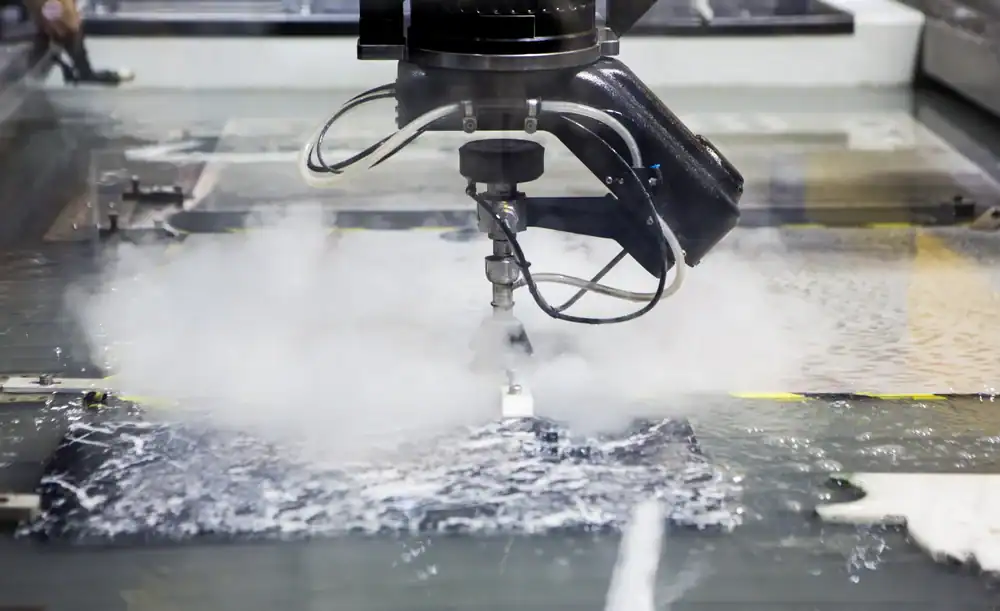
You’ve got a design that requires curves, inlays, or patterns that can’t be cut with a blade. Maybe it’s a custom medallion for a foyer, an intricate backsplash, or a countertop that needs to wrap around unusual angles without visible seams.
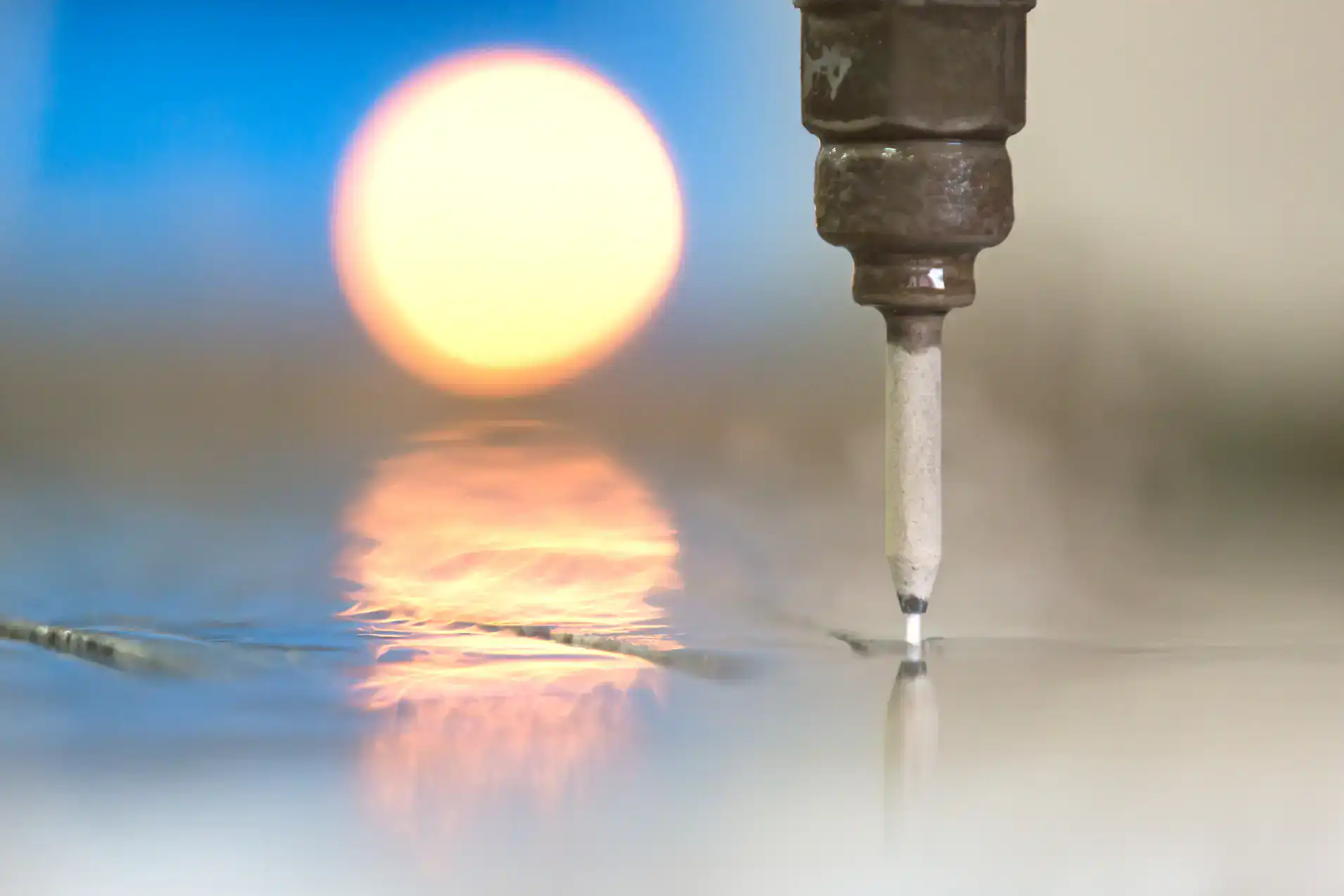
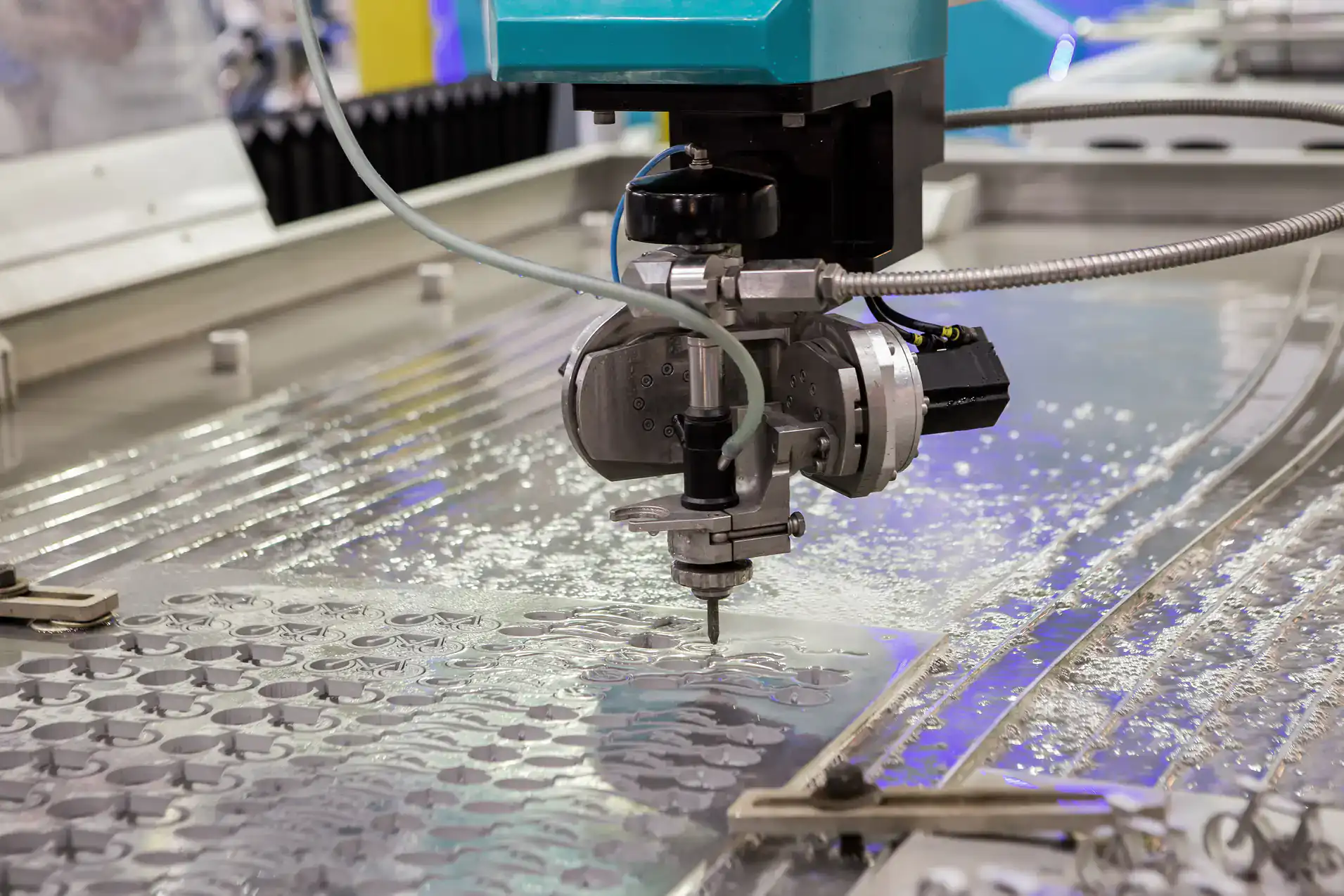
Waterjet cutting handles all of it. The process uses high-pressure water mixed with fine abrasive to cut through marble without generating heat, which means no cracking, no discoloration, and no weakened edges. You get clean cuts on the first pass.
The system reads your CAD file and replicates it with tolerances as tight as ±0.005 inches. If you need ten identical pieces, they’ll be identical. If you need one complex piece with multiple radii and tight corners, it gets done without compromising the material. That level of precision means less waste, faster installation, and fewer headaches when your contractor shows up to fit everything together.
We work with architects, designers, and contractors across Long Island who need precision marble waterjet cutting in Southold, NY and surrounding areas. We handle everything from residential kitchen renovations to commercial lobbies that require custom stone elements.
Southold’s residential market leans toward high-end finishes, and we see a lot of projects that involve Carrara, Calacatta, and darker marble varieties. Whether you’re working on a North Fork estate or a commercial build closer to the Sound, the expectation is the same: tight tolerances, clean edges, and delivery that doesn’t hold up the rest of your schedule.
We provide material consultation upfront, so you’re not guessing whether your design will work with the stone you’ve selected. Our CNC equipment handles the cutting, and we coordinate timing based on your project phases.
You send us your design file—typically a CAD drawing or a detailed sketch with dimensions. We review it to confirm the design works with your material type and thickness. If there are potential issues, we flag them before cutting starts.
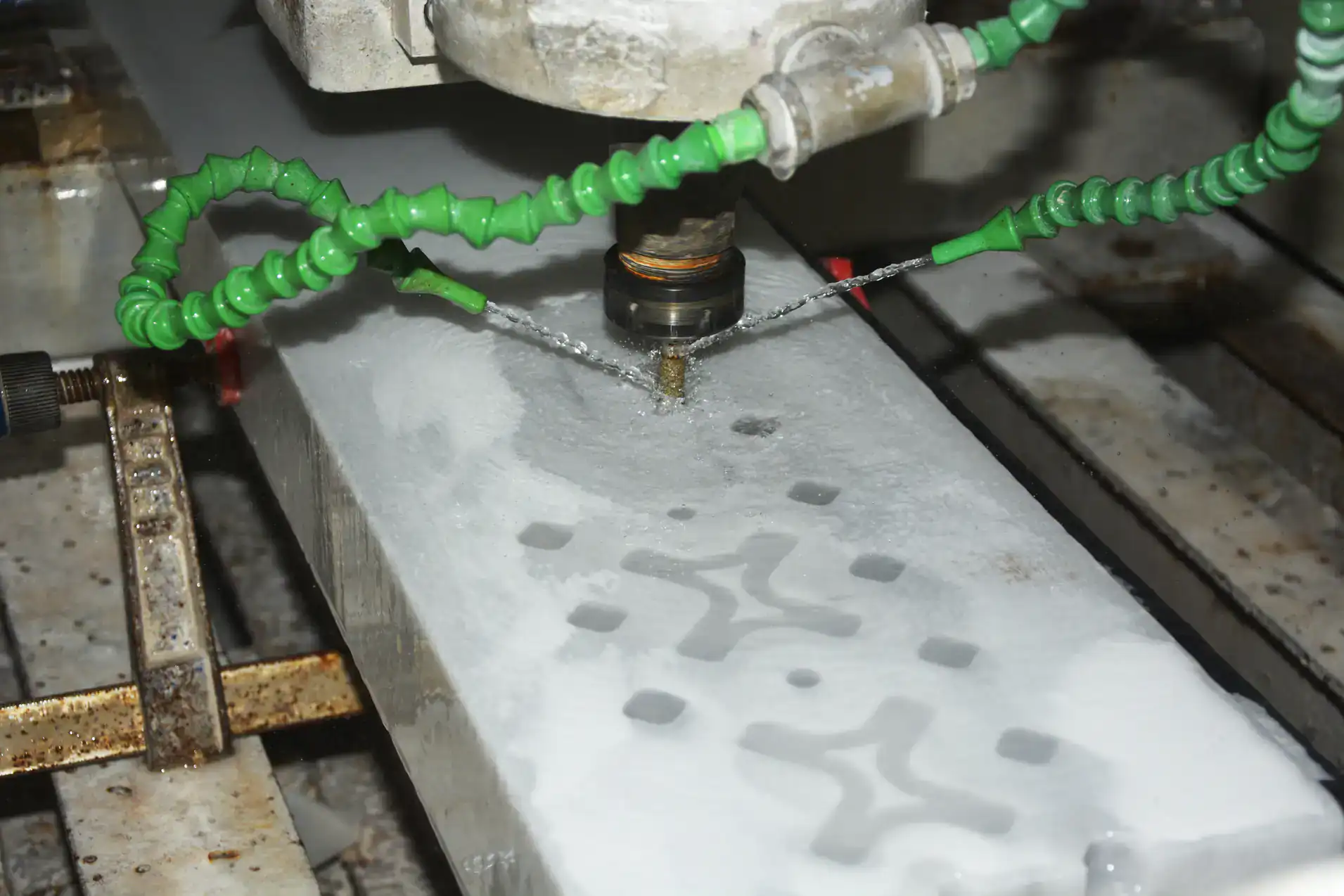
Once the design is confirmed, we load your marble slab onto the cutting bed and secure it. The waterjet system follows the programmed path, using a stream of water and garnet abrasive traveling at speeds up to 90,000 PSI. The cut is cold, so there’s no thermal stress on the stone.
After cutting, edges are smooth enough that many installations require minimal finishing. If your project calls for polished edges or additional detailing, we handle that too. Then we package everything for transport or coordinate delivery based on your timeline. Most projects move from file to finished cut within a few days, depending on complexity and schedule.
Ready to get started?
Waterjet cutting works for straight cuts, curves, and intricate interior cutouts that would be nearly impossible with a blade. You can specify custom inlays, logos, geometric patterns, or relief designs. The process handles marble from half an inch thick up to several inches without issue.
Because the cut is made with water and abrasive instead of heat, you avoid the micro-cracking that sometimes shows up with saw cuts, especially in more delicate marble types. The edges come out smooth, and in many cases, you can install them as-is or with just a light polish.
In Southold and the broader North Fork area, we’re seeing increased demand for custom marble elements in both new construction and high-end renovations. Homeowners want unique stone features that set their properties apart, and contractors need a fabricator who can execute complex designs without delays. Waterjet cutting delivers both. The technology also reduces material waste, which matters when you’re working with expensive slabs. Better yield means lower costs and less environmental impact.
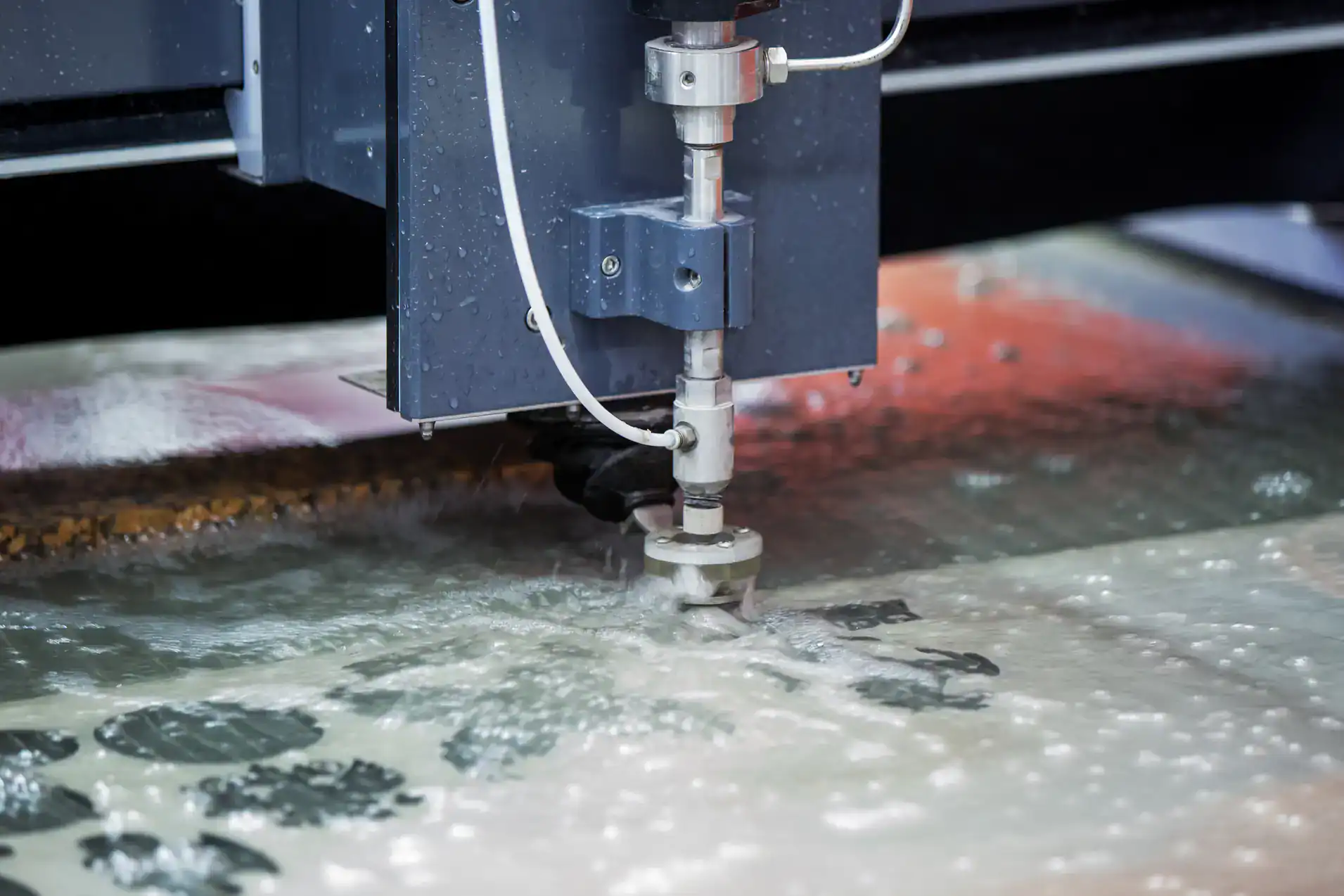
Waterjet cutting achieves tolerances of ±0.005 inches, which is significantly tighter than what you’ll get with most blade-based methods. That level of precision matters when you’re fitting multiple pieces together or creating patterns that need to align perfectly.
Traditional saws can handle straight cuts well, but they struggle with curves and intricate shapes. They also generate heat, which can cause micro-cracking in certain marble types, especially along thin sections or delicate veining. Waterjet cutting is a cold process, so the stone stays intact without thermal stress.
If your design includes interior cutouts, tight radii, or complex geometries, waterjet is often the only practical option. The CNC system follows your CAD file exactly, so what you draw is what you get. That consistency is especially important for commercial projects or large installations where every piece needs to match.
Waterjet cutting handles virtually any marble type, from softer white Carrara to denser varieties like Emperador or black marble. The process works across different thicknesses, typically from half an inch up to four inches or more, depending on the project requirements.
Delicate marbles with heavy veining or natural fissures can be tricky with traditional cutting methods because heat and vibration can cause cracking. Waterjet eliminates both of those issues. The cutting stream is narrow—usually around 0.04 inches—so there’s minimal material removal and no vibration transferred to the slab.
If you’re working with book-matched slabs or trying to preserve specific veining patterns, waterjet cutting gives you more control. You can program the cut path to avoid weak points or follow the natural lines in the stone. That flexibility is harder to achieve with a saw, where the blade path is more rigid and the risk of chipping is higher.
Turnaround depends on design complexity and current project load, but most jobs move from file submission to finished product within three to five business days. Simpler cuts—straight lines, basic shapes—can often be completed faster. More intricate designs with multiple interior cutouts or detailed patterns take longer.
The actual cutting time varies based on material thickness and the length of the cut path. A straightforward countertop cutout might take an hour or two, while an elaborate medallion with fine details could take most of a day. The CNC system runs continuously once it starts, so there’s no downtime between cuts.
We coordinate timing with your project schedule. If you’re working on a renovation with a hard deadline, let us know upfront. We can often prioritize jobs that are time-sensitive, especially if you’re waiting on the stone to move forward with installation. Clear communication on your end makes it easier for us to deliver when you need it.
Waterjet cutting is one of the most material-efficient methods available. The cutting stream is narrow, so you lose very little stone to the kerf—the width of the cut itself. That means better yield from each slab, which matters when you’re working with expensive marble.
The edges produced by waterjet cutting are smoother than what you’d get from a saw. In many cases, they’re ready for installation without additional finishing. If your project requires polished edges or a specific finish profile, we can handle that as part of the process, but it’s not always necessary.
The cutting process does produce slurry—a mixture of water, abrasive, and stone particles—but it’s contained and disposed of properly. There are no harmful chemicals involved, and the water can be filtered and reused in some systems. Compared to other cutting methods, waterjet is cleaner and generates less airborne dust, which makes it safer for operators and better for the environment.
Yes. Waterjet systems cut through marble slabs up to four inches thick or more, depending on the equipment. Most countertops are either three-quarter inch or one-and-a-quarter inch thick, both of which are well within the capability range. Flooring tiles are typically thinner, and waterjet handles those without issue.
Thicker slabs take longer to cut because the water stream has to penetrate deeper, but the process remains consistent. You don’t lose precision as thickness increases, which is a common problem with saws. The CNC system adjusts pressure and feed rate based on material thickness, so the cut quality stays the same whether you’re working with a thin tile or a thick slab.
For large-format installations—like a single-slab island or a floor with minimal seams—waterjet cutting allows you to maximize the usable area of each piece. You can cut around natural flaws, preserve specific veining, and create custom shapes that fit your space exactly. That level of control reduces waste and gives you more design flexibility than you’d have with pre-cut standard sizes.
Waterjet cutting typically costs more per linear foot than a standard saw cut, but the total project cost often ends up lower because of reduced waste, fewer errors, and less finishing work. You’re paying for precision and capability that other methods can’t match.
If your design is simple—straight cuts, basic shapes—a saw might be more economical. But if you need curves, intricate patterns, or tight tolerances, waterjet is often the only option that works. Trying to achieve complex cuts with traditional methods usually means more labor, more material waste, and a higher risk of mistakes that require rework.
The other factor is time. Waterjet cutting is faster for complex designs because the CNC system handles everything in one pass. You’re not stopping to reposition the slab or switch tools. That efficiency translates to quicker turnaround, which can save money on the overall project timeline, especially if delays would hold up other trades. When you factor in material savings, reduced finishing, and faster completion, waterjet cutting often delivers better value for projects that require precision.
Useful Links
Other Services we provide in Southold