Hear from Our Customers
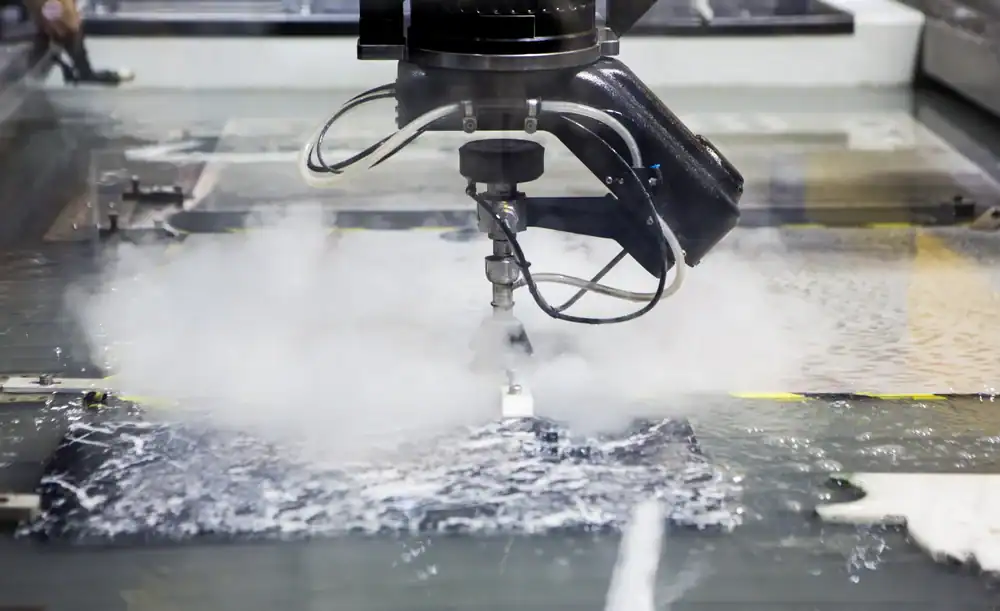
You need marble cut to exact specifications without chipping, cracking, or heat distortion. Traditional cutting methods generate friction and heat that can compromise the stone before you even install it.
Waterjet cutting uses high-pressure water mixed with fine abrasive to slice through marble without generating heat. That means no thermal stress, no micro-fractures, and no discoloration along the cut edge. Your material stays intact.
Whether you’re working on custom medallions for a luxury foyer, intricate backsplash inlays, or architectural elements that require tight tolerances, the cuts come out clean. If you can draw the design, we can cut it. Circles, curves, complex geometries—the machine follows your CAD file with positioning accuracy that holds to within a hundredth of a millimeter.
You get parts that fit right the first time, with edges smooth enough that finishing work is minimal. No callbacks. No rework. Just precision marble components ready for installation.
We’ve been running CNC waterjet systems since 2011, serving architects, contractors, and fabricators across New York, New Jersey, Pennsylvania, and Connecticut. We’ve cut components for high-profile clients including Ralph Lauren, Coach, and the Port Authority—projects where tolerances matter and mistakes aren’t an option.
St. James sits in a market where residential renovations and commercial builds demand quality stonework. You’re competing for projects where details separate you from the next contractor. We handle the precision cutting so you can deliver work that stands out.
Our background in traditional machining means we understand how parts need to fit together. When you send us a file or a sketch, we assess it for manufacturability and flag potential issues before cutting starts. That saves you material, time, and the headache of discovering a problem after the fact.
You start by sending us your design—CAD files work best, but we can work from detailed sketches or templates if that’s what you have. We review the design for any cutting limitations and confirm material specifications and thickness.
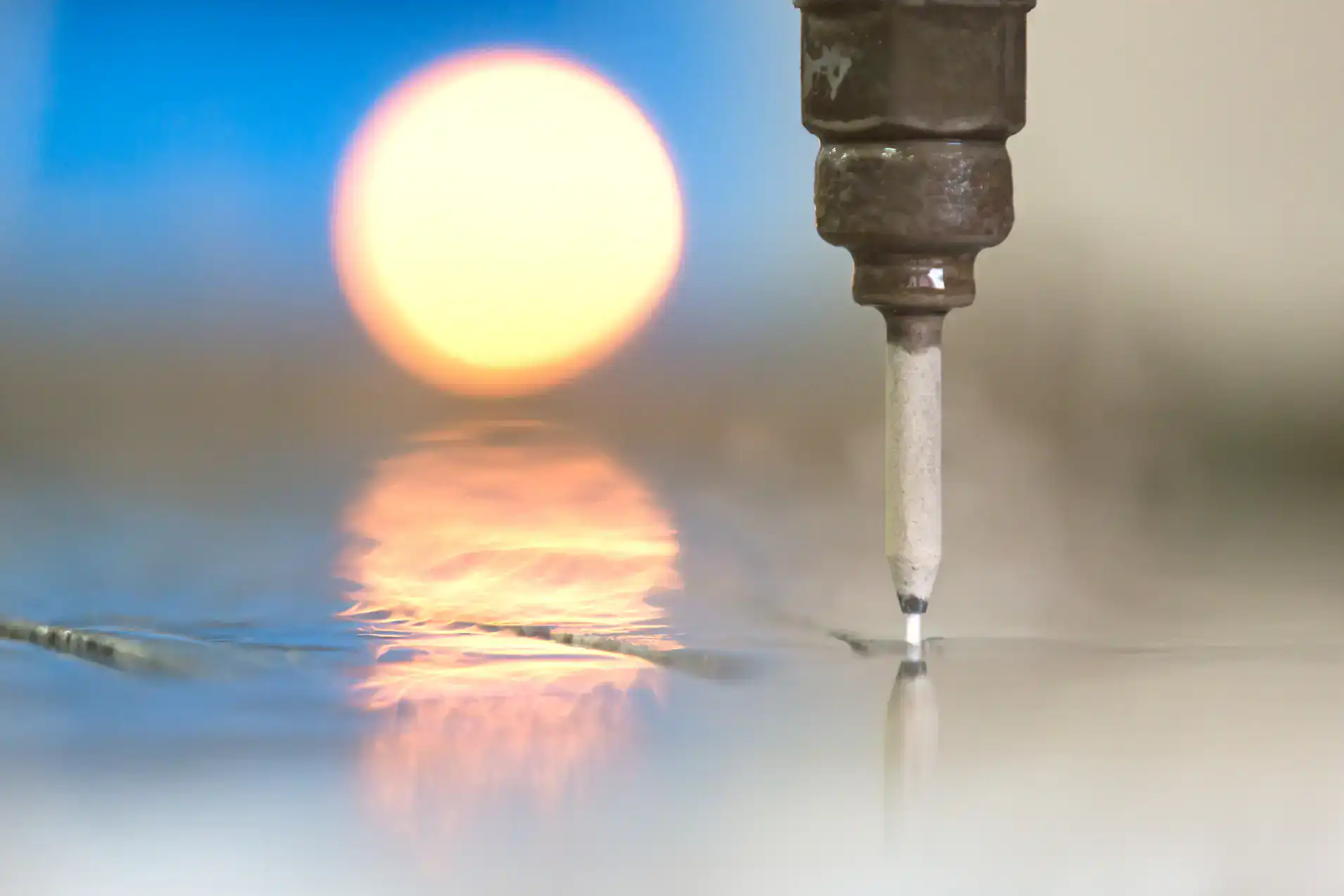
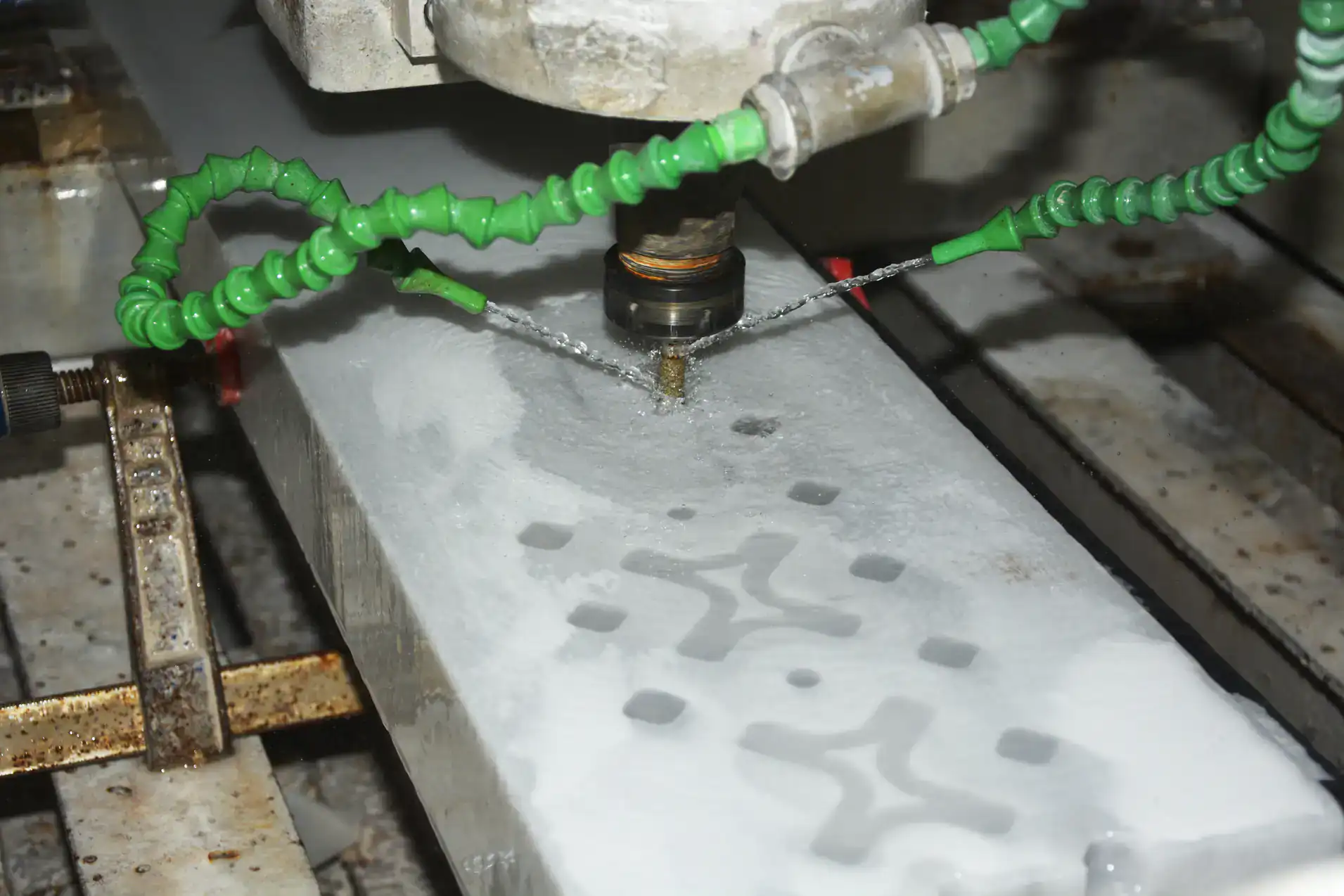
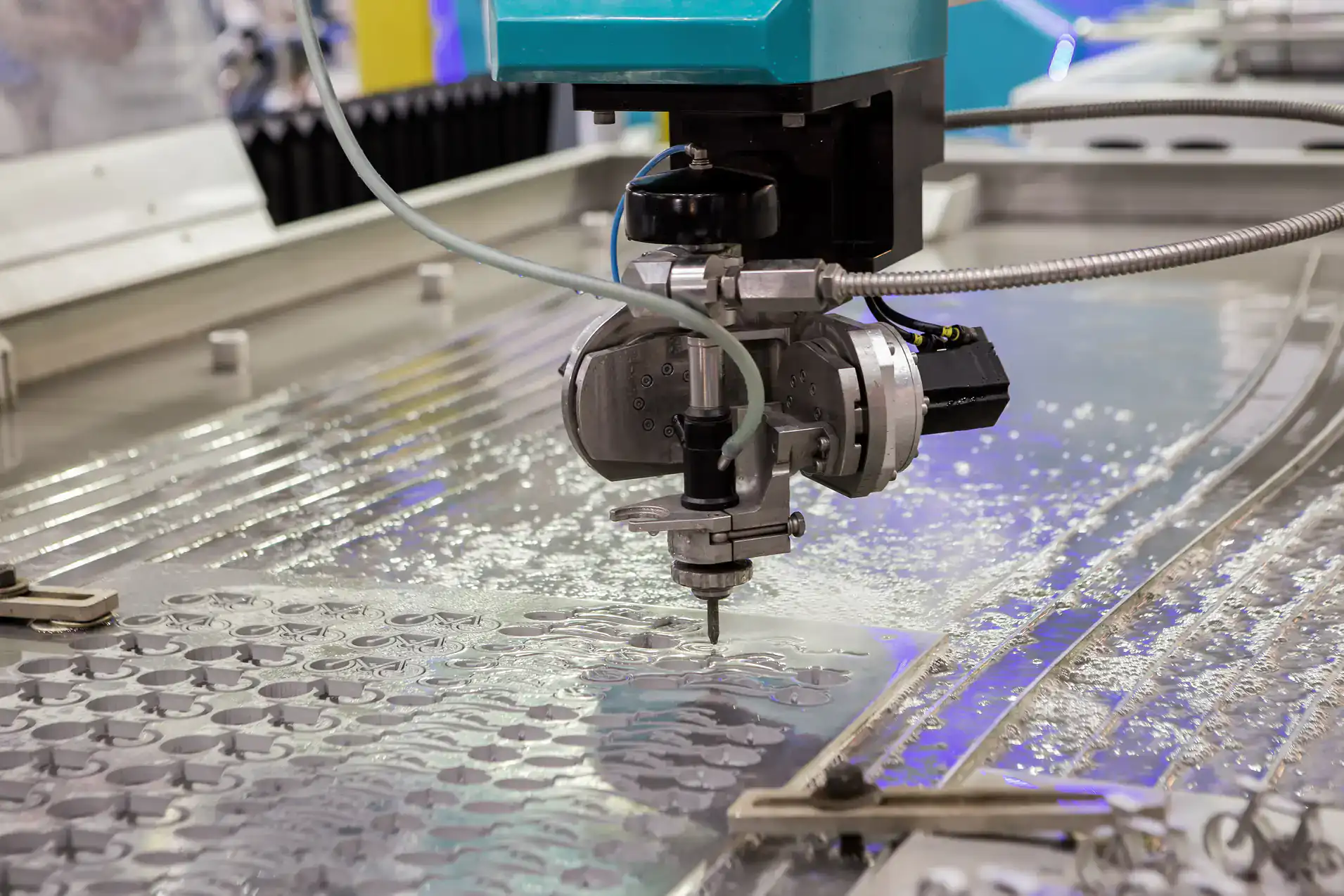
Once the design is approved, we program the CNC waterjet system with your exact specifications. The cutting head is fitted with a diamond-embedded nozzle that focuses a stream of water and garnet abrasive at pressures up to 60,000 PSI. This stream cuts through marble without generating heat or vibration that could damage the stone.
The machine follows the programmed path, cutting your design with consistent precision across the entire piece. For complex projects, we can nest multiple parts on a single slab to minimize waste and reduce your material costs. Cuts happen in one continuous process—no need for multiple setups or tool changes.
After cutting, we inspect each piece to verify dimensions and edge quality. You receive components that are ready for installation or final finishing, depending on your project requirements. Turnaround depends on complexity and queue, but we handle rush jobs when your timeline demands it.
Ready to get started?
You get cuts on marble slabs up to 72 x 144 inches, with thickness capacity that handles most architectural and design applications. Tolerances hold to +/- 0.005 inches, which matters when you’re fitting inlays or matching patterns across multiple pieces.
The process works on all marble types—Carrara, Calacatta, Emperador, travertine—plus granite, engineered stone, and composites. Different materials have different hardness levels, but waterjet handles them all without changing tooling or technique. That consistency means you can spec multiple stone types for a single project without worrying about cut quality varying between materials.
In St. James and the surrounding Long Island area, residential projects often involve custom kitchen islands, fireplace surrounds, and bathroom vanities where homeowners want unique patterns or edge profiles. Commercial work tends toward lobby installations, elevator cabs, and facade elements that require architectural precision. We cut for both.
You also get design consultation if you need it. Sometimes a design that looks good on paper doesn’t account for how stone behaves during cutting or installation. We’ve seen enough projects to spot those issues early and suggest adjustments that make your job easier without compromising the design intent.
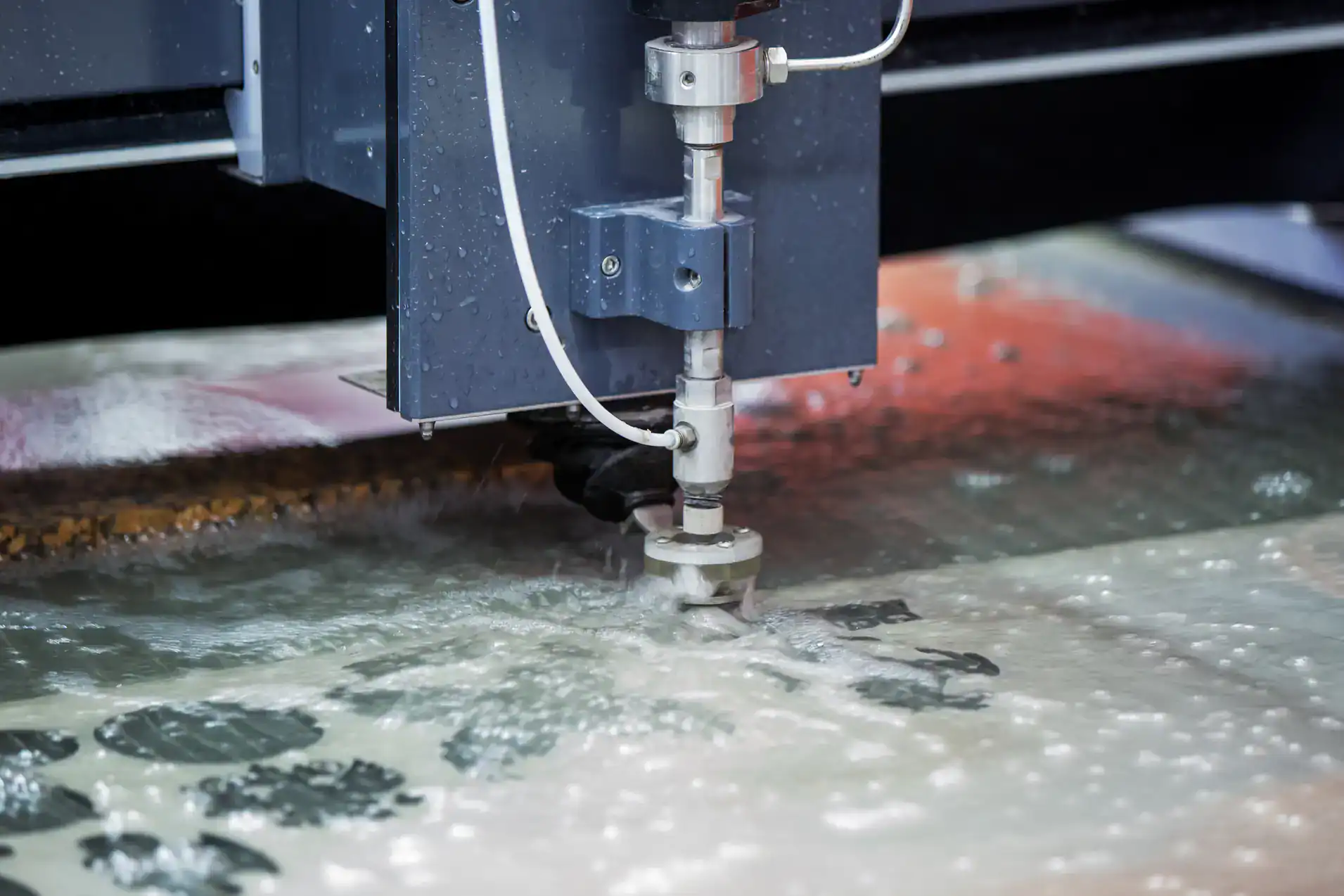
Saw blades generate friction, and friction creates heat. When you cut marble with a blade, that heat transfers into the stone and creates thermal expansion along the cut line. Marble doesn’t expand uniformly because of its natural veining and mineral composition, so you end up with internal stress that can cause micro-fractures or visible cracks.
Waterjet cutting uses a stream of water and abrasive that doesn’t generate meaningful heat. The cutting action is erosion, not friction. The water also acts as a coolant, keeping the stone at ambient temperature throughout the entire cut. No heat means no thermal expansion and no stress-related cracking.
This matters most when you’re cutting intricate patterns with tight inside corners or narrow sections. Those are exactly the spots where thermal stress concentrates and causes problems with traditional methods. Waterjet handles them without issue because there’s no heat to manage in the first place.
Yes. The cutting head is controlled by CNC programming that follows your design file with precision down to hundredths of a millimeter. If you can define the shape digitally, the machine can cut it.
Intricate designs—medallions, geometric patterns, organic curves, interlocking pieces—are exactly where waterjet excels. There’s no physical cutting tool that needs clearance or creates a minimum radius. The water stream is thin enough to cut sharp internal corners and detailed features that would be impossible or extremely difficult with a blade.
You do need to account for the kerf width, which is the width of the cut itself. That’s typically around 0.03 to 0.04 inches depending on the abrasive and pressure settings. We adjust the tool path to compensate so your finished dimensions match your design specs. For inlay work where pieces need to fit together precisely, we cut all mating parts in the same setup to ensure consistency.
Turnaround depends on design complexity, material availability, and current queue. A straightforward job—cutting a few simple shapes from material you provide—might be ready in a few days. Complex projects with multiple nested parts or tight tolerances take longer because programming and setup are more involved.
We give you a realistic timeline when you submit your project. If you’re on a tight deadline, let us know upfront. We handle emergency jobs when you need immediate turnaround, though that may affect pricing depending on what we need to shuffle in the schedule.
Most delays happen because of design revisions or material procurement, not cutting time. The actual cutting is relatively fast—the machine runs continuously once it starts. If you provide clean CAD files and have your material ready, we can move quickly. If we’re working from sketches that need conversion or waiting on stone delivery, that adds time to the front end.
Waterjet cutting can actually reduce waste if the job is planned properly. The kerf width is narrow—around 0.03 inches—so you lose less material to the cut itself compared to saw blades that are often twice as wide or more.
The bigger waste reduction comes from nesting. Because the CNC system can cut any shape in any orientation, we can arrange multiple parts on a single slab like puzzle pieces, fitting them together to use as much of the material as possible. With traditional cutting, you’re often limited by straight cuts and fixed blade positions, which leaves more unusable scrap.
That said, waterjet doesn’t eliminate waste entirely. Complex shapes with lots of cutouts will always generate scrap pieces. But you’re not wasting material to heat damage, cracked pieces, or oversized kerfs. For expensive marble, that difference adds up quickly across a project.
It depends on your application and aesthetic requirements. Waterjet cutting produces a clean edge with minimal chipping, but the surface finish has a slightly frosted or matte appearance from the abrasive action. For many applications—parts that will be grouted, edges that won’t be visible, or components where a natural stone texture is acceptable—the waterjet edge is fine as-is.
If you need a polished edge that matches the face of the stone, you’ll want to finish it after cutting. That’s standard for countertop edges, exposed inlay borders, or anywhere the cut edge is a visible design element. The advantage is that waterjet gives you a straight, accurate edge to start from, so finishing is just about surface treatment, not correcting dimensional problems.
Some projects split the difference—using the waterjet edge for most cuts and only polishing the edges that will be seen. That saves finishing time and cost while still delivering the appearance you need where it matters.
CAD files work best—DXF and DWG formats are standard and import directly into our CNC programming software. If you’re working in AutoCAD, Illustrator, or most design programs, you can export to one of those formats. Vector files are better than raster images because they define shapes mathematically rather than as pixels, which gives us clean, scalable paths to follow.
If you don’t have CAD files, we can work from detailed drawings or templates, but there’s more manual work involved in converting those to machine code. That can add time and introduces more opportunity for interpretation errors, so the cleaner your source file, the better.
Include dimensions and any critical tolerances in your file or notes. If certain features need to be held tighter than our standard tolerance, flag those upfront. Same with edge finish requirements, material thickness, and quantity. The more complete your specs, the less back-and-forth we need before cutting starts.
Useful Links
Other Services we provide in St. James