Hear from Our Customers
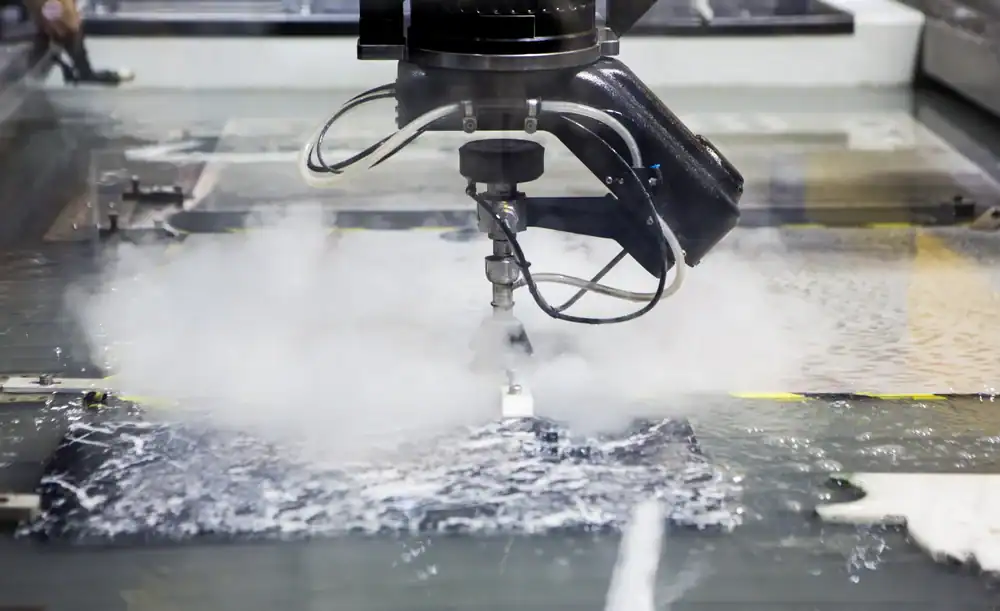
You’ve got a design that requires curves, medallions, or patterns traditional saws can’t touch. That’s where waterjet cutting changes everything for marble work.
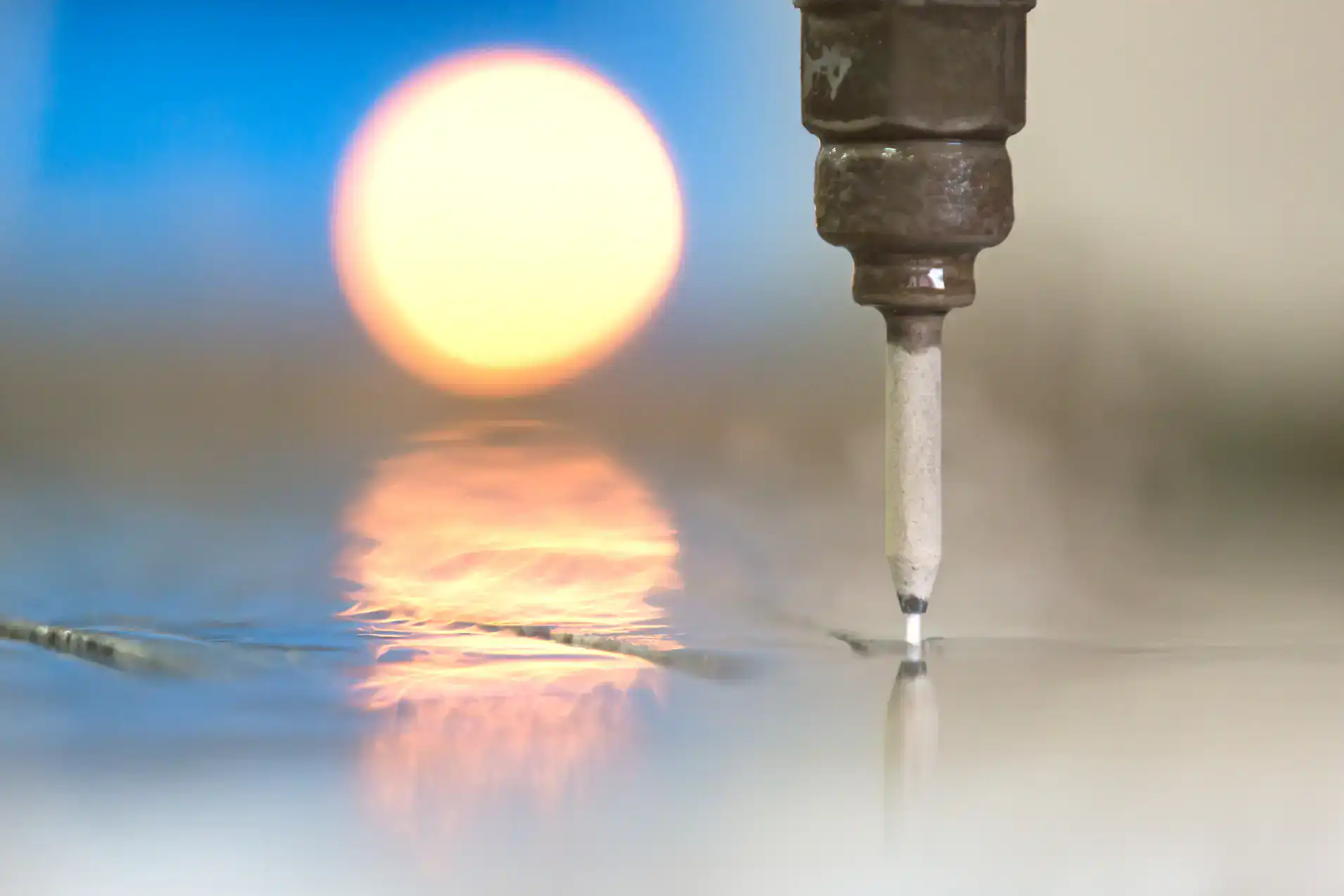
The process uses high-pressure water mixed with fine abrasive to cut through marble without generating heat. No thermal shock. No microfractures spreading through your slab weeks later. Just clean edges that fit together the first time.
You’re not dealing with rough cuts that need hours of secondary finishing. The edge quality coming off the machine is what you’d expect after polishing—which means your installer isn’t calling you about gaps or chips during the fit-up. Your project stays on schedule, and the final result looks like what you approved in the design phase.
If you’re working with Calacatta, Carrara, or any marble where veining matters, waterjet cutting lets you orient each piece exactly how you want it. You control the visual flow across countertops, fireplace surrounds, or feature walls because the cuts follow your layout—not the limitations of the tool.
We operate out of West Islip, serving architects, designers, and contractors across Valley Stream and the surrounding Long Island area. We’re the shop you call when the cut matters as much as the material.
Valley Stream sits in a market where marble and stone work is everywhere—from high-end residential renovations in the Five Towns to commercial lobbies in Nassau County. The standard here isn’t low. Your clients have seen quality work, and they know when something’s off.
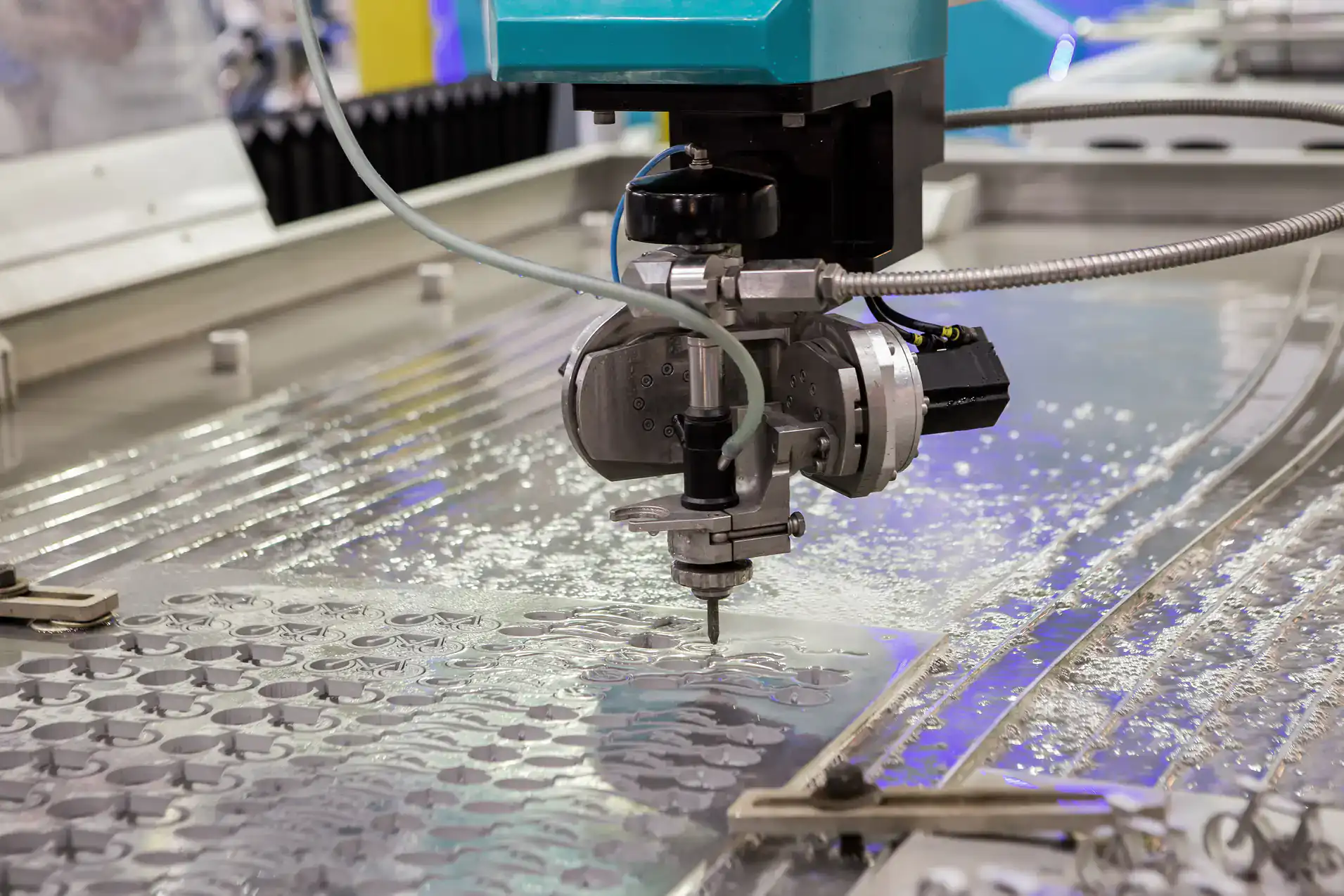
We handle custom marble waterjet cutting for projects where precision isn’t negotiable. CNC-controlled cutting means your CAD file translates directly to the cut—no interpretation, no approximation. You send the design, we cut it, and it fits.
You start by sending us your design file—DXF, DWG, or even a detailed PDF if that’s what you’re working from. We’ll review it for any potential issues with tight radiuses or material limitations before we start cutting.
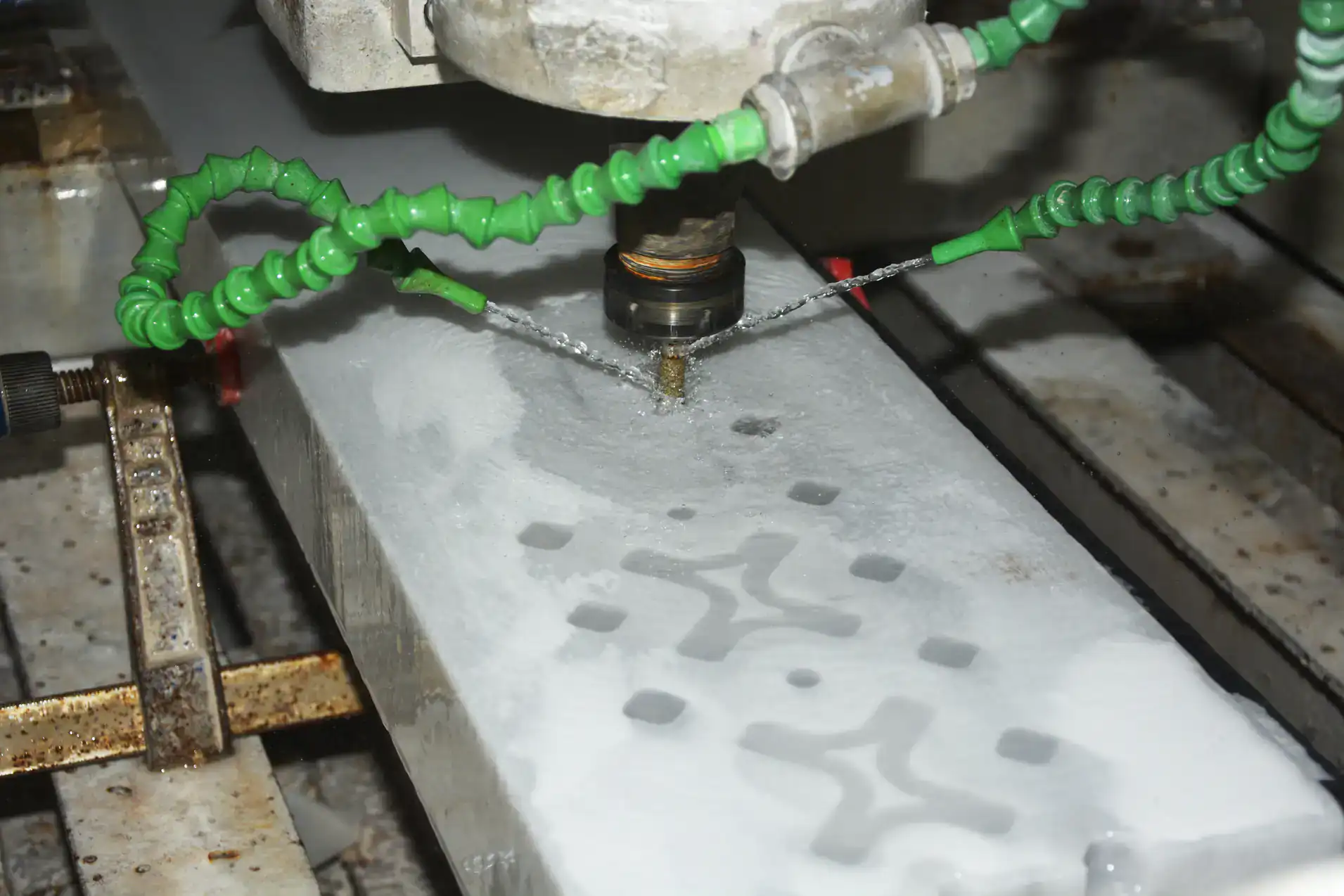
Once the file is dialed in, we program the CNC waterjet system. The machine follows your design with a cutting stream that’s thinner than most saw blades, which means tighter nesting and less waste from your slab. For marble work in Valley Stream, NY, where material costs add up fast, that waste reduction matters.
The cutting itself is a cold process. Water pressure does the work—no heat, no vibration transferring into the stone. Marble doesn’t experience thermal stress, so you’re not introducing weak points that show up later as cracks.
After cutting, the edges come off clean. Depending on your application, you might want a light polish or honing, but you’re not grinding down rough cuts or trying to salvage chipped corners. The part is ready for installation or final finishing without the rework time you’d expect from traditional cutting methods.
Ready to get started?
When you’re speccing out precision marble waterjet cutting in Valley Stream, NY, you’re getting access to tolerances that traditional fabrication methods can’t match. We’re talking 0.01 mm accuracy—which matters when you’re fitting inlays, matching seams, or creating patterns where alignment is visible.
Our cutting capacity handles marble slabs up to 100 mm thick. Whether you’re working with standard 2 cm or 3 cm countertop material or something thicker for a custom application, the process stays consistent. Thicker material doesn’t mean rougher edges or slower timelines that blow up your schedule.
You also get design flexibility that opens up options you might not have considered. Circular patterns, intricate borders, custom edge profiles, relief cuts for undermount sinks—if you can draw it, the machine can cut it. That’s particularly useful for projects in Valley Stream and the surrounding Nassau County area, where custom residential work often requires one-off designs that need to look intentional, not improvised.
Material waste drops significantly compared to traditional cutting. Waterjet cutting can reduce scrap by up to 30% because the kerf width is minimal and nesting efficiency is higher. When you’re working with premium marble, that waste reduction translates directly to cost savings on material—or the ability to get more pieces from a single slab.
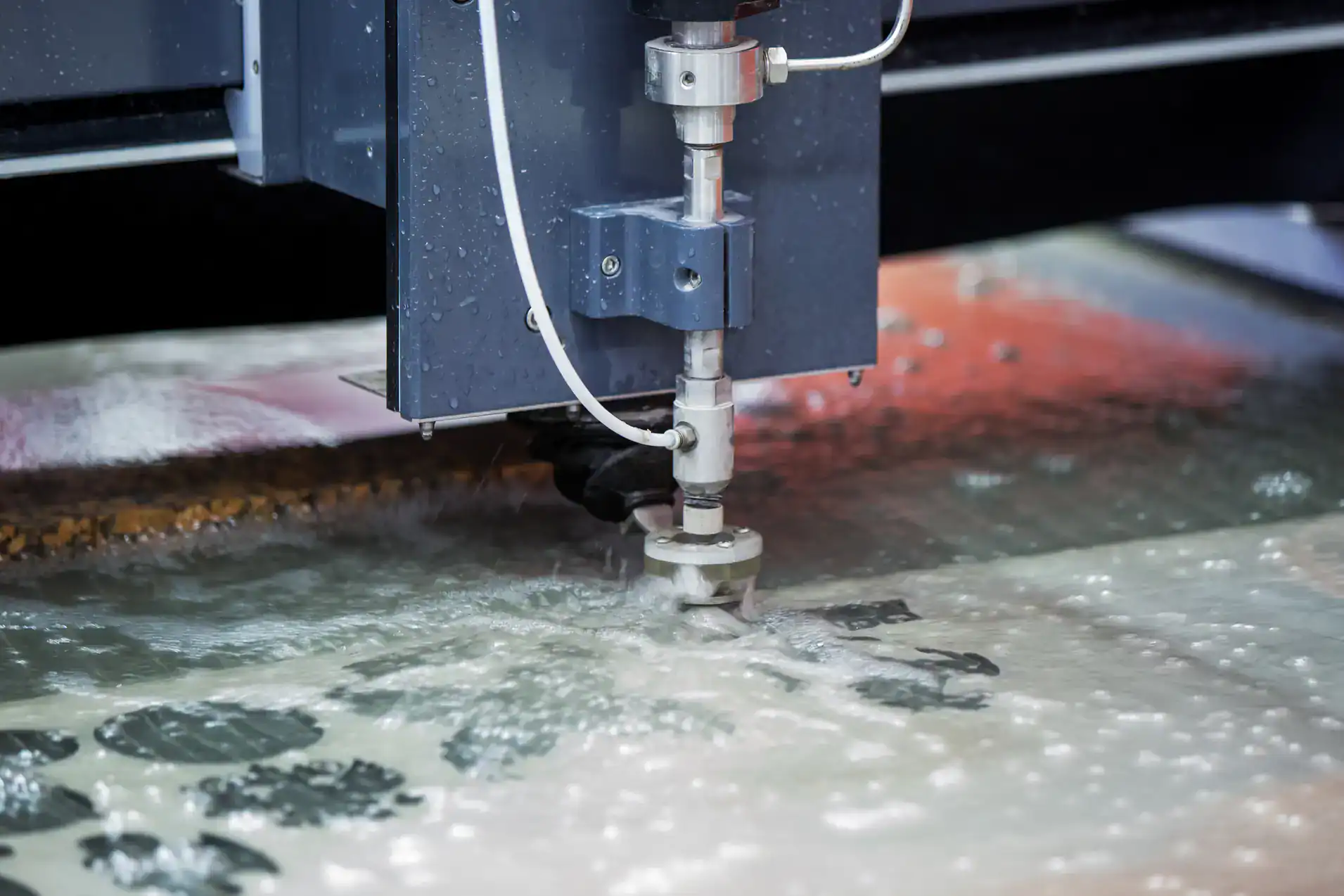
No. Waterjet cutting is a cold-cutting process, which means there’s no heat generated during the cut. Heat is what causes thermal shock in marble—leading to microfractures or immediate cracking, especially in materials with existing veining or natural fissures.
Traditional cutting methods like saws generate friction and heat. That heat transfers into the stone and can cause expansion or stress points that compromise the integrity of your slab. With waterjet cutting, the high-pressure water stream does the work without raising the temperature of the material.
This is especially important if you’re working with marble types that are more prone to cracking—like certain Calacatta or Statuario varieties where the veining creates natural weak points. The cold-cutting process doesn’t add stress to those areas, so your slab stays intact through the cutting process and during installation.
Waterjet cutting achieves tolerances within 0.01 mm when properly programmed and calibrated. For context, that’s about the thickness of a human hair. In practical terms, it means your cuts are accurate enough for tight inlays, seamless edge matching, and complex patterns where even slight misalignment would be visible.
CNC marble cutting in Valley Stream, NY, uses computer-controlled systems that follow your design file exactly. There’s no hand-guiding or eyeballing the cut. The machine executes the programmed path, which eliminates human error from the cutting process.
That level of precision matters most when you’re doing detailed work—medallions, borders, or multi-piece installations where each part has to fit together perfectly. If one piece is off by even a millimeter, the whole assembly looks wrong. Waterjet cutting removes that variable so your installation goes smoothly the first time.
Turnaround depends on the complexity of your design and the current project queue, but most custom marble waterjet cutting projects in Valley Stream, NY, are completed within a few days to a week. Simple cuts with straightforward geometry move faster than intricate multi-piece designs.
The actual cutting time is often shorter than you’d expect. Waterjet systems cut efficiently, and because there’s no tool wear or heat buildup, the machine maintains consistent speed throughout the job. What takes time is the setup—programming the CNC system, securing the material properly, and doing test runs if the design has particularly tight tolerances or complex curves.
If you’re on a tight deadline, communicate that upfront. We can often prioritize urgent projects or adjust the schedule to accommodate your installation timeline. The key is getting us the design file early so we can flag any potential issues before you’re counting on a specific delivery date.
Yes. If you can draw it in a CAD program, waterjet cutting can execute it in marble. The cutting stream is thin enough to navigate tight radiuses and intricate patterns that would be impossible with traditional saws or routers.
This is where custom marble waterjet cutting in Valley Stream really separates itself from conventional methods. You’re not limited to straight cuts or simple curves. Medallions, scrollwork, geometric patterns, custom edge profiles—all of that is achievable because the waterjet nozzle can pivot and follow complex paths without breaking the cut or requiring multiple setups.
The limitation isn’t the machine—it’s the material. Marble has natural characteristics like veining and density variations that can affect how tight of a radius you can cut without risking a break. But those are material constraints, not process constraints. We’ll review your design and let you know if any features need adjustment based on the specific marble you’re using.
It depends on your application and the finish level you need. Waterjet cutting produces clean edges with no delamination or chipping, but the surface finish coming off the machine is typically a matte or slightly textured finish—not polished.
For most installations, a light honing or polishing pass brings the edge up to the finish level that matches the face of the slab. That’s standard practice and takes significantly less time than grinding down rough edges from a saw cut or repairing chips from traditional cutting methods.
If you’re doing an application where the edge won’t be visible—like a piece that’s getting covered by trim or another material—you might not need any secondary finishing at all. The structural quality of the cut is already there. You’re just deciding whether the aesthetic finish needs adjustment based on how the piece will be seen in the final installation.
The cutting process itself can cost more per linear foot than a basic saw cut, but you’re comparing different capabilities. Waterjet cutting handles designs that traditional methods can’t execute—and when you factor in reduced material waste, no secondary finishing for rough edges, and fewer rejected pieces due to cracking or chipping, the total project cost often balances out or even comes in lower.
For precision marble waterjet cutting in Valley Stream, NY, you’re also paying for accuracy that saves time during installation. When pieces fit correctly the first time, your installer isn’t making return trips or trying to improvise solutions for gaps and misalignments. That labor savings adds up quickly, especially on commercial projects or high-end residential work where hourly rates are significant.
If your project requires intricate cuts, tight tolerances, or complex patterns, waterjet cutting isn’t more expensive—it’s the only method that delivers the result you need. Traditional cutting would require multiple setups, hand-finishing, and a much higher risk of material loss. You’re not paying a premium for waterjet cutting in those scenarios; you’re paying for a process that actually works for what you’re trying to build.
Useful Links
Other Services we provide in Valley Stream