Hear from Our Customers
You’re working with expensive marble. Maybe it’s a custom medallion for an entryway, an intricate kitchen backsplash, or architectural inlays that need to fit perfectly the first time. Traditional cutting methods introduce heat, vibration, and the real risk of micro-fractures that show up later or waste that eats into your budget.
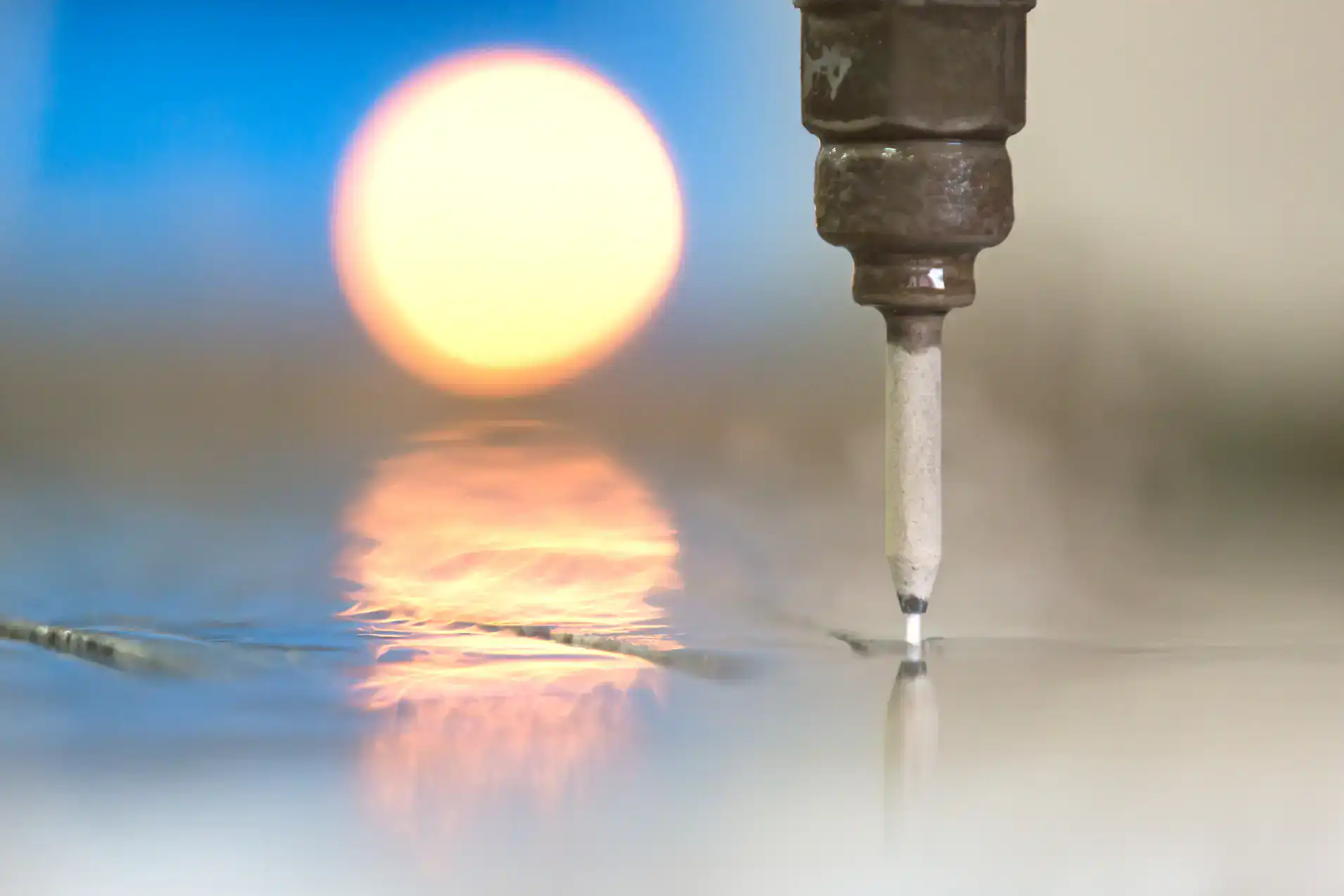
Precision marble waterjet cutting in Woodmere, NY eliminates those risks entirely. The process uses high-pressure water mixed with fine abrasive to cut through marble without generating heat, which means no thermal stress, no cracking, and no discoloration. You get clean edges that require minimal finishing, cuts accurate to within 0.005 inches, and the ability to create curves and patterns that would be nearly impossible with a saw.
The result is less material waste, faster project completion, and marble work that looks exactly how you envisioned it. No compromises on the details that matter.
We’ve spent over 20 years at Tri-State Waterjet working with architects, designers, contractors, and homeowners across Woodmere, NY and the surrounding Five Towns area. We’ve handled everything from simple countertop cutouts to complex architectural installations for high-end residential projects where precision isn’t optional.
Woodmere’s luxury home market demands a level of craftsmanship that matches the area’s reputation. With median home prices exceeding $1.29 million and a community that values quality, custom marble work here isn’t just decorative—it’s an investment. We understand that, and we’ve built our process around protecting that investment.
Our CNC waterjet equipment handles marble of any thickness, any hardness, any complexity. We’ve worked on projects for industry names you’d recognize and homeowners whose names you won’t, and the standard is the same: get it right the first time.
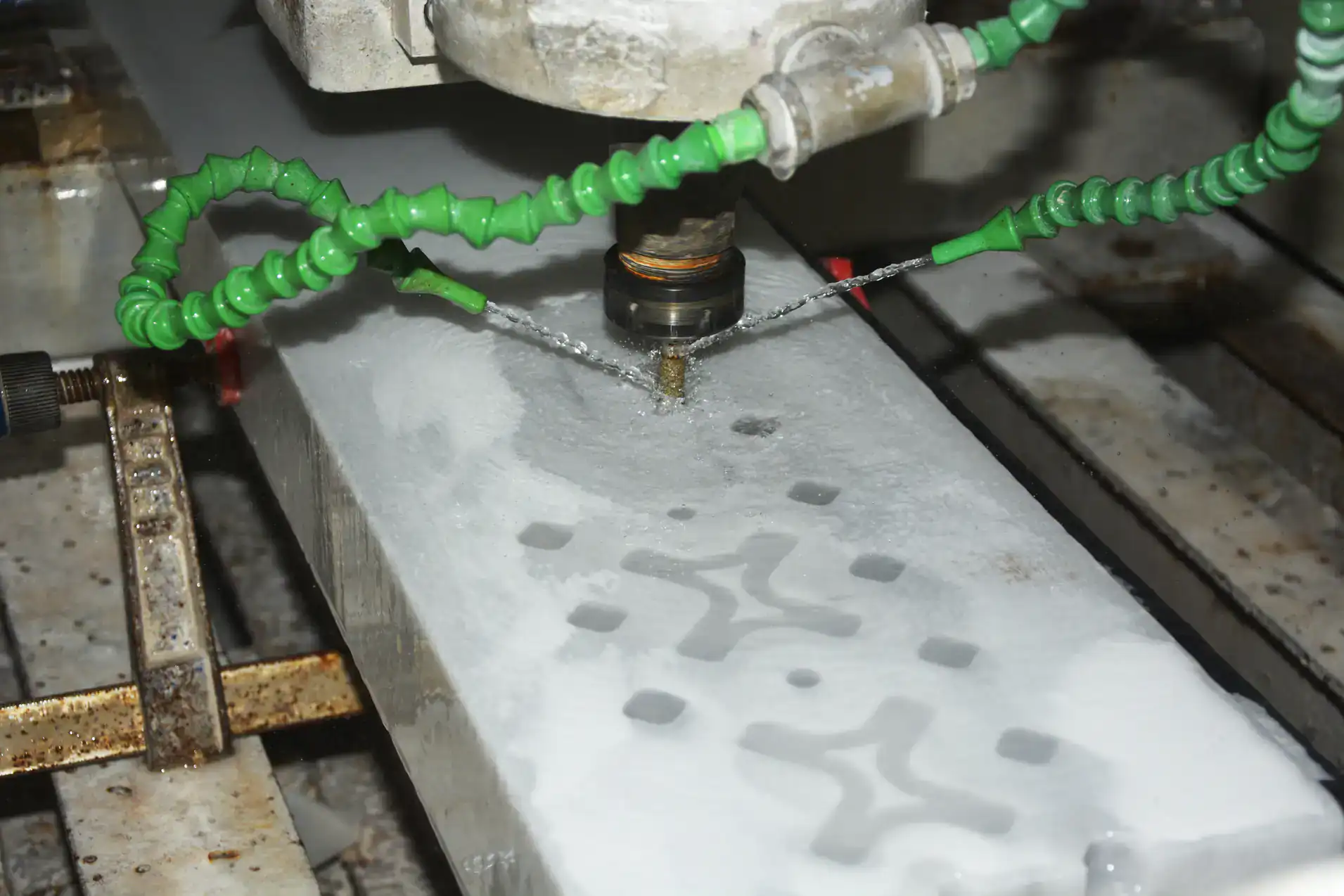
The process starts with your design. If you have CAD files, we can work directly from those. If you’re still sketching ideas, we’ll help translate your vision into a cuttable format. Once the design is finalized, it’s programmed into our CNC waterjet system with exact specifications for your marble type and thickness.
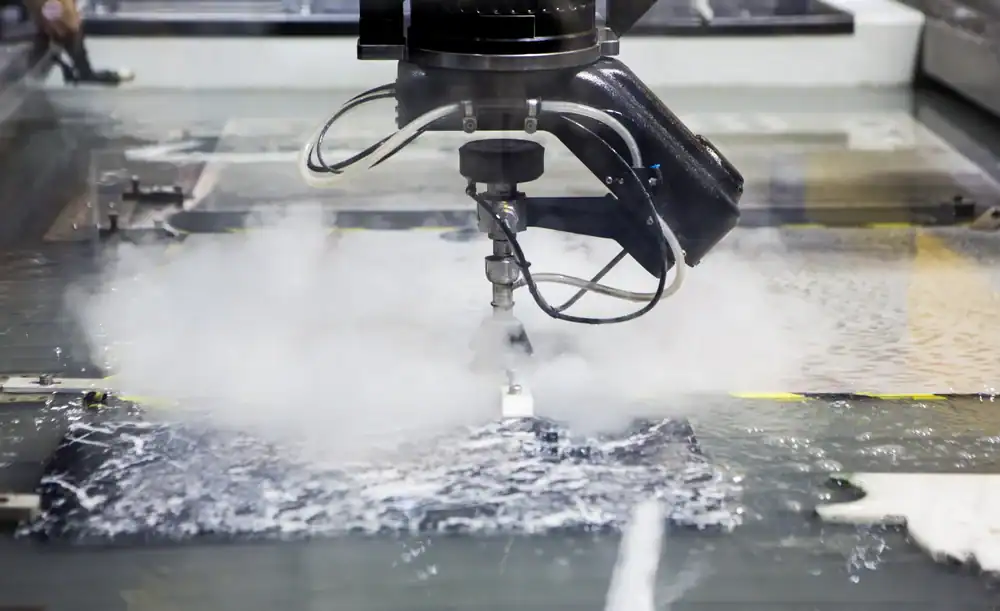
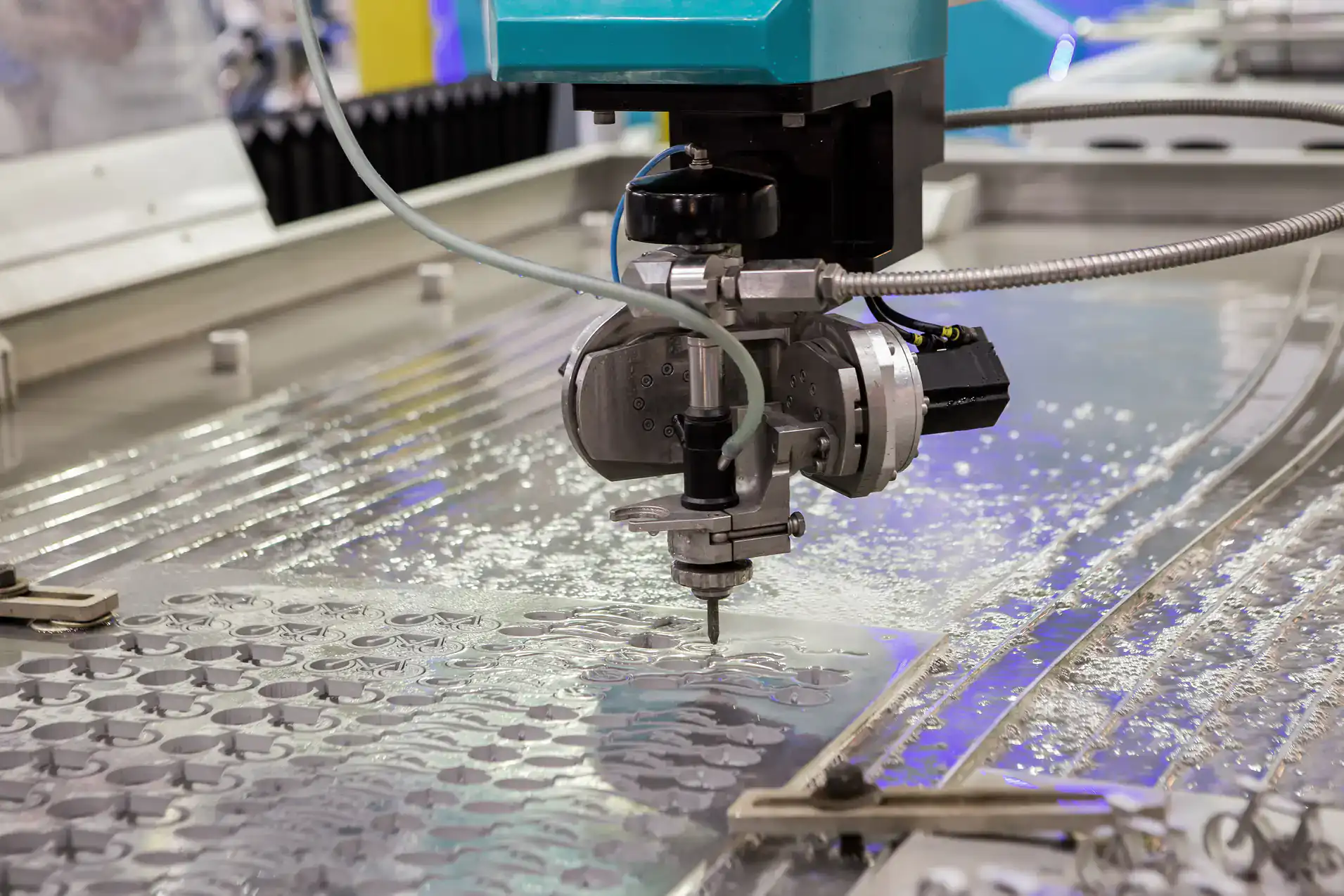
The cutting itself is where waterjet technology shows its advantage. A high-pressure stream of water mixed with garnet abrasive cuts through the marble in a single pass, following your design with computer-controlled precision. There’s no blade contact, no heat buildup, no vibration that could cause internal stress. The marble stays cool throughout the entire process, which preserves its structural integrity and natural beauty.
After cutting, edges come out smooth enough that many projects need little to no additional finishing. Complex cuts that would take hours with traditional methods—curves, interior cutouts, intricate patterns—are completed in a fraction of the time. You get your pieces ready for installation, cut exactly to spec, without the usual concerns about fit or finish quality.
Ready to get started?
Custom marble waterjet cutting in Woodmere, NY means you’re not limited by what’s available in standard sizes or simple shapes. We cut marble medallions, floor inlays, wall murals, custom countertops, furniture elements, and architectural details that traditional fabrication shops turn away. If your design requires curves, interior holes, or patterns with tight tolerances, waterjet handles it.
The Woodmere area’s construction market has seen significant growth, with private sector construction employment expected to add over 22,000 jobs in the next few years. That growth brings more high-end residential projects, more custom renovation work, and more demand for marble fabrication that can deliver on complex design requirements. Waterjet cutting meets that demand without the material waste or timeline delays that come with conventional methods.
You also get material efficiency that matters when you’re working with premium marble. Waterjet cutting reduces waste by up to 30% compared to saw cutting, which means more of your material ends up in the finished project instead of the scrap bin. For large installations or rare marble varieties, that difference adds up quickly in both cost and availability.
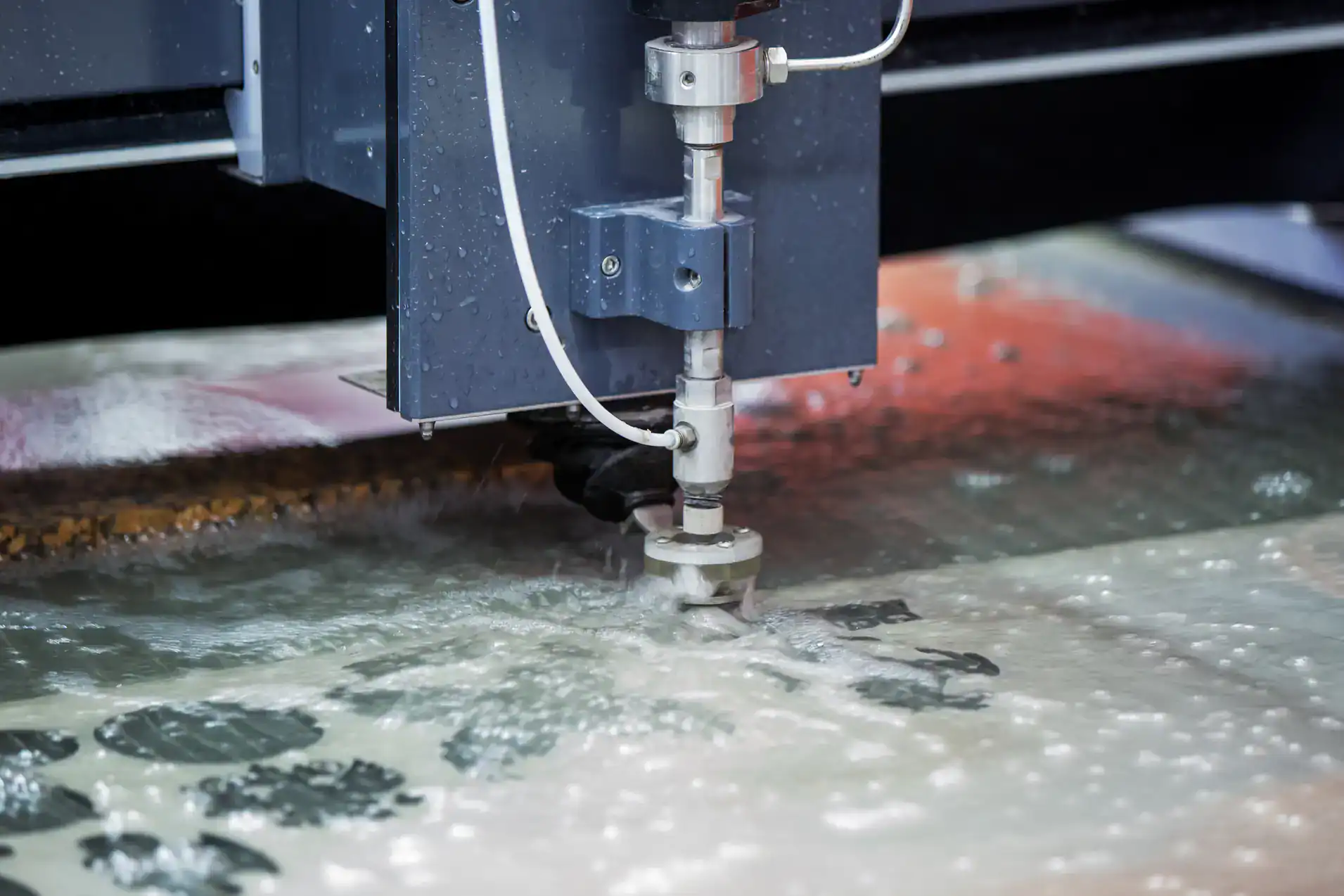
Waterjet cutting works with essentially any marble type, regardless of hardness, color, or finish. That includes softer marbles like Carrara and harder varieties like Calacatta or exotic imports. The process doesn’t rely on mechanical force that could cause different marbles to react unpredictably—it’s a controlled erosion process that adapts to the material.
Thickness isn’t a limiting factor either. We’ve cut marble ranging from thin 3/8-inch tiles to thick 3-inch slabs without issue. The waterjet pressure and abrasive flow rate get adjusted based on your specific marble’s characteristics, which means consistent results whether you’re working with polished Statuario or honed Emperador.
If you’re using reclaimed marble or working with material that has natural fissures or veining, waterjet cutting is actually safer than traditional methods. There’s no vibration or impact that could propagate existing cracks, and the cold-cutting process won’t cause thermal expansion that might worsen weak points in the stone.
The biggest difference is heat. Saw blades generate friction, which creates heat, which causes thermal expansion in marble. That expansion can lead to micro-fractures that compromise the stone’s integrity or create stress points that show up as cracks later. Waterjet cutting is a cold process—the water actually cools the marble during cutting, eliminating thermal stress entirely.
Precision is the second major difference. A good saw operator can get close to your measurements, but “close” might mean a variance of 1/16 inch or more depending on blade thickness and material movement. Waterjet cutting holds tolerances within 0.005 inches consistently, which matters when you’re creating inlays that need to fit together perfectly or cutting pieces that must align with existing architectural elements.
Edge quality is also noticeably better with waterjet. Saw cuts often require grinding, polishing, or other finishing work to smooth out blade marks and achieve a clean edge. Waterjet-cut edges come out smooth enough that many applications need minimal or no additional finishing, which saves time and labor costs on your project.
Yes, and that’s where waterjet cutting really separates itself from other methods. The cutting stream is narrow—typically around 0.03 to 0.04 inches in diameter—which allows for extremely tight radius curves and detailed patterns. If you can draw it in a CAD program, we can cut it in marble.
Interior cutouts are straightforward with waterjet. Creating a hole or opening in the middle of a marble piece just requires a pierce point where the waterjet starts, then it follows the programmed path to cut out the shape. With a saw, you’d need to drill entry points and make multiple cuts, which increases the risk of cracking and limits how complex the shape can be.
For projects like marble medallions, mosaic inlays, or decorative borders with repeating patterns, waterjet cutting maintains consistency across every piece. The CNC system follows the exact same path every time, so if you’re cutting 50 identical elements for a floor pattern, piece 50 matches piece 1 with the same precision. That consistency is nearly impossible to achieve with manual cutting methods.
Turnaround depends on project complexity and current workload, but waterjet cutting is generally faster than traditional fabrication methods for anything beyond basic straight cuts. A simple countertop cutout might be completed in a day. More complex projects like detailed floor medallions or multi-piece installations typically take a few days to a week, including programming time and quality checks.
The speed advantage comes from the single-pass cutting capability. Where traditional methods might require multiple setups, tool changes, or sequential operations to complete a complex cut, waterjet does it all in one continuous process. That eliminates the downtime between steps and reduces the overall calendar time from design approval to finished pieces.
For projects in Woodmere, NY and the surrounding area, we can often work with your timeline to accommodate installation schedules or project deadlines. If you’re coordinating with other trades or working around a homeowner’s schedule, knowing exactly when your marble pieces will be ready helps keep the whole project on track. We’ll give you a realistic timeframe upfront based on your specific design requirements.
Waterjet cutting is actually one of the cleaner fabrication methods for marble. The water used in cutting gets filtered and recycled through our system, and the abrasive garnet that does the actual cutting settles out and can be disposed of as non-hazardous waste. There’s no dust cloud like you’d get with saw cutting, no chemical residues, and no fumes or odors.
Material waste is significantly lower than traditional cutting methods. The narrow cutting stream means less marble is turned into dust or chips during the cut, and the precision of CNC programming allows us to nest multiple pieces efficiently on a single slab. That optimization can reduce raw material waste by 25-30%, which matters both environmentally and economically when you’re working with expensive marble.
The environmental aspect resonates in areas like Woodmere where sustainable building practices are increasingly valued. Waterjet cutting uses no harmful chemicals, produces minimal waste, and operates with lower energy consumption than many traditional fabrication methods. For projects pursuing green building standards or homeowners who prioritize environmentally conscious construction, it’s a cleaner option that doesn’t sacrifice performance.
The most helpful thing you can provide is a clear design file—CAD drawings, DXF files, or even detailed sketches with dimensions. The more specific you can be about measurements, the more accurate the quote. If you have the actual marble selected, knowing the type, thickness, and finish helps us account for material-specific cutting parameters.
For complex projects, photos or descriptions of the installation location can be useful. If you’re creating an inlay that needs to fit within existing marble or architectural elements, understanding those constraints upfront prevents issues later. Same goes for edge finish requirements—if you need polished edges versus natural cut edges, that affects both the process and pricing.
If you’re still in the design phase and not sure exactly what’s possible, that’s fine too. We can review your concept and provide guidance on what works well with waterjet cutting, what might need adjustment for optimal results, and what the realistic cost range looks like for your vision. The goal is to give you enough information to make a decision, not to lock you into specifics before you’re ready.
Useful Links
Other Services we provide in Woodmere