Hear from Our Customers
You need parts that meet spec without the headaches. No warped edges from heat. No grinding down oxidation before welding. No explaining to your customer why tolerances slipped.
Waterjet cutting metal eliminates the heat-affected zone completely. The edge comes off the table ready for assembly or welding. You’re not paying for secondary operations because the cut is clean from the start.
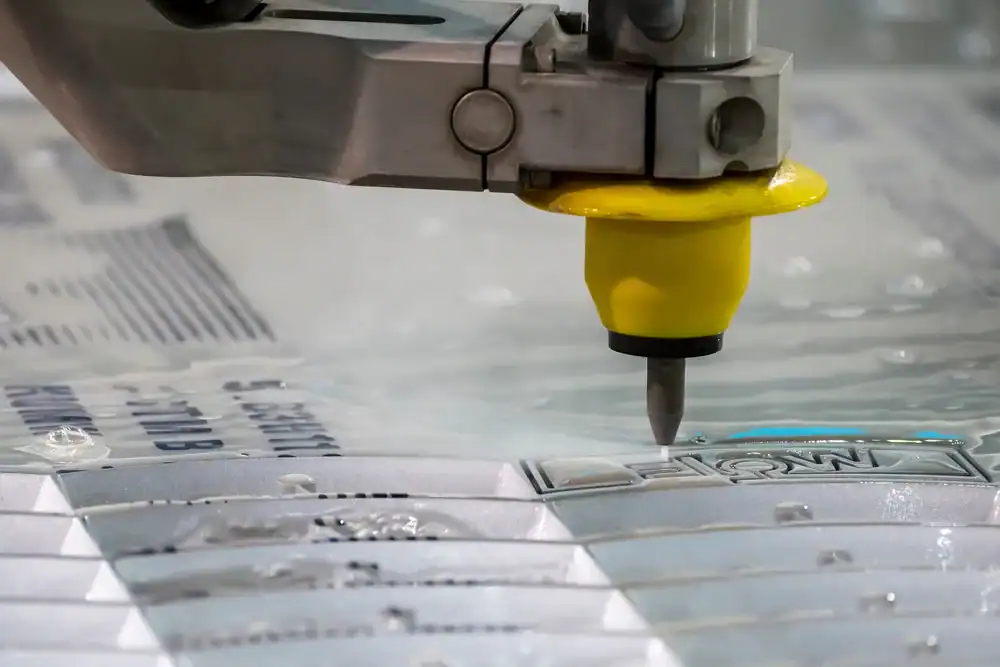
Accuracy holds to ±0.001″ on positioning. Complex shapes, tight inside corners, holes placed exactly where your CAD file says they go. Our Flow Mach 500 reads your design and cuts it as drawn, whether you’re running one prototype or a full production batch.
Material thickness up to 8 inches. Stainless, aluminum, tool steel, titanium—the abrasive stream doesn’t care. You get the same clean edge on 1/4″ plate as you do on 6″ stock, without changing your process or worrying about heat distortion.
We operate out of West Islip, serving Brentwood and the broader Long Island manufacturing community. We’re close enough to turn around rush jobs without the logistics nightmare of shipping across state lines.
Our equipment includes Flow Mach 500 CNC systems and Mitsubishi waterjet machines with automatic taper control. That means consistent standoff, optimum nozzle position, and repeatable quality across your entire run.
Brentwood’s industrial sector—machine shops, metal fabricators, contractors—needs reliable cutting capacity without the overhead of owning the equipment. You send the file, we cut the parts, you get them back faster than most shops can even quote the job.
You send us your CAD file—DXF, DWG, whatever format you’re working in. We load it directly into the CNC controller. No manual programming, no interpretation errors.
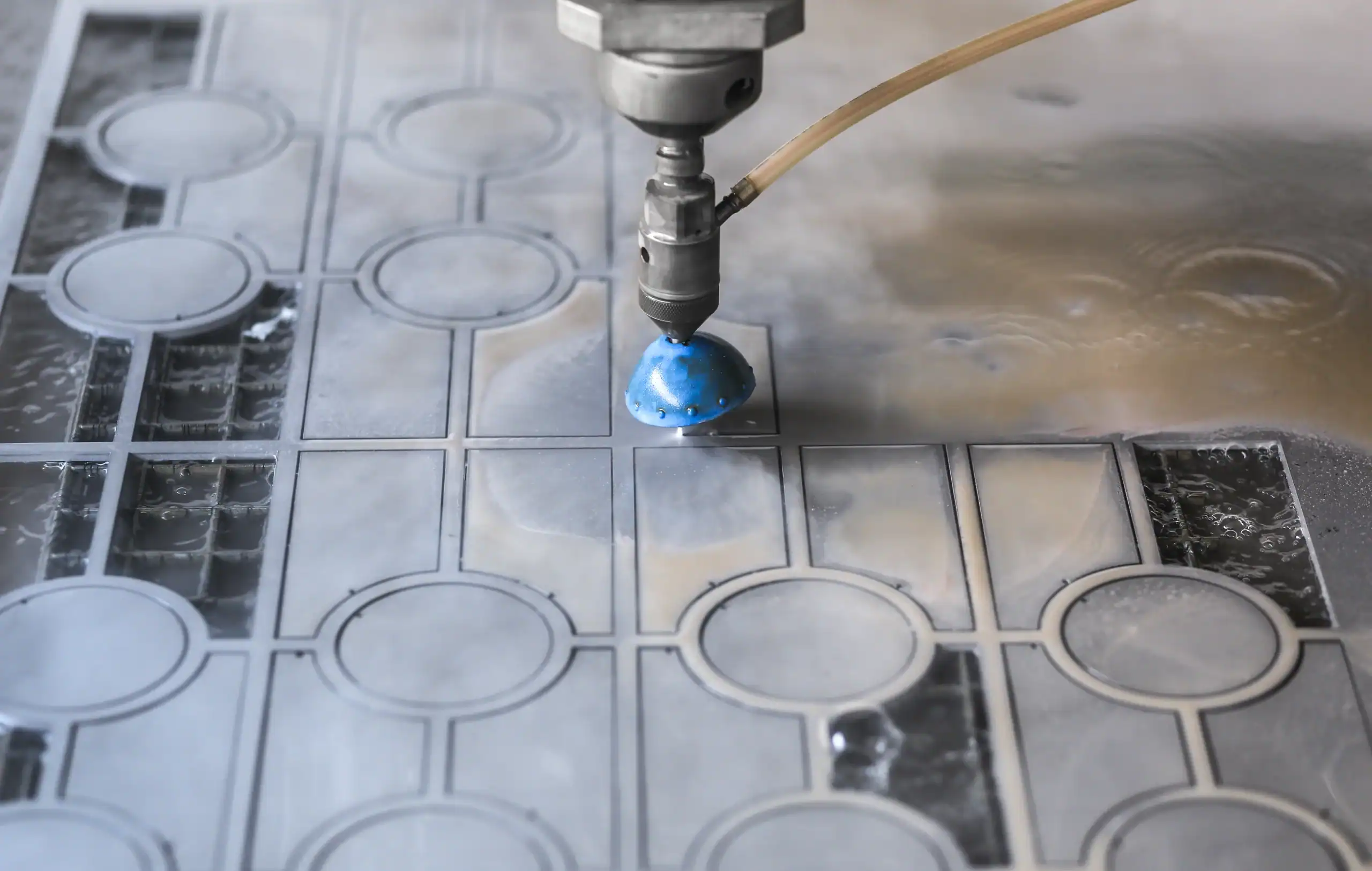
The system positions the nozzle, sets the cutting speed based on material type and thickness, and starts the cut. High-pressure water mixed with garnet abrasive does the work. The stream is thinner than what you’d get from plasma or laser, so kerf width stays minimal and material waste drops.
Automatic height control keeps the standoff distance consistent throughout the cut. The nozzle adjusts for material variations in real time. You don’t get the taper issues that come from manual setups or worn equipment.
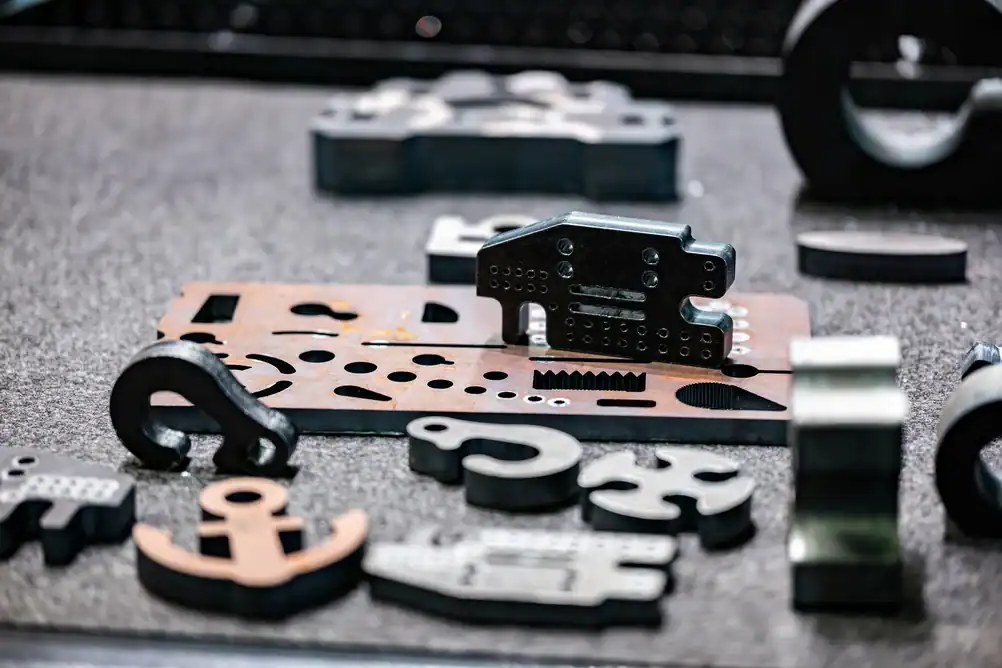
Once the cut finishes, parts come off the table ready to use. No deburring. No heat treatment to correct warping. No secondary machining to bring tolerances back into spec. If you need multiples, the machine repeats the exact same cut without drift.
Ready to get started?
Material consultation comes first. You tell us what you’re cutting and what it needs to do. We’ll flag potential issues—like materials that don’t play well with abrasive cutting—before you waste time or money.
Custom design support if you need it. Not every shop has in-house CAD capability. We can take your sketch or rough dimensions and turn it into a cuttable file. You approve it, we cut it.
Brentwood’s metal fabrication businesses often work with mixed materials on the same project. Waterjet handles that without changing tooling. Stainless brackets, aluminum panels, tool steel fixtures—all cut on the same table with the same setup.
Turnaround depends on complexity and queue, but rush service is available. Long Island’s manufacturing pace doesn’t always allow for two-week lead times. We keep capacity open for jobs that need to move fast, especially for local Brentwood clients who can coordinate pickup or delivery without cross-country shipping delays.
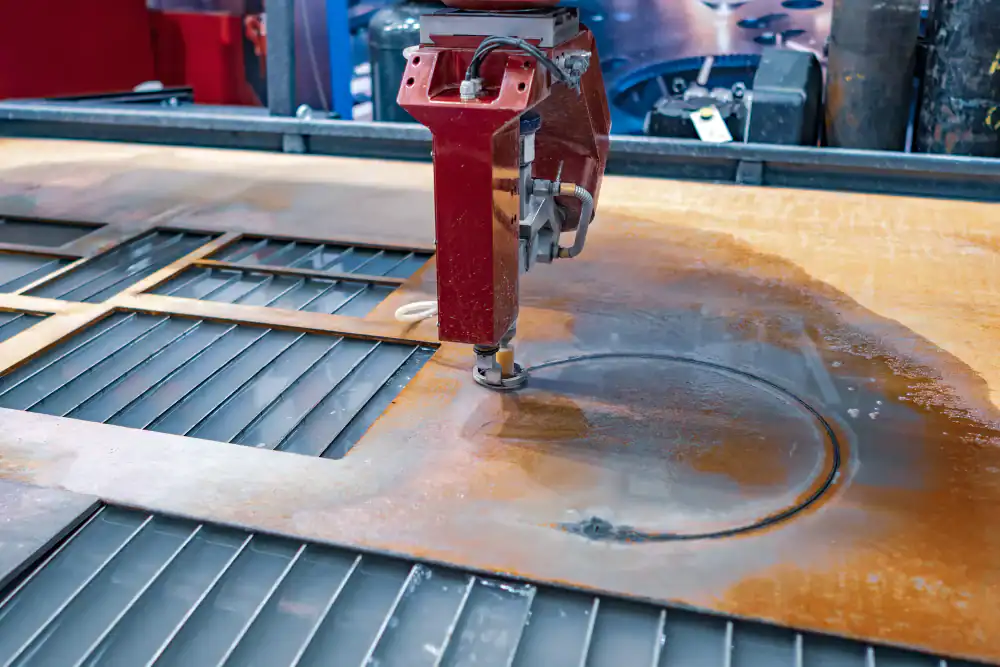
Laser and plasma both use heat to melt through material. You get fast cuts, but you also get a heat-affected zone. The edge hardens, oxidizes, or warps depending on the metal. Thin material can distort enough to throw off your tolerances.
Waterjet is a cold process. The abrasive stream erodes material without changing its properties. No hardened edge, no oxidation, no thermal stress. The part comes off the table at room temperature with the same material characteristics it had before cutting.
Laser struggles with thicker stock and reflective materials like aluminum or copper. Plasma leaves a rougher edge that usually needs grinding. Waterjet handles both without issue and delivers a finish clean enough for most applications without secondary work. If you’re welding, painting, or assembling immediately after cutting, waterjet saves you the prep time.
Positioning accuracy runs ±0.001″ on our CNC systems. The machine places the nozzle exactly where the file specifies, and automatic height control maintains consistent standoff throughout the cut.
Kerf width—the material removed by the cutting stream—stays around 0.030″ to 0.040″ depending on nozzle size and abrasive flow. The CNC compensates for kerf automatically, so your finished part matches the dimensions in your CAD file.
Taper can be an issue on thicker materials if the equipment isn’t set up right. Our Mitsubishi waterjet includes automatic angle adjustment to correct for taper in real time. You don’t get the V-shaped edge that comes from older machines or manual setups. The cut stays square through the full thickness of the material, which matters when you’re stacking parts or need tight fit-up for welding.
We regularly cut metal up to 8 inches thick. The limiting factor isn’t the waterjet process itself—it’s how long you’re willing to wait and how much abrasive you’re willing to pay for.
Thicker material takes longer because the stream has to erode through more volume. A 1/4″ stainless plate might cut at 10 inches per minute. A 6″ plate of the same material might drop to 1 inch per minute. The machine doesn’t care, but your timeline and budget might.
Plasma and laser top out around 1 to 2 inches on most metals, and the edge quality degrades as thickness increases. Waterjet maintains the same clean edge whether you’re cutting 1/4″ or 6″. If you’ve got parts too thick for traditional methods, or if you need that thickness without a heat-affected zone, waterjet is usually the only option that makes sense.
Stainless steel, aluminum, tool steel, titanium, brass, copper, Inconel—basically anything except tempered glass and diamonds. Hardness doesn’t matter because the abrasive stream erodes material mechanically, not thermally.
Exotic alloys that would destroy cutting tools or create problems with heat-based methods cut just fine. Titanium doesn’t catch fire. Inconel doesn’t work-harden at the cut edge. Tool steel doesn’t need annealing after cutting.
If you’re working with multiple metals on the same project, waterjet handles the transition without changing setups. One job might include stainless structural components, aluminum panels, and brass fittings. We cut all three from the same table without swapping tooling or recalibrating. That flexibility matters when you’re trying to keep a project moving without downtime between operations.
Standard turnaround runs three to five business days for most jobs. That includes file review, material sourcing if needed, cutting, and quality check before it leaves the shop.
Rush service is available if you’re under the gun. We keep capacity open specifically for jobs that need to move faster. Same-day or next-day turnaround is possible depending on complexity and current queue. Being local to Brentwood helps—you’re not waiting on freight or dealing with cross-country shipping delays.
Complex parts with tight tolerances or thick material take longer to cut. A simple bracket might take 10 minutes of machine time. An intricate part with dozens of holes and inside corners could take hours. We’ll give you a realistic timeline upfront based on your file and material specs, so you’re not guessing when parts will be ready.
We can work either way. If you’ve got material on hand or a specific supplier you prefer, send it over and we’ll cut from your stock. You maintain control over material specs and traceability.
If you need us to source it, we can handle that too. We work with metal suppliers throughout Long Island and can usually get common materials within a day or two. You tell us the grade, thickness, and quantity, we’ll include it in the quote.
Material consultation is part of the service. If you’re not sure what grade or thickness you need for the application, we’ll walk through the options. Sometimes a thinner gauge works fine and saves you money. Sometimes you need the extra thickness for strength or rigidity. We’ll flag potential issues before you commit to material that won’t work for your project.
Useful Links
Other Services we provide in Brentwood