Hear from Our Customers
You’re dealing with tighter deadlines, rising material costs, and customers who expect flawless results. Every rejected part costs you time and money you don’t have.
Waterjet cutting metal eliminates the guesswork. No heat means no warping, no hardening, no micro-cracks. The edge comes out smooth and burr-free, so you skip secondary finishing and move straight to assembly or delivery.
Whether you’re cutting stainless steel, aluminum, titanium, or hardened tool steel, the process handles thick plates and intricate geometries without compromising accuracy. You get complex shapes cut exactly as designed, with material waste kept to a minimum because the kerf stays thin and parts nest tightly.
We operate right here in the Long Island manufacturing corridor, serving machine shops, fabricators, and industrial businesses throughout Copiague and Suffolk County. We understand the pace and pressure of local production environments because we’re part of them.
Our CNC-controlled Flow Mach 500 system cuts directly from your CAD files, so what you design is exactly what you get. We work with companies like yours who need precision metal parts without the delays, rework, or quality issues that come from outdated methods.
You’re not looking for a vendor who overpromises. You need someone who shows up with the right equipment, delivers on spec, and doesn’t waste your time.
The process starts with your design. You send us a CAD file or work with our team to create one based on your specifications. We program the CNC system to follow those exact dimensions, accounting for material type, thickness, and edge quality requirements.
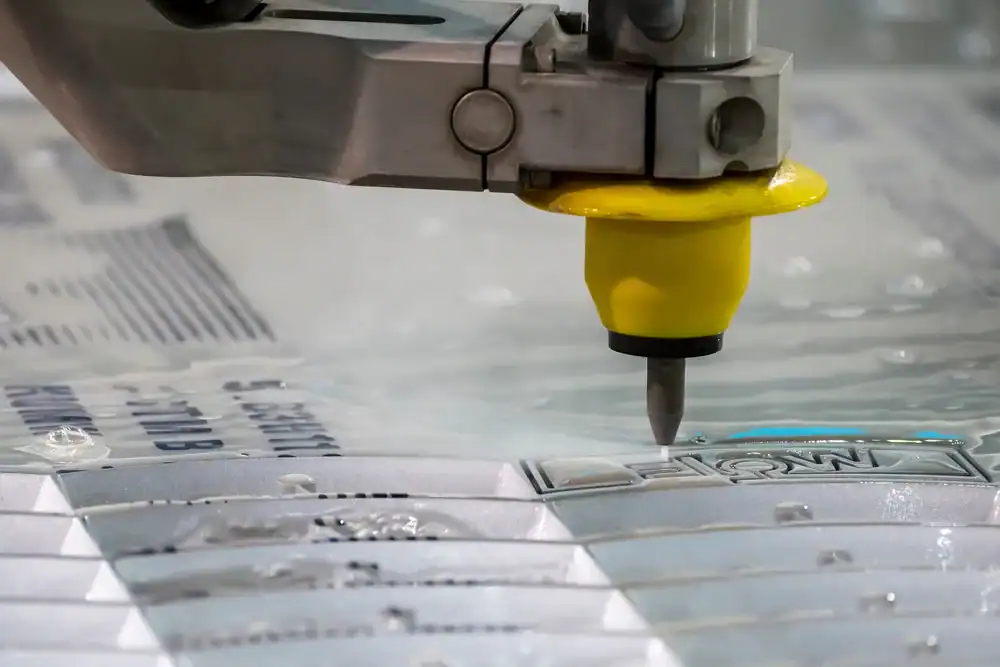
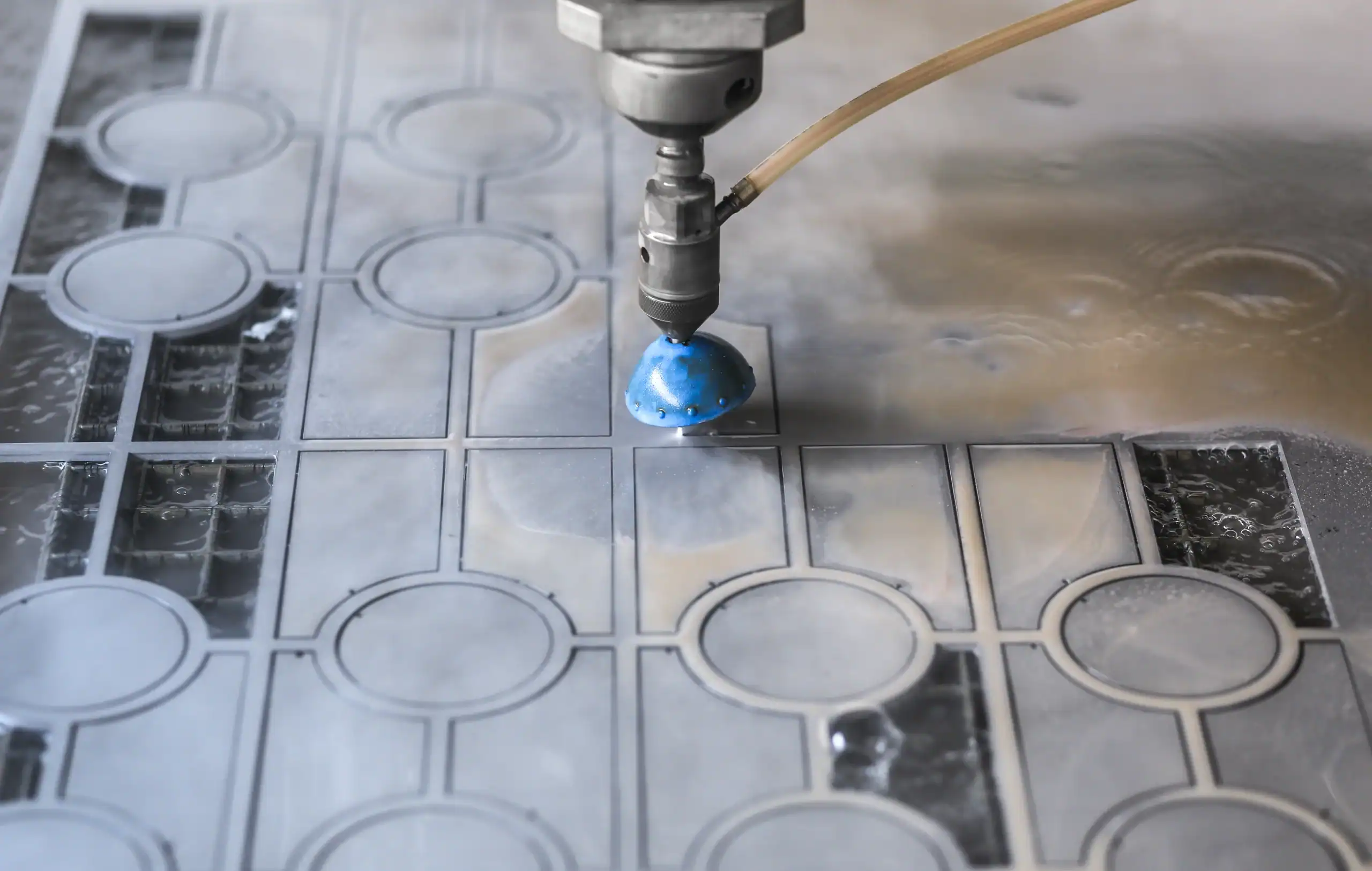
Once programmed, the waterjet system uses a high-pressure stream of water mixed with abrasive garnet to cut through the metal. The stream is thinner than a credit card, which keeps material waste low and allows for tight nesting of multiple parts on a single sheet. There’s no heat involved, so the metal’s properties stay intact—no warping, no hardening, no stress fractures.
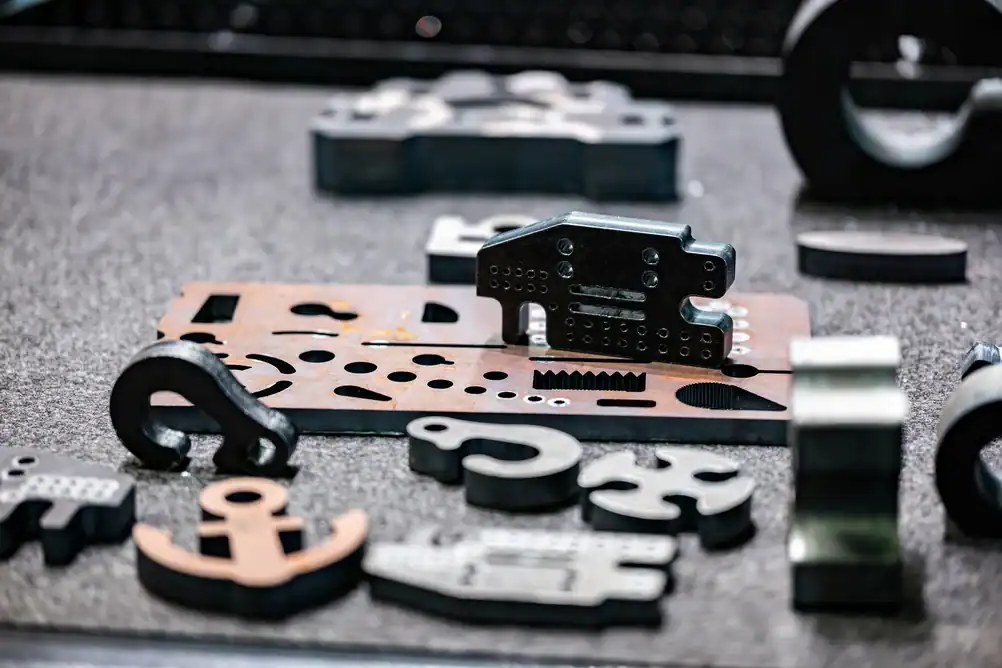
After cutting, parts come off the table ready to use. The edges are smooth and uniform, typically eliminating the need for grinding, deburring, or additional machining. If your project requires multiple materials or complex contours, the system handles it in a single setup without tool changes or repositioning.
Ready to get started?
Every job includes CNC precision cutting with tolerances down to ±0.001 inch, regardless of material hardness or thickness. You can run stainless steel, carbon steel, aluminum, titanium, brass, copper, and hardened tool steel through the same system without switching equipment or processes.
Copiague’s industrial landscape includes machine shops, precision manufacturers, and fabrication facilities that depend on fast turnaround and reliable quality. Local companies like Railex Conveyor Corp and Long Island Tool & Die operate in environments where production delays ripple through the entire supply chain. That’s why our setup and programming happen quickly—your job gets cut and delivered without the bottlenecks that come from slower, heat-based methods.
The waterjet process also keeps your shop compliant and clean. There are no toxic fumes, no hazardous waste, and no air pollution. It’s water and natural abrasive, which means you’re not dealing with disposal headaches or environmental concerns that come with plasma, laser, or torch cutting.
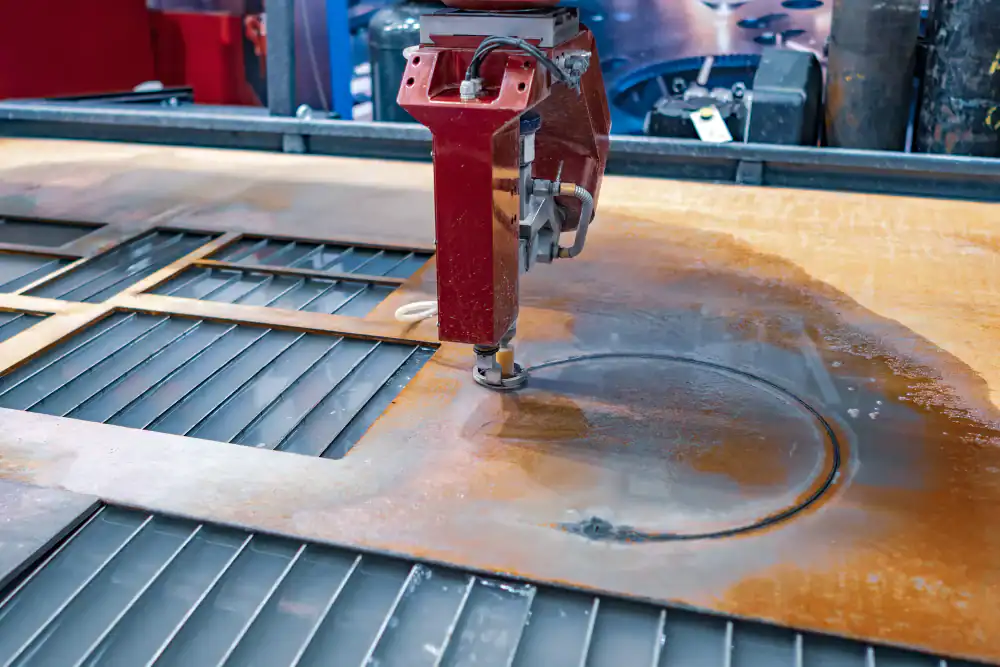
We cut virtually every metal you’d use in manufacturing or fabrication. That includes stainless steel, carbon steel, aluminum, titanium, brass, copper, and hardened tool steel. The system handles soft metals and hardened alloys equally well because there’s no heat to alter material properties.
Thickness isn’t a limiting factor either. Waterjet excels at cutting thick plates that other methods struggle with—up to several inches depending on the material. If you’re working with exotic alloys or materials that are difficult to machine, waterjet handles them without tool wear or the need for specialized bits.
The process works for both production runs and one-off custom parts. Whether you need a single prototype or a full batch of components, the setup stays efficient and the quality stays consistent across every piece.
CNC metal waterjet cutting delivers accuracies of ±0.001 inch, which meets the standards for precision machining and tight-tolerance applications. The system cuts directly from your CAD file, so dimensional accuracy is controlled digitally and repeated exactly across multiple parts.
Because there’s no heat distortion, the material doesn’t warp or shift during cutting. That’s critical when you’re working with thin stock or parts that need to fit together with minimal clearance. Heat-based methods like plasma or laser can cause the metal to expand and contract, throwing off your dimensions. Waterjet eliminates that variable entirely.
Edge quality also contributes to accuracy. The cut is smooth and uniform, so you’re not dealing with rough surfaces or burrs that add thickness or require removal. What comes off the table is what you specified, ready for assembly or finishing without additional correction.
Waterjet cutting produces smooth, burr-free edges in most applications, which eliminates or significantly reduces the need for secondary finishing. The high-pressure water stream cuts cleanly through the material without generating the rough edges or slag that come from thermal cutting methods.
For most jobs, parts come off the table ready to use. If your application requires an exceptionally fine finish or specific surface texture, minimal touch-up might be needed, but it’s far less than what you’d face with plasma, torch, or even some laser cutting. That saves you labor hours and keeps production moving.
The lack of heat also means there’s no heat-affected zone along the cut edge. With methods like plasma or laser, the metal near the cut can harden or become brittle, which affects how the part performs under stress. Waterjet leaves the material properties unchanged, so the edge behaves the same as the rest of the part.
Turnaround depends on the complexity of the design, material thickness, and current shop schedule, but waterjet cutting is inherently faster to set up than most traditional machining processes. Programming happens quickly because the system reads directly from CAD files, and there’s no need for custom tooling or die creation.
Simple parts with straightforward geometry can often be cut the same day or next day, depending on material availability and queue. More complex jobs with intricate contours or multiple material types take longer, but the actual cutting process is efficient because the system doesn’t require tool changes or repositioning between cuts.
If you’re facing a tight deadline, let us know upfront. We can often prioritize urgent jobs or adjust the schedule to accommodate production needs. The key is communication—give us the details on your timeline and specs, and we’ll tell you exactly what’s realistic.
Waterjet cutting works without heat, which is the main advantage over laser and plasma. Heat-based methods create a heat-affected zone along the cut edge, which can harden the material, introduce stress fractures, or cause warping. If you’re cutting thin stock or working with materials that are sensitive to temperature changes, that’s a problem.
Waterjet also handles a wider range of materials and thicknesses in a single setup. Laser cutting works well for thinner metals but struggles with thick plate. Plasma is fast but produces rougher edges and more slag. Waterjet cuts everything from thin gauge to several inches thick with consistent edge quality and no material restrictions.
There’s also no secondary cleanup. Plasma leaves slag and rough edges that need grinding. Laser can leave discoloration or oxidation. Waterjet produces a clean cut with minimal finishing required, which saves you time and labor on every job.
Yes. CNC control allows the waterjet system to follow any path defined in your CAD file, no matter how intricate. That includes tight radius curves, sharp internal corners, complex contours, and detailed patterns. The cutting stream is extremely thin, so it can navigate small features without overcut or distortion.
If you’re designing parts with holes, slots, or cutouts, the system handles those in the same pass as the outer profile. There’s no need to drill pilot holes or switch tools mid-job. Everything gets cut in sequence based on the programmed path, which keeps setup time low and accuracy high.
Custom shapes also benefit from the thin kerf. Because the cutting stream removes very little material, parts can be nested closely together on the sheet. That maximizes material usage and reduces scrap, which matters when you’re working with expensive alloys or trying to control costs on a production run.
Useful Links
Other Services we provide in Copiague