Hear from Our Customers
You’re not looking for the cheapest cut. You need parts that meet dimensional requirements without secondary grinding, deburring, or rework eating into your schedule and budget.
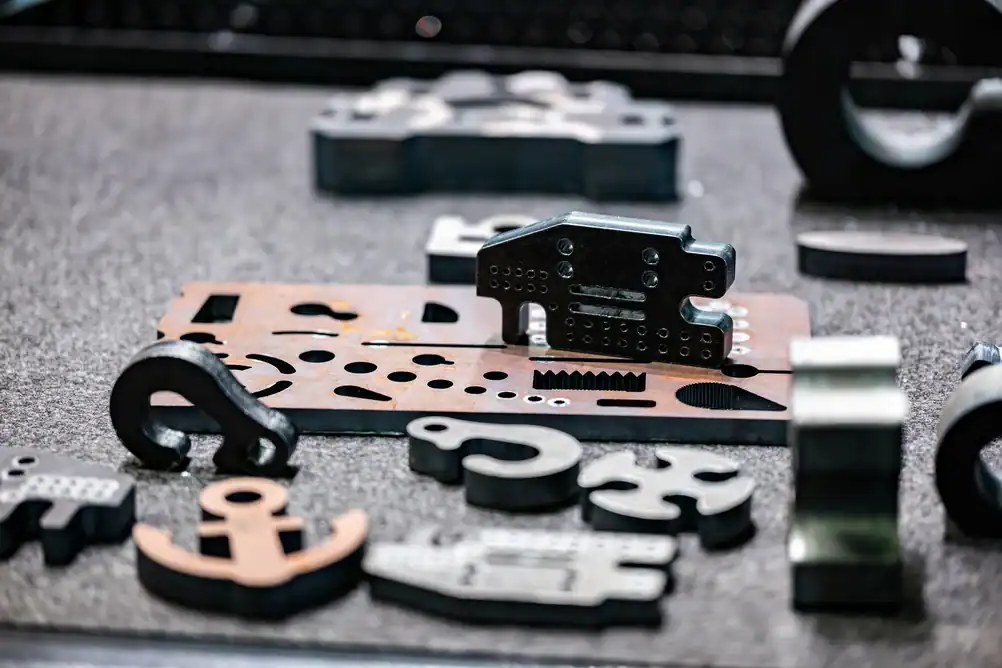
Custom metal waterjet cutting in East Islip, NY gives you clean edges on stainless steel, aluminum, titanium, and hardened tool steel without burn marks or material distortion. The cold cutting process means no heat-affected zones that compromise material properties or require cleanup.
Whether you’re prototyping a new design or running production parts, you get the same tight tolerances and smooth finish every time. That’s fewer callbacks, faster assembly, and parts that actually work the way your engineers drew them up.
We serve manufacturers, fabricators, architects, and contractors across East Islip, NY and the broader Long Island area. We understand the local market because we’re part of it.
East Islip’s professional services sector and manufacturing community need reliable precision cutting that doesn’t require a three-week lead time or a trip to another state. You get experienced operators who program your cuts correctly, material consultation when you need it, and turnaround times that keep your projects moving.
We’ve built our reputation on delivering what we promise when we promise it. No surprises, no excuses.
You send us your CAD file or drawing with specifications. We review it for any potential issues with material selection, tolerances, or features that might need adjustment. If something looks off, we call you before we cut.
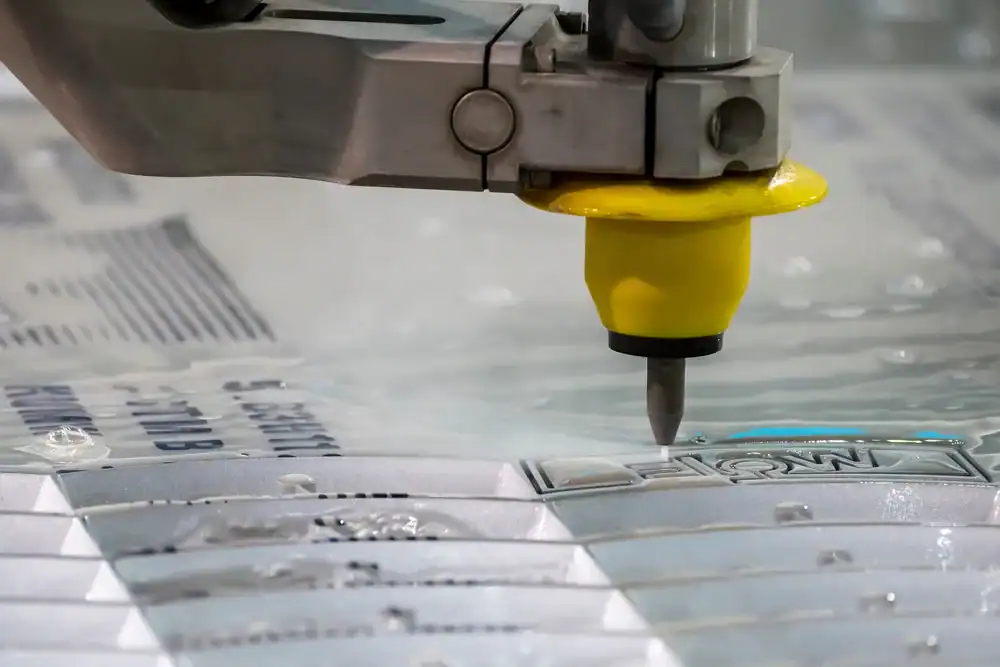
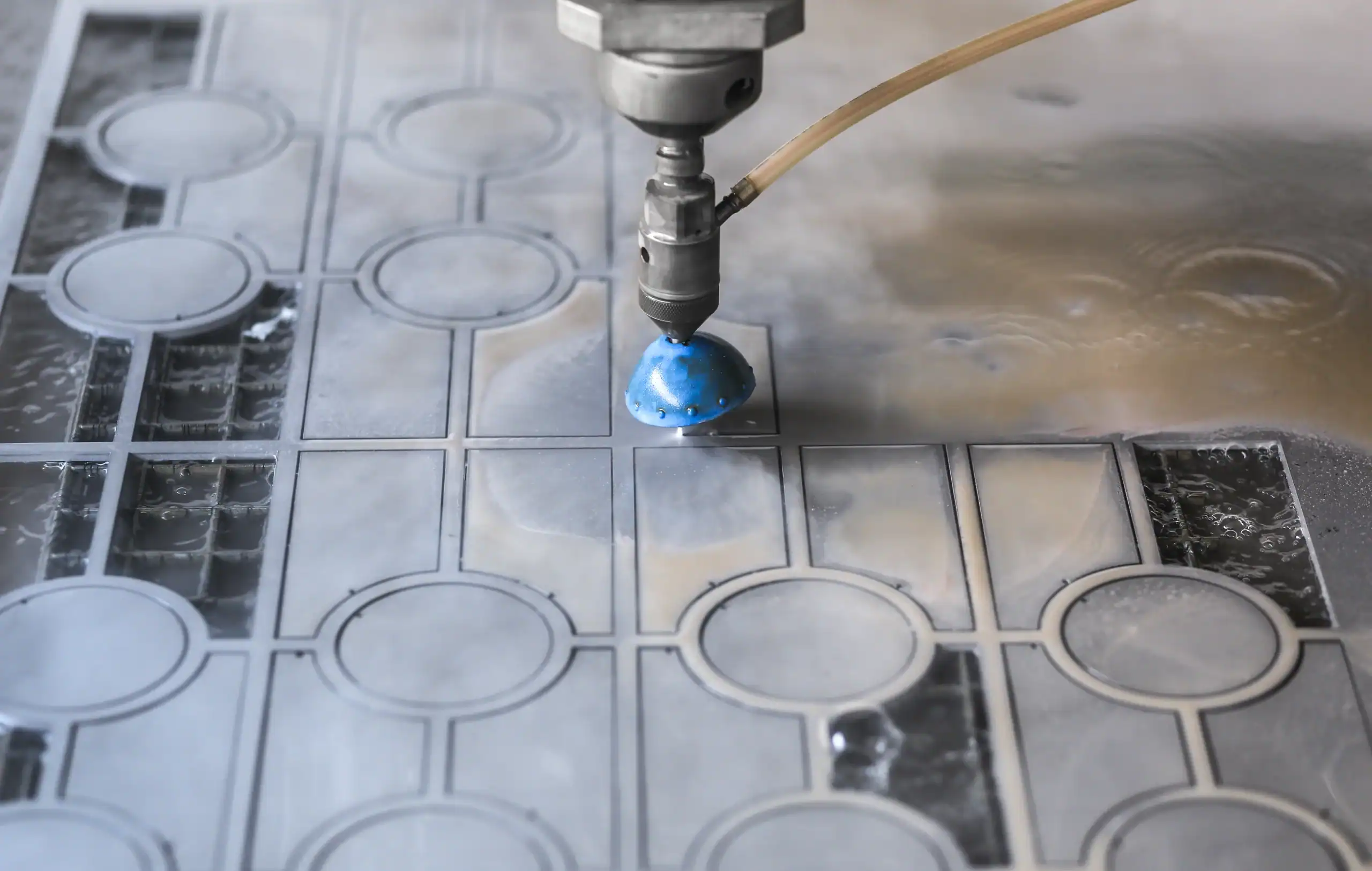
Once the file is programmed, we secure your material and run the cut using high-pressure water mixed with abrasive garnet. The stream is about 0.03 inches wide, which means minimal material waste and the ability to nest multiple parts efficiently.
The waterjet cuts through your material without generating heat, so there’s no melting, warping, or hardening along the edge. Complex shapes, tight radiuses down to 0.020 inches, and internal cutouts all come out clean. After cutting, parts are inspected and ready to ship or pick up. Most jobs don’t need any secondary finishing unless you specifically request it.
Ready to get started?
You get precision cuts on virtually any metal without the limitations of laser or plasma. Waterjet handles thick materials over 10 inches, exotic alloys, and composites that other processes struggle with.
For East Islip’s manufacturing sector—which represents nearly 4% of local employment—that versatility matters. Whether you’re cutting brackets for aerospace applications, decorative panels for architectural projects, or custom fixtures for production lines, the process adapts to your needs.
The lack of heat-affected zones means you can often skip secondary operations entirely. No grinding away burn marks. No dealing with warped edges. No retapping holes that got distorted during cutting. Parts come off the machine ready to use, which translates directly to lower total manufacturing costs even if the cutting itself takes slightly longer than laser on certain materials.
You also get better material utilization. The narrow kerf and efficient nesting mean less scrap, which adds up when you’re working with expensive alloys or running larger production quantities.
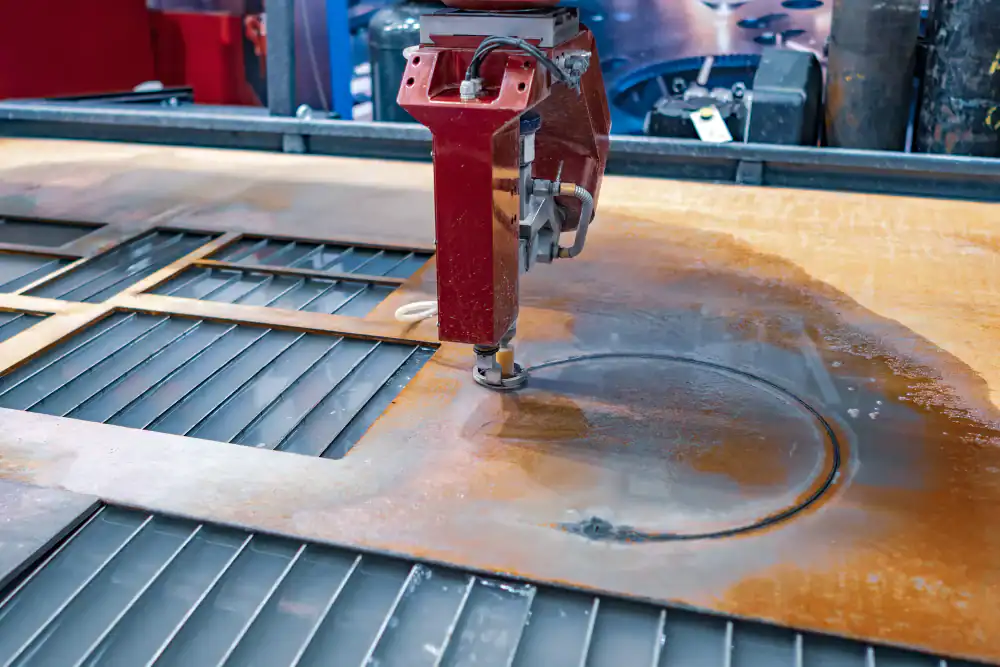
Waterjet cuts all common metals plus the difficult ones. Stainless steel, aluminum, and mild steel are standard. Titanium, Inconel, hardened tool steel, copper, brass—all cut cleanly without heat damage.
The process works because it’s mechanical cutting, not thermal. There’s no flame or laser that might struggle with reflective surfaces or generate excessive heat in thick sections. That makes it particularly useful for aerospace-grade materials and medical device components where material properties can’t be compromised.
If you’re working with exotic alloys or aren’t sure whether your material is a good fit, bring us a sample or the material spec sheet. We’ll tell you straight whether waterjet is the right process or if you’d be better served by a different cutting method.
Standard waterjet cutting holds ±0.005″ to ±0.010″ depending on material thickness and complexity. That’s tight enough for most manufacturing applications, including many aerospace and medical components.
The accuracy comes from CNC control and the narrow cutting stream. Because there’s no heat distortion pulling the material around, what you program is what you get. Features stay where they’re supposed to be, and parts fit together the way your assembly requires.
If your application demands even tighter tolerances, we can discuss secondary operations or whether waterjet is the best primary process. But for the majority of parts—brackets, panels, plates, fixtures, prototypes—waterjet delivers the precision you need without the heat-related headaches of laser or plasma cutting.
Most waterjet-cut parts come off the machine ready to use. The edge quality is smooth with minimal burring, especially compared to plasma or even laser cutting on thicker materials.
That’s one of the biggest cost advantages even though waterjet might have a higher per-hour cutting rate than some other processes. When you factor in the time and labor to grind, deburr, and clean up parts cut with thermal processes, waterjet often comes out ahead on total cost per part.
There are cases where you might want additional finishing—if you need a polished edge for aesthetic reasons, or if you’re doing secondary operations like welding that benefit from a specific edge prep. But for functional parts going into assemblies or getting powder coated, waterjet edges typically work as-cut. You’re not paying someone to spend hours cleaning up heat damage that shouldn’t have been there in the first place.
Turnaround depends on material availability, queue, and job complexity. Simple cuts on common materials that we stock can often be done in a few days. More complex jobs or specialty materials might take a week or two.
The setup time for waterjet is relatively fast compared to other precision cutting methods. There’s no expensive tooling to fabricate, and programming is straightforward for most geometries. That means we can get your job running quickly once material is on hand.
If you’re on a tight deadline, call us before you submit the file. We’ll tell you honestly whether we can hit your date or if you need to adjust expectations. Rush jobs are sometimes possible depending on what else is in the queue, but we won’t promise a date we can’t deliver just to get the order.
Waterjet routinely cuts metal up to 6 inches thick, and can go beyond 10 inches on some materials. The limitation isn’t usually the cutting capability—it’s whether the cut quality and speed make sense for your application at extreme thicknesses.
For most manufacturing work in the 0.25″ to 3″ range, waterjet is fast and produces excellent edge quality. As you get thicker, the cutting speed slows down and you might see a slight taper on the edge, though it’s usually well within acceptable tolerances.
If you’re cutting very thick plate and need perfectly square edges, we can make multiple passes or adjust parameters to minimize taper. The point is that waterjet gives you options for thick material that other cutting processes simply can’t handle. Laser loses effectiveness on thick steel. Plasma creates huge heat-affected zones. Waterjet keeps cutting with minimal impact on the material.
Waterjet makes sense for prototypes and small runs because there’s no tooling cost. You’re paying for machine time and material, not for dies or custom fixtures that only make sense at high volume.
The challenge with any precision cutting service is the minimum charge. Setup, programming, and material handling have fixed costs whether you’re cutting one part or a hundred. That’s not unique to waterjet—it’s reality for any custom fabrication shop.
Where waterjet wins is in the total cost per part when you factor in the lack of secondary operations. If you’re prototyping and need parts that fit correctly for testing, waterjet gets you there faster than processes that require cleanup. And because the same file that cuts your prototype can run your production parts, there’s no transition cost when you’re ready to scale up.
Useful Links
Other Services we provide in East Islip