
Hear from Our Customers
Your parts come out right the first time. No warping from heat. No hardened edges that kill your tooling. No expensive rework because someone’s torch cut went wide.
Waterjet cutting metal means you’re working with a cold process that doesn’t change your material properties. The edge quality is clean enough that most parts skip secondary finishing entirely. That’s time back in your schedule and money that stays in your budget.
When you’re dealing with thick material—up to 8 inches—or complex geometries that would normally require multiple setups, CNC metal waterjet cutting in Glen Cove, NY handles it in one pass. The kerf is narrow, so you’re not wasting expensive material. The accuracy holds to +/- 0.001 inch, so your parts actually fit together the way your drawings say they should.
We bring decades of machining background to every custom metal waterjet cutting project in Glen Cove, NY. That matters because waterjet isn’t just about owning the equipment—it’s about knowing how different metals behave under pressure and how to program cuts that account for material thickness, hardness, and your tolerance requirements.
We’ve worked with Glen Cove’s manufacturing sector long enough to understand the pace you’re operating at. Long Island’s industrial corridor doesn’t slow down, and neither do your deadlines. Our setup is built for quick turnaround without sacrificing the precision that keeps your production moving.
You’re not getting a sales pitch here. You’re getting a shop that knows the difference between stainless and tool steel, understands why your architect specified that particular thickness, and can read your drawings without three rounds of clarification calls.
You send us your drawings or DXF files. We review them for any potential issues—places where geometry might cause problems or where we can optimize the cut path to save you material. If something looks off, we’ll tell you before we start cutting.
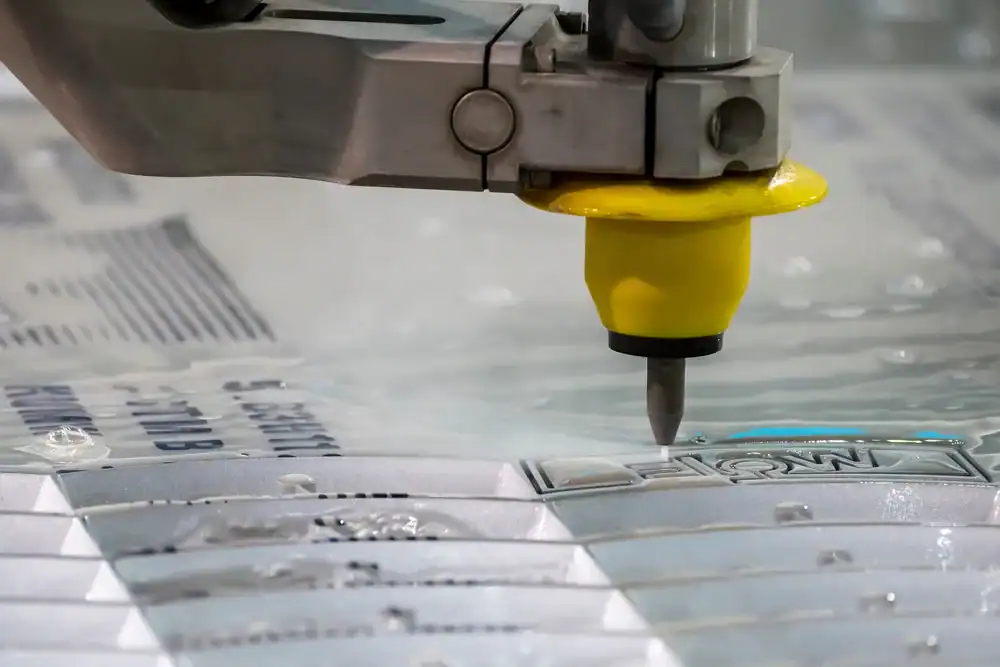
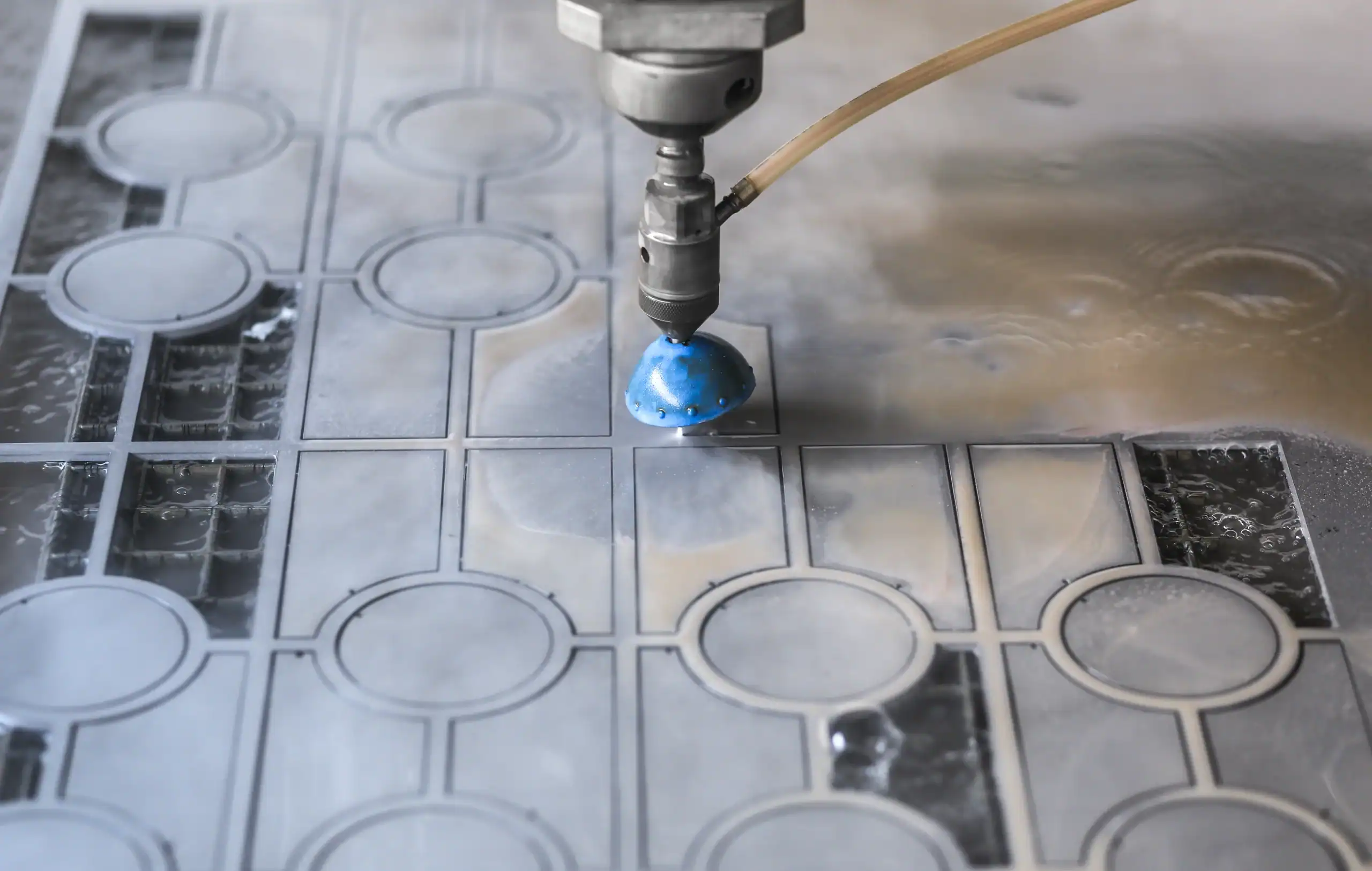
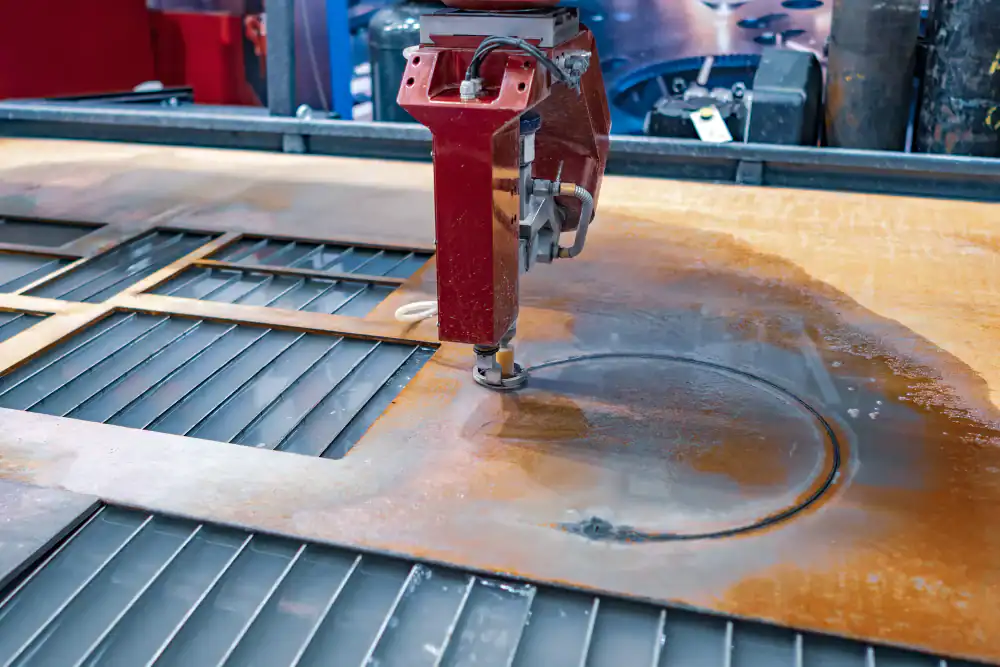
Once the program is set, your material goes on the table and the cutting head does its work. We’re using a high-pressure stream of water mixed with abrasive garnet, moving along your cut path with CNC precision. The stream is thin—about the diameter of a human hair at the orifice—so the kerf stays tight and your material usage stays efficient.
There’s no heat involved, which means no distortion and no heat-affected zone that changes your material properties. The cut edge comes out with a fine finish that often eliminates grinding or deburring. For complex parts, we can handle bevels and angles with 5-axis capability, so you’re not limited to straight vertical cuts.
Turnaround depends on complexity and thickness, but setup is fast. We can switch between different materials and parts in minutes, not hours. That flexibility matters when your project scope changes or you need a quick prototype before committing to a full run.
Ready to get started?
You get material consultation upfront. If you’re not sure whether your specified thickness will work for your application, or if there’s a more cost-effective material choice, we’ll walk through the options. That’s especially relevant in Glen Cove, NY, where manufacturing projects often involve aerospace-grade materials or specialized alloys that require specific handling.
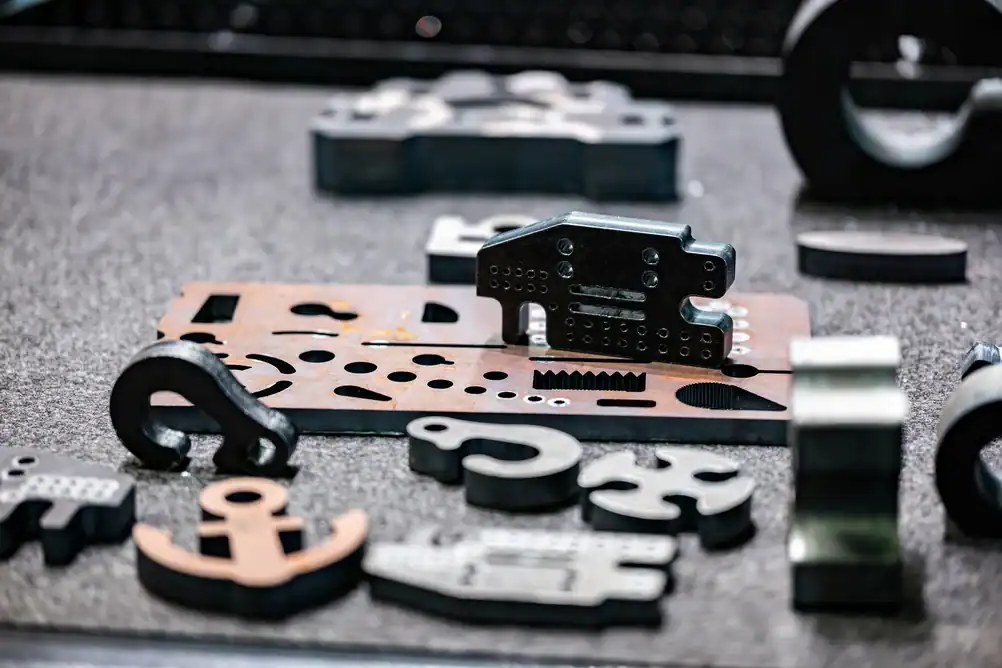
The cutting itself covers everything from aluminum and stainless steel to hardened tool steel, titanium, and red metals like copper and brass. Thickness ranges from thin sheet up to 8 inches, depending on material type. Complex shapes, tight inside corners, intricate patterns—all handled in a single setup without multiple operations.
Edge quality comes standard. You’re looking at a finish comparable to fine sandblasting, with minimal striations. For most applications, that’s good enough to move directly to assembly or welding. If your tolerances are tighter, we can discuss finishing options, but the majority of waterjet metal cutting shop work doesn’t require it.
Long Island’s industrial sector—over 3,000 manufacturing companies—relies on fast turnaround and accurate work. We’re set up to handle both prototype quantities and production runs, with the same attention to precision regardless of volume. You’re not waiting weeks for parts that should take days.
We handle essentially any metal you’re working with. Aluminum, stainless steel, carbon steel, tool steel, titanium, brass, copper—if it’s a metal, we can cut it. That includes hardened materials that would destroy conventional tooling.
Thickness capability goes up to 8 inches, though practical cutting thickness depends on your material type and the edge quality you need. For most projects, we’re working in the 0.25 to 6-inch range, where cut quality and speed are both optimized. Thinner materials cut faster with excellent edge finish. Thicker materials take longer but still produce clean results without the heat damage you’d get from plasma or torch cutting.
The advantage with waterjet cutting metal is that material hardness doesn’t matter the way it does with mechanical cutting. A piece of hardened tool steel cuts just as easily as aluminum—it might take a bit longer, but your edge quality stays consistent and there’s no tool wear to factor into your costs.
The biggest difference is heat. Laser and plasma both use thermal energy to melt through material, which creates a heat-affected zone around your cut edge. That zone can harden, warp, or change the material properties in ways that affect your final part performance. Waterjet is a cold cutting process—no heat means no thermal distortion and no metallurgical changes.
Edge quality is another factor. Waterjet produces a fine, sandblasted finish that’s often ready to use as-is. Laser can leave a heat-affected edge that needs cleanup. Plasma is faster for thick material but rougher, usually requiring secondary grinding or machining.
Material versatility matters too. Waterjet cuts reflective metals like aluminum and copper without the issues that laser systems face. It handles thick materials better than laser, and it produces cleaner edges than plasma. For complex shapes with tight inside corners, waterjet gives you better detail because the cutting stream is so narrow. There’s no taper or bevel unless you specifically program it in with 5-axis cutting.
Setup is fast—usually minutes, not hours—because there’s no hard tooling to build or change. That means simple parts can often be cut same-day or next-day, depending on our queue and your material availability. More complex projects with intricate geometries or thick materials might take a few days, but you’re still looking at significantly faster turnaround than traditional machining methods.
The advantage of CNC metal waterjet cutting in Glen Cove, NY is that we can switch between different parts quickly. If you need three different components cut from different materials, we’re not spending half a day on setup between each one. That flexibility is especially valuable for prototype work or short runs where traditional methods would eat up time and budget on tooling.
Rush projects are possible when your schedule demands it. Because we’re not dealing with tool wear or heat buildup that requires cooldown time, we can run continuously if needed. The limiting factor is usually material availability and cut complexity, not the process itself.
Most parts come off the table ready to use. The edge finish from waterjet cutting metal is comparable to fine sandblasting—smooth enough for welding, assembly, or powder coating without additional prep. You’ll see some minor striations, especially on thicker cuts, but they’re typically within acceptable limits for functional parts.
Whether you need finishing depends on your application. If you’re building structural components or parts that will be painted or coated, the waterjet edge is usually fine as-is. If you’re working with visible surfaces where aesthetics matter, or if you have extremely tight tolerance requirements, you might want light deburring or polishing. But that’s the exception, not the rule.
Compare that to plasma cutting, which almost always requires grinding to clean up the rough edge and remove slag. Or laser cutting, where you’re often dealing with a hardened edge that needs to be machined away. Waterjet eliminates most of that secondary work, which saves you time and reduces your total cost per part.
Complex geometry is where waterjet really shows its value. Tight inside corners, intricate patterns, nested parts—all possible in a single setup. The cutting stream is thin enough that you can achieve inside corner radii as small as the nozzle diameter, which is typically around 0.03 to 0.04 inches. That’s significantly tighter than what you’d get with plasma or most mechanical cutting methods.
Tolerance-wise, you’re looking at +/- 0.001 inch on positioning accuracy with CNC control. Actual part tolerance depends on material thickness and complexity, but for most applications, waterjet delivers precision that meets or exceeds your drawing requirements. If you need even tighter tolerances, waterjet can serve as a near-net-shape process that leaves minimal stock for final machining.
The 5-axis capability adds another dimension—literally. You can cut bevels, angles, and complex 3D shapes without repositioning your part or creating multiple setups. That’s particularly useful for weld prep, where you need specific edge angles, or for architectural metalwork where aesthetics demand precise angular cuts. Custom metal waterjet cutting in Glen Cove, NY gives you that flexibility without the cost and lead time of building custom fixtures or tooling.
Waterjet makes sense for low volumes specifically because there’s no hard tooling cost. You’re not building dies, punches, or custom fixtures that only pay off over thousands of parts. The programming is digital, setup is fast, and changes are easy to make. That means your first part costs roughly the same as your hundredth part.
For prototype work, that’s a significant advantage. You can test a design, make revisions, and cut new parts without the financial penalty that comes with traditional methods. If your geometry changes—and it usually does during development—you’re updating a program, not rebuilding tooling.
Material efficiency matters too. The narrow kerf means you’re wasting less material, and the ability to nest multiple parts on a single sheet maximizes your material usage. For expensive metals like titanium or specialty alloys common in Long Island’s aerospace sector, that material savings adds up quickly. You’re paying for precision and flexibility without the overhead that makes other cutting methods prohibitive for short runs.
Useful Links
Other Services we provide in Glen Cove