Hear from Our Customers
You’re not cutting metal just to cut it. You need parts that fit right the first time, edges that don’t require secondary finishing, and turnaround times that keep your project moving forward.
Metal waterjet cutting in Hampton Bays, NY gives you that precision without the burn marks, warping, or heat-affected zones that come with thermal cutting methods. The process uses high-pressure water mixed with abrasive particles to cut through steel, aluminum, copper, brass, and virtually any metal thickness you’re working with.
What matters most is what happens after the cut. You get parts that nest together without gaps, decorative panels with intricate patterns that look exactly like your CAD file, and components that go straight into assembly without grinding, filing, or explaining to your customer why the edges look rough. When material costs are climbing and your deadline isn’t moving, clean cuts the first time aren’t a luxury—they’re how you stay profitable and on schedule.
We operate in Hampton Bays, NY with a straightforward approach to CNC metal waterjet cutting: review your files before programming, catch potential issues before they become expensive problems, and deliver parts that match your specifications.
Our in-house design team looks at every file that comes through. If there’s a detail that won’t translate well from screen to metal, or if a tolerance seems off for your application, you’ll know before we start cutting. That review process is how we avoid the back-and-forth that eats up your timeline.
Hampton Bays sits in the middle of Long Island’s manufacturing and construction corridor, where fabrication shops, architectural firms, and contractors need precision work without the logistics headache of shipping to distant suppliers. You get local access to advanced waterjet technology and the kind of technical consultation that comes from actually understanding how these parts fit into your larger project.
The process starts when you send your design file. We review it for manufacturability—checking that line weights are correct, that curves will cut cleanly, and that your tolerances match what the material and application actually require. If something needs adjustment, we’ll tell you before programming begins.
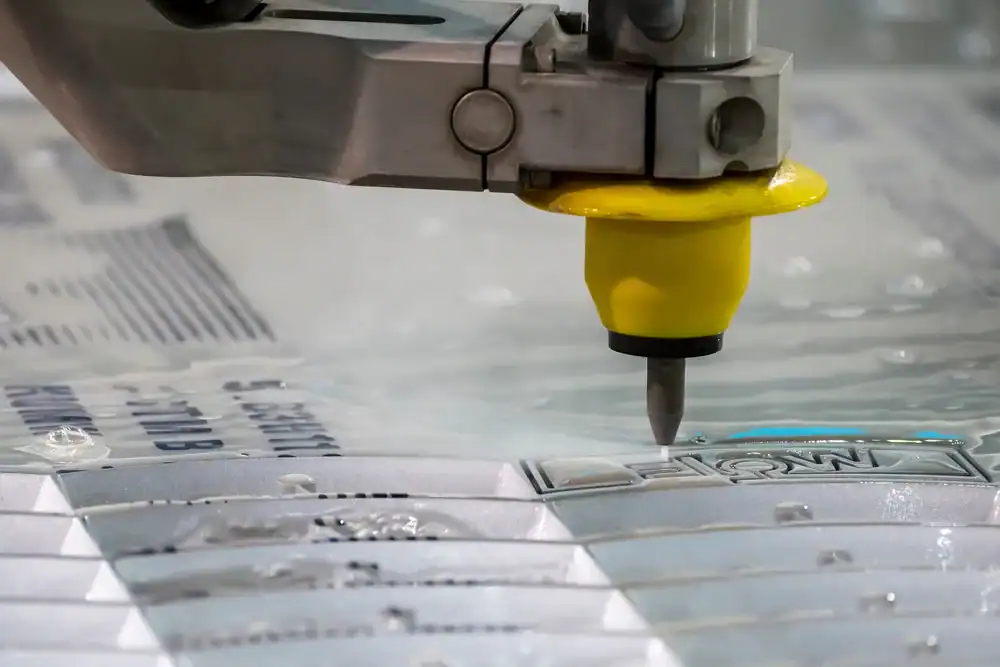
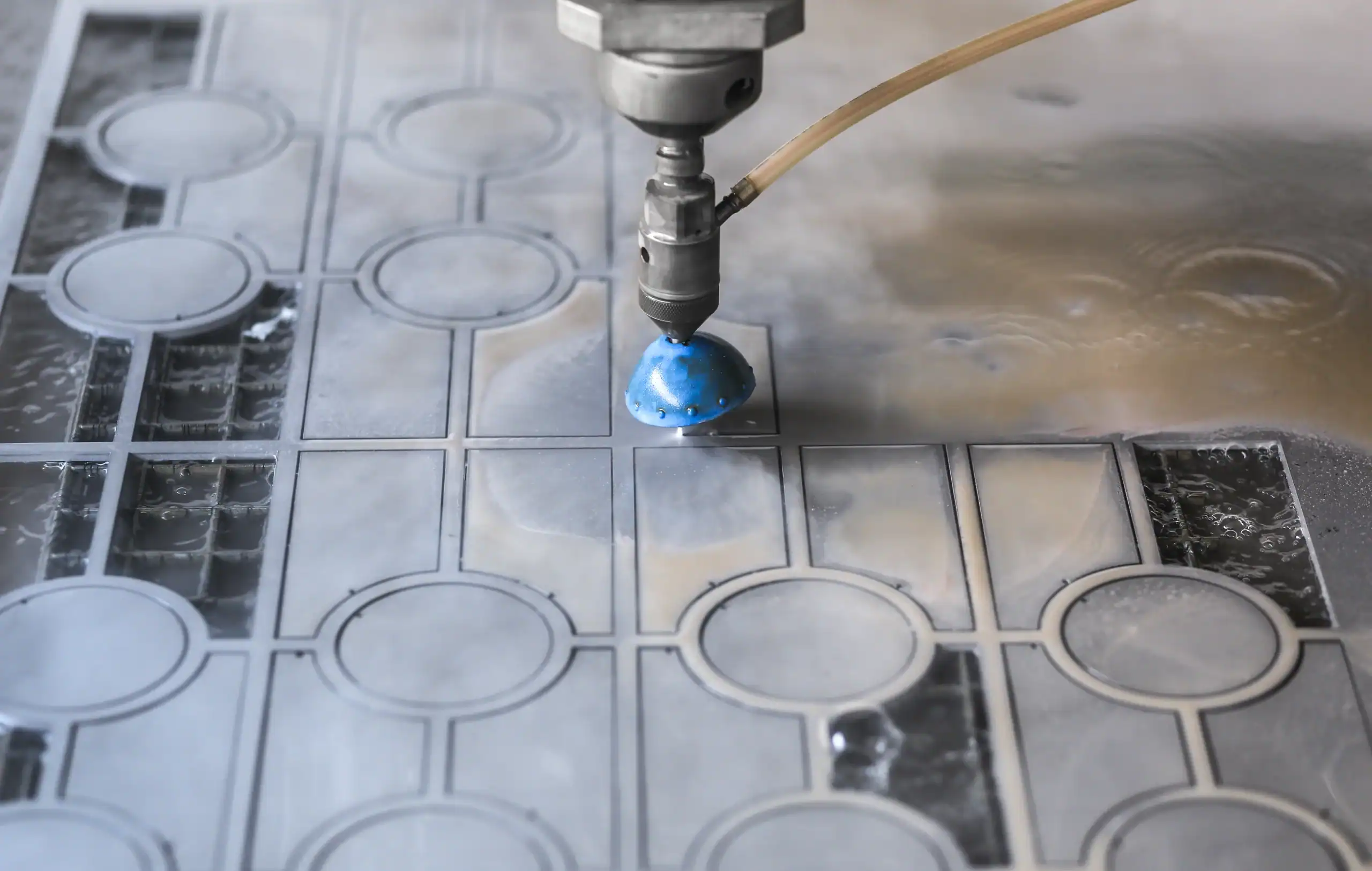
Once your file is approved, it goes to our CNC metal waterjet cutting system. The machine follows your exact specifications, using a stream of water pressurized up to 60,000 PSI mixed with garnet abrasive. That stream cuts through your metal without generating heat, which means no warping, no hardened edges, and no material stress that shows up later.
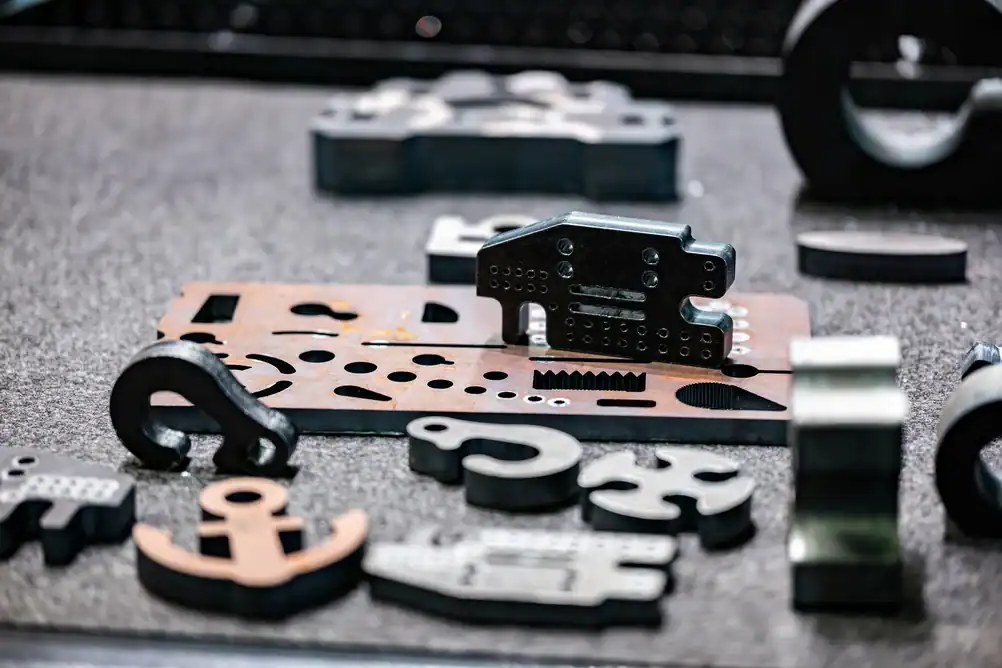
After cutting, parts come off the table ready for your next operation. Depending on your application, edges may need minimal deburring, or they might go straight into powder coating, welding, or installation. Because there’s no heat-affected zone, you’re not dealing with discoloration or brittleness along cut lines.
The entire process—from file review to finished parts—typically runs faster than traditional cutting methods because you’re eliminating the secondary operations that thermal cutting requires. When you’re coordinating multiple trades or managing a production schedule, that time savings compounds quickly.
Ready to get started?
Metal waterjet cutting in Hampton Bays, NY handles materials from thin gauge aluminum for architectural panels to thick steel plate for industrial components. The process cuts stainless steel, mild steel, copper, brass, titanium, and exotic alloys without changing setup or worrying about material hardness.
You can run complex geometries that would be difficult or impossible with other methods—tight inside corners, intricate patterns, small holes relative to material thickness. The cutting stream is narrow enough to nest parts efficiently, which matters when material costs are significant and waste directly impacts your bottom line.
For Hampton Bays contractors and fabricators, this translates to practical advantages on real projects. Architectural metalwork for Hamptons properties often requires custom screens, decorative panels, or one-off components where precision and finish quality directly affect the final installation. Manufacturing operations need parts that meet engineering tolerances without the lead time of outsourcing to distant suppliers. Waterjet cutting metal locally means you can iterate designs quickly, manage smaller production runs economically, and keep quality control in-house rather than hoping a distant vendor understands your specifications.
The Long Island market moves fast, especially during construction season. Having access to custom metal waterjet cutting services in Hampton Bays means you’re not waiting on shipping delays or dealing with minimum order quantities that don’t match your project scope.
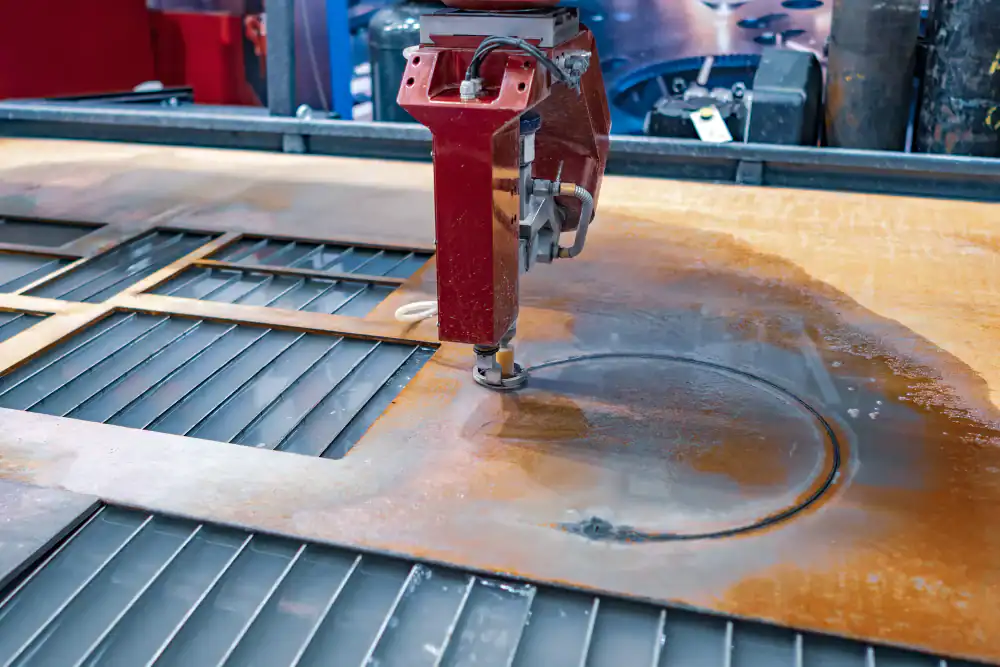
We cut virtually any metal you’re working with—stainless steel, aluminum, mild steel, copper, brass, titanium, Inconel, and tool steels all cut cleanly without material-specific setup changes. Thickness ranges from thin foil up to several inches of plate, depending on your application.
The process doesn’t care about material hardness the way thermal cutting does. If you’re working with hardened tool steel or exotic alloys that cause problems for plasma or laser systems, waterjet handles them without special considerations. That flexibility matters when you’re bidding projects with mixed materials or when specifications change mid-job.
For Hampton Bays fabricators, this means you can bring architectural bronze, industrial steel plate, and precision aluminum parts to us without coordinating multiple suppliers. The cut quality stays consistent across materials, so you’re not troubleshooting finish issues based on what you’re cutting.
The fundamental difference is heat. Laser and plasma cutting use thermal energy, which creates a heat-affected zone along every cut edge. That heat changes the metal’s properties—you get hardened edges, discoloration, warping on thin materials, and sometimes micro-cracking that shows up later.
Waterjet cutting metal in Hampton Bays, NY uses mechanical erosion instead of heat. The high-pressure abrasive stream removes material without raising temperature, so you get clean edges with no hardness change, no oxidation, and no thermal distortion. For parts going into powder coating or welding, that means better adhesion and fewer prep steps.
Laser cuts faster on thin materials, but requires secondary operations to clean up edges. Plasma is economical for thick plate but leaves rough edges and significant dross. Waterjet sits in the middle for speed but eliminates most secondary work, which often makes it faster overall when you factor in the complete process. If your parts need to fit precisely or if edge quality affects your final product, waterjet typically delivers better results with less total handling.
Turnaround depends on material availability, current queue, and job complexity, but most custom metal waterjet cutting projects in Hampton Bays run within a few days from approved file to finished parts. Simple cuts on common materials often ship faster; complex multi-part jobs or specialty alloys may take longer.
The file review process happens quickly—usually within hours of submission. That’s where potential delays get caught and resolved before they affect your timeline. Once programming is complete and material is staged, cutting time itself is often just hours, even for intricate patterns.
What slows projects down is usually on the front end: unclear specifications, file issues that require back-and-forth, or material that needs to be sourced. If you send a clean DXF or DWG file with clear tolerances and material callouts, and if we have your material in stock or can get it quickly, you’re looking at fast turnaround. For Hampton Bays contractors managing tight construction schedules, that responsiveness often makes the difference between staying on track and explaining delays to your customer.
Most waterjet cut edges need minimal finishing compared to thermal cutting methods. You’ll typically see a slight texture from the abrasive stream, but no burrs, no heat scale, and no hardened zones that resist machining or coating.
For many applications—structural components, parts going into welding, brackets, or anything where edge finish isn’t cosmetic—parts go straight from the waterjet table to the next operation. If you’re powder coating, the texture actually improves adhesion. For welding, clean edges without oxidation mean better penetration and stronger joints.
When edge finish matters cosmetically—architectural panels, decorative metalwork, or precision components with tight tolerances—light deburring or sanding brings edges to whatever finish you need. That’s still significantly less work than cleaning up plasma dross or grinding away laser-hardened edges. The key difference is that you’re refining an already-clean edge rather than correcting problems created by the cutting process itself.
Waterjet excels at intricate details that challenge other cutting methods. The cutting stream diameter is narrow—typically around 0.030 to 0.040 inches—which allows for small holes, tight inside corners, and complex patterns that would be difficult or impossible with plasma or torch cutting.
Inside corner radius is limited by stream diameter, so you’ll get a small radius rather than a sharp 90-degree corner. For most applications, that radius is acceptable and often preferable from a stress concentration standpoint. If you absolutely need sharp corners, they can be addressed in secondary operations, but the waterjet gets you close enough that finishing is minimal.
For CNC metal waterjet cutting in Hampton Bays, this capability opens up design options that aren’t practical with other methods. Decorative screens with intricate patterns, precision parts with small features, or nested components that maximize material usage all become straightforward rather than problematic. If your CAD file shows it clearly, we can cut it accurately.
The process starts with file review before any programming begins. Our design team checks your CAD file for issues that could affect accuracy—line weights that might confuse the software, overlapping geometry, or tolerances that don’t match the material or application. If something looks off, you hear about it before cutting starts.
Once the file is clean, CNC programming translates your design into machine instructions. The waterjet system follows those instructions with precision measured in thousandths of an inch, repeating the same path for every part in your run. That consistency means the first part and the last part match each other and match your file.
For critical dimensions or tight tolerances, we verify parts during and after cutting. If your application requires specific accuracy—mating parts that need to fit together, holes that align with existing mounting points, or components that interface with other fabricated elements—that verification catches any deviation before parts leave the shop. The combination of file review, CNC precision, and quality checks is how we deliver parts that fit right the first time.
Useful Links
Other Services we provide in Hampton Bays