Hear from Our Customers
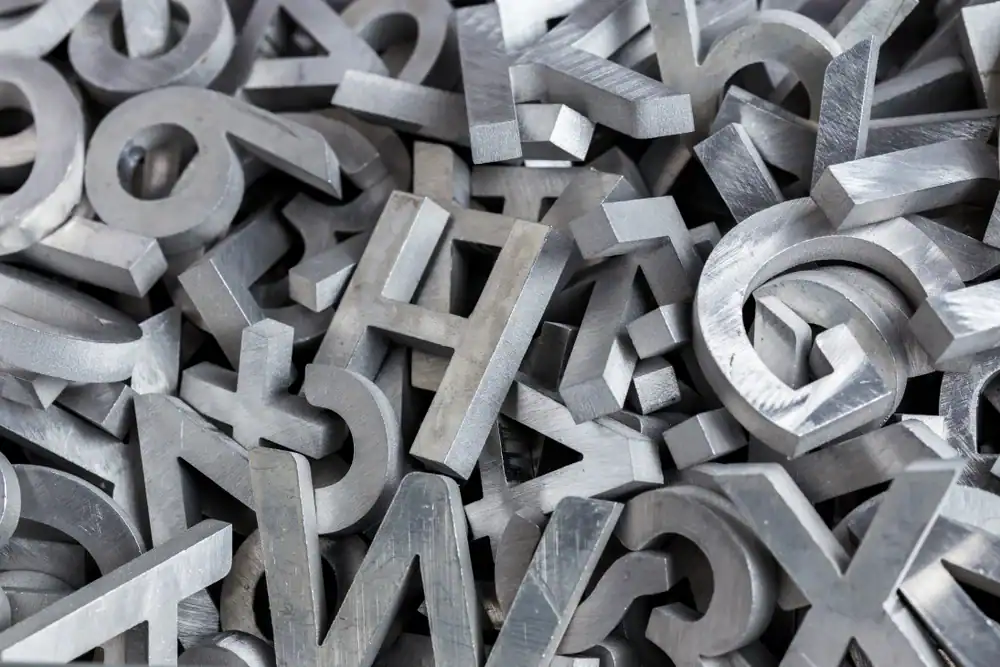
When you’re cutting thick steel, aluminum, or stainless for a critical project, the last thing you need is warped edges or a part that needs rework. Waterjet cutting metal eliminates that risk entirely.
There’s no heat-affected zone. That means the material’s structural integrity stays intact—no hardening, no softening, no distortion. You get a finished edge that’s clean enough to skip secondary operations in most cases.
Whether you’re running one prototype or a full production batch, the process handles complex geometries without tool wear or quality drift. Thick materials that would challenge laser or plasma systems cut cleanly in a single pass. You save time, reduce waste, and avoid the headaches that come with traditional methods.
This matters in Huntington, NY, where manufacturing timelines are tight and quality expectations are high. Architects need custom metal panels that fit perfectly. Fabricators need parts that meet spec without callbacks. Waterjet delivers that consistency.
We serve manufacturers, architects, contractors, and fabricators throughout Huntington, NY and the surrounding region. We’ve built our reputation on accuracy and turnaround—not promises.
Our client list includes industry names like Ralph Lauren, Coach, Port Authority, and Apparatus Studio. These aren’t companies that tolerate mistakes or delays. They expect parts that meet spec, delivered on schedule.
We operate under ISO 9001:2015 certification, which means every cut is traceable and every process is documented. For projects in Huntington’s growing manufacturing and construction sectors, that level of accountability matters. You’re not guessing whether the part will fit—you know it will.
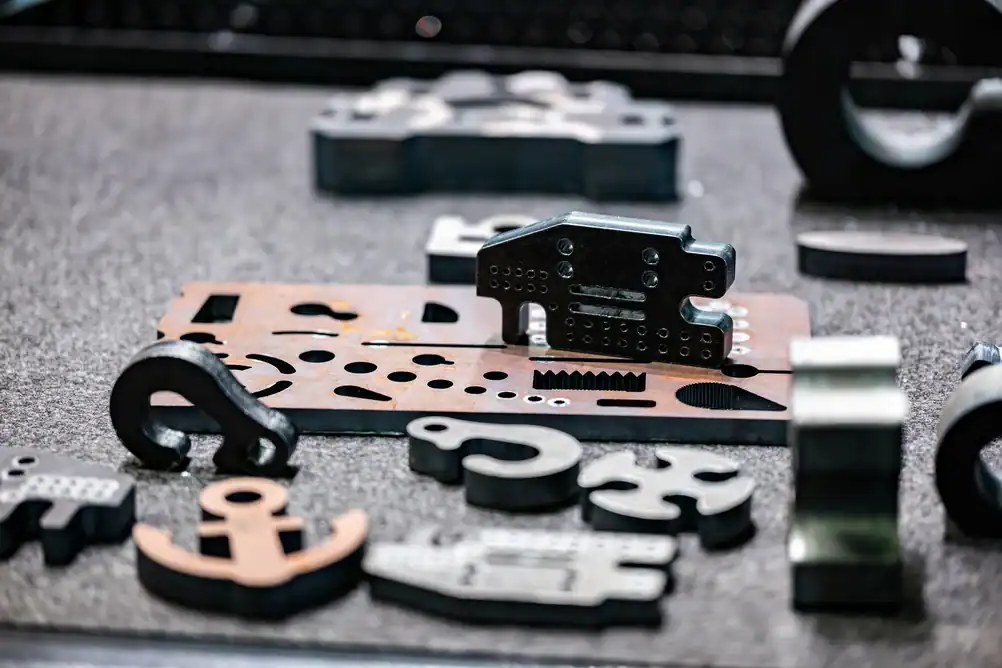
You send us your design file—DXF, DWG, or even a sketch if that’s what you’re working from. We review it for manufacturability and flag any potential issues before we start cutting. If there’s a more efficient way to nest your parts or a material consideration you haven’t thought through, we’ll tell you.
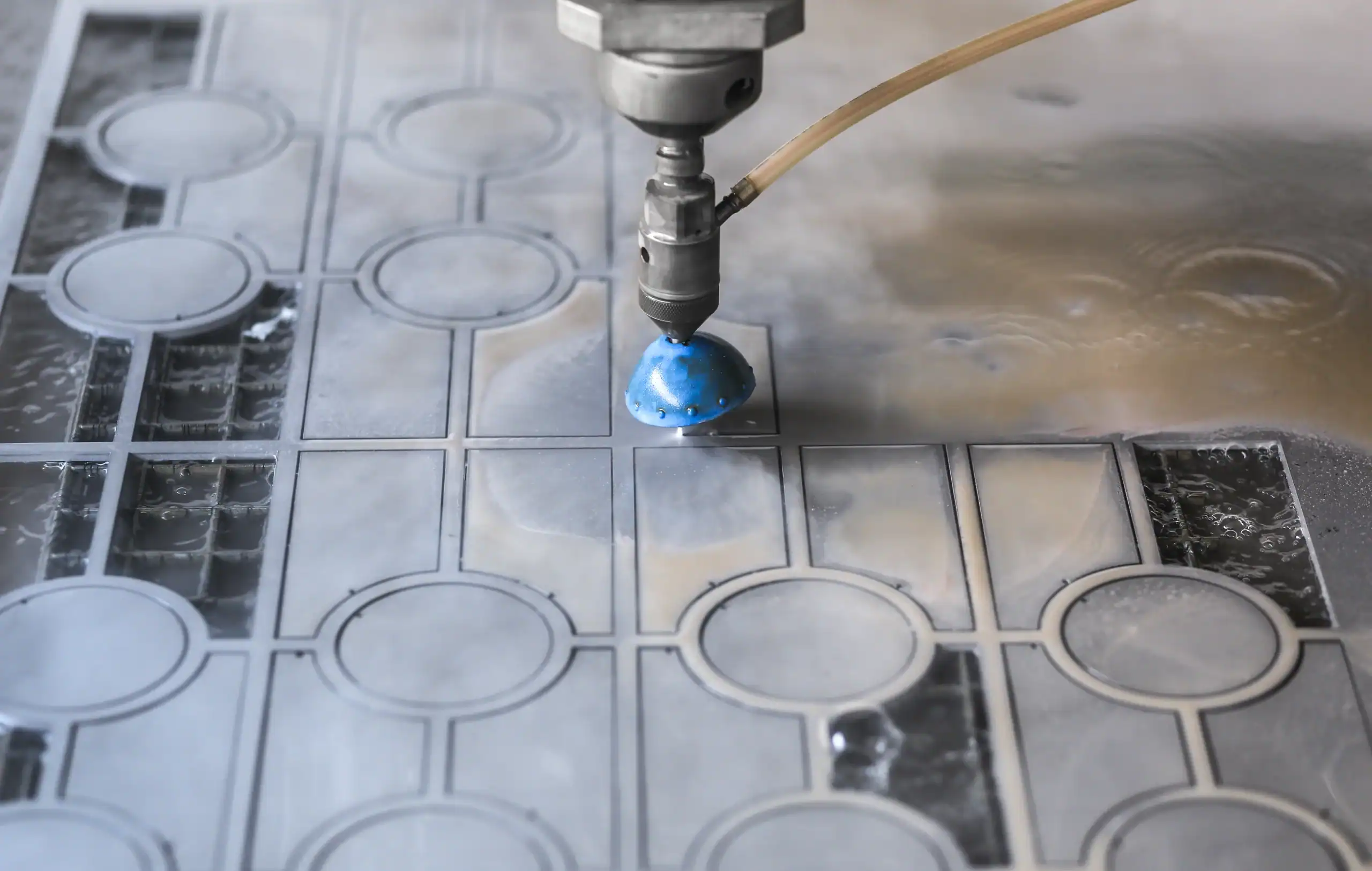
Once the file is dialed in, it goes to our CNC waterjet system. A high-pressure stream of water mixed with abrasive garnet cuts through your metal with precision down to tight tolerances. No blades. No heat. No mechanical stress on the material.
The waterjet follows your exact geometry—curves, angles, intricate patterns—without needing multiple setups or tool changes. Thick materials get cut in one pass. Complex shapes come out clean. If you’re working with stainless steel, aluminum, or other metals prone to heat damage, this process protects the material properties you’re counting on.
After cutting, parts are inspected and prepped for delivery or pickup. Most jobs don’t need deburring or edge finishing because the waterjet produces a smooth, finished edge right off the machine.
Ready to get started?
You get material consultation upfront. If you’re unsure whether your spec will work for the application, we’ll walk through options based on what we’ve seen work in similar projects across Huntington’s manufacturing and construction industries.
CNC waterjet cutting handles materials from thin gauge up to several inches thick. Steel, aluminum, stainless, copper, brass—if it’s metal, we can cut it. The process doesn’t create burrs or rough edges that need grinding, so you’re not paying for secondary finishing unless your project specifically requires it.
Nesting is optimized to reduce material waste. That’s especially valuable if you’re working with expensive alloys or trying to keep costs down on a prototype run. We maximize what you get out of each sheet.
Turnaround depends on complexity and volume, but most projects move faster than traditional machining because there’s no tool wear to manage and no multi-step setups. Huntington-area clients often need quick turnarounds for architectural deadlines or production schedules—we’re set up to handle that pace without sacrificing accuracy.
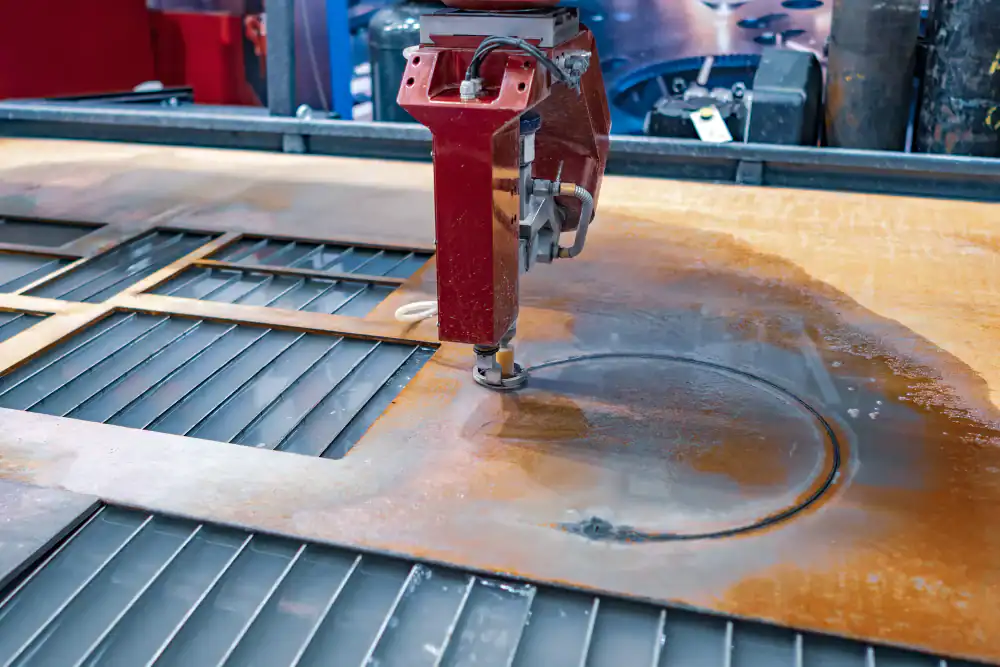
Waterjet handles virtually any metal you’re working with. Steel, stainless steel, aluminum, copper, brass, titanium—thickness isn’t a limiting factor the way it is with laser or plasma.
If you’re cutting something thicker than 25-30mm, waterjet is often the only practical option. Laser systems struggle with thick materials, and plasma creates a wide kerf with heat distortion. Waterjet cuts clean through without changing the material’s properties.
This matters for structural components, aerospace parts, or any application where you can’t afford to introduce stress or hardening into the metal. The process is cold, so what you specify is what you get.
Plasma and laser both use heat, which creates a heat-affected zone around the cut. That zone can warp thin materials, harden edges, or change the metal’s structural properties. You often end up grinding, straightening, or doing slag removal after the cut.
Waterjet uses high-pressure water and abrasive. No heat. No warping. No secondary cleanup in most cases. The edge quality is clean enough to weld or assemble right away.
Plasma is faster on thin materials and cheaper per cut, but you pay for it in post-processing and quality inconsistency. Laser is precise on thinner stock but can’t handle the thicknesses waterjet manages. If your project involves tight tolerances, thick materials, or metals sensitive to heat, waterjet is the better call.
Yes. CNC waterjet systems cut virtually any two-dimensional shape you can design. Intricate curves, sharp angles, interior cutouts—it’s all handled in a single setup without tool changes.
Tolerances depend on material thickness and complexity, but waterjet consistently holds tight specs that meet or exceed what most fabrication and manufacturing projects require. There’s no tool wear to throw off accuracy mid-run, so the first part and the last part come out the same.
This is especially useful for prototype work or short production runs where you can’t afford to dial in a process over multiple attempts. You get it right the first time, and if you need to scale up later, the process repeats exactly.
Turnaround depends on material thickness, part complexity, and how many pieces you need. Simple cuts on thinner materials can be same-day or next-day. Thicker stock or intricate geometries take longer but still move faster than traditional machining.
One advantage of waterjet is that it’s a one-step process. You’re not waiting for multiple setups, tool changes, or secondary finishing operations. The part comes off the machine ready to use in most cases.
If you’re in Huntington and working against a construction deadline or production schedule, let us know upfront. We’ll give you a realistic timeline and flag any potential delays before they become problems.
DXF and DWG files work best because they translate directly into the CNC system. If you’re working from a different format or even a hand sketch, we can usually convert it.
Before we start cutting, we review the file for manufacturability. Sometimes a small design tweak makes a big difference in cost or quality—like adjusting a radius or repositioning a cutout to reduce material waste. We’ll walk you through any recommendations.
If you’re not sure whether your design will work, send it over. We’d rather catch an issue during file review than after the cut is made.
Waterjet is one of the most cost-effective options for short runs, especially on metals that are difficult or expensive to cut conventionally. There’s no tooling cost, no setup charge for custom dies, and no minimum run length to make the process viable.
You’re also not paying for secondary operations like deburring, grinding, or heat treatment to correct distortion. The part comes out clean, which saves labor and time.
For prototypes, waterjet lets you test a design without committing to expensive tooling or long production runs. If the part needs adjustments, you’re only revising a digital file—not retooling a machine. That flexibility is valuable when you’re still dialing in specs or working through design iterations.
Useful Links
Other Services we provide in Huntington