Hear from Our Customers
You’re not looking for a cutting method. You’re looking for parts that fit the first time, materials that don’t warp under heat, and a process that doesn’t limit your design.
Waterjet cutting metal gives you that. It’s a cold-cutting process, which means no heat-affected zones. Your stainless steel, aluminum, titanium, or copper comes out structurally sound. No melting. No warping. No compromised edges that need secondary finishing.
The tolerance is tight—down to ±0.001 inch when the material and thickness allow it. That level of precision means your architectural panels line up. Your industrial components assemble without force. Your prototypes actually test what you designed, not what got distorted in fabrication.
And because it’s CNC-controlled, complex geometries aren’t a problem. Curves, intricate patterns, tight radiuses—whatever your file calls for, the machine follows it exactly.
We operate in Kings Park, NY, serving architects, fabricators, and manufacturers across Long Island and the surrounding tri-state area. We’ve built our reputation on one simple practice: we don’t just run your file. We review it first.
That means catching scaling issues, open paths, or geometry problems before they become expensive mistakes. It means verifying dimensions, confirming material specs, and making sure what you designed is what you’re going to get.
Kings Park sits in a region with deep manufacturing roots and a growing demand for precision metalwork—from custom architectural facades in commercial developments to one-off industrial parts for local shops. We work with that range daily, and we understand what’s at stake when a component has to be right the first time.
You send us your CAD file—preferably a DXF or DWG to maintain vector precision. Our design team opens it, checks the geometry, and flags anything that might cause issues during cutting. If something’s off, we reach out before we program the job.
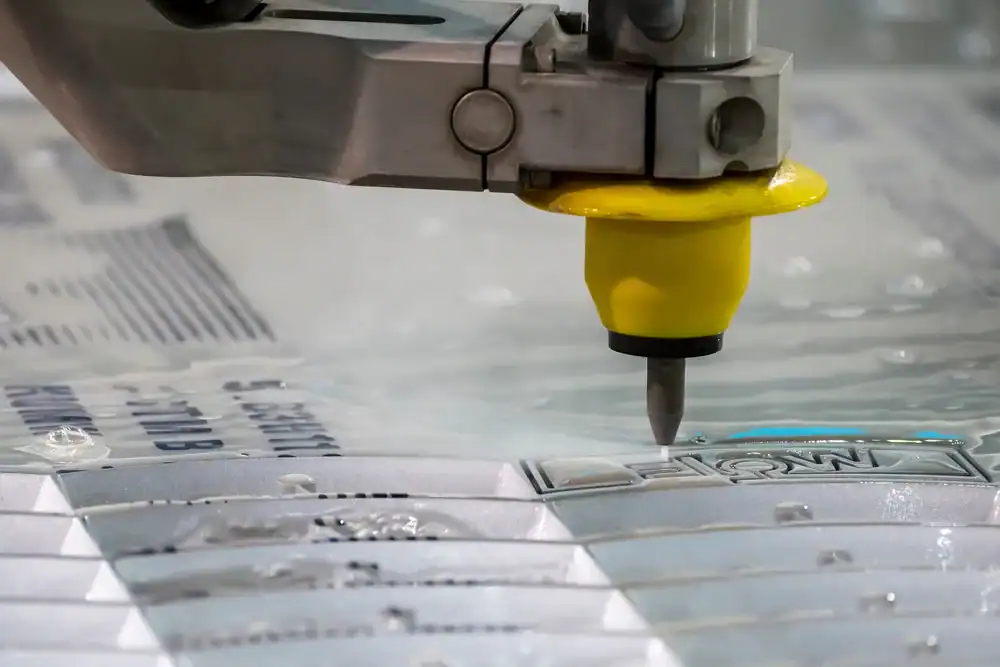
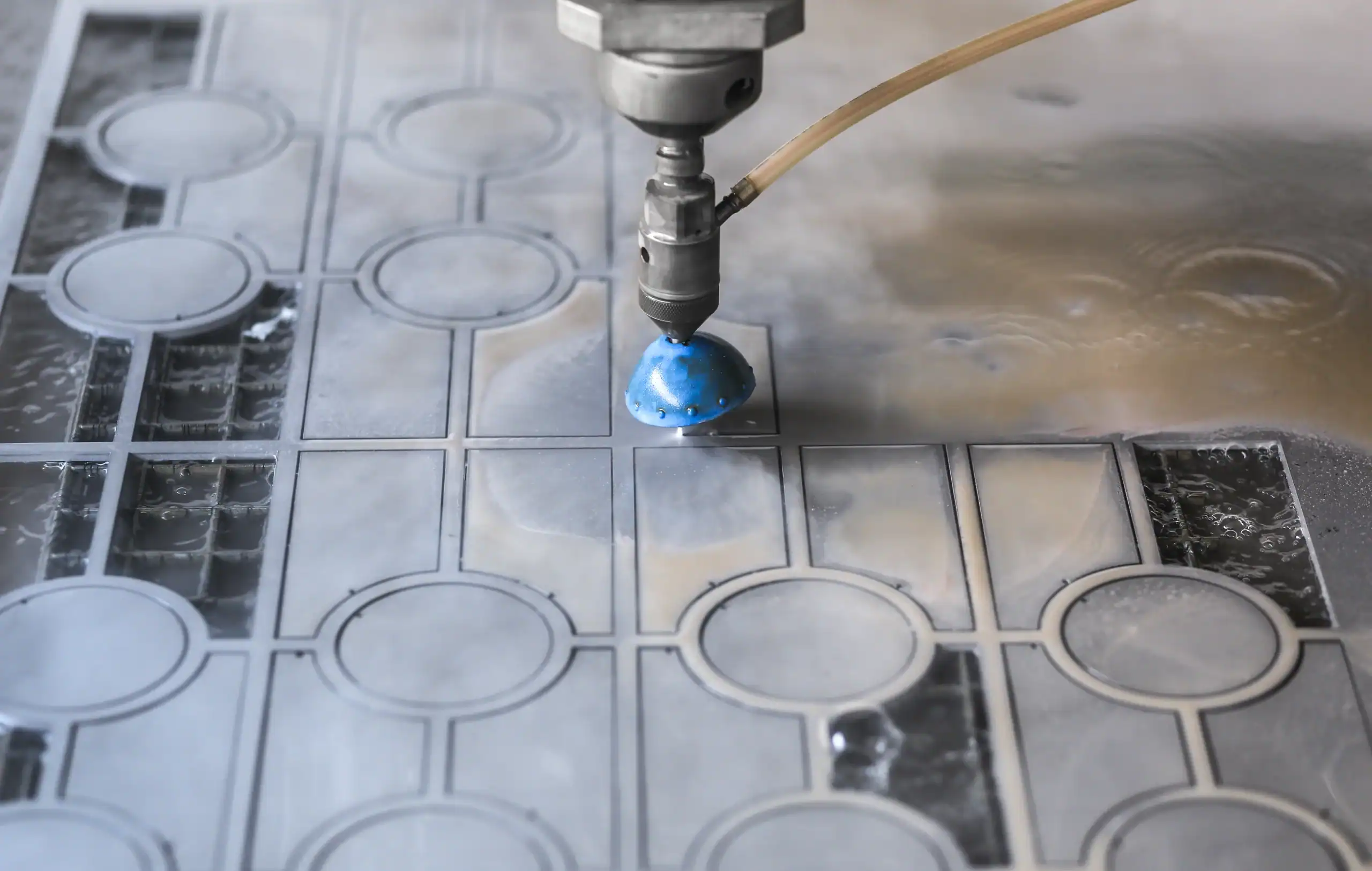
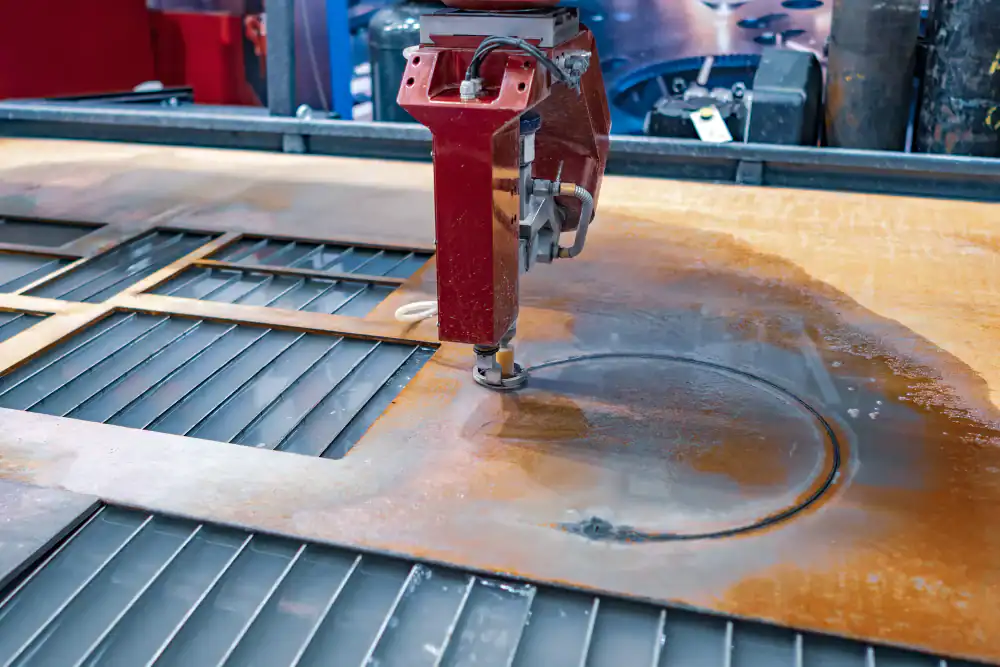
Once the file is clean, we load your material onto the cutting bed. The waterjet system uses a high-pressure stream mixed with abrasive garnet to cut through the metal. There’s no blade dulling, no heat buildup, no tool changes between materials. The stream follows your design with CNC accuracy.
Depending on thickness and material, we adjust pressure, speed, and abrasive flow to optimize edge quality and tolerance. Thinner materials can be stacked to increase output. Thicker materials—up to 10 inches in some cases—are cut individually with slower passes to maintain precision.
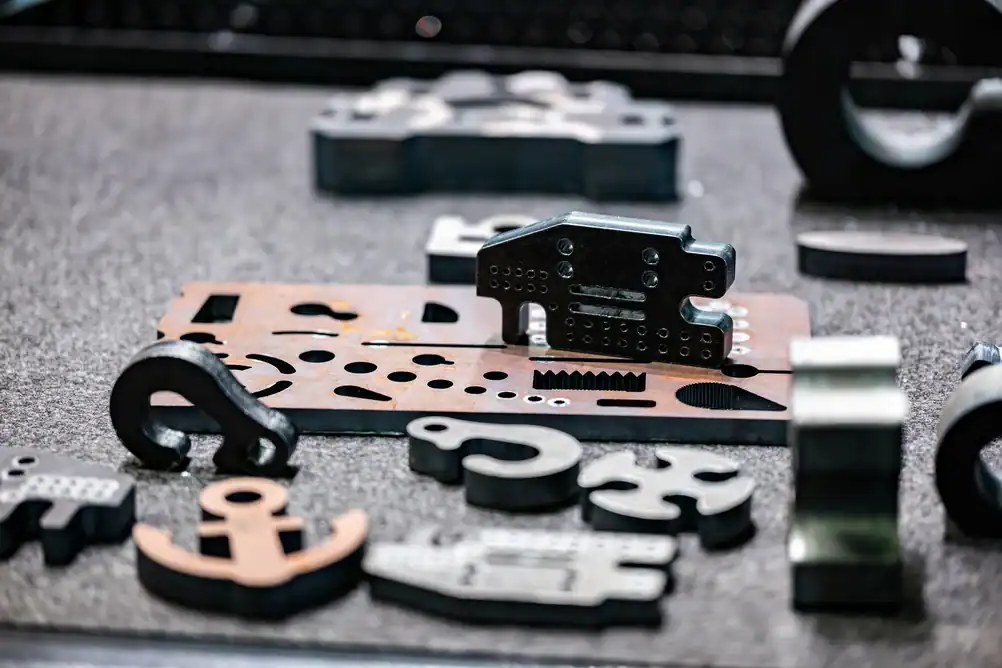
After cutting, parts come off the table clean. There’s no slag, no burrs that need grinding, and no heat discoloration. What you get is a component that’s ready for assembly, finishing, or installation—not one that needs another round of cleanup.
Ready to get started?
Every job starts with file review. We don’t charge extra for it, and we don’t skip it. It’s part of making sure your parts come out right.
You get access to a range of materials—metals like stainless steel, aluminum, brass, copper, and titanium, but also composites, glass, stone, and foam if your project calls for it. The process handles them all without changing tooling or worrying about heat sensitivity.
In Kings Park and across Long Island, we see a lot of architectural work—decorative screens, custom panels, perforated metal for facades. We also handle industrial components, gaskets, machine parts, and prototypes. The common thread isn’t the industry. It’s the need for accuracy and the expectation that the part matches the print.
Turnaround depends on complexity, material availability, and current queue. Clean files move faster. If your project has a hard deadline, let us know up front—we’ll tell you whether it’s realistic and what it takes to meet it.
We cut most metals—stainless steel, aluminum, brass, copper, titanium, tool steel. We also handle non-metals like glass, stone, composites, ceramics, plastics, and foam. The waterjet process doesn’t rely on hardness or heat tolerance, so the range is wide.
Thickness matters more than material type. We can cut up to 10 inches in stainless steel, though most jobs fall between 0.010 inches and 2 inches. Thinner materials can be stacked to improve efficiency. Thicker materials take longer and may show slight taper as the stream travels away from the nozzle, but we adjust parameters to keep that minimal.
If you’re not sure whether your material works for waterjet, send us the specs. We’ll tell you what’s possible and what tolerances to expect.
Standard tolerance is ±0.005 inches. On thinner materials with optimal conditions, we can hit ±0.001 inches. That’s tight enough for most architectural, industrial, and prototype applications.
Tolerance tightens or loosens based on material thickness, type, and edge quality requirements. A quarter-inch aluminum plate will hold tighter tolerance than a 4-inch stainless block. The waterjet stream spreads slightly as it moves through thicker material, which introduces taper. We compensate by adjusting speed, pressure, and abrasive flow.
If your project requires tolerances beyond what waterjet can deliver, we’ll tell you before quoting the job. There’s no point in running a part that won’t meet your specs. You’ll know up front whether the process fits your needs.
Waterjet doesn’t generate heat. That’s the main difference. Laser and plasma both create heat-affected zones, which can warp thin materials, alter hardness, or discolor edges. If you’re cutting stainless steel and you don’t want burn marks, waterjet handles it cleanly.
Waterjet also cuts thicker materials than most lasers. A laser might top out around 1 inch in steel. Waterjet goes much thicker without losing capability. And because there’s no heat, you’re not limited by melting points or reflectivity—materials like copper, brass, and aluminum cut just as easily as steel.
The tradeoff is speed. Laser is faster on thin materials. But if edge quality, material integrity, and thickness range matter more than cycle time, waterjet makes sense. It depends on what your project actually needs, not what sounds impressive.
Yes. Waterjet doesn’t require custom tooling, so there’s no setup cost that makes small runs uneconomical. Whether you need one part or a hundred, the process is the same—load the file, load the material, and cut.
That makes waterjet ideal for prototypes, custom architectural elements, or replacement parts where you don’t have volume to justify stamping or machining. We’ve cut single decorative panels for building facades and individual gaskets for equipment repairs. Both get the same attention to file prep and cutting accuracy.
If you’re testing a design before committing to production, waterjet gives you a real part to evaluate. No approximations, no hand-finishing to make it work. You get what the file specifies, and you can decide whether it’s right before scaling up.
It depends on material, thickness, complexity, and how clean your file is. A simple shape in quarter-inch aluminum might take minutes to cut. An intricate pattern in 2-inch stainless steel could take hours.
File prep adds time up front but saves it on the back end. If we catch an issue during review, we fix it before programming. That prevents scrapped material, recuts, and delays. Clean files with proper scaling, closed paths, and clear layer organization move through faster.
Once cutting starts, thicker materials and tighter tolerances slow the process down. We adjust feed rates to maintain edge quality and accuracy. Rush jobs are possible if the schedule allows, but we won’t sacrifice precision to hit an arbitrary deadline. If timing is critical, tell us when you request a quote—we’ll let you know what’s realistic.
DXF and DWG files work best. They maintain vector precision, preserve layer organization, and translate cleanly into CNC toolpaths. If you’re working in CAD software, export to one of those formats before sending.
Make sure paths are closed, dimensions are correct, and there’s no overlapping geometry. Scale matters—if your file is in millimeters but we’re expecting inches, the part won’t match your intent. Label layers clearly if you have multiple components or different cutting requirements in one file.
We can work with other formats—PDF, AI, EPS—but they often require conversion, which introduces risk of scaling errors or lost detail. If DXF or DWG isn’t an option, send what you have and we’ll review it. We’d rather flag a problem during file prep than discover it after cutting starts.
Useful Links
Other Services we provide in Kings Park