Hear from Our Customers
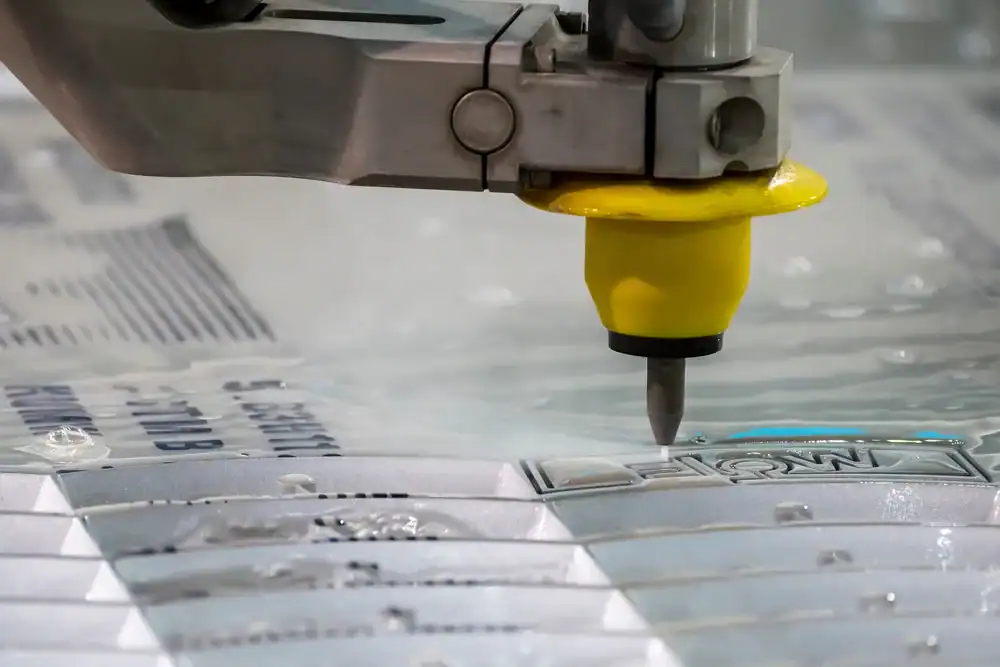
You don’t have time for warped metal, burnt edges, or parts that need rework. When you’re cutting steel, aluminum, titanium, or specialty alloys, heat is your enemy. It changes the material properties, creates stress points, and turns precision work into guesswork.
Waterjet cutting metal eliminates that problem entirely. No torches. No lasers. No plasma. Just high-pressure water mixed with garnet abrasive that cuts through metal without raising the temperature a single degree. That means your parts come off the table flat, dimensionally accurate, and ready for the next operation.
You get smooth edges that don’t need deburring. Tight tolerances that hold across the entire cut. And material integrity that stays intact from start to finish. Whether you’re fabricating architectural panels, machining aerospace components, or producing custom parts for a one-off project, the cut quality stays consistent. No heat-affected zones. No secondary finishing. Just clean, accurate parts that match your CAD file.
We operate out of West Islip, serving Melville and the broader Long Island manufacturing community. We run a Flow Mach 500 CNC waterjet system that cuts directly from your CAD files with repeatable precision.
Melville sits in the heart of Long Island’s commercial and industrial corridor. You’ve got aerospace suppliers, architectural fabricators, automotive shops, and custom manufacturers all within a few miles. That means tight deadlines, exacting standards, and zero tolerance for rework. We built our shop to meet that demand.
We handle everything from single prototypes to production runs. Our team includes experienced designers who can take your concept and turn it into a production-ready file. And because we’re local, you can stop by, review samples, and talk through your project face-to-face.
You send us your design file or sketch. If you’re working from a concept, our design team converts it into a production-ready CAD file. We review material specs, thickness, tolerances, and any special requirements before we start cutting.
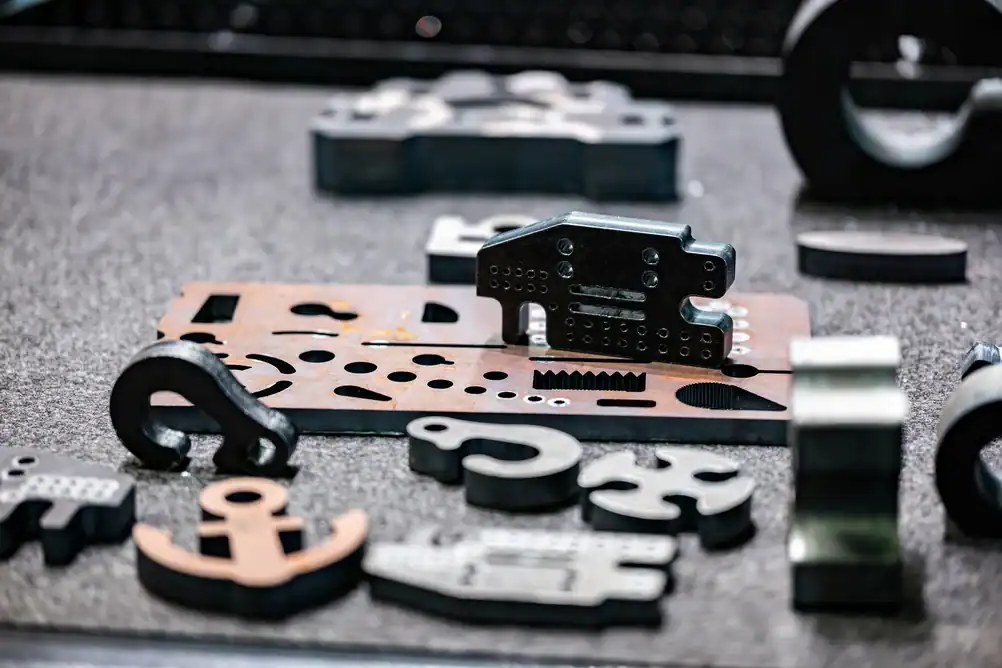
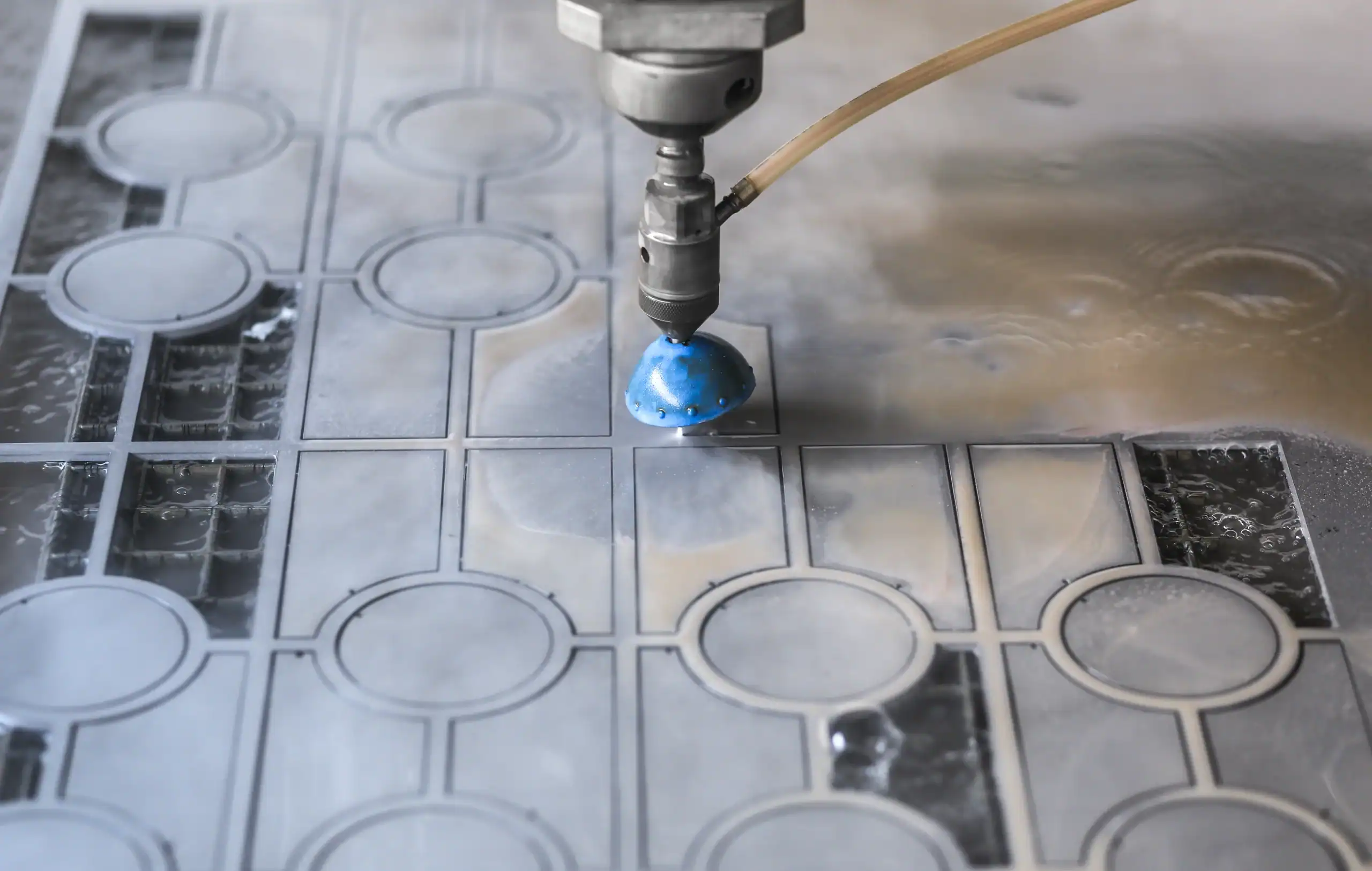
Once the file is programmed, we load your material onto the cutting table and secure it. The CNC system controls the waterjet head with precision down to thousandths of an inch. High-pressure water mixed with garnet abrasive cuts through the metal, following the programmed path exactly. There’s no heat, no fumes, and no material distortion.
After cutting, we inspect each part for dimensional accuracy and edge quality. Most parts come off the table ready to use. If you need additional services like tapping, drilling, or finishing, we coordinate that too. You get parts that match your specifications without the back-and-forth or delays that come from outsourcing multiple operations.
Ready to get started?
Every metal waterjet cutting project includes CAD file review and optimization. We check for potential issues before cutting starts so you’re not wasting material or time on avoidable mistakes. Our system handles materials from thin gauge sheet metal up to several inches thick, including stainless steel, aluminum, copper, brass, titanium, and exotic alloys.
Melville’s manufacturing sector demands versatility. Architectural firms need decorative panels with intricate patterns. Aerospace suppliers need components that meet strict tolerance requirements. Automotive fabricators need custom brackets and mounting plates. Our waterjet metal cutting shop in Melville handles all of it without changing equipment or processes.
You also get material consultation if you’re unsure which alloy or thickness works best for your application. We’ve cut thousands of parts across dozens of industries. That experience helps you avoid costly material choices that don’t perform under real-world conditions. And because waterjet cutting doesn’t create heat-affected zones, you can tap threads, weld, or machine parts immediately after cutting without worrying about altered material properties.
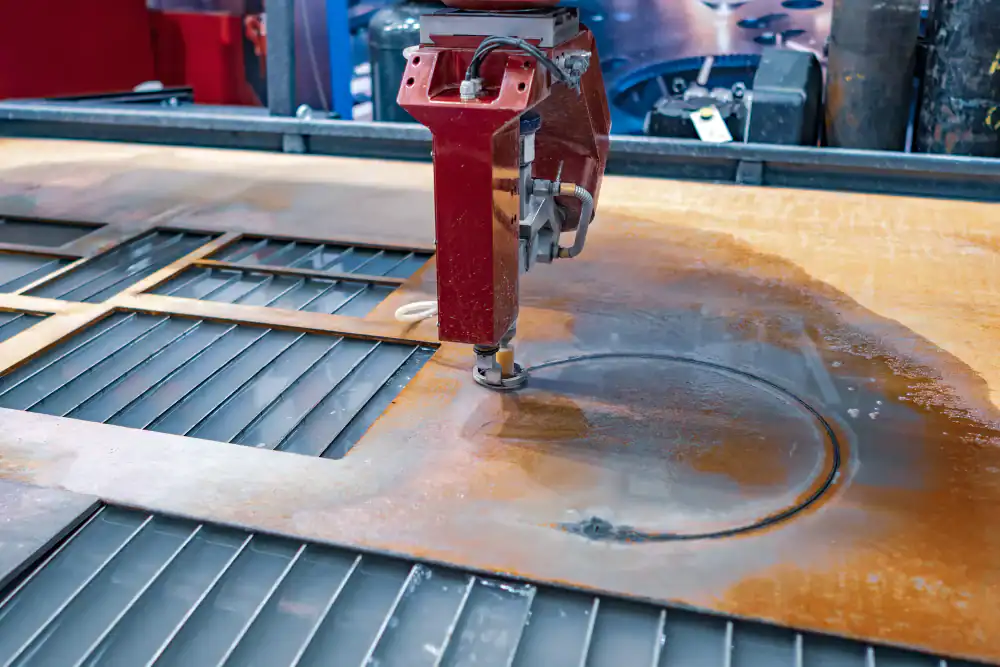
We cut steel, stainless steel, aluminum, copper, brass, titanium, and specialty alloys. Thickness ranges from thin gauge sheet metal up to several inches, depending on the material. Harder metals like titanium or tool steel take longer to cut but produce the same clean edge quality as softer materials.
Waterjet cutting works on any metal that doesn’t react chemically with water. That includes most common alloys used in manufacturing, fabrication, and architectural applications. If you’re working with an exotic or specialty material, send us the specs and we’ll confirm compatibility before starting your project.
Waterjet doesn’t generate heat. Laser and plasma both use thermal energy, which creates heat-affected zones that can warp thin materials, alter hardness, and require secondary finishing. With waterjet cutting metal, the material stays cool throughout the entire process. That means no distortion, no hardened edges, and no need for additional machining to clean up burnt or rough cuts.
Waterjet also handles thicker materials more efficiently than laser. Once you get past an inch thick, laser cutting slows down significantly and edge quality suffers. Waterjet maintains consistent speed and quality regardless of thickness. You also avoid the fumes and gases that come with thermal cutting, which matters if you’re working in a facility with ventilation restrictions.
The tradeoff is speed on thin materials. Laser cuts thin sheet metal faster than waterjet. But if you’re cutting anything over half an inch, need zero heat distortion, or require a finished edge without secondary operations, waterjet is the better choice.
Our Flow Mach 500 system holds tolerances within ±0.005 inches on most cuts. Actual tolerance depends on material type, thickness, and part geometry. Thicker materials and tighter inside corners can affect precision slightly, but we stay well within standard manufacturing tolerances for most applications.
CNC control means the waterjet head follows your CAD file exactly. There’s no operator error or manual adjustment during the cut. The system compensates for variables like material density and abrasive flow rate automatically. That consistency matters when you’re running production parts that need to be identical across multiple sheets.
If your project requires tighter tolerances than standard waterjet can deliver, we’ll tell you upfront. Some applications need post-cut machining to hit extremely tight specs. We’d rather have that conversation before cutting than deliver parts that don’t meet your requirements.
Turnaround depends on material thickness, part complexity, and current shop schedule. Simple parts in common materials can be cut within a few days. Complex designs or thick materials take longer. Rush jobs are possible if you’re up against a deadline, but we need to know upfront so we can adjust the schedule.
Cutting speed varies by material. Aluminum cuts faster than stainless steel. Thicker materials take more time than thin sheet. A quarter-inch aluminum part might take a few minutes to cut, while a two-inch stainless steel part could take significantly longer. We provide time estimates once we review your file and material specs.
Being local to Melville helps with turnaround. You’re not waiting on shipping from across the country. We can coordinate pickup or delivery within the Long Island area quickly. And if there’s an issue with the file or material, we can resolve it with a quick conversation instead of days of back-and-forth emails.
A CAD file makes the process faster and more accurate, but it’s not required. If you have a DXF, DWG, or similar vector file, we can load it directly into our CNC system and start cutting. That eliminates any chance of dimensional errors from manual programming.
If you’re working from a sketch, photo, or concept, our design team can create the CAD file for you. We use advanced design software to convert your idea into a production-ready format. This adds a step to the timeline, but it ensures the final part matches your vision. We’ll send you the file for approval before cutting starts.
Some customers come in with a physical sample they need replicated. We can measure the original part and create a CAD file from those dimensions. This works well for replacement parts or legacy components where original drawings no longer exist.
Waterjet eliminates the problems that come with heat-based cutting. No warping on thin materials. No hardened edges that dull your tools during secondary operations. No burnt surfaces that need grinding or finishing. The part comes off the table ready for the next step in your process.
You also get more design flexibility. Waterjet cuts virtually any two-dimensional shape without special tooling or fixturing. Complex curves, tight inside corners, and intricate patterns all cut with the same setup. That matters when you’re producing architectural details, decorative panels, or custom components that would be difficult or impossible with traditional methods.
Material waste drops significantly with waterjet. The kerf width is narrow, so you can nest parts closer together and get more pieces from each sheet. And because there’s no heat distortion, you don’t lose parts to warping or dimensional errors. For expensive materials like titanium or specialty alloys, that material savings adds up quickly across a production run.
Useful Links
Other Services we provide in Melville