Hear from Our Customers
Your material stays structurally sound because there’s no heat involved. No warping. No hardening. No weakened edges that crack under stress or fail inspection.
You get satin-smooth edges that don’t need grinding or secondary finishing in most cases. That means faster turnaround and lower costs on your end. When you’re working with hardened steel, titanium, or specialty alloys, waterjet cutting metal handles what laser and plasma can’t touch without compromising the material.
Complex shapes, tight tolerances, intricate designs—waterjet cuts them all without tooling changes or setup delays. If you’re dealing with rising material costs, the narrow kerf width reduces waste. You get more usable parts per sheet, which matters when raw material prices keep climbing.
We operate out of West Islip, serving fabricators, contractors, and manufacturers across Mount Sinai, NY and the surrounding Long Island region. We work with the aerospace, automotive, construction, and industrial sectors—industries where precision isn’t negotiable.
Mount Sinai sits in a manufacturing corridor that includes some of the most active industrial parks outside Silicon Valley. Your deadlines are tight, your specs are exact, and your customers expect consistency. We built our waterjet metal cutting shop around those realities.
We handle everything from one-off prototypes to production runs, with CNC precision on every cut.
You send us your design files—DXF, DWG, or whatever CAD format you’re working in. We review the specs, confirm material type and thickness, and program the CNC system to match your exact tolerances.
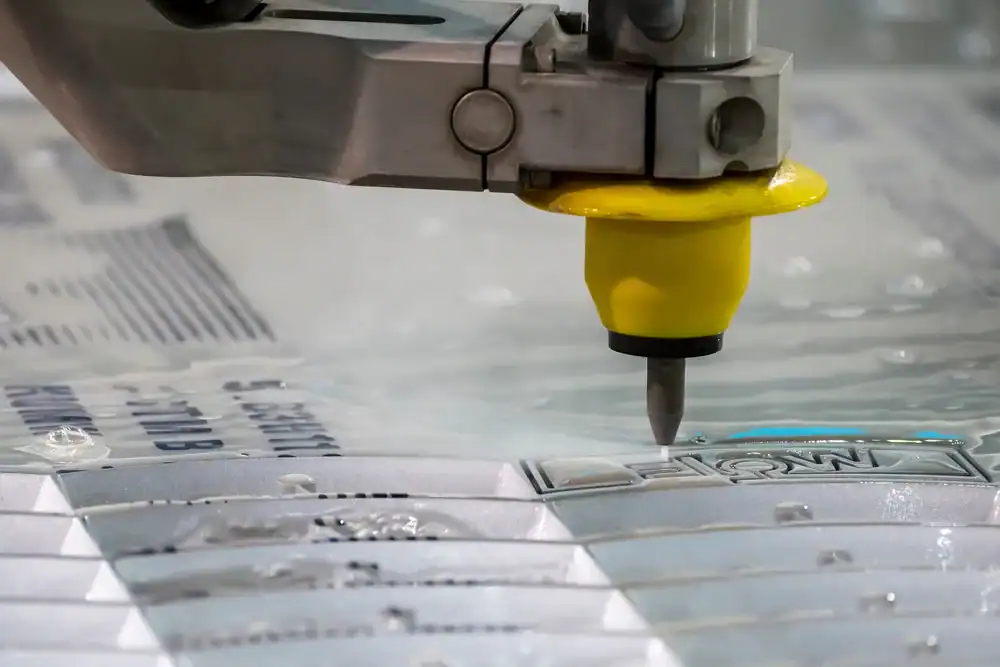
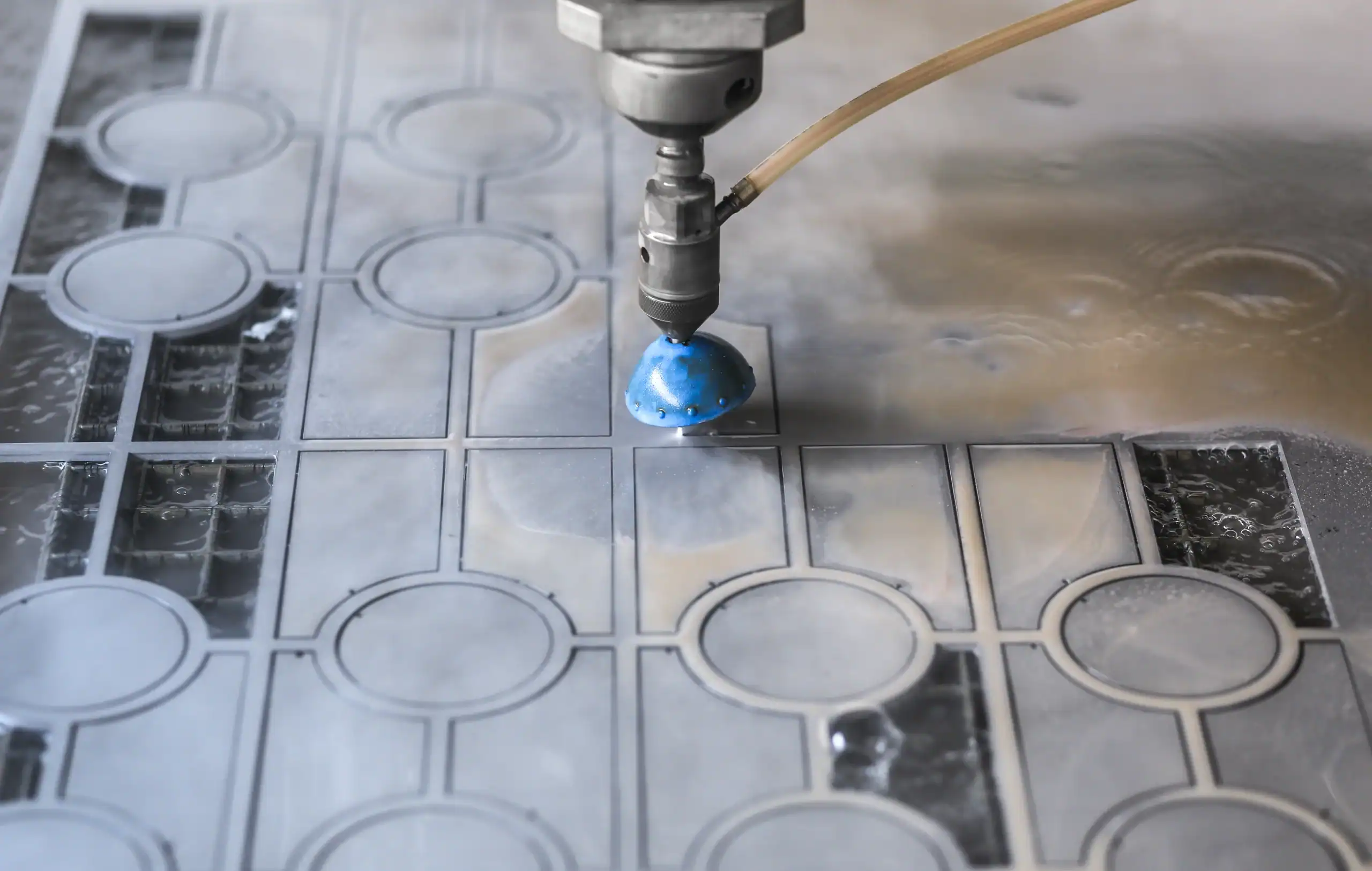
The waterjet stream combines ultra-high-pressure water (up to 60,000 PSI) with fine abrasive particles. This mixture cuts through steel, stainless, aluminum, titanium, and other metals up to 6 inches thick. Because there’s no heat, your material properties stay intact—no brittleness, no HAZ, no microstructure changes.
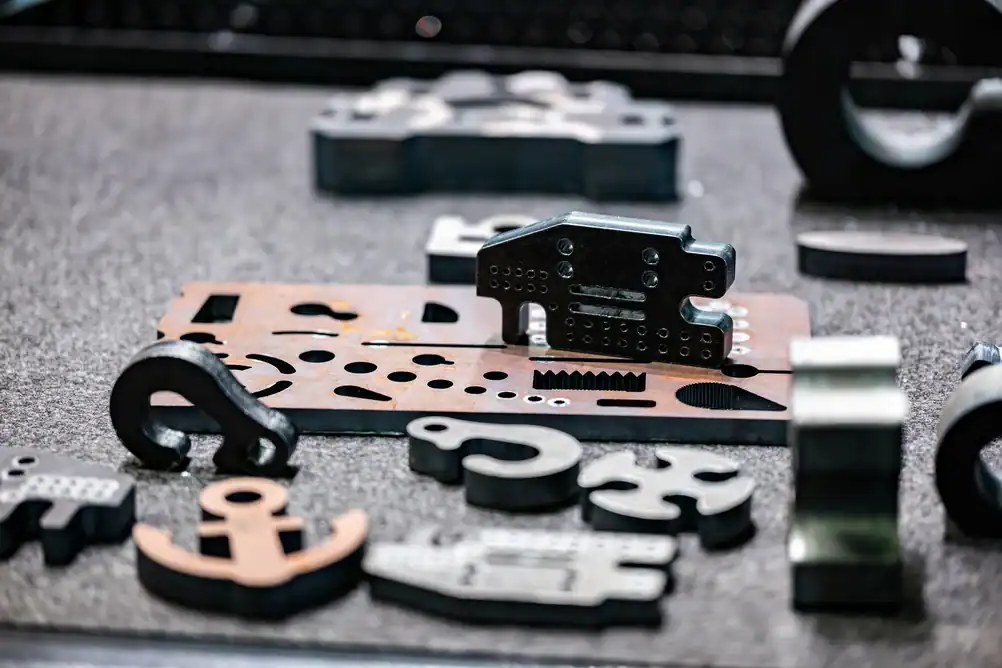
The CNC controls the cutting head with precision down to thousandths of an inch. Complex curves, sharp angles, interior cutouts—it all happens in one pass. Once cutting is complete, parts come off the table ready for assembly or installation, with smooth edges and accurate dimensions.
You get what you ordered, when you need it, without the rework or quality issues that come from heat-based cutting methods.
Ready to get started?
You get CNC-controlled precision on every job, whether it’s a single prototype or a full production run. We cut stainless steel, aluminum, titanium, hardened steel, and specialty alloys used in aerospace and automotive applications.
Stack cutting is available when you need multiples of the same part. We can layer materials and cut them simultaneously, which speeds up production without sacrificing accuracy. For Mount Sinai, NY manufacturers dealing with infrastructure projects or health care facility expansions, this efficiency matters when deadlines are non-negotiable.
Material consultation is part of the process. If you’re not sure whether your alloy or thickness will work for waterjet cutting metal, we’ll tell you upfront. We also provide design support to optimize your parts for cutting efficiency and cost savings.
Turnaround times are fast because waterjet doesn’t require tooling changes or extensive setup. You’re not waiting weeks for custom dies or dealing with minimum order quantities that don’t match your actual needs.
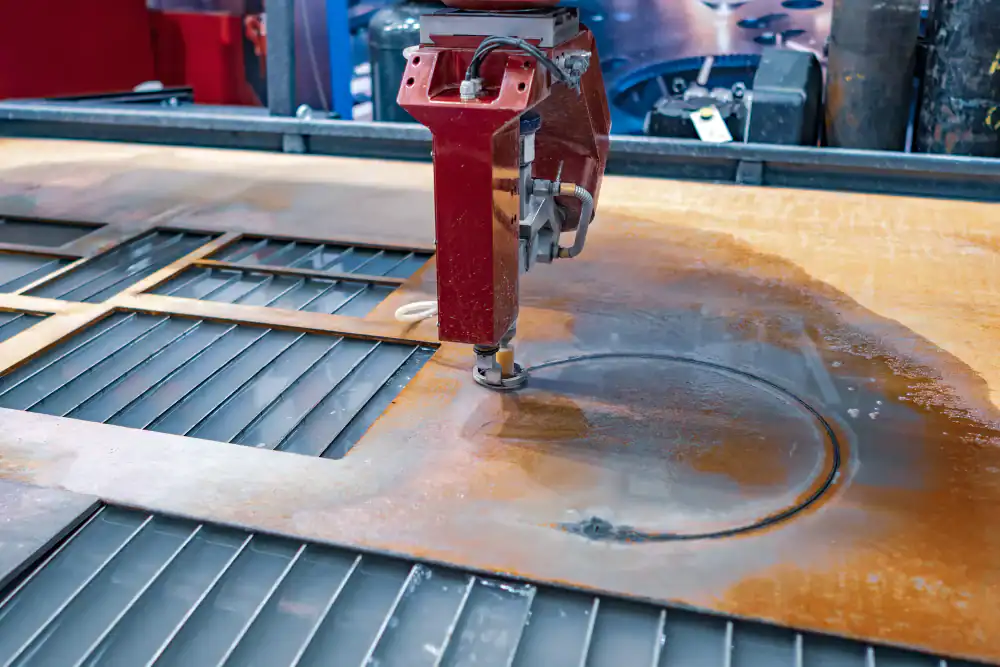
Waterjet cuts virtually any metal you’re working with. Stainless steel, aluminum, titanium, hardened steel, copper, brass—if it’s a metal, waterjet handles it without heat damage.
Thickness capacity goes up to 6 inches for most metals, though cutting speed varies based on material hardness and density. Titanium and hardened steel take longer than aluminum, but the cut quality stays consistent regardless of material type.
Specialty alloys used in aerospace and medical applications work well with waterjet because there’s no heat-affected zone to alter material properties. If your project requires specific certifications or material traceability, waterjet cutting metal won’t compromise those requirements.
Waterjet doesn’t generate heat, which means no warping, no hardened edges, and no HAZ. Laser and plasma both create thermal distortion that can weaken material or change its dimensions—especially problematic with thin gauge metals or tight tolerances.
Edge quality is another difference. Waterjet produces smooth, burr-free edges that often don’t need secondary finishing. Laser and plasma leave dross, slag, or rough edges that require grinding or sanding before parts are usable.
Material versatility matters too. Laser struggles with reflective metals like aluminum and copper. Plasma can’t handle thicker materials without losing cut quality. Waterjet cutting metal works across all metal types and thicknesses without switching processes or equipment.
If your project involves hardened steel or titanium, laser and plasma either can’t cut it or will damage the material. Waterjet handles both without issue.
Turnaround depends on material thickness, part complexity, and current production schedule, but most jobs are completed within a few days. Simple cuts on thinner materials can often be done same-day or next-day if your timeline is urgent.
Waterjet doesn’t require custom tooling or lengthy setup, which is why turnaround is faster than traditional machining methods. Once your design is programmed into the CNC system, cutting begins immediately.
For Mount Sinai, NY projects tied to construction deadlines or manufacturing schedules, we understand that delays cost money. If you’re working on infrastructure projects or facility expansions happening across Long Island, we prioritize getting your parts cut and delivered on time.
Production runs take longer than single prototypes, but stack cutting capabilities let us process multiple layers simultaneously, which speeds things up considerably.
Waterjet has one of the narrowest kerf widths of any cutting method—typically around 0.03 to 0.04 inches. That means less material is lost between parts, so you get more usable pieces per sheet.
When raw material costs are climbing—and they have been, with steel prices more than doubling in recent years—reducing waste directly impacts your bottom line. Efficient nesting of parts during programming maximizes sheet utilization even further.
There’s also no scrap from heat damage or warped edges. Parts come off the table dimensionally accurate and ready to use, so you’re not throwing away pieces that didn’t meet spec.
The abrasive material used in the cutting process is recyclable, and the water can be filtered and reused. If environmental impact matters for your project or company, waterjet cutting metal is one of the cleanest fabrication methods available.
Yes. CNC control allows the cutting head to follow intricate paths with precision down to ±0.003 inches. Sharp angles, tight radii, interior cutouts, complex curves—waterjet handles all of it in a single pass without tool changes.
If you’re producing aerospace components, custom architectural elements, or precision machine parts, waterjet delivers the accuracy you need without compromising speed. The process doesn’t create mechanical stress on the material, so there’s no deflection or movement during cutting that could throw off dimensions.
Stack cutting also maintains tolerance consistency across multiple layers, which is critical when you need identical parts for assembly or installation. Each piece matches the programmed specs exactly.
For Mount Sinai, NY manufacturers working on projects that demand repeatable precision—whether that’s conveyor components, structural steel elements, or custom fabrication—waterjet cutting metal provides the consistency that keeps production moving and customers satisfied.
Waterjet is one of the most cost-effective methods for low-volume work because there’s no tooling cost. Laser, punch, or stamping processes require expensive dies or setups that only make sense at high volumes.
With waterjet, you’re paying for machine time and material, not custom tooling. That makes it practical for prototyping, one-offs, or small batches where traditional methods would be prohibitively expensive.
If you’re testing a design before committing to full production, waterjet lets you cut a few samples quickly and affordably. Changes to the design only require updating the CNC program—no new tools, no setup fees, no minimum order quantities.
For Mount Sinai, NY fabricators and contractors working on custom projects or short-run jobs, waterjet cutting metal offers flexibility that other methods can’t match. You get precision parts without the overhead costs that eat into margins on smaller orders.
Useful Links
Other Services we provide in Mount Sinai