Hear from Our Customers
You’re not dealing with laser burns or plasma distortion. Waterjet cutting metal means your material stays cool through the entire process, so there’s no heat-affected zone weakening your parts or changing their properties.
The edge quality comes out smooth enough that most projects skip secondary finishing entirely. You save time, you save money on extra machining, and your parts maintain their structural integrity from the first cut. Whether you’re working with stainless steel, aluminum, titanium, or specialty alloys, the material doesn’t warp or harden around the cut line.
Tolerances hold tight at ±0.005 inches, even on complex geometries. If you’re prototyping or running production batches, that consistency matters when parts need to fit together without adjustment. The kerf width stays narrow—around 0.02 inches—so you’re not wasting material on wide cuts that eat into your stock.
We operate out of West Islip and serve the New Hyde Park area with precision waterjet metal cutting for architects, contractors, designers, and manufacturers. You’re working with a team that understands Long Island’s industrial landscape—from aerospace suppliers in Nassau County to custom fabricators across Suffolk.
Our equipment handles everything from thin gauge sheet metal to thick plate, and the process works across material types without needing different tooling for each job. You send CAD files, discuss specifications, and get parts cut to your exact requirements without the back-and-forth that comes from outsourcing to distant shops.
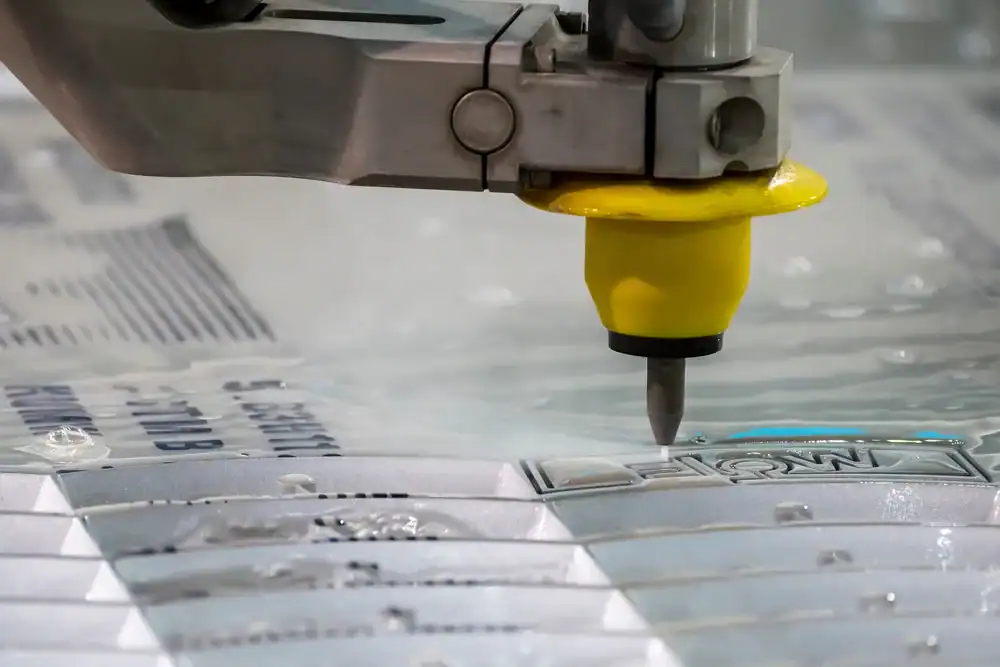
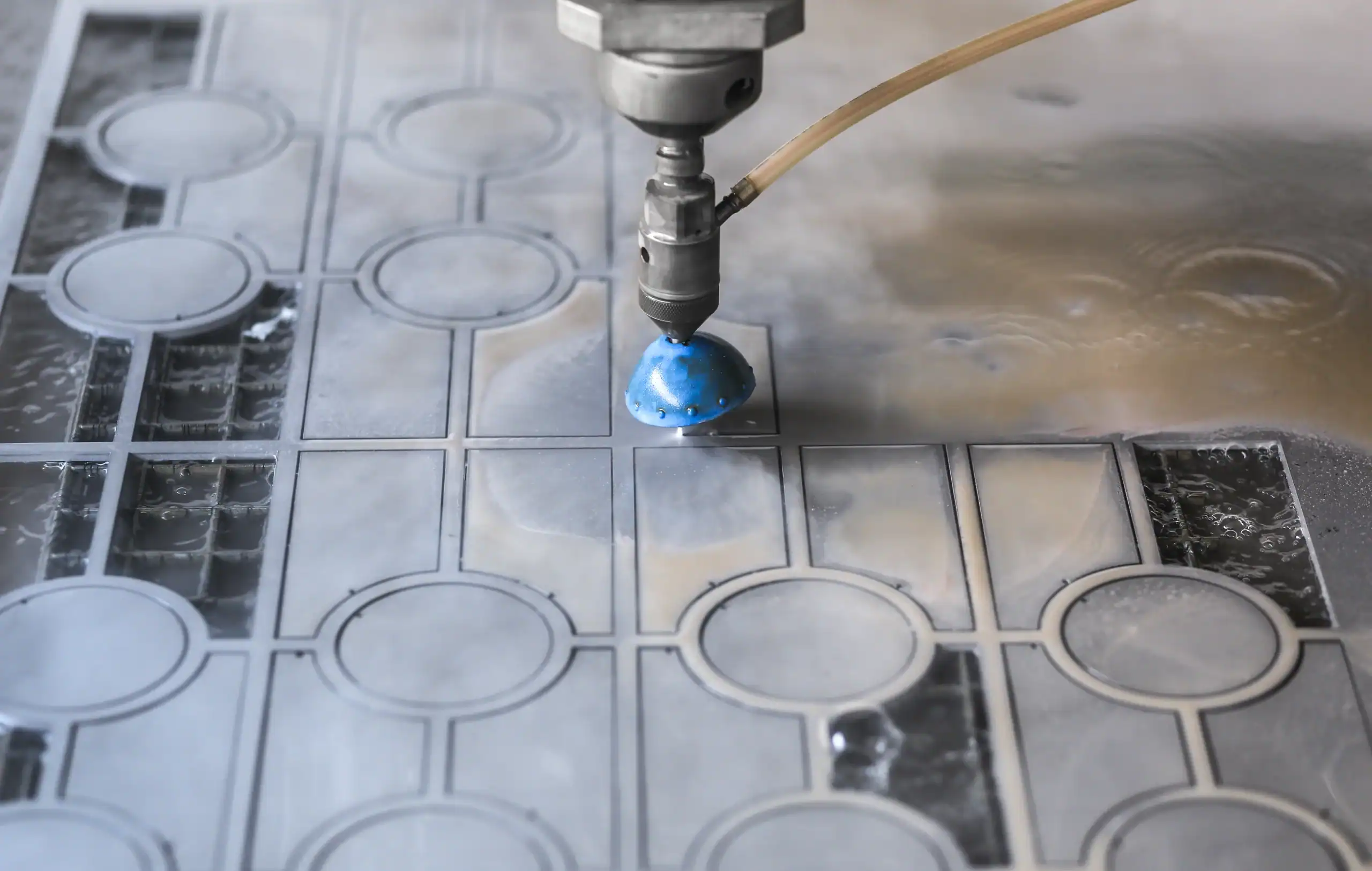
The process starts with your design file. CAD drawings translate directly into cutting paths, so what you design is what gets cut. The CNC system controls a high-pressure water stream—up to 60,000 PSI—mixed with fine abrasive garnet particles that do the actual cutting.
That stream moves across your material following the programmed path. Because it’s water-based and not thermal, there’s no melting, no burning, no hardening of the cut edge. The material stays at room temperature throughout. For metals, this means no metallurgical changes and no weakened zones that could fail under stress later.
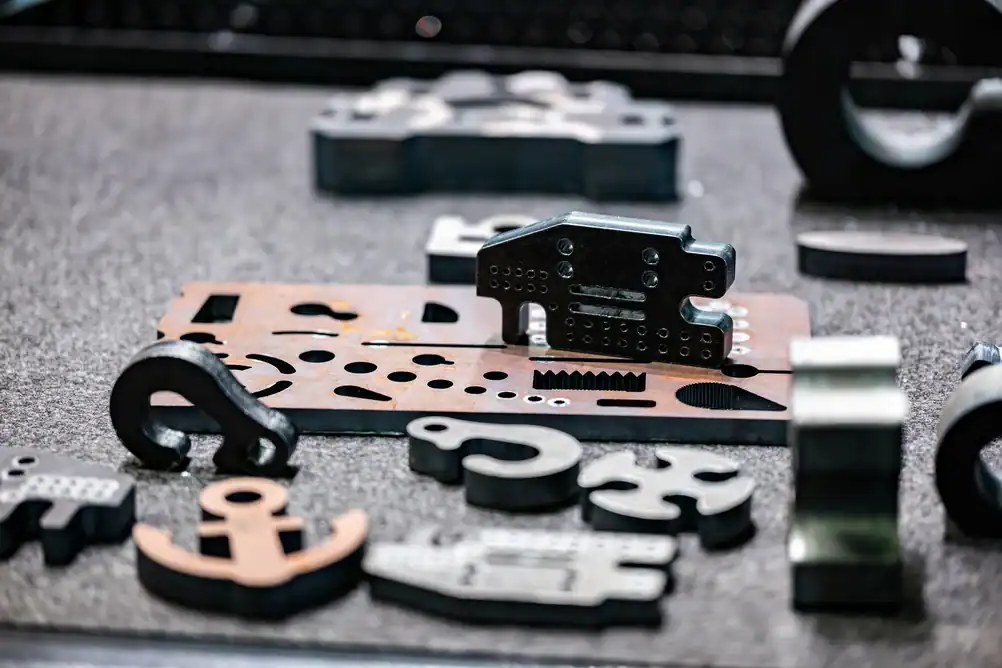
The cutting head can handle intricate shapes, tight inside corners, and small holes that other methods struggle with. Once the cut finishes, parts come off the table ready to use in most cases. If your project needs specific edge finishes or additional machining, that gets discussed upfront so you know exactly what you’re getting.
Ready to get started?
You get material consultation before cutting starts. Not every metal behaves the same under the waterjet stream, and thickness affects cutting speed and edge quality. That conversation happens early so your material choice matches your application requirements.
The cutting itself covers single prototypes or full production runs. If you need one custom bracket or 500 identical components, the setup works the same way. Programming happens once, and the CNC system repeats it exactly for however many parts you need.
New Hyde Park’s manufacturing sector—especially businesses serving the aerospace and automotive industries nearby—often needs quick turnarounds on precision parts. Local proximity means faster communication and shorter lead times compared to shipping materials to out-of-state cutting services. You’re not waiting days for quotes or weeks for delivery when we’re twenty minutes away.
Edge quality comes standard, not as an upcharge. The satin-smooth finish that waterjet cutting produces is part of the process, not an add-on service. For most applications, that edge goes straight into assembly without deburring or grinding.
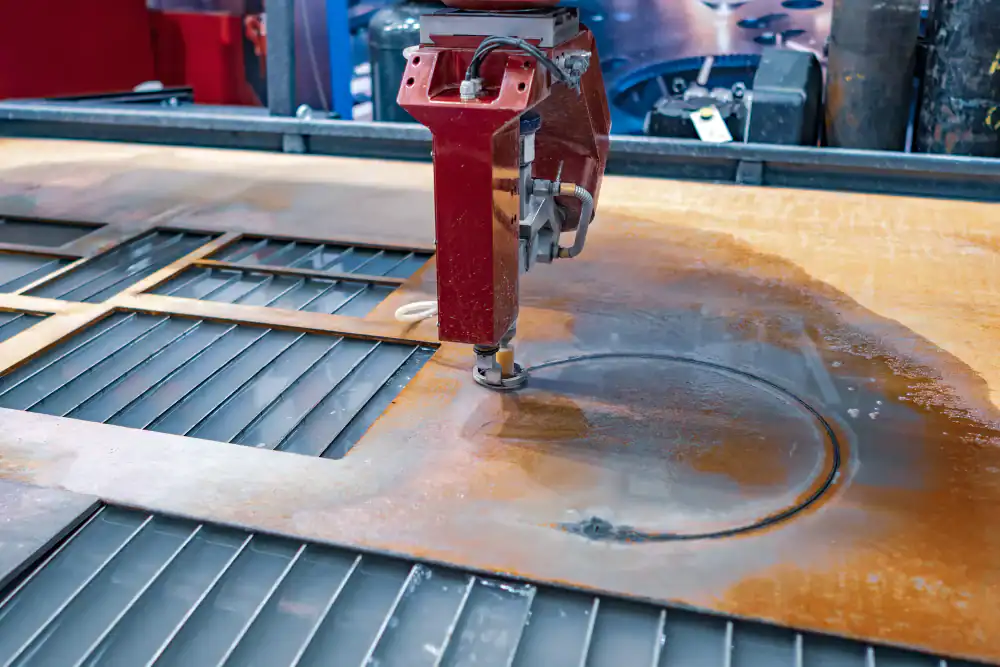
Waterjet handles nearly every metal you’d use in fabrication or manufacturing. Stainless steel, aluminum, mild steel, tool steel, titanium, inconel, brass, copper—all cut cleanly without heat damage. The process doesn’t care about hardness the way drill bits or saw blades do.
Thickness range goes from thin foil up to several inches of plate, depending on the material. Softer metals like aluminum cut faster and thicker than harder alloys like titanium, but both are well within the equipment’s capability. If you’re working with exotic alloys or specialty materials, we evaluate those individually based on density and abrasiveness.
The key advantage for metals specifically is that cold cutting preserves the material’s properties. Heat-treated steel doesn’t lose its hardness around the cut. Aluminum doesn’t develop burrs that need grinding off. Stainless keeps its corrosion resistance right up to the edge.
Standard accuracy runs ±0.005 inches, which covers most precision applications. CNC control keeps the cutting head following the programmed path consistently, and because there’s no tool deflection like you’d get with end mills or saw blades, the cut stays true to the design file.
For parts that need to fit together—brackets, flanges, mounting plates—that tolerance level means minimal adjustment during assembly. Holes line up, edges mate cleanly, and you’re not filing or grinding to make things work. If your application demands tighter tolerances, that’s worth discussing upfront because some geometries and materials hold better than others.
Repeatability matters as much as accuracy when you’re running production batches. The waterjet doesn’t wear down between cuts like a blade would, so part number one and part number five hundred come out the same. That consistency eliminates the quality drift you sometimes see with mechanical cutting tools that dull over time.
Most parts don’t need additional finishing work. The waterjet stream produces a smooth edge that’s ready to use in typical applications—assembly, welding, powder coating, whatever comes next in your process. You’re not dealing with slag like plasma cutting leaves, or rough edges that need deburring.
Thicker materials sometimes show slight striations on the cut edge, which is normal for abrasive waterjet cutting. For parts where that texture matters—cosmetic surfaces or precision mating edges—a quick pass with a file or sandpaper cleans it up. But for structural components, brackets, internal parts, or anything that gets finished later anyway, the edge comes off the table ready to go.
The lack of heat-affected zones means you’re also not dealing with hardened edges that make drilling or tapping more difficult. If your part needs holes added after cutting, or threads tapped into the edge, the material machines normally because it hasn’t been altered by thermal cutting processes.
Cutting time depends on material type, thickness, and complexity of the design. Simple shapes in thin material cut quickly—minutes per part. Intricate designs with lots of detail, or thick plate material, take longer because the stream moves slower to maintain edge quality through the full thickness.
Programming time is minimal since CAD files convert directly to cutting paths. For single prototypes, you’re looking at same-day or next-day turnaround in most cases. Production runs get scheduled based on quantity and current workload, but local proximity to New Hyde Park means faster coordination than shipping materials across the country.
Lead time also factors in material availability if you need us to source stock. If you’re supplying your own material, that speeds things up since cutting can start as soon as programming is done and the machine is available. We accommodate rush jobs when possible, especially for local customers dealing with tight project deadlines.
Waterjet typically costs more per hour of cutting time, but you’re paying for capabilities laser can’t match. Thicker materials, reflective metals like aluminum and copper, and parts that can’t tolerate heat all require waterjet. Laser struggles or fails entirely on those applications.
The cost equation shifts when you factor in secondary operations. If laser cutting leaves you with heat-affected zones that need grinding, or edges that need deburring, those extra steps add labor and time. Waterjet’s clean edges often eliminate that additional work, which narrows the price gap on the final delivered part.
For thin materials with simple geometries, laser might be cheaper. For everything else—thick plate, complex shapes, materials sensitive to heat, or parts requiring tight tolerances—waterjet delivers better value because you get usable parts without the extra finishing work. The right choice depends on your specific application, material, and quality requirements.
Small batch production is exactly where waterjet makes sense. There’s no expensive tooling to build, no dies to machine, no setup costs that only pencil out over thousands of parts. You program the cut once and run as many pieces as you need—ten parts or a hundred.
CNC automation means each part comes out identical without manual intervention between cuts. Load the material, start the program, and the machine runs through the batch while maintaining the same quality on every piece. For New Hyde Park manufacturers and contractors who need consistent parts without committing to massive order quantities, that flexibility matters.
The process also adapts easily if your design changes between runs. Update the CAD file, reprogram the cutting path, and you’re producing the revised version without scrapping expensive tooling. That’s particularly valuable during product development phases when designs evolve based on testing and feedback.
Useful Links
Other Services we provide in New Hyde Park