Hear from Our Customers
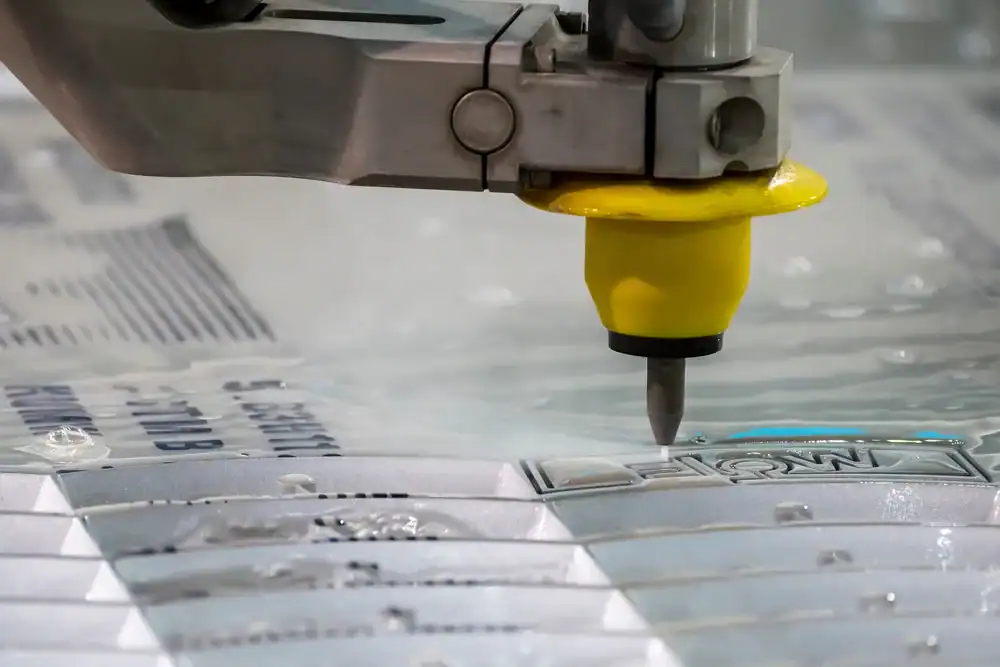
When your project requires exact dimensions and clean edges, traditional cutting methods often fall short. Heat warps metal. Saws leave burrs. Multi-step processes eat up time and budget.
Waterjet cutting metal in North Bellmore, NY changes that equation. You get parts cut to your exact specifications without thermal distortion, without hardened edges, and without the need for secondary finishing. The cutting stream is thinner than a credit card, which means less material waste and the ability to nest parts tighter on your sheet stock.
Whether you’re fabricating architectural components, prototyping automotive parts, or producing aerospace components that demand tight tolerances, you need cuts that maintain material integrity. No heat-affected zones. No micro-fractures. No compromised edges that fail inspection or require rework.
Your files get reviewed by experienced eyes before any cutting begins. That catches potential issues early—before you’ve burned through material and time. You receive parts that match your drawings, hold their dimensions, and arrive when you need them.
Tri-State Waterjet operates as a waterjet metal cutting shop in North Bellmore, NY with a singular focus: precision cutting done right. This isn’t a side service we offer alongside a dozen other fabrication methods. It’s what we do, day in and day out.
The background here matters. Years of traditional machining experience means we understand tolerances, material behavior, and what actually works in production. We’ve held the parts, seen the failures, and know what separates a clean cut from a costly mistake.
North Bellmore sits in the heart of Nassau County’s industrial corridor, where manufacturing, construction, and architectural fabrication drive the local economy. Companies here need fast access to precision cutting without shipping delays or communication gaps. That’s the advantage of working with a local waterjet metal cutting shop that understands your timeline pressures and material sourcing challenges.
You start by sending your CAD files—DXF, DWG, or whatever format your design software outputs. Our in-house team reviews every file before it hits the cutting table. We’re looking for potential issues: lines that don’t close properly, dimensions that might cause problems, details that could be optimized for better results.
If something needs attention, you hear about it before cutting starts. That conversation saves you material, time, and the frustration of parts that don’t match expectations.
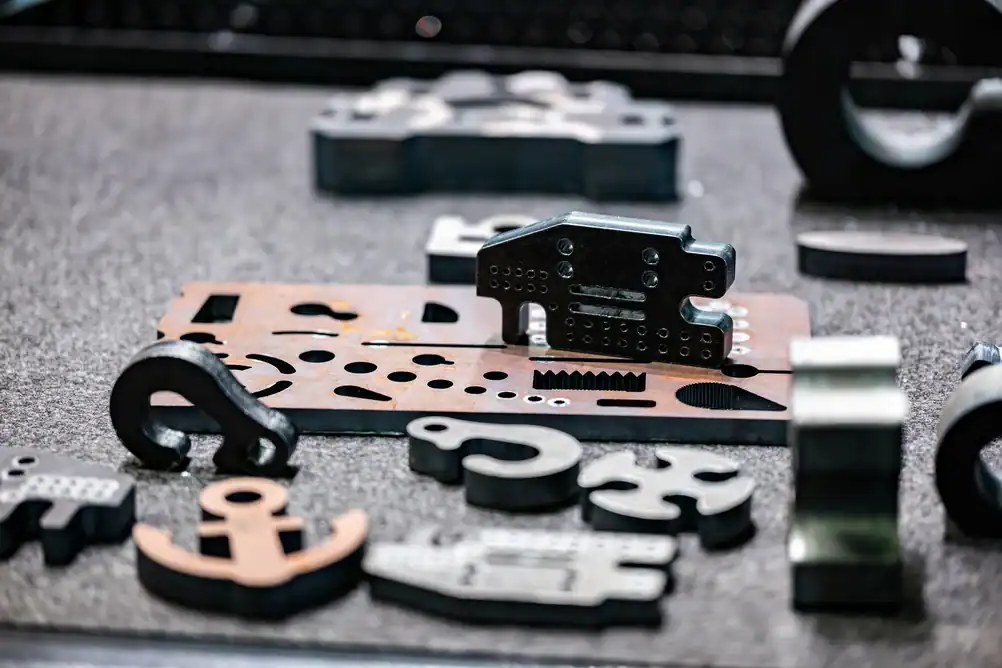
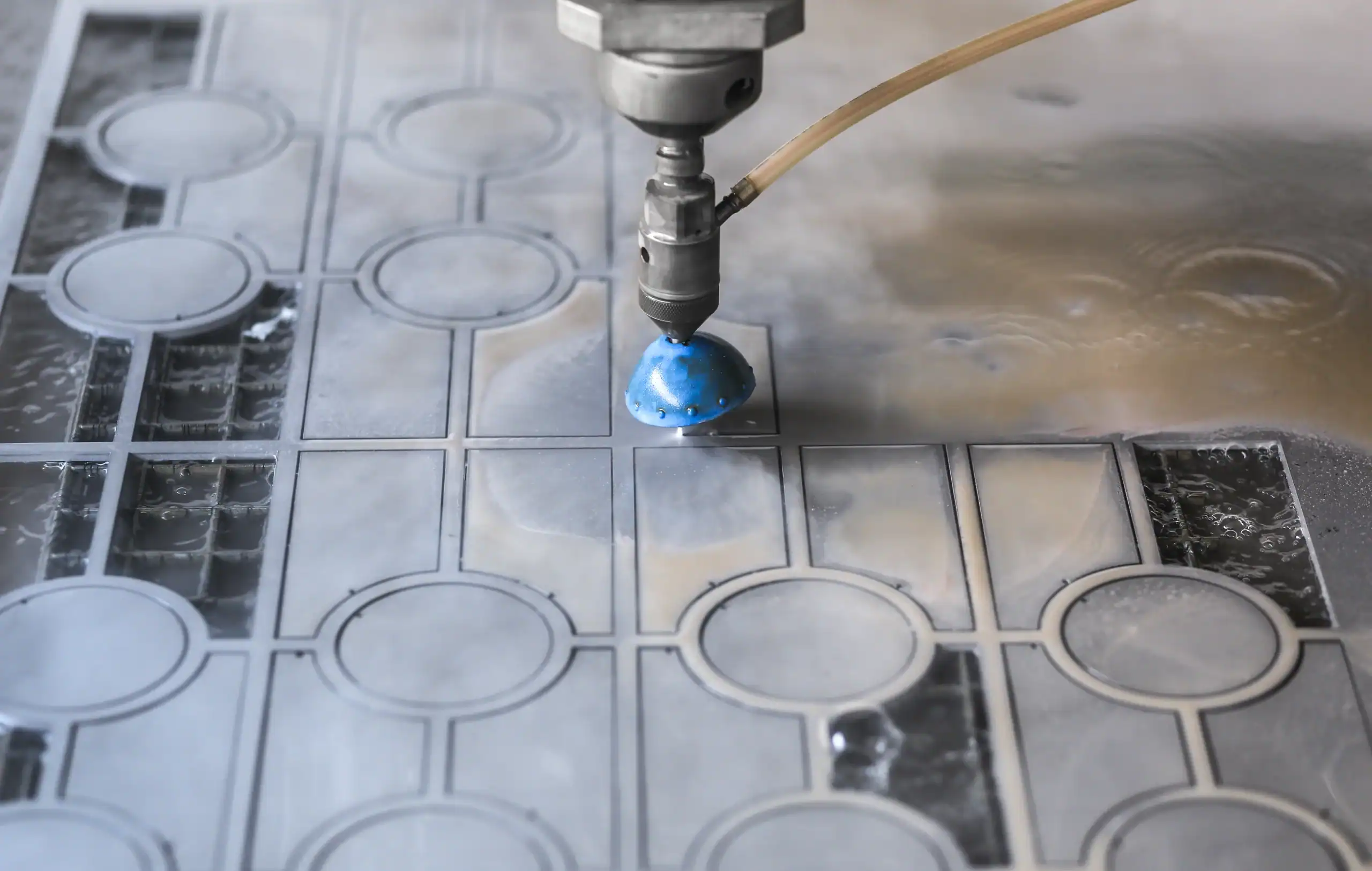
Once your file is dialed in, it moves to our CNC metal waterjet cutting system. High-pressure water mixed with fine abrasive particles cuts through your material following the programmed path. The cutting head moves in precise increments, maintaining consistent speed and pressure to deliver the edge quality and dimensional accuracy your project requires.
Thickness isn’t a limiting factor. Steel up to 6 inches. Aluminum, titanium, stainless—whatever your application demands. The cold-cutting process means your material properties stay intact. No annealing. No warping. No hardened edges that dull your tools during secondary operations.
After cutting, parts get inspected and packaged for delivery or pickup. You’re not waiting weeks. Most jobs turn around in days, and rush service is available when your project timeline gets compressed.
Ready to get started?
Custom metal waterjet cutting in North Bellmore, NY means you’re not locked into standard shapes or limited material options. We handle one-off prototypes and full production runs with the same attention to accuracy.
Material versatility covers the spectrum: carbon steel, stainless steel, aluminum alloys, titanium, brass, copper, and specialty metals. If you’re working with composites, glass, stone, or plastics, those cut just as precisely. The abrasive waterjet doesn’t discriminate based on hardness.
Edge quality matters when you’re trying to hit deadlines. Parts come off the table with clean edges that often eliminate deburring or grinding. That’s one less operation, one less setup, and one less chance for dimensional drift.
North Bellmore’s proximity to major material suppliers and the concentration of manufacturing businesses across Nassau County means shorter lead times on material sourcing. When steel prices spike or supply chains tighten—issues that have hammered manufacturers recently—local relationships help keep your projects moving.
The cutting process generates minimal waste compared to traditional machining. That narrow kerf width allows for efficient nesting, which translates to lower material costs per part. When you’re producing hundreds or thousands of pieces, those savings compound quickly.
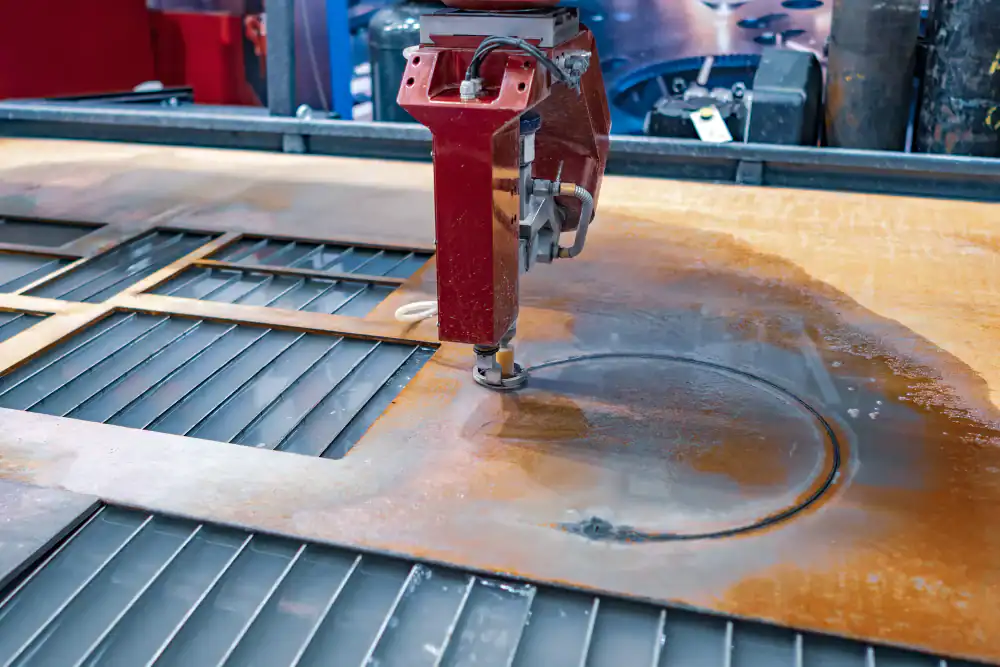
Our CNC waterjet systems consistently hold tolerances of ±0.005″ on most materials and geometries. On optimized setups with proper fixturing and material support, we can push that to ±0.002″ for critical dimensions.
Those numbers aren’t marketing fluff. They’re what our equipment delivers when operated by people who understand feed rates, abrasive flow, and how different materials respond to the cutting stream. Softer materials like aluminum can be more forgiving. Harder materials like tool steel require adjustments to maintain those tight tolerances.
The key factor is consistency across your production run. If you need 500 parts, part number 500 needs to match part number 1. That’s where CNC control and proper file preparation make the difference. Your dimensions stay locked in throughout the entire job.
Laser and plasma both use heat to cut metal, which creates heat-affected zones along your cut edges. Those zones change the material’s properties—hardness, brittleness, internal stress. Waterjet cutting metal eliminates that issue entirely because it’s a cold-cutting process.
Laser cutting works well for thinner materials and delivers fast cutting speeds on sheet metal. But once you get above 1 inch thick, laser struggles. Plasma handles thicker material better than laser but still introduces heat distortion and produces rougher edges that need finishing.
Waterjet cuts through 6 inches of steel without breaking a sweat, maintains your material properties, and delivers edges that are often ready for assembly without secondary operations. You’re not limited by material hardness either. Titanium, tool steel, hardened alloys—waterjet cuts them all at the same feed rate as mild steel.
The tradeoff is cutting speed. Waterjet is slower than laser on thin sheet metal. But when you factor in the elimination of secondary finishing, no heat distortion to correct, and the ability to cut thicker materials, the total production time often favors waterjet.
The cutting stream diameter on an abrasive waterjet is roughly 0.030″—about the thickness of a credit card. That narrow kerf allows for intricate detail work, tight radius corners, and complex geometries that would be difficult or impossible with other cutting methods.
Inside corners do have a natural radius limitation based on the kerf width. You can’t achieve a perfectly sharp 90-degree inside corner because the stream has physical diameter. But we can get down to a 0.015″ radius, which is sharp enough for most applications.
Complex shapes with multiple direction changes, acute angles, and fine details are where waterjet cutting metal in North Bellmore, NY really shines. You’re not limited by tool access or the need to reposition the part multiple times. The cutting head follows your programmed path in a single setup, which maintains accuracy and eliminates cumulative positioning errors.
Most standard jobs turn around in 3-5 business days from file approval to finished parts. That timeline assumes your files are clean, material is in stock or readily available, and the cutting queue isn’t backed up with rush jobs.
Rush service is available when your project timeline gets compressed. Depending on current shop load and material availability, 24-48 hour turnaround is possible. That costs more, but it’s an option when you’re facing hard deadlines.
The biggest variable in turnaround time is usually material procurement. If you’re cutting standard materials like mild steel or 6061 aluminum, those are typically in stock or available within a day from local suppliers. Specialty alloys, exotic materials, or unusual thicknesses may require ordering, which adds time.
File preparation also impacts your timeline. Clean files that are ready to cut move through faster than files that need extensive review and revision. Sending proper CAD files with closed polylines and accurate dimensions helps keep your job on schedule.
Waterjet cutting metal handles both ends of that spectrum effectively. For prototypes, you get the flexibility to cut one or two pieces without expensive tooling or setup costs. Make changes to your design, send a revised file, and cut the next iteration quickly.
For production runs, CNC control ensures every part matches your specifications. Whether you need 50 pieces or 5,000, the dimensional consistency stays locked in. The cutting program doesn’t drift or wear out like physical tooling does.
The economics work differently than stamping or traditional machining. There’s no expensive die to amortize across thousands of parts. Your per-piece cost stays relatively flat whether you’re cutting 10 parts or 1,000. That makes custom metal waterjet cutting in North Bellmore, NY viable for mid-volume production that doesn’t justify hard tooling investment.
Setup time between jobs is minimal. Swap material, load the next cutting program, and you’re running. That flexibility allows for efficient production of multiple part numbers without the downtime associated with tool changes and machine reconfiguration.
Tempered glass is the main material that doesn’t work with waterjet cutting. The internal stress in tempered glass causes it to shatter when the cutting stream penetrates the surface. Annealed glass cuts fine, but tempered glass is off the table.
Beyond that limitation, waterjet cuts virtually everything. Metals, composites, ceramics, stone, plastics, rubber, foam—material hardness isn’t a limiting factor. The abrasive stream cuts through hardened tool steel just as easily as aluminum.
Some materials require special handling or considerations. Very thin materials may need backing support to prevent deflection from the water pressure. Brittle materials like certain ceramics can chip at the exit point if cutting parameters aren’t optimized. Layered materials or composites sometimes delaminate if feed rates are too aggressive.
Those are process considerations, not deal-breakers. We adjust cutting parameters based on material properties to deliver clean results. If you’re working with an unusual material or have concerns about how it will respond to waterjet cutting, that’s a conversation worth having before you commit to production.
Useful Links
Other Services we provide in North Bellmore