Hear from Our Customers
You’re dealing with tight tolerances and assembly deadlines that don’t allow room for rework. When parts don’t fit during assembly, you’re looking at production delays, wasted material, and frustrated clients asking questions you don’t want to answer.
Waterjet cutting metal eliminates the heat-affected zone that causes microscopic cracks and warping in traditional cutting methods. The abrasive waterjet stream cuts cold, which means your material properties stay intact and your dimensions stay accurate. You get burr-free edges that often go straight to assembly without additional machining.
This matters when you’re cutting aluminum components for HVAC systems or titanium parts for aerospace applications. The cut quality you receive determines whether you’re spending hours on secondary finishing or moving directly to the next production phase. Clean edges and consistent tolerances mean fewer adjustments, less scrap, and projects that stay on schedule.
We serve the established manufacturing community across Long Island, where metal fabrication shops have been operating for decades. Riverhead’s industrial sector includes machine shops, custom fabricators, and specialized manufacturers who need precision cutting that doesn’t compromise material integrity.
We understand the regional market because we’re part of it. When you’re working with marine-grade stainless steel for boat components or cutting intricate patterns in architectural metals, you need a shop that knows the difference between acceptable and exact. Our CNC metal waterjet cutting handles both prototype runs and production volumes without requiring expensive tooling changes.
You’ll work directly with people who understand your timeline pressures and specification requirements. No lengthy approval chains or distant customer service departments—just straightforward communication about what you need and when you need it delivered.
You provide your CAD file or design specifications, and we’ll review it for any potential cutting challenges before programming begins. This upfront review catches issues like inside corners that need specific radius adjustments or thickness variations that affect cut quality. If your design needs modification for optimal cutting, you’ll know before production starts.
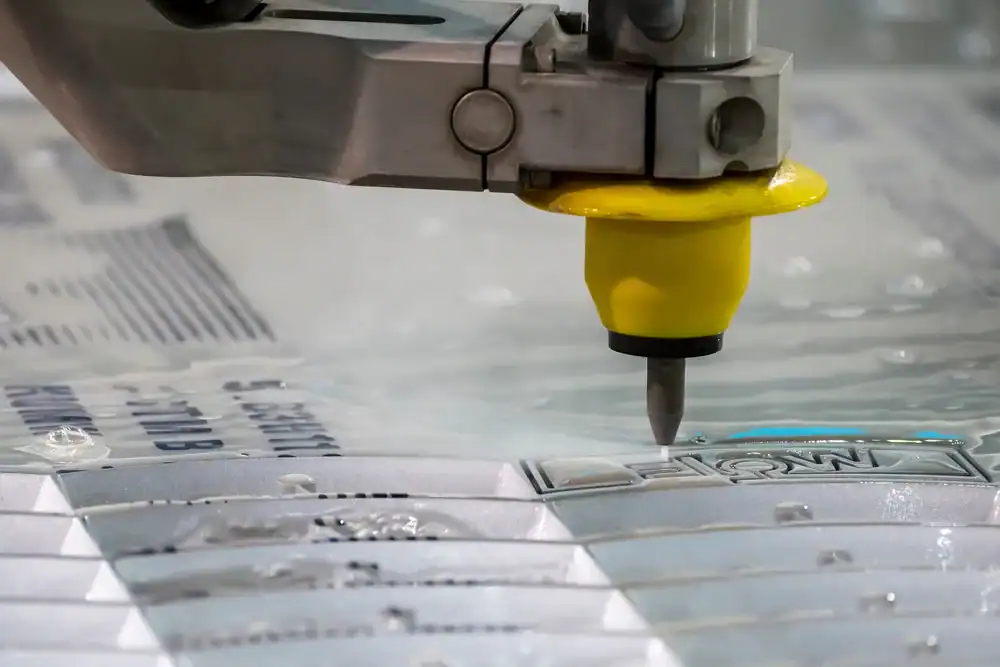
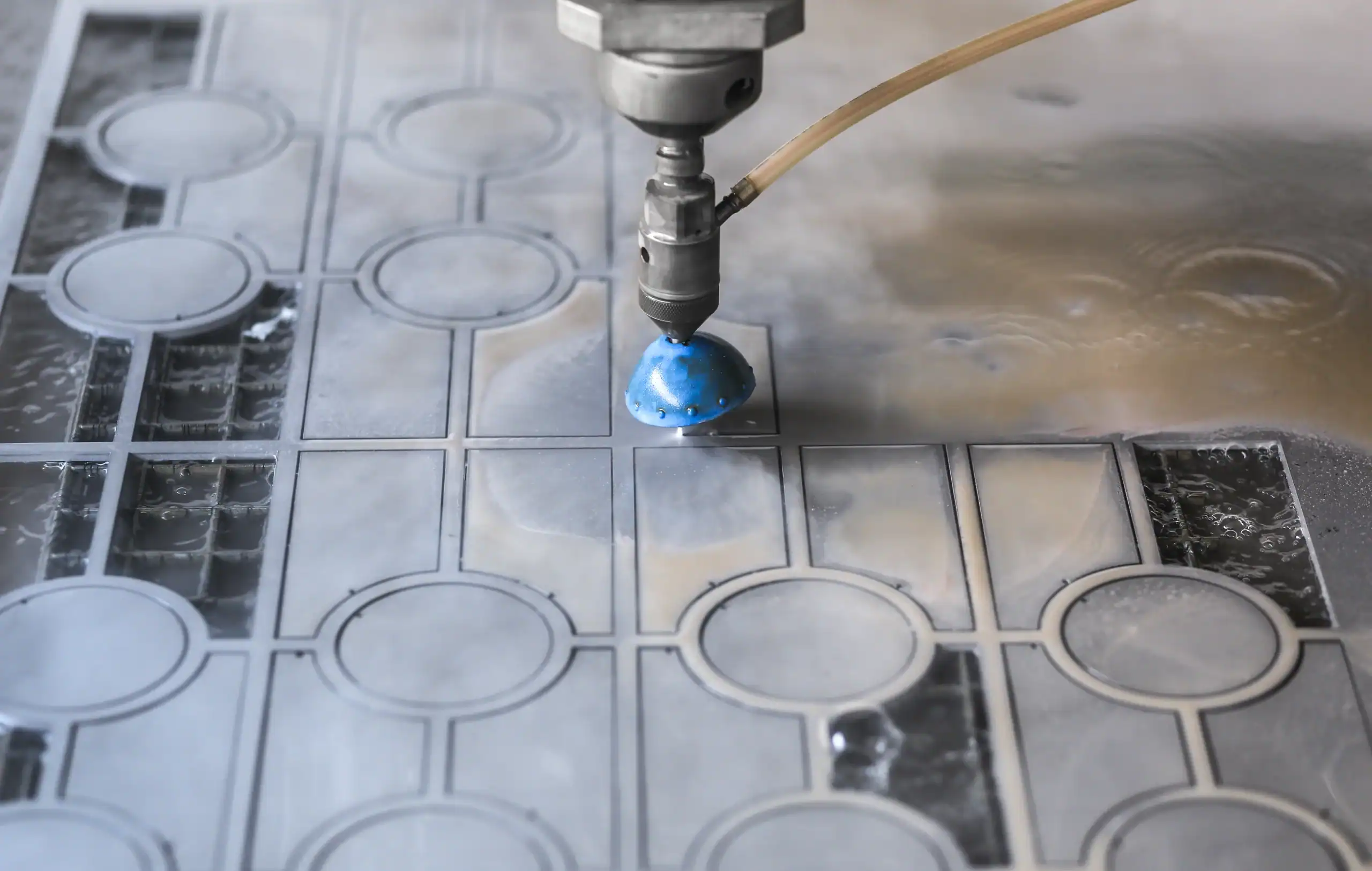
Once the program is set, the CNC system controls a high-pressure water stream mixed with garnet abrasive. The stream reaches pressures up to 60,000 PSI and cuts through your material following the exact path programmed. Because there’s no heat involved, there’s no hardened edge or thermal distortion to manage afterward.
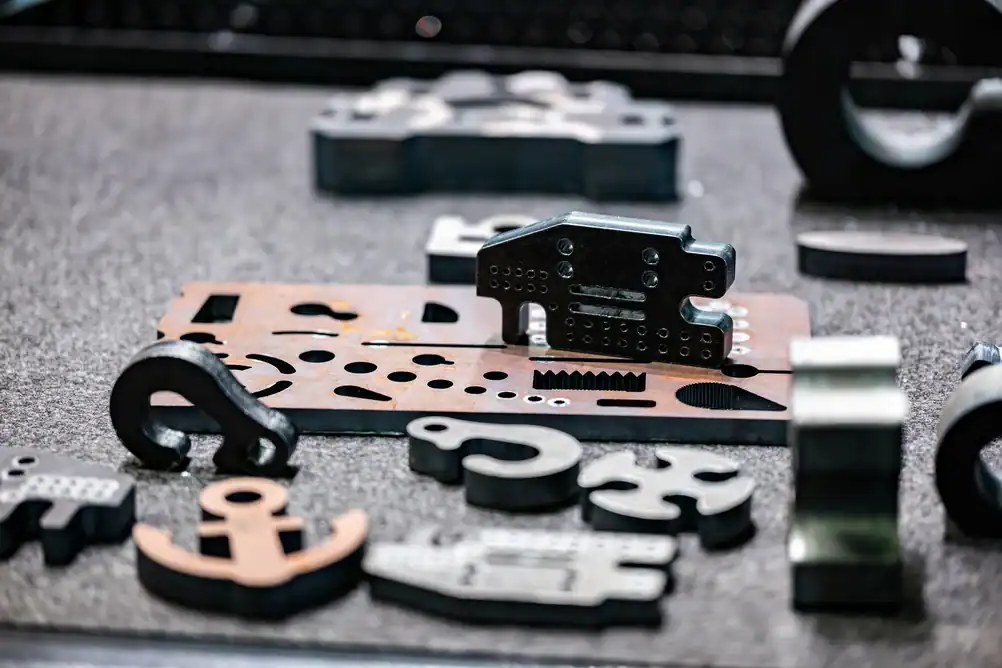
The cutting head moves in precise X-Y coordinates, handling complex geometries including sharp angles, curves, and intricate interior cutouts. For thicker materials, the system adjusts stream intensity and cutting speed to maintain edge quality throughout the entire depth. You receive parts with dimensional accuracy that matches your specifications and surface finish that’s ready for your next process step.
Ready to get started?
The process handles virtually any metal you’re working with—steel, stainless steel, aluminum, titanium, copper, brass, and exotic alloys. Thickness capacity extends to 6 inches for steel, which covers most industrial applications from thin sheet metal to heavy plate stock. If you’re cutting composite materials or layered metals, the waterjet stream cuts through without delamination.
Long Island’s manufacturing sector includes diverse applications from HVAC components to custom architectural elements. Riverhead’s proximity to both industrial facilities and coastal marine operations means material requirements vary significantly. The waterjet process adapts to these different needs without requiring different equipment or extensive setup changes between jobs.
You’ll receive parts with edge quality that often eliminates grinding, deburring, or additional machining. The lack of heat-affected zones means no hardened edges that damage your tooling during subsequent operations. For materials like aluminum that are prone to heat distortion, this cold-cutting approach prevents the warping that creates assembly headaches. When you’re producing parts that need powder coating or welding afterward, you’re working with clean material that hasn’t been compromised by thermal stress.
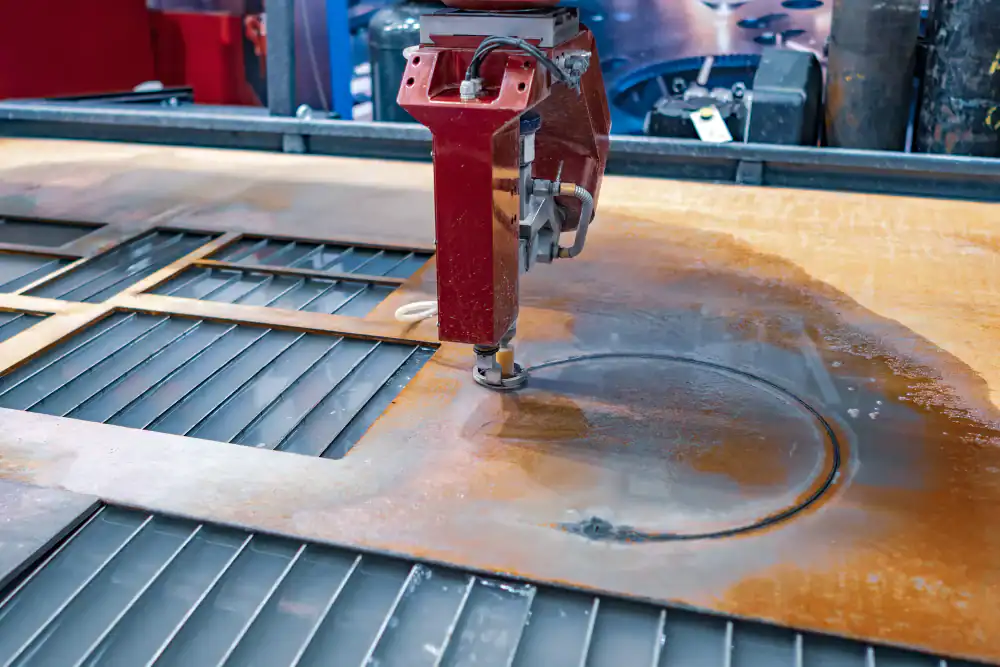
Standard waterjet cutting metal holds tolerances of ±0.005 inches, which handles most industrial manufacturing requirements. With precision programming and optimal cutting parameters, tolerances tighten to ±0.003 inches for applications that demand higher accuracy.
The actual tolerance you’ll achieve depends on several factors: material thickness, material type, and part geometry. Thinner materials generally hold tighter tolerances than thick plate because the waterjet stream has less distance to travel through the material. Harder metals like titanium maintain better edge definition than softer materials like aluminum, which can show slight variation at the exit point.
For comparison, plasma cutting typically holds ±0.030 inches, and laser cutting ranges from ±0.005 to ±0.010 inches depending on material thickness. If you’re currently using plasma and dealing with parts that need extensive secondary machining to meet spec, waterjet cutting eliminates much of that additional work. The tolerance consistency also matters for production runs—you’re not seeing dimensional drift between the first part and the hundredth part like you might with processes that generate heat buildup.
Waterjet cutting uses high-pressure water and abrasive particles instead of heat to separate material. The water stream stays cold throughout the cutting process, which means there’s no heat-affected zone where material properties change. This is fundamentally different from laser and plasma cutting, which both use extreme heat to melt through metal.
When laser or plasma cutting heats metal to melting point, the area immediately surrounding the cut experiences thermal stress. This creates a hardened zone that’s brittle and prone to cracking, especially in materials like tool steel or high-carbon alloys. You’ll also see warping in thin materials as heat causes expansion and contraction. If you’ve ever cut a thin aluminum sheet with plasma and watched it buckle, that’s thermal distortion at work.
The cold-cutting approach matters most when you’re working with metals that are heat-sensitive or when you need to maintain specific material properties. Titanium aerospace components can’t have altered grain structure in the cut zone. Stainless steel kitchen equipment can’t have discoloration or oxidation along cut edges. Hardened tool steel loses its temper when exposed to cutting heat. Waterjet cutting sidesteps all these issues because the material never gets hot enough to change its characteristics.
Our waterjet metal cutting shop handles steel up to 6 inches thick, which covers the vast majority of industrial fabrication requirements in the Long Island manufacturing sector. Aluminum cuts cleanly up to 5 inches, stainless steel to 4 inches, and titanium to 3 inches. These thickness capacities exceed what most shops need for standard production work.
The thickness limit isn’t just about whether the waterjet can penetrate the material—it’s about maintaining cut quality throughout the entire depth. As material thickness increases, cutting speed decreases to ensure the abrasive stream fully penetrates and produces clean edges at both entry and exit points. For 6-inch steel plate, you’re looking at slower feed rates than you’d see with half-inch material, but the edge quality remains consistent.
If you’re working with thicker materials, the alternative cutting methods start showing significant limitations. Plasma cutting loses accuracy and produces rough edges on thick plate. Laser cutting becomes impractical beyond 1-1.5 inches for most metals. Mechanical sawing works but leaves rough edges that need extensive finishing. Waterjet maintains its advantage on thick materials because the process doesn’t rely on heat penetration or mechanical force—just erosion from high-pressure abrasive stream.
CNC metal waterjet cutting handles geometrically complex profiles including sharp angles, curves, and intricate interior cutouts. The cutting stream diameter is typically 0.030 to 0.040 inches, which determines the smallest inside radius you can achieve. For practical purposes, inside corners will have a small radius rather than a perfectly sharp 90-degree angle.
This matters when you’re cutting parts with detailed patterns or tight geometric requirements. If your design shows sharp inside corners, the actual cut will have a radius matching the stream diameter. For most applications, this minor radius doesn’t affect function or assembly. If you absolutely need sharp corners for a specific application, those can be finished with secondary machining, but you’re starting with a part that’s already 95% complete rather than rough-cut material that needs extensive work.
The CNC control allows for complex path following that would be difficult or impossible with manual cutting methods. Undercuts, tapered edges, and contoured surfaces are all achievable by adjusting the cutting head angle during the process. If you’re producing architectural metal panels with intricate designs or custom machine parts with multiple features, the waterjet system handles these without requiring multiple setups or tool changes. You program the complete part geometry once, and the system executes it consistently across your entire production run.
Waterjet cutting typically costs more per linear inch than plasma cutting but less than precision laser cutting for most materials and thicknesses. The real cost comparison needs to include secondary operations, scrap rates, and production time—not just the cutting cost itself.
If you’re currently using plasma and spending significant time deburring edges, grinding away heat-affected zones, or scrapping parts that warped during cutting, those costs add up quickly. Waterjet cutting produces finished edges that often go directly to assembly or coating without additional work. The time saved on secondary operations and the reduction in scrapped parts frequently offset the higher per-inch cutting cost.
For production runs, the lack of required tooling is a significant advantage. Laser and plasma systems need consumable parts that wear out and require replacement. Waterjet systems use garnet abrasive and water, both of which are relatively inexpensive. You’re not dealing with torch tips, nozzles, or lenses that degrade and affect cut quality over time. The cost predictability matters when you’re quoting jobs—you know what your cutting costs will be without worrying about consumable replacement schedules or quality degradation between maintenance intervals.
Waterjet cutting handles virtually every metal used in industrial manufacturing—steel, stainless steel, aluminum, titanium, copper, brass, bronze, and exotic alloys like Inconel or Hastelloy. The process also cuts non-metallic materials including glass, stone, ceramics, plastics, rubber, and composites. There are very few materials that present problems for waterjet cutting.
Tempered glass is one exception because the internal stress in the material causes it to shatter when the waterjet stream penetrates the surface. Certain very soft, fibrous materials can be difficult because the waterjet stream may push the material rather than cutting cleanly through it. But for metal fabrication work in Riverhead’s industrial sector, you won’t encounter materials that can’t be cut.
The versatility matters when you’re working on projects that combine different materials. If you’re producing assemblies that include metal components alongside plastic or rubber gaskets, the same cutting process handles all materials without requiring different equipment. This is particularly useful for prototyping when you’re testing different material combinations and need quick turnaround without setting up multiple cutting operations. The ability to cut dissimilar materials also supports custom fabrication work where each project might involve different material specifications.
Useful Links
Other Services we provide in Riverhead