Hear from Our Customers
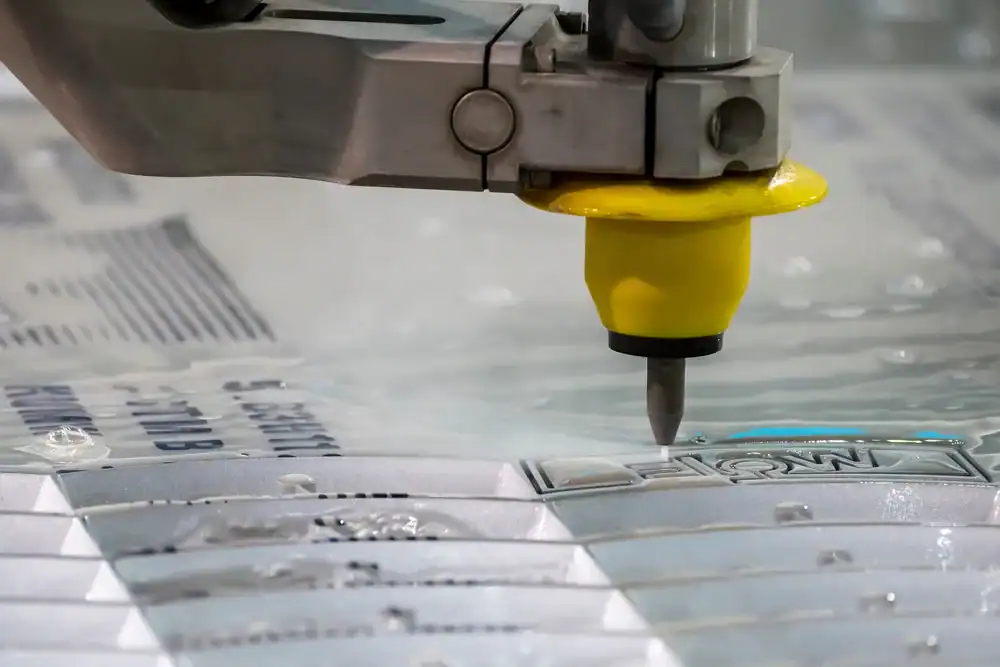
You’re dealing with tight deadlines and tighter tolerances. The last thing you need is heat-affected zones creating microscopic cracks or warped edges that force you into secondary finishing work.
Metal waterjet cutting in Rockville Centre, NY eliminates that problem entirely. The cold-cutting process uses high-pressure water mixed with abrasive to slice through steel, aluminum, titanium, and virtually any material you’re working with—without generating heat. That means no thermal distortion, no hardened edges, and no compromised material properties.
Your parts come off the table ready to use, with burr-free edges and the exact dimensions you specified. Whether you’re fabricating custom components for aerospace applications or cutting intricate profiles for architectural metalwork, you get consistent quality across every piece. That’s fewer rejected parts, less time spent on finishing, and more confidence in your final product.
We serve metal fabricators, manufacturers, and contractors throughout Rockville Centre and the surrounding Nassau County area. We understand the challenges you face when you’re sourcing precision cutting services locally—limited options, inconsistent quality, and vendors who don’t grasp the importance of meeting your specifications the first time.
Our facility handles everything from rapid prototyping to production runs. You work with people who know the difference between acceptable and exact, and who understand that your reputation depends on the quality of every cut we make.
Rockville Centre’s manufacturing community has built its reputation on delivering quality work to the broader Long Island and NYC metro markets. We’re here to support that standard with cutting services that match the precision your projects demand.
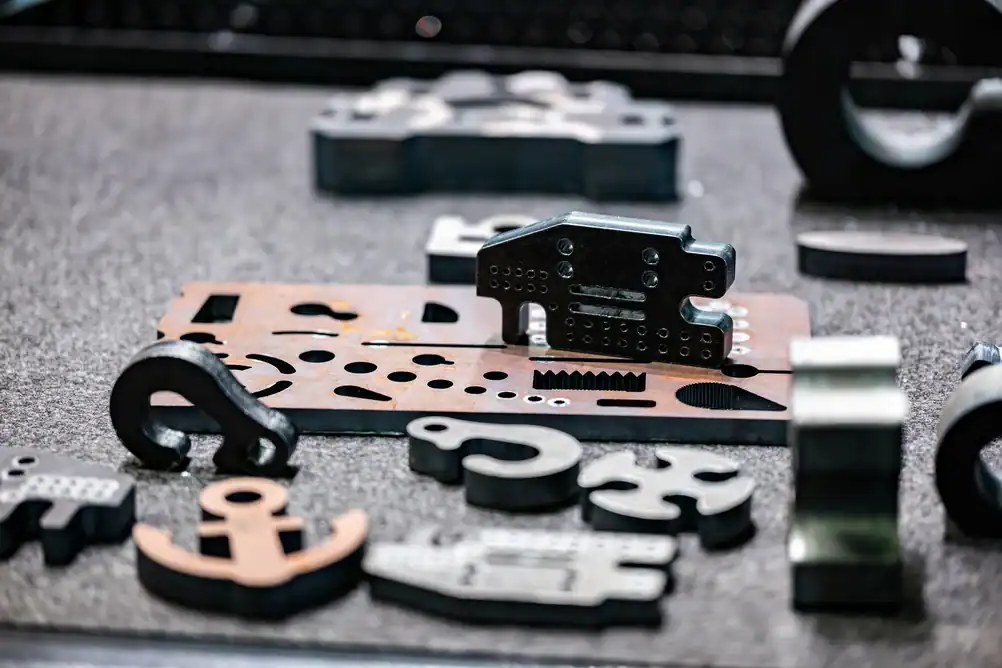
You send us your CAD file or technical drawings with your specifications. We review the design, confirm material type and thickness, and identify any potential issues before we start cutting. If something looks off or if there’s a more efficient way to approach your project, we’ll tell you upfront.
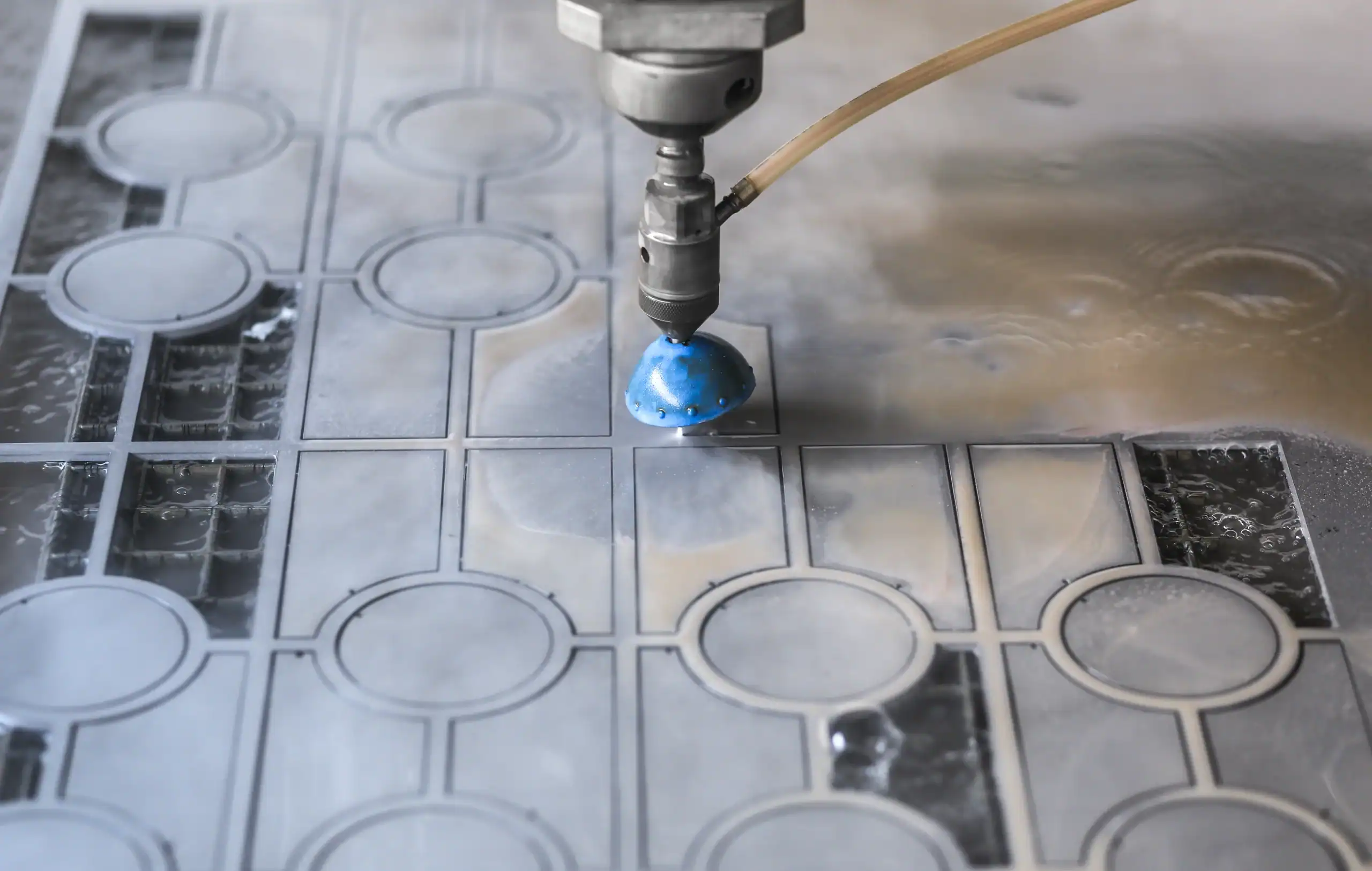
Once everything’s confirmed, your job goes to our CNC metal waterjet cutting system. The machine follows your exact design path, using a high-pressure stream of water and abrasive garnet to cut through the material. The five-axis capability handles complex geometries—undercuts, bevels, tapered edges—without requiring multiple setups or tool changes.
Throughout the process, the cutting head maintains precise tolerances even as it moves through varying material thicknesses. There’s no heat buildup, no tool wear affecting accuracy, and no need for secondary deburring on most applications. You get parts that match your specifications, with clean edges and maintained material properties throughout.
Ready to get started?
When you choose metal waterjet cutting services in Rockville Centre, NY, you’re getting capability that traditional cutting methods can’t match. We cut steel up to 6 inches thick, aluminum, stainless steel, titanium, and exotic alloys without changing tools or processes. The same system handles everything.
You’re not limited to straight cuts or simple shapes. Complex profiles, tight inside corners, and intricate patterns all come out with the same precision as basic geometry. If your design includes multiple materials or varying thicknesses in a single part, waterjet handles those transitions without the setup changes that slow down other cutting methods.
For Nassau County fabricators working on projects that range from structural components to decorative metalwork, this flexibility matters. You can prototype a design, make adjustments, and move into production without investing in expensive tooling. Rush jobs get the same quality as scheduled production runs because the process doesn’t require extensive setup time.
The environmental aspect isn’t just marketing talk—there are no hazardous fumes, no thermal cutting gases, and the abrasive material is inert and recyclable. If you’re working on projects with strict environmental requirements or in facilities where air quality matters, waterjet cutting metal gives you a clean process from start to finish.
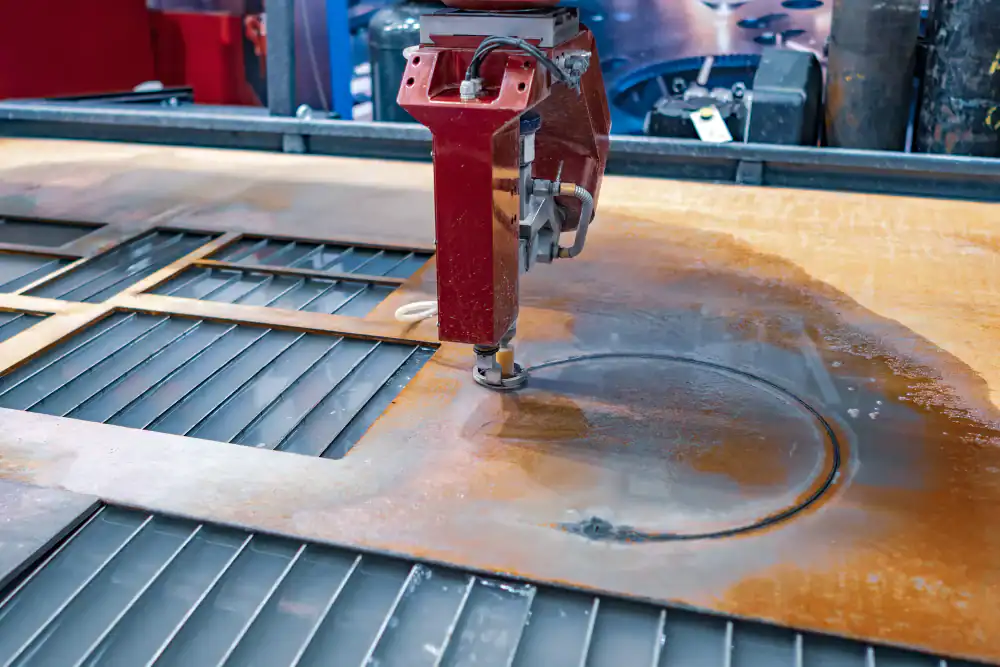
We cut virtually any material you’re working with—steel, stainless steel, aluminum, titanium, copper, brass, and exotic alloys are all standard. The process also handles non-metals like glass, stone, ceramics, plastics, rubber, and composite materials without switching equipment or methods.
The thickness range depends on the material. For steel, we cut up to 6 inches thick while maintaining precision. Softer materials like aluminum or plastics can go even thicker—up to 12 inches or more. If you’re working with layered materials or assemblies that combine different substrates, waterjet cuts through the entire stack in one pass.
What matters most is that the cutting process doesn’t change the material’s properties. There’s no heat-affected zone that could alter hardness, create stress points, or affect how the material behaves during welding or forming operations later. You get the same material characteristics after cutting that you had before.
We hold tolerances down to ±0.003 inches consistently across your parts. That level of precision stays constant whether we’re cutting the first piece or the hundredth, and it doesn’t degrade as the job progresses because there’s no tool wear to account for.
The CNC metal waterjet cutting system compensates for variables like material hardness and thickness changes automatically. If your part has sections that range from thin gauge to heavy plate, the cutting head adjusts pressure and speed to maintain accuracy throughout. You don’t see the dimensional drift that happens with thermal cutting methods as heat builds up.
For parts that require assembly or need to interface with other components, that consistency matters. Holes line up, edges mate properly, and you’re not dealing with parts that fit in theory but need adjustment in practice. If your specifications call for tighter tolerances than ±0.003 inches, we’ll tell you honestly whether waterjet is the right process or if you need a different approach.
The main difference is heat. Laser and plasma both use thermal energy to melt through material, which creates a heat-affected zone along every cut edge. That zone can cause warping in thin materials, hardening that makes edges difficult to machine, and internal stresses that show up later as distortion or cracking.
Waterjet cutting metal eliminates those issues because it’s a cold process. The abrasive stream mechanically erodes the material without raising its temperature. Your parts come off the table at room temperature, with no discoloration, no hardened edges, and no thermal stress. If you’re cutting materials that are sensitive to heat—like certain alloys or pre-treated metals—waterjet is often the only viable option.
The other advantage is material versatility. If your shop handles diverse projects that involve different materials, you need multiple cutting systems with laser or plasma. Waterjet handles everything from hardened tool steel to soft rubber with the same equipment. That flexibility reduces your dependency on multiple vendors and gives you more control over scheduling and quality.
Turnaround depends on material thickness, complexity, and current shop capacity, but most straightforward jobs are completed within a few days. Simple parts in common materials often go faster—sometimes same-day or next-day if your timeline is critical and we have the capacity.
Complex geometries or thick materials take longer because the cutting head moves more slowly to maintain precision. A part with intricate details cut from 4-inch steel plate requires more time than a simple profile in quarter-inch aluminum. We’ll give you a realistic timeline when you submit your design, not an optimistic estimate that we can’t meet.
Rush jobs are possible when you genuinely need them. We understand that manufacturing schedules change and sometimes you need parts immediately to keep a project moving. The key is communication—if you tell us what you’re actually dealing with and when you need the parts, we can usually find a way to accommodate critical deadlines without sacrificing the quality you’re counting on.
CAD files make the process most efficient, but we work with whatever you have. If you’ve got detailed drawings with dimensions, we can create the cutting program from those. Even rough sketches work if they include the critical dimensions and specifications we need to produce accurate parts.
We provide design consultation as part of the service. If you’re still developing the concept or if you’re not sure whether your design will work with waterjet cutting, we can review it with you and suggest modifications that improve manufacturability or reduce costs. Sometimes small changes to inside corner radii or edge details make a significant difference in cutting time without affecting your part’s function.
The goal is to get from your concept to finished parts as directly as possible. If creating perfect CAD files is slowing down your project or if you need prototypes to test a design before finalizing drawings, we can work with less formal documentation and refine things as we go. What matters is that you end up with parts that do what you need them to do.
The narrow kerf width—typically around 0.03 to 0.04 inches—means you lose less material to the cutting process itself. When you’re nesting multiple parts on a sheet or plate, that narrow cut width allows tighter spacing and better material utilization. You get more parts per sheet compared to wider-kerf processes like plasma cutting.
There’s also no secondary finishing cost for most applications. The edges come off clean enough that you can weld, powder coat, or assemble parts without additional grinding or deburring. That saves labor time and eliminates an entire step from your production process. If you’re used to budgeting for edge prep after cutting, waterjet often reduces or eliminates that line item.
The precision also reduces scrap from parts that don’t meet specifications. When cuts are consistently accurate and there’s no heat distortion throwing off dimensions, you’re not remaking parts or adjusting assemblies to compensate for cutting errors. Over the course of a project—especially production runs—that reliability translates directly to lower overall costs even if the per-cut price seems higher than rougher cutting methods.
Useful Links
Other Services we provide in Rockville Centre