Hear from Our Customers
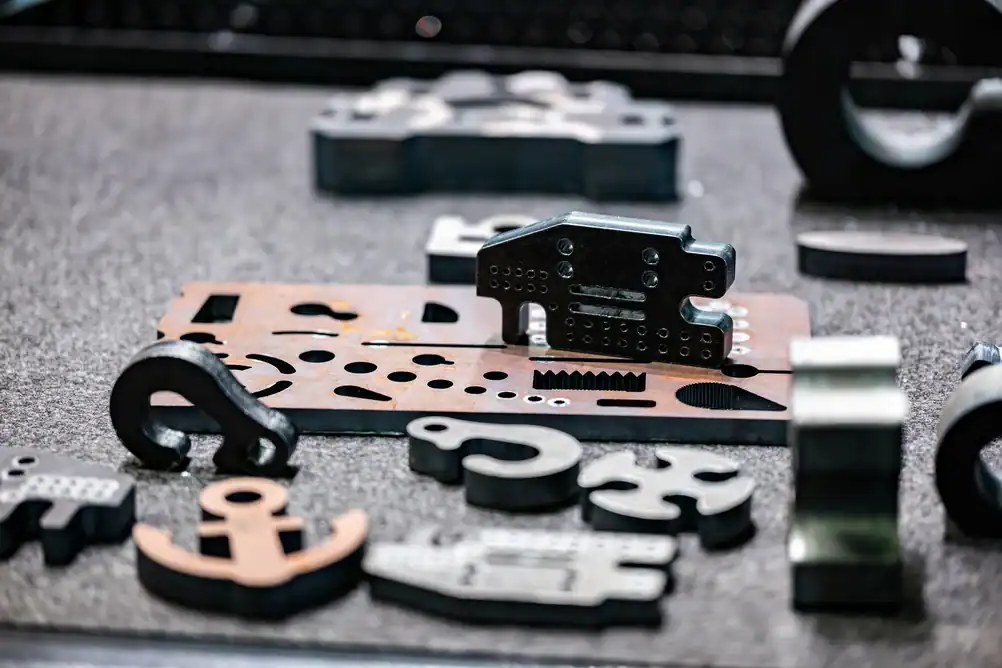
You’re looking at parts that come off the machine ready to go. No secondary deburring. No warped edges from torches. No material properties compromised by heat.
Waterjet cutting metal means your aluminum doesn’t distort. Your hardened steel doesn’t lose temper. Your titanium aerospace components maintain structural integrity. The abrasive stream cuts cold, so what you spec is what you get.
Tolerances hold at ±0.002″ on complex geometries. Kerf width stays minimal, so you’re not burning through expensive material on scrap. If you’re running production parts or one-off prototypes for automotive, marine, or architectural projects in Roosevelt, NY, this process eliminates the usual headaches that come with thermal cutting methods.
You also skip the finishing costs. Edges come out smooth enough that most applications don’t need additional work. That’s time back in your schedule and labor costs you don’t have to eat.
We operate out of Roosevelt, NY, serving metal fabricators, manufacturers, contractors, and designers across Long Island and the surrounding tri-state area. We’ve built our reputation on straight answers and consistent results.
You’re not dealing with a call center or getting bounced between departments. When you need material consultation or design guidance, you’re talking to people who understand waterjet cutting metal at a technical level—and who’ve seen what works in real-world applications.
Roosevelt sits in the middle of a strong manufacturing corridor. We know the local shops, the timelines you’re working with, and the standards your clients expect. Whether you’re fabricating custom architectural panels or precision automotive components, we’re set up to handle the work without the runaround.
You send us your CAD file or design specs. We review it for manufacturability and flag anything that might cause issues—tight inside corners, material thickness concerns, tolerance requirements. If something won’t work as drawn, we tell you before we start cutting.
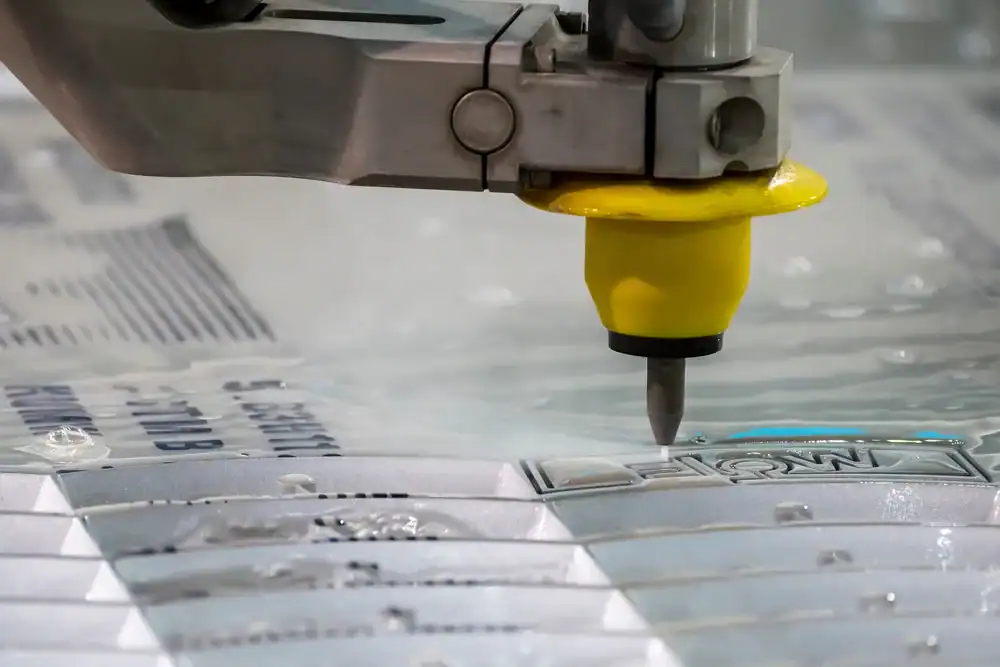
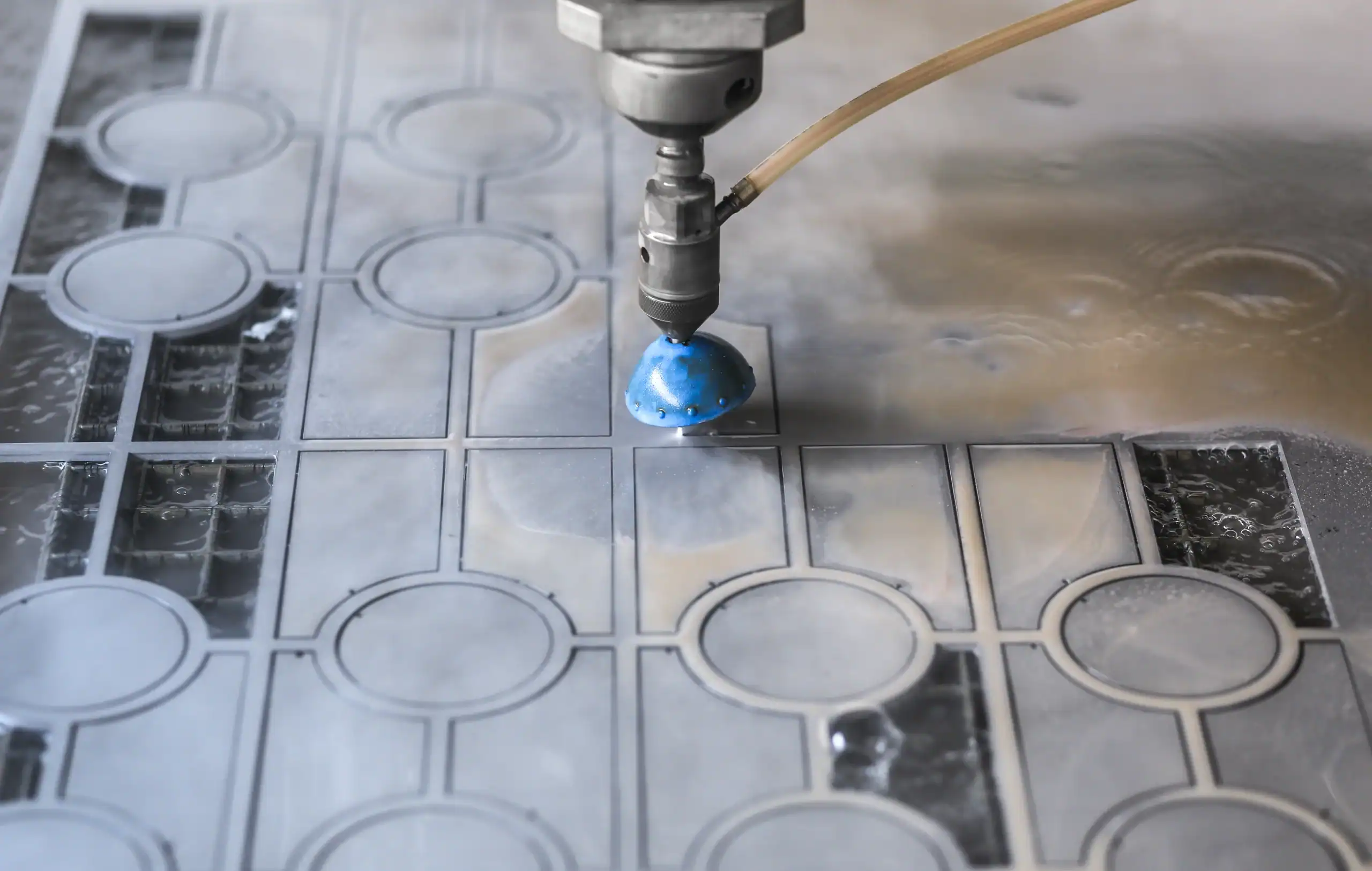
Once the file is dialed in, it goes to our CNC waterjet system. The machine uses a high-pressure stream mixed with abrasive garnet to cut through your material. No heat. No mechanical stress. Just controlled erosion that follows your programmed path with repeatable accuracy.
The cutting head moves in X, Y, and Z axes, handling intricate shapes, sharp angles, and varying thicknesses up to 24 inches. Pressure, abrasive flow, and traverse speed stay locked in by the CNC controls, so part one matches part one hundred.
After cutting, parts come off the table with smooth edges. Depending on your application, they’re ready to weld, assemble, or install. If you need additional services—drilling, tapping, forming—we can coordinate that or deliver parts ready for your next operation.
Turnaround depends on complexity and queue, but because waterjet cutting metal doesn’t require tool changes or setups for different materials, we move through jobs faster than conventional methods. You get a timeline upfront, and we hit it.
Ready to get started?
We cut steel, stainless steel, aluminum, brass, copper, titanium, and hardened alloys. If it’s metal and you need it cut with precision, we can handle it. Thickness range goes up to 24 inches, though most production work falls between 1/8″ and 2″.
Roosevelt’s manufacturing base includes automotive shops, marine fabricators, and architectural metalworkers. You’re often dealing with materials that don’t respond well to plasma or laser—thick plate, heat-sensitive alloys, or composites that need a cold-cutting process. That’s where waterjet cutting metal in Roosevelt, NY makes sense.
Complex shapes aren’t a problem. The CNC system handles tight radii, intricate patterns, and nested parts without retooling. You’re not paying for custom dies or dealing with minimum run quantities like you would with stamping. One part or one thousand—setup cost stays low.
We also provide material consultation. If you’re not sure whether 6061 aluminum or 7075 is the right call for your application, or if you’re weighing cost vs performance on stainless grades, we walk through the options. It’s part of the service, not an upsell.
Location matters when you’re coordinating project timelines. Being in Roosevelt, NY means faster communication, easier site visits if needed, and shipping times that don’t eat into your schedule. You’re working with a local shop that understands the pace and standards of Long Island manufacturing.
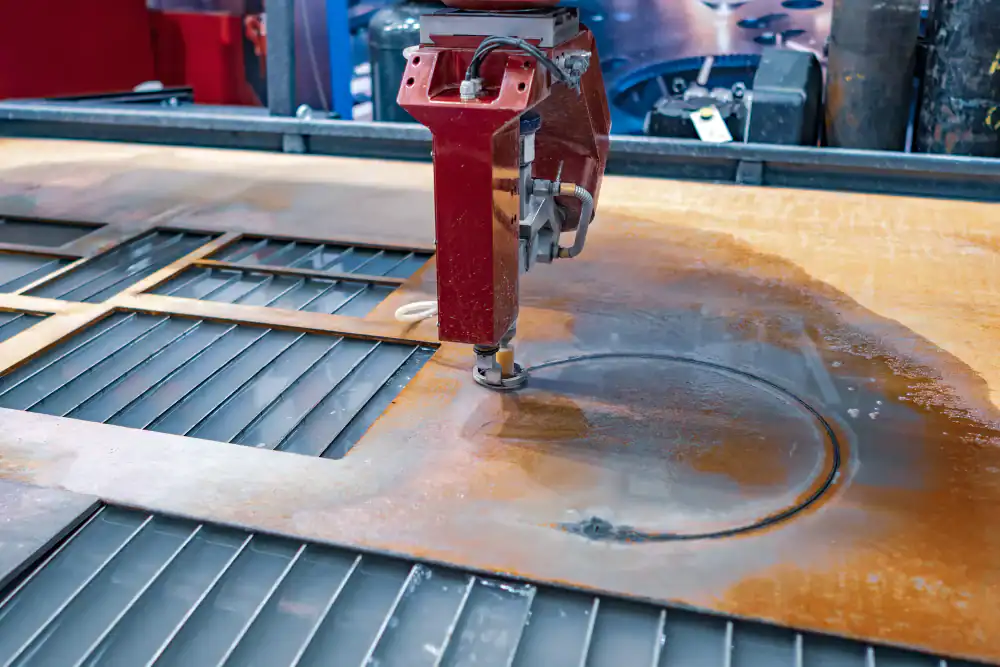
CNC waterjet cutting holds tolerances as tight as ±0.002″ on most metals. That’s consistent across steel, aluminum, titanium, and hardened alloys. The exact tolerance depends on material thickness, edge quality requirements, and part geometry.
For reference, most production parts spec ±0.005″ to ±0.010″, which waterjet handles without issue. If you’re running aerospace components or precision automotive parts that need tighter control, we can hit ±0.002″ with proper fixturing and calibration.
Thicker materials—anything over 2 inches—may see slightly wider tolerances due to stream dynamics, but we’re still talking about precision that beats plasma, torch, or abrasive saw cutting by a significant margin. If your print calls for specific tolerances, send it over and we’ll confirm what’s achievable before we commit to the job.
No. Waterjet cutting metal is a cold process, so there’s no heat-affected zone. Your material properties stay intact—no warping, no hardness changes, no temper loss on heat-treated alloys.
That’s critical if you’re working with aerospace-grade titanium, hardened tool steel, or aluminum that’s been tempered to specific strength requirements. Plasma and laser introduce enough heat to alter the microstructure near the cut edge. Waterjet doesn’t.
You also avoid mechanical stress. There’s no clamping force or tool pressure that could deform thin-gauge material. The abrasive stream does the work through erosion, not force. That means you can cut delicate parts, thin sheets, or complex shapes without worrying about distortion or springback.
Kerf width on waterjet cutting metal runs between 0.020″ and 0.040″, depending on abrasive size and nozzle diameter. That’s significantly narrower than plasma or torch cutting, which means you’re losing less material to the cut itself.
For expensive metals—titanium, Inconel, hardened stainless—that kerf difference adds up fast. You can nest parts tighter, reduce scrap, and get more usable pieces per sheet. On a 4×8 sheet of material, tighter kerf can mean one or two additional parts depending on your layout.
There’s also no edge waste from heat damage. Plasma leaves a heat-affected zone that sometimes needs to be machined off. Waterjet edges come out clean, so you’re not trimming material post-cut to meet quality standards. What you program is what you get, with minimal material ending up in the scrap bin.
Our system handles metal up to 24 inches thick. Most production work falls between 1/8″ and 2″, but if you’ve got heavy plate or structural components that need cutting, we’re equipped for it.
Thicker materials take longer to cut because the abrasive stream needs more dwell time to penetrate, but the process stays consistent. You’re not dealing with multiple passes or tool changes like you would with a saw or mill. The waterjet goes straight through in one continuous cut.
Edge quality on thick cuts stays clean. You might see slight taper on materials over 6 inches depending on traverse speed, but it’s manageable and predictable. If your application requires perfectly square edges on heavy plate, we adjust pressure and speed to compensate. It’s all programmable through the CNC system.
Custom shapes are what waterjet does best. If you’ve got a CAD file, we can cut it. Intricate curves, sharp internal corners, complex nesting patterns—it’s all handled through CNC programming without custom tooling or dies.
That’s a major advantage over stamping or punching, where you’d need dedicated dies for each shape. With waterjet cutting metal, the “tool” is the programmed path. Change the file, change the part. No setup costs for custom geometries.
We also handle design adjustments. If your part has an inside radius that’s too tight for the kerf width, or if there’s a feature that’ll cause issues during cutting, we catch it in the file review and suggest modifications. You’re not locked into a design that doesn’t work—we help you get to a manufacturable version before any material gets cut.
Turnaround depends on part complexity, material thickness, and current queue. Simple parts in thin material might be same-day or next-day. Complex geometries in thick plate could take a few days, especially if you’re running a large batch.
We give you a realistic timeline upfront. If you’ve got a hard deadline, let us know and we’ll tell you whether it’s achievable. Rush jobs happen, but we don’t overpromise and underdeliver.
Cutting speed itself is faster than most people expect. A typical part in 1/2″ aluminum might take 10-20 minutes depending on perimeter length and detail. The real time factor is queue position and any secondary operations you need. Because waterjet produces finished edges, you’re often skipping the deburring or grinding time you’d need with other cutting methods, which speeds up your overall project timeline even if the cut itself takes a bit longer than plasma.
Useful Links
Other Services we provide in Roosevelt