Hear from Our Customers

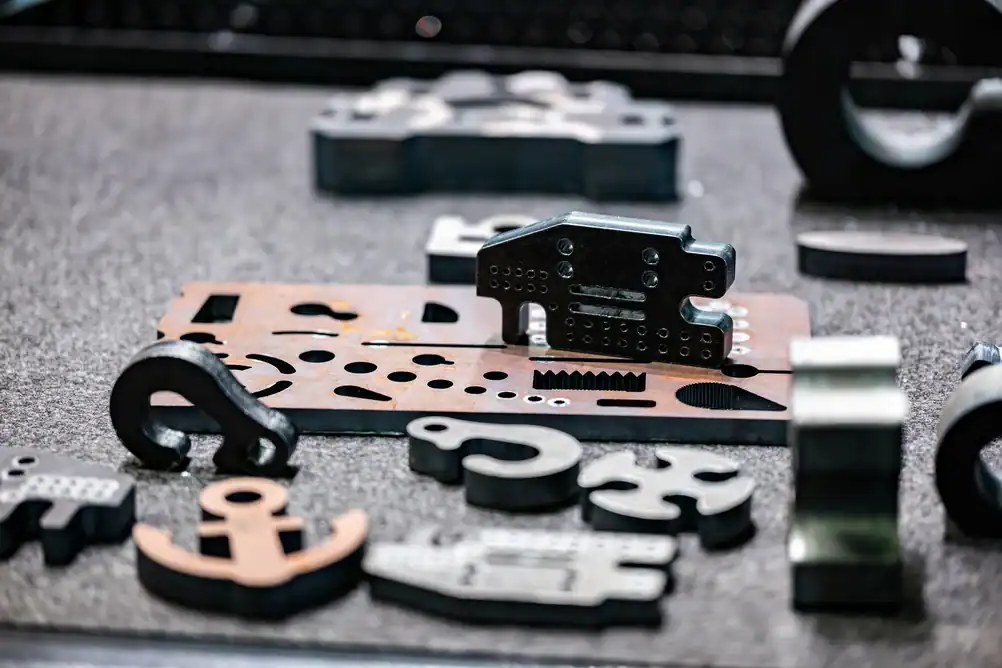
You get parts that hold tolerances within ±0.005 inches, every time. The edges come off the table smooth enough for welding or forming without additional work. That saves you time and keeps your project moving.
Because there’s no heat involved in waterjet cutting metal, your material properties stay intact. No warped edges. No hardened zones that crack during bending. No discoloration that needs grinding off.
You can run prototypes in the morning and production parts in the afternoon using the same setup. The CNC system handles intricate geometries without tool changes, which means complex designs don’t slow you down or drive up costs. Whether you’re cutting thin gauge stainless steel or thick aluminum plate, the process adapts without requiring different equipment or lengthy reprogramming.
We operate right here in Shirley, NY, serving manufacturers and fabricators across Long Island who need precision metal cutting without the wait. We’ve built our reputation on turnaround times that match your project deadlines, not our convenience.
Long Island’s manufacturing sector relies on quick access to advanced cutting capabilities. When you’re working with aerospace components, architectural metalwork, or custom machinery parts, you can’t afford shipping delays or miscommunication with distant suppliers. You need someone local who picks up the phone and understands what you’re building.
We handle everything from one-off prototypes to full production runs. Same equipment, same precision, whether you need one part or a thousand.
You send us your CAD file or drawing with specifications. We review it for any potential issues—tight inside corners, thin sections that might need support, anything that could affect the final result. If we spot something, we’ll call you before we start cutting.
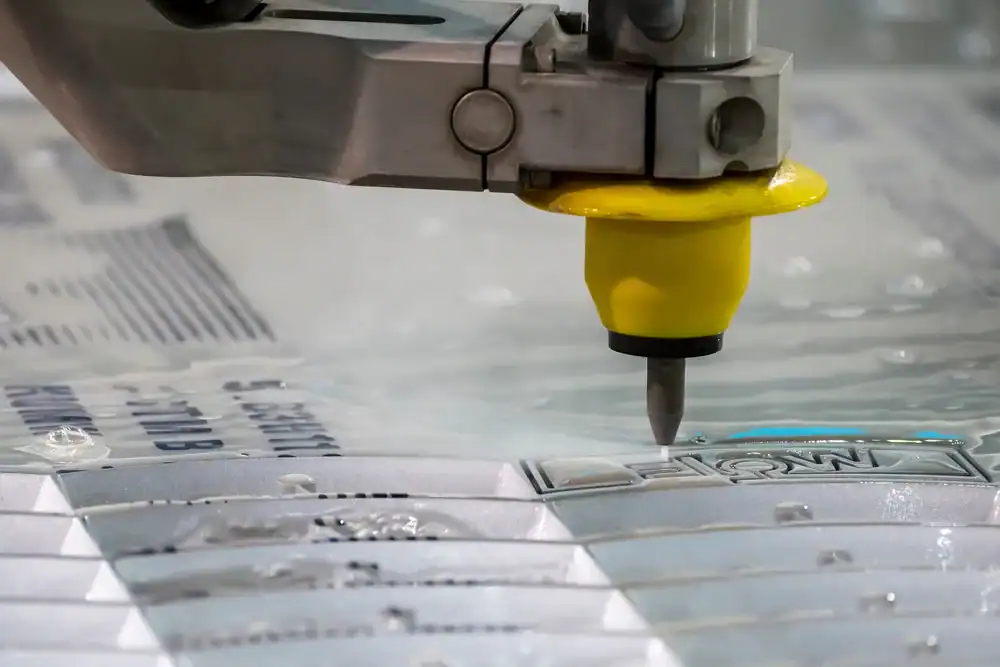
Once the file is programmed into our CNC system, we load your material onto the cutting table. The waterjet head positions itself and begins cutting using a high-pressure stream mixed with fine abrasive garnet. This stream cuts through stainless steel, aluminum, titanium, brass, copper—basically any metal alloy you’re working with.
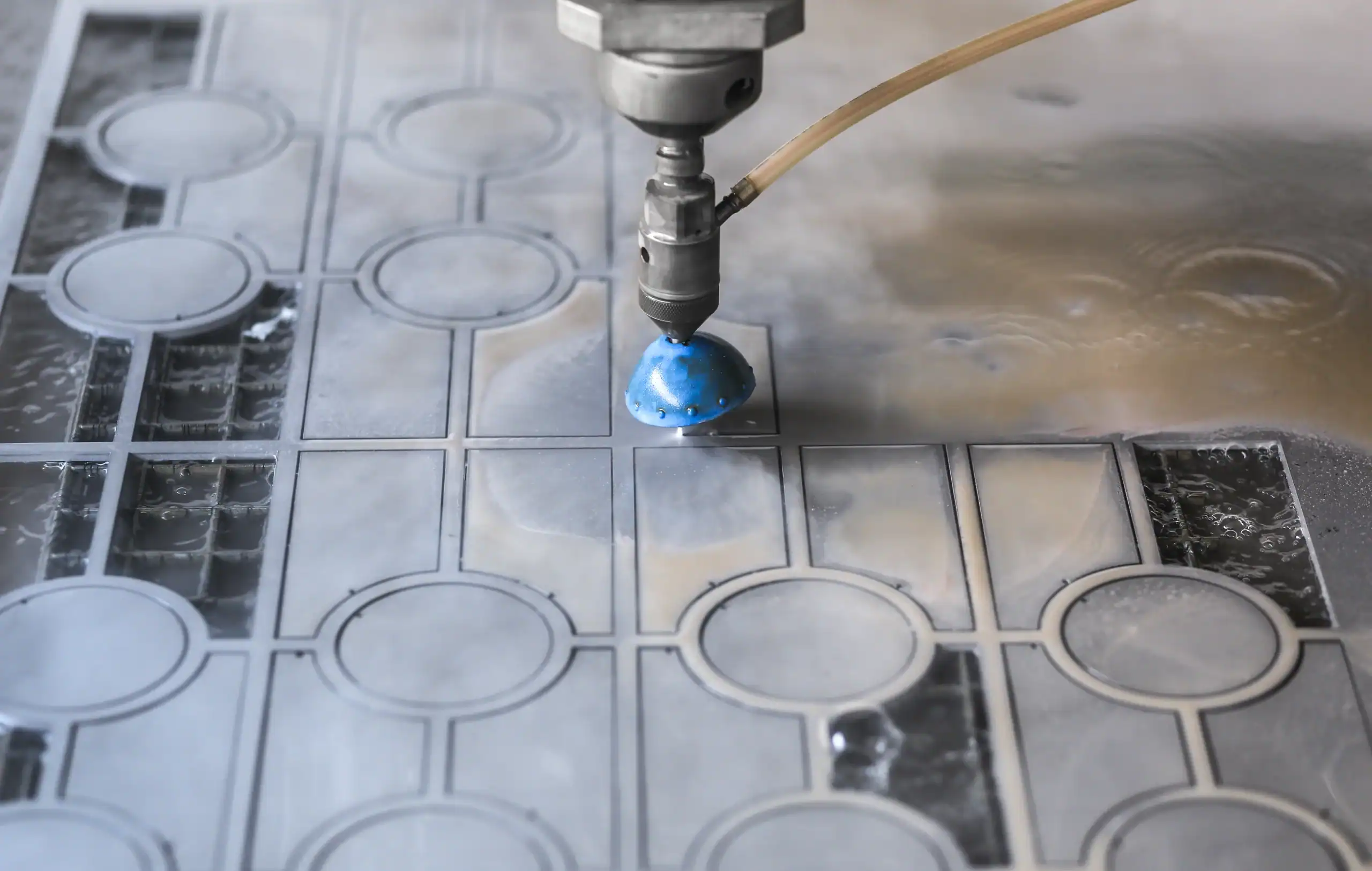
The cutting happens underwater, which eliminates dust and keeps the material cool throughout the entire process. No heat means no distortion, even on thin materials that would warp under laser or plasma cutting. The CNC controls the head movement with precision, following your design exactly while maintaining consistent cutting speed and pressure.
After cutting, we inspect dimensions and edges. Your parts come off the table ready for the next operation in your workflow. Most jobs ship the same day or next day, depending on complexity and material thickness.
Ready to get started?
We cut stainless steel from half a millimeter up to two inches thick. That covers everything from decorative panels to structural brackets. Aluminum cuts even faster, making it cost-effective for both prototypes and production volumes. Titanium, copper, brass, and high-strength alloys all run through the same system without special tooling.
The kerf width—the amount of material removed by the cutting stream—measures less than a millimeter on most jobs. That narrow cut path means you can nest parts tightly and reduce material waste. When you’re working with expensive alloys, that efficiency adds up quickly.
Long Island manufacturers often need quick turnarounds for aerospace components, architectural metalwork, food processing equipment, and custom machinery parts. Our location in Shirley puts us within easy reach of fabrication shops throughout Suffolk County and beyond. You can drop off material in the morning and pick up finished parts by end of day on many jobs.
The waterjet process doesn’t create tool wear, so there’s no degradation in quality from first part to last part in a production run. Part number one hundred looks identical to part number one. That consistency matters when you’re building assemblies or maintaining tight quality standards.
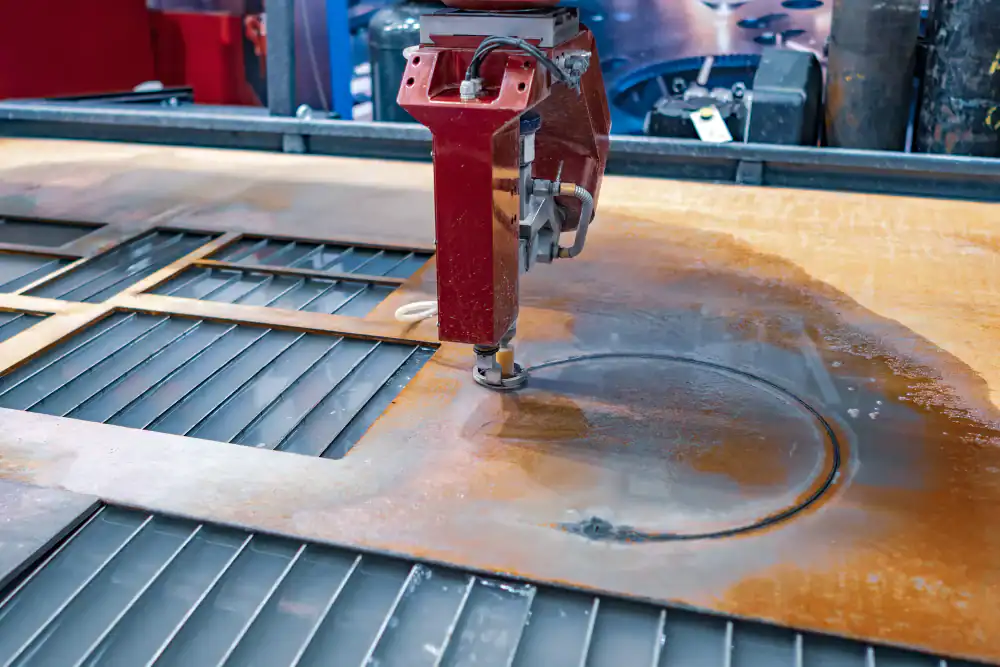
We cut virtually any metal alloy you’re working with. Stainless steel in grades 304, 316, and 400-series cuts cleanly from thin gauge up to two inches thick. Aluminum cuts quickly across all alloys—6061, 7075, 5052—without any melting or edge deformation that you’d see with thermal cutting methods.
Titanium is one of the materials where waterjet really shines. It’s expensive and difficult to machine, but waterjet handles it without work hardening the edges or creating heat-affected zones that compromise the material properties. That makes it ideal for aerospace and medical components.
Copper and brass cut without issue, even though their high reflectivity makes them problematic for laser cutting. High-strength tool steels, hardened materials, and exotic alloys all process the same way. If you can get it onto our cutting table, we can cut it.
You can expect tolerances within ±0.005 inches on most cuts. That’s tight enough for parts that need to fit together without adjustment or components that interface with machined surfaces. The CNC system maintains positional accuracy throughout the cut, so complex shapes hold dimension just as well as simple rectangles.
Taper—the slight angle that can occur from top to bottom of the cut—gets minimized through dynamic head compensation. On thicker materials, we adjust cutting speed and pressure to keep the stream perpendicular to the material surface. That keeps your parts square and eliminates the need for secondary machining to true up edges.
Inside corners come out with a small radius equal to the stream diameter, typically around 0.03 inches. If you need sharper corners, we can make relief cuts or you can plan for a small radius in your design. Outside corners and curves follow your CAD file exactly, limited only by the kerf width of the cutting stream.
The main difference is heat. Laser and plasma both use thermal energy to melt through metal, which creates a heat-affected zone along the cut edge. That zone changes the material’s microstructure—it can become harder, more brittle, or more prone to cracking. Waterjet uses mechanical erosion instead, so the material properties stay unchanged right up to the cut edge.
That matters most when you’re cutting materials sensitive to heat or when you need to bend, form, or weld the parts afterward. Stainless steel doesn’t discolor. Aluminum doesn’t get a melted edge that needs deburring. Hardened materials don’t develop stress fractures.
Waterjet is slower on thin materials compared to laser, but it’s faster than you’d think on thick stock. And when you factor in that the edges come off ready to use without grinding, deburring, or secondary finishing, the total time often ends up competitive. You’re also not limited by material reflectivity or thickness the way you are with laser systems.
Most jobs cut and ship within one to two business days. Simple parts in common materials often go out same-day if you get them to us in the morning. Complex geometries or thick materials take longer to cut, but we’ll give you an accurate timeline when you submit your files.
Rush service is available when you’re up against a deadline. We run jobs after hours and on weekends when necessary. Being local to Long Island means you can also drop off material and pick up finished parts directly, which eliminates shipping time entirely.
Production runs get scheduled based on volume and material availability. Once we’re set up and cutting, the CNC runs continuously until the job is complete. We’ll coordinate delivery or pickup timing to match your assembly schedule or project milestones.
We can work either way. If you’ve already got material on hand or you have a specific supplier relationship, bring it in and we’ll cut from your stock. That’s common with aerospace and defense work where material certifications and traceability matter.
If you need us to source material, we can handle that too. We work with metal suppliers throughout the New York area and can typically get common alloys and sizes within a few days. For standard stainless steel, aluminum, and carbon steel in typical thicknesses, we often have stock on hand.
Providing your own material usually speeds up the timeline since we can start cutting as soon as you deliver it. Either way, we’ll confirm material type, thickness, and dimensions before we start programming to make sure everything matches your specifications.
DXF and DWG files work best since they import cleanly into our CNC programming software. These CAD formats preserve the exact geometry and dimensions without any conversion issues. If you’re working in SolidWorks, AutoCAD, or similar programs, just export your part outline as a DXF.
We can also work from PDF drawings or even hand sketches for simple shapes. We’ll recreate the geometry in our system and send you a drawing for approval before cutting. That adds a bit of time to the process, but it works fine for straightforward parts or when you’re still in the design phase.
Include any critical dimensions, tolerances, or notes about edge finish in your submittal. If certain features need tighter tolerances than others, call that out. Same goes for any areas where small radii or draft angles matter for your application. The more information you give us up front, the better we can match your expectations on the first run.
Useful Links
Other Services we provide in Shirley