Hear from Our Customers
You’re not cutting metal just to cut it. You need parts that fit the first time, edges that don’t need rework, and material that hasn’t been compromised by heat.
Waterjet cutting metal in Smithtown means you’re working with a cold process. No warping. No temper changes. No heat-affected zones that turn your precision work into guesswork. The kerf stays narrow—around 0.030″ to 0.040″—so you can nest parts tighter and actually use more of what you paid for.
Tolerances hold at ±0.005″ when the job calls for it. The edge comes off smooth enough that most parts skip secondary finishing entirely. You’re not buffing, grinding, or explaining to your customer why the dimensions shifted. You’re moving to the next operation.
Thick plate, thin sheet, titanium, tool steel, brass—it all cuts clean. Complex shapes, tight radii, small holes—all doable without switching equipment or methods. If you’ve been stuck between laser limitations and plasma mess, this is the middle ground that actually works.
We work with fabricators, contractors, architects, and designers across Long Island who need precision metal parts without the back-and-forth. We’re based in West Islip, close enough to Smithtown that turnaround stays realistic.
We handle the full process—design consultation, material recommendations, and CNC metal waterjet cutting controlled to the specs you actually need. No heat distortion means no surprises when you measure the finished part.
Smithtown’s manufacturing and metal fabrication community runs on tight deadlines and tighter tolerances. We’ve built our process around that reality. You send the file, we confirm the details, and the parts come back ready to use—not ready to fix.
You start by sending us your design file or specs. CAD files work best, but we can work with what you have. We review the material type, thickness, tolerances, and any edge finish requirements before we quote it.
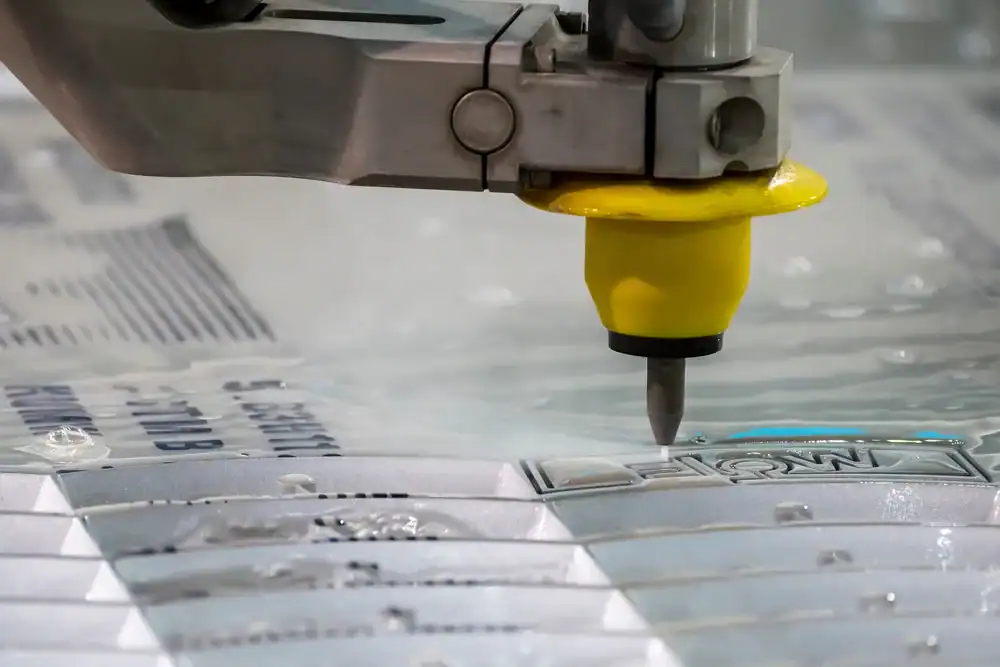
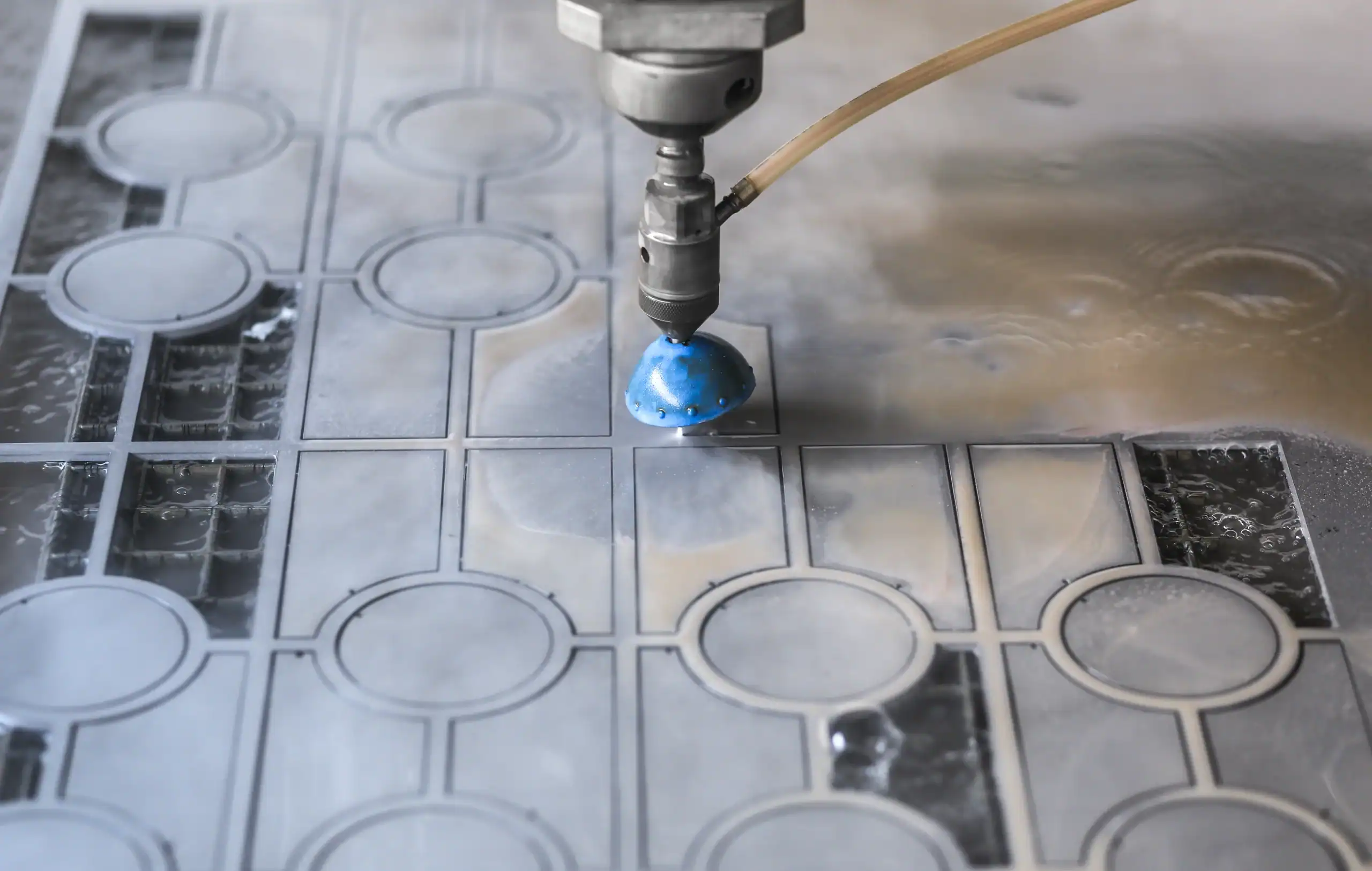
Once you approve, the file goes into our CNC system. The waterjet uses high-pressure water mixed with abrasive garnet to cut through your metal. No torches, no blades, no thermal stress. The stream is narrow and controlled, so intricate shapes and tight nesting happen without issue.
While the cut runs, the CNC system follows your design with repeatable accuracy. Parts come off the table with smooth edges and dimensions that match what you specified. If you’re running multiples, each piece cuts the same as the first.
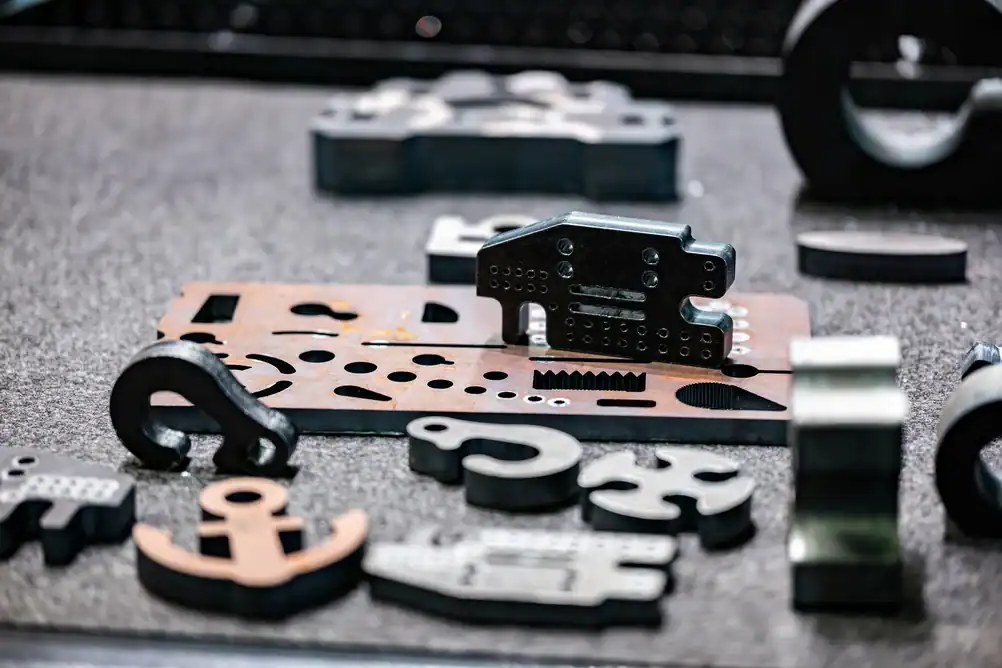
After cutting, we inspect for quality and package the parts for pickup or delivery. Most jobs don’t need additional finishing unless you’ve requested it. You get metal parts that are ready to weld, assemble, or install—not parts that need another shop to clean up the edges.
Ready to get started?
Every custom metal waterjet cutting job includes material consultation. If you’re not sure whether 304 stainless or 6061 aluminum fits your application better, we talk through it before the cut happens. We’ve worked with enough Smithtown contractors and fabricators to know what holds up in local conditions.
You get CNC-controlled precision on every cut. That means repeatable tolerances, consistent edge quality, and the ability to run one prototype or a hundred production pieces with the same setup. The abrasive waterjet handles materials up to 6 inches thick in metal, so heavy plate work doesn’t require a different process.
Design support is part of the service. If your part design has features that won’t cut cleanly or nest efficiently, we’ll flag it before we start. Small adjustments to inner radii or part spacing can save you material cost and cut time without changing the function of your part.
Smithtown’s metal fabrication market includes everything from HVAC components to custom architectural metalwork. We’ve cut parts for both, and the process adapts to what you’re building. No minimum order requirements that force you to overbuy, and no lead times that assume you’re not in a hurry.
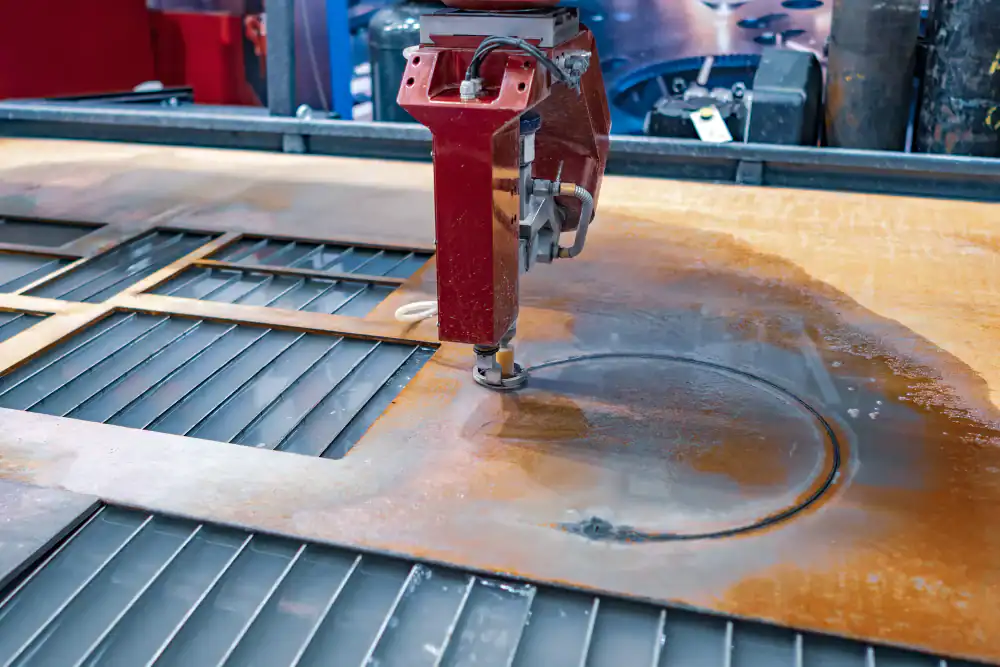
Standard waterjet cutting holds tolerances around ±0.005 inches, which covers most fabrication and manufacturing applications. If your part requires tighter specs, we can discuss fixturing and multi-pass options that get closer to ±0.003 inches on critical dimensions.
The tolerance you actually need depends on how the part gets used. If you’re cutting brackets that get welded into an assembly, ±0.005″ is usually more than tight enough. If you’re cutting precision components that mate with machined parts, we’ll talk through what’s realistic and what might need secondary machining.
CNC control keeps the cut consistent across multiple parts. If you’re running a batch, the first piece and the last piece will measure the same. That repeatability matters when you’re trying to maintain quality across a production run without constant adjustments.
Waterjet cutting metal produces a smooth edge that typically doesn’t require deburring. The abrasive stream cuts cleanly through the material without creating the rolled edges or slag you’d see from plasma or oxy-fuel cutting.
Edge finish quality depends on cutting speed and abrasive flow. For most applications, we run settings that produce a satin-smooth edge directly off the table. If you need a specific edge finish for aesthetic or functional reasons, let us know upfront so we can adjust the cut parameters.
Thicker materials may show slight striations on the cut edge—that’s normal for waterjet cutting and doesn’t affect part function in most cases. If your application requires a polished or completely smooth edge, secondary finishing is an option, but most Smithtown fabricators find the as-cut edge works fine for welding, powder coating, or assembly.
We cut steel, stainless steel, aluminum, brass, copper, titanium, Inconel, and tool steel. The waterjet process works on both soft and hardened metals without changing the material properties, so you’re not limited by what a torch can handle or what a laser might burn.
Thickness capacity goes up to 6 inches for most metals. Thin sheet cuts just as cleanly as heavy plate, and we can handle both in the same setup if your job requires multiple gauges. The cold cutting process means even heat-sensitive alloys like titanium stay dimensionally stable.
If you’re working with an unusual alloy or aren’t sure how your material will cut, we can run a test piece before committing to the full job. Smithtown’s metal fabrication projects often involve specialty materials for marine, aerospace, or architectural applications—we’ve cut most of them.
Waterjet cutting metal doesn’t generate heat, so there’s no heat-affected zone, no warping, and no change to the material’s temper or hardness. Laser and plasma both introduce enough thermal energy to alter the metal near the cut edge, which can matter if you’re working with hardened tool steel or tight-tolerance parts.
Waterjet handles thicker materials better than laser. Once you get past about 1 inch in steel, laser cutting slows down significantly and edge quality suffers. Waterjet maintains consistent cut quality through 6 inches of metal without switching processes.
The kerf width on waterjet is narrower than plasma, which means you can nest parts closer together and reduce material waste. For Smithtown shops running custom metal waterjet cutting jobs where material cost adds up, that difference matters. Plasma is faster on straight cuts in thin material, but waterjet wins on precision, edge quality, and versatility across different metals and thicknesses.
Turnaround depends on material availability, job complexity, and current queue, but most straightforward cutting jobs finish within 3-5 business days from file approval. Rush service is available when your timeline doesn’t allow for standard lead times.
Simple parts in common materials like aluminum or mild steel typically cut faster than complex designs in thick stainless or titanium. If you need a firm delivery date for a project deadline, let us know upfront so we can schedule accordingly.
Prototypes and small-batch runs often turn around quicker than large production orders, simply because machine time is shorter. For Smithtown contractors working on project-based schedules, we can coordinate delivery timing to match your installation or assembly dates rather than just cutting everything as fast as possible and having it sit in your shop.
We work with CAD files in most standard formats—DXF, DWG, and others import directly into our CNC system. If you have a finished design, that’s ideal. If you’re still working through the design phase, we can provide input on what will cut efficiently and what might cause issues.
Sometimes a part design looks fine on screen but creates problems during cutting—internal corners that are too tight, features that are too small to cut cleanly, or shapes that waste material when nested. We’ll review your file and flag anything that could be adjusted to improve the outcome or reduce cost.
If you don’t have CAD capability in-house, we offer design services. You can provide sketches, measurements, or sample parts, and we’ll create the cut file. For Smithtown fabricators who need custom metal parts but don’t have a full design department, that removes a step from your process and ensures the file is optimized for waterjet cutting from the start.
Useful Links
Other Services we provide in Smithtown