Hear from Our Customers
When aerospace components need ±0.005″ tolerances or medical device parts require burr-free edges, there’s no room for rework. Waterjet cutting metal in South Farmingdale, NY means your parts arrive ready to assemble—no grinding, no deburring, no rejected batches.
The cold cutting process keeps material properties intact. No melted edges on aluminum. No warped stainless steel. No hardened zones on tool steel that wreck your tooling downstream.
You also keep more material in play. Kerf width runs 0.030″ to 0.040″, so you can nest parts tighter and cut common lines between pieces. That’s less scrap in the dumpster and more parts per sheet—especially valuable when you’re working with expensive alloys like Inconel or titanium.
We operate from West Islip, serving manufacturers across Long Island—including South Farmingdale’s established industrial corridor. This area has supported metal fabrication for decades, and shops here know the difference between acceptable and precise.
Our design team reviews every DXF and DWG file before it hits the cutting table. We catch tolerance issues, nesting problems, and geometry errors before they become expensive mistakes. You’re not just getting a cut—you’re getting engineering eyes on your project.
We handle both prototype runs and production volumes. Whether you need one custom bracket or 500 architectural panels, the same attention goes into setup, programming, and quality checks.
You send us your design file—DXF, DWG, STEP, or IGES formats all work. Our team imports it into the CAD system and checks dimensions, tolerances, and cut paths. If something looks off or could be optimized for better nesting, we reach out before starting.
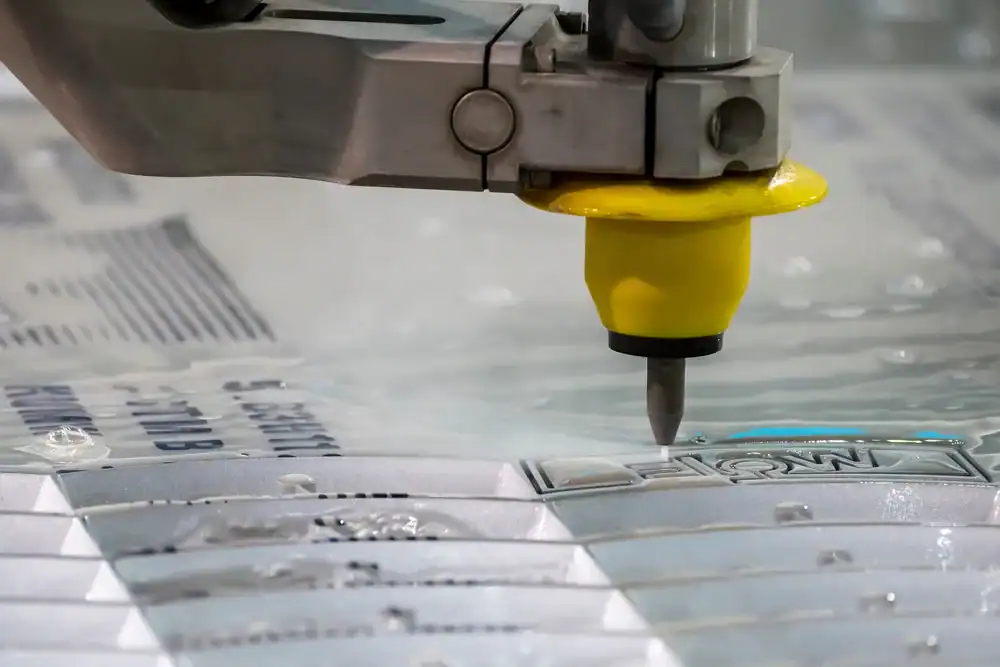
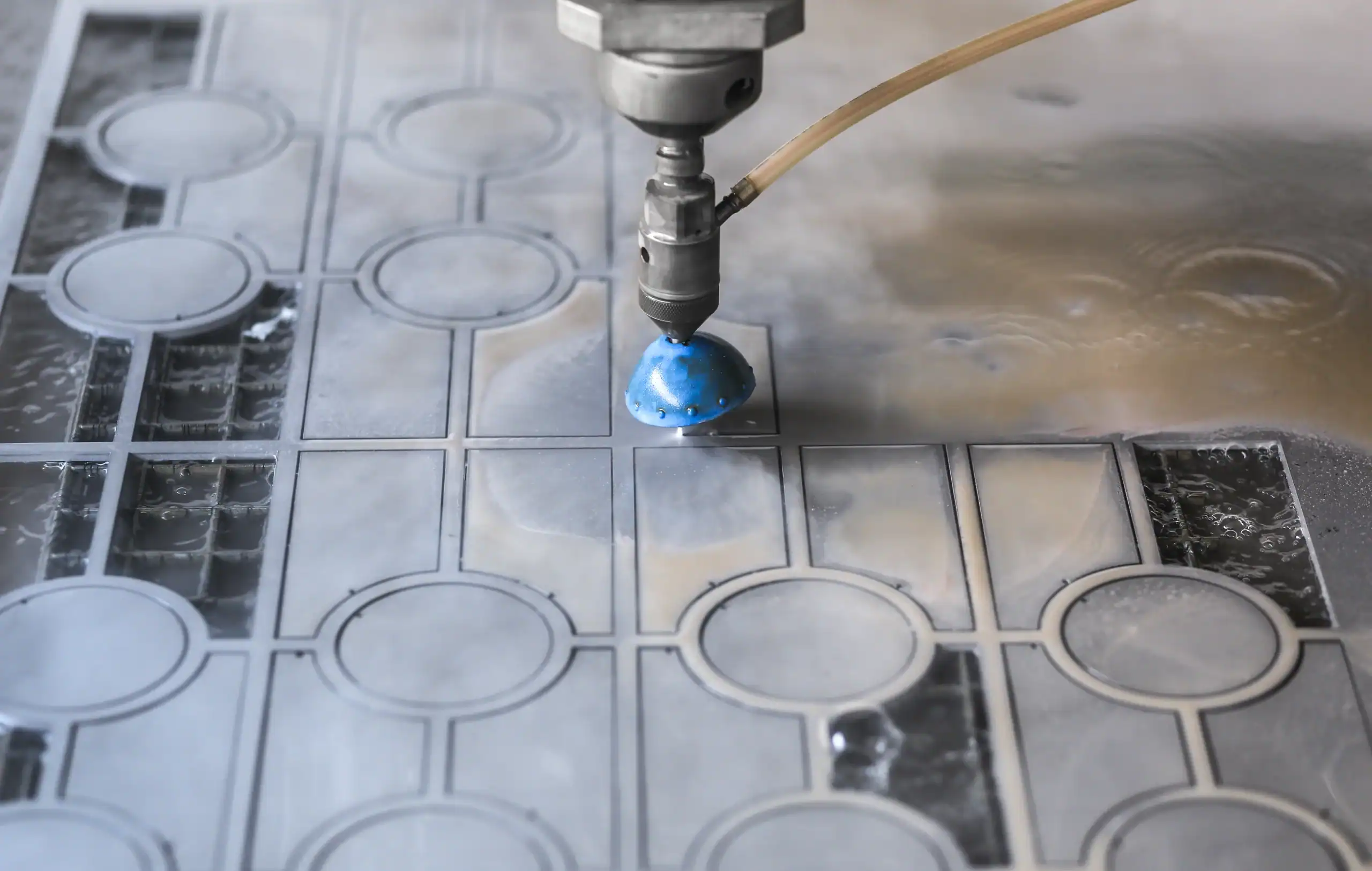
Once the file is approved, we program the CNC waterjet system. The machine uses a high-pressure stream mixed with garnet abrasive to cut through your material. Pressure runs up to 60,000 PSI, but the process stays cold—no heat transfer into the workpiece.
During cutting, the abrasive stream follows your programmed path with precision measured in thousandths. Complex geometries, tight inside radii down to 0.020″, sharp corners—all handled without tool changes or multiple setups.
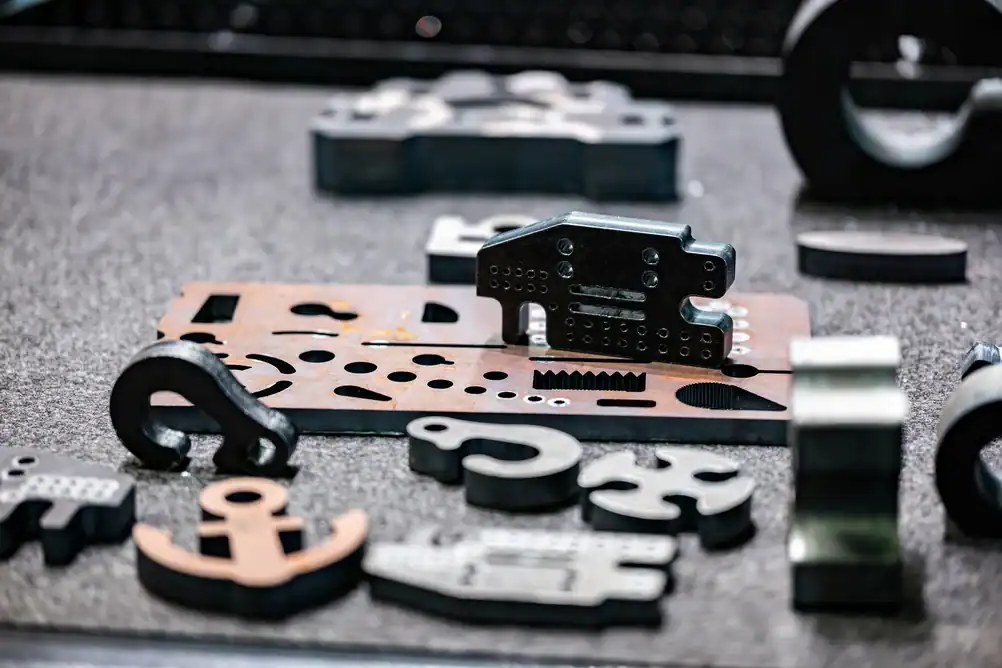
After cutting, parts come off the table with smooth edges. Most applications don’t need secondary finishing. You get clean parts ready for welding, assembly, or powder coating.
Ready to get started?
Every metal waterjet cutting project in South Farmingdale, NY includes file review and optimization. We don’t just run what you send—we look for ways to reduce cost through better nesting or identify potential tolerance issues before cutting starts.
You get access to our full material range. We cut 1/4″ aluminum up to 8″ thick titanium, plus stainless steel, brass, Inconel, tool steel, and other specialty alloys. Table size accommodates parts up to 36″ x 120″, with extended length capability to 288″ for architectural work.
The cutting process produces no hazardous fumes and generates minimal waste. Garnet abrasive is inert and recyclable. Water recirculates through filtration systems. This matters for shops with environmental compliance requirements or facilities where welding fumes are already a concern.
South Farmingdale’s manufacturing sector includes aerospace suppliers, automotive component makers, and custom fabricators serving medical and defense industries. These applications demand documented processes and consistent quality—which is exactly what CNC metal waterjet cutting delivers through repeatable digital programming and automated operation.
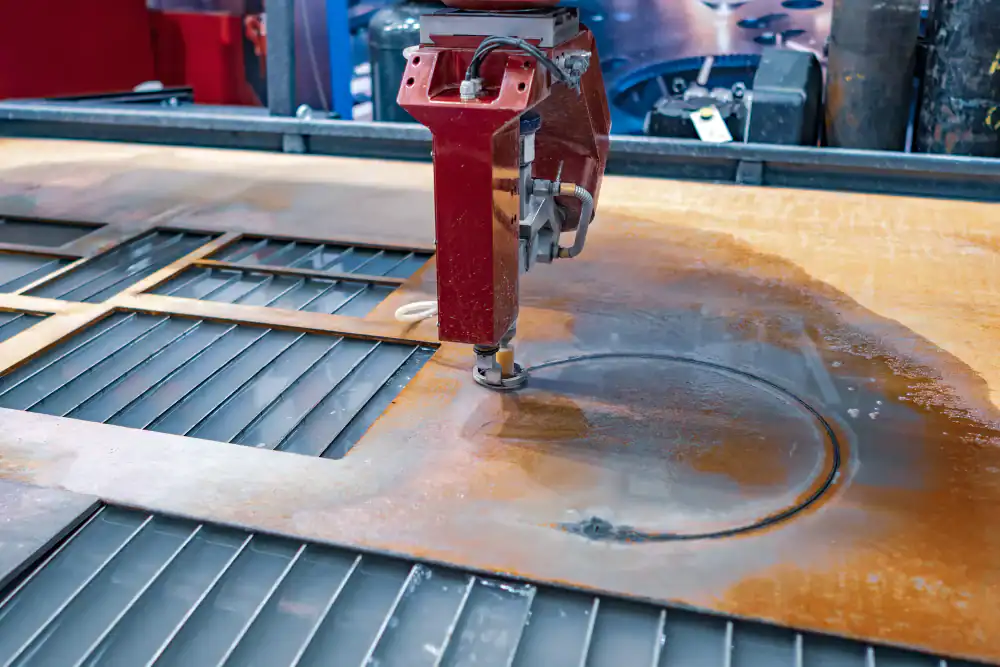
Standard waterjet cutting holds ±0.005″ on most metals. With proper fixturing and optimized parameters, we achieve ±0.001″ to ±0.002″ on critical dimensions—tight enough for aerospace and medical device work.
Tolerance depends on material thickness, type, and part geometry. Thinner materials (under 1/2″) generally hold tighter tolerances than thick plate. Straight cuts hold better than complex curves with multiple direction changes.
The cold cutting process helps. Since there’s no heat distortion pulling material out of shape, dimensions stay true to your CAD file. You don’t get the warping issues common with laser or plasma cutting, especially on thin-gauge stainless or aluminum.
Waterjet keeps stainless steel cold during cutting—no heat-affected zone, no hardened edges, no discoloration. Laser transfers significant heat into the workpiece, which can warp thin material and create hardened zones that dull your tools during secondary operations.
Edge quality differs too. Waterjet produces smooth cuts that often go straight to welding or assembly. Laser-cut stainless usually needs deburring and sometimes grinding to remove dross and heat scale.
Waterjet also handles thicker stainless more cost-effectively. Once you get past 1/2″ thick, laser cutting slows down significantly and edge quality degrades. Waterjet maintains consistent speed and quality through 2″ and beyond.
Material waste is lower with waterjet due to narrower kerf width. That matters when you’re cutting expensive stainless grades like 316 or duplex alloys.
Yes. Waterjet excels at titanium, Inconel, tool steel, and other materials that are expensive or difficult to machine conventionally. The abrasive stream cuts through without generating heat that would work-harden the material or dull cutting tools.
We regularly cut titanium from 1/4″ up to 8″ thick for aerospace applications. The process doesn’t create the work hardening issues you’d face with milling or sawing. Material properties stay consistent right to the cut edge.
Inconel and other nickel-based alloys cut cleanly without the tool wear problems that make conventional machining so expensive. You’re not buying replacement end mills or dealing with work hardening that ruins surface finish.
Tool steels cut before or after heat treatment. Since waterjet doesn’t add heat, there’s no risk of changing material hardness or creating microcracks near cut edges.
We work with DXF and DWG files as primary formats—these are standard CAD outputs that maintain vector precision. STEP and IGES files import cleanly too, though we’ll convert them to 2D profiles for cutting paths.
Your files need to be drawn to actual size with dimensions in inches or millimeters clearly specified. We need closed polylines or splines for cut paths—no overlapping lines or gaps that create programming errors.
If you’re working from a sketch or PDF, our design team can convert it to a cuttable file. We’ll need clear dimensions and specifications for tolerances, material type, and thickness. This adds some lead time but ensures accuracy.
Before cutting, we’ll send a proof showing nest layout and cut paths. You can verify orientation, check that all features are included, and approve material usage. Changes at this stage are simple—once cutting starts, modifications mean scrapped material.
Simple parts often cut same-day or next-day depending on queue and material availability. Complex geometries with tight tolerances need more programming time and slower cutting speeds—figure 2-3 days for intricate work.
Programming takes 30 minutes to several hours based on part complexity. Simple brackets or plates with basic geometry program quickly. Parts with dozens of holes, tight inside radii, or multiple tolerance zones need careful path planning and feed rate optimization.
Actual cutting speed varies by material and thickness. Thin aluminum (1/4″) cuts at 10-20 inches per minute. Thick stainless (2″) drops to 2-4 inches per minute. Titanium and Inconel cut slower than steel at equivalent thickness.
For prototypes, we typically run one or two parts first, measure critical dimensions, and verify edge quality before completing the run. This catches any programming issues early and prevents scrapping your entire order.
Most parts go straight to assembly or welding without additional work. The abrasive waterjet stream produces smooth edges—typically 125 RMS surface finish or better. That’s clean enough for welding prep, powder coating, or assembly in most applications.
Parts cut with optimized parameters show minimal taper (the slight angle from top to bottom of the cut edge). On materials under 1″ thick, taper is usually under 0.003″—negligible for most fits and assemblies.
Some applications do require secondary operations. If you need deburred edges for safety or cosmetic reasons, that’s a quick process since there are no sharp burrs or slag like you’d get from plasma cutting. Mirror-finish edges for visible architectural work might need polishing.
Threaded holes, precision bores, or features requiring tighter than ±0.001″ tolerance get added through conventional machining after waterjet cutting. We cut the blank to near-net shape, which reduces your machining time and tool wear compared to cutting the entire part from solid stock.
Useful Links
Other Services we provide in South Farmingdale