Hear from Our Customers
You’re not looking for another fabrication shop that promises quality and delivers rework. You need parts that meet spec without the heat-affected zones that throw off tolerances or the rough edges that require secondary finishing.
CNC metal waterjet cutting in Stony Brook, NY gives you that precision. We’re talking about cutting through steel, aluminum, titanium, and exotic alloys up to 300mm thick with tolerances that hold to 0.01mm. No thermal distortion. No material property changes. No warping that shows up during assembly.
The process uses high-pressure water mixed with abrasive particles to cut through metal without generating heat. That means your aerospace components maintain their structural integrity. Your architectural panels fit together exactly as designed. Your prototype parts don’t need costly revisions because the dimensions shifted during cutting.
You get parts that work the first time, which means your project stays on schedule and your budget stays intact.
We serve manufacturers, aerospace contractors, and fabrication shops across Stony Brook, NY and the broader Long Island area. We understand the local manufacturing landscape because we’re part of it—working with companies that supply everything from defense contractors in Farmingdale to commercial builders throughout Suffolk County.
The region’s aerospace and precision machining sector demands cutting services that don’t compromise material properties or introduce defects. That’s exactly what our waterjet metal cutting shop in Stony Brook, NY delivers. We’ve built our reputation on accuracy and reliability because your deadlines and specifications aren’t negotiable.
When you’re working with materials that cost hundreds per square foot or components that require AS9100D traceability, you need a cutting partner who gets it right.
You send us your CAD files or design specifications, and we review them for manufacturability. If there’s an issue—like a tolerance that’s too tight for the material thickness or a geometry that’ll create unnecessary waste—we’ll tell you before we start cutting. That conversation saves you money and prevents delays.
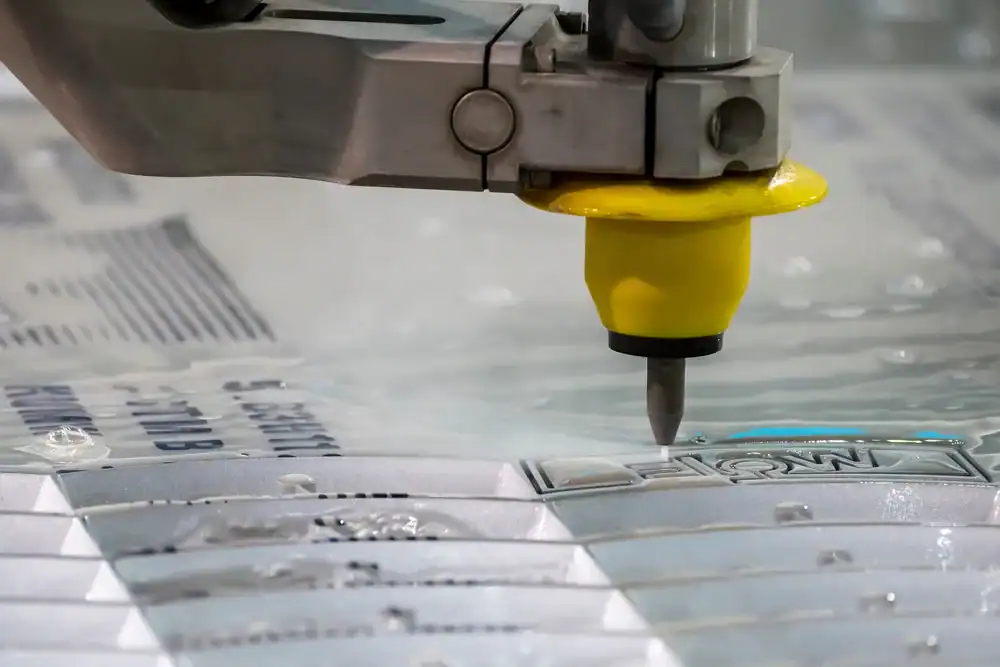
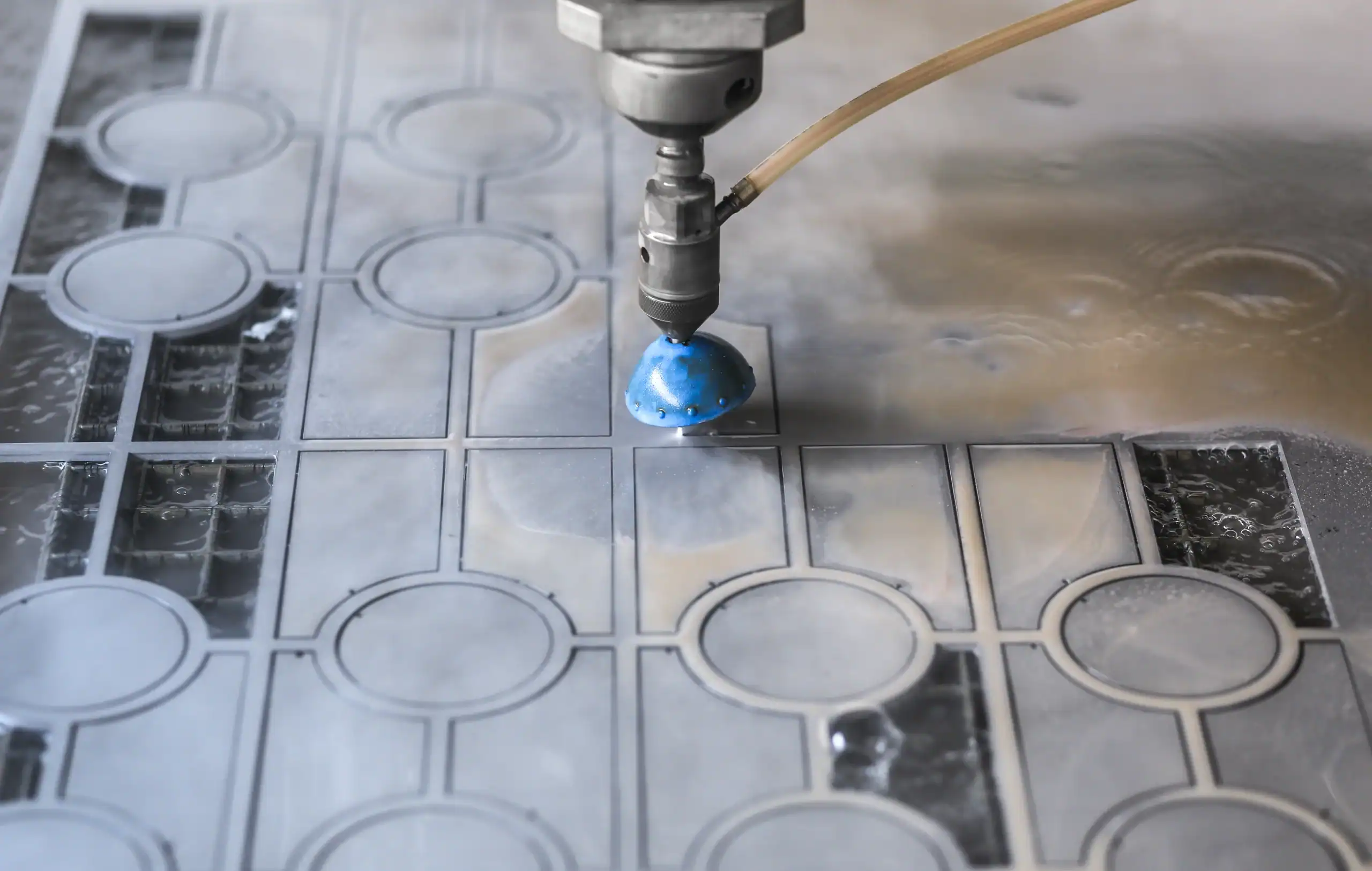
Once the design is confirmed, we program the CNC waterjet system with your exact specifications. The cutting head follows the programmed path while high-pressure water mixed with garnet abrasive cuts through your material. The process is cold, so there’s no heat-affected zone to worry about. No hardening. No softening. No warping.
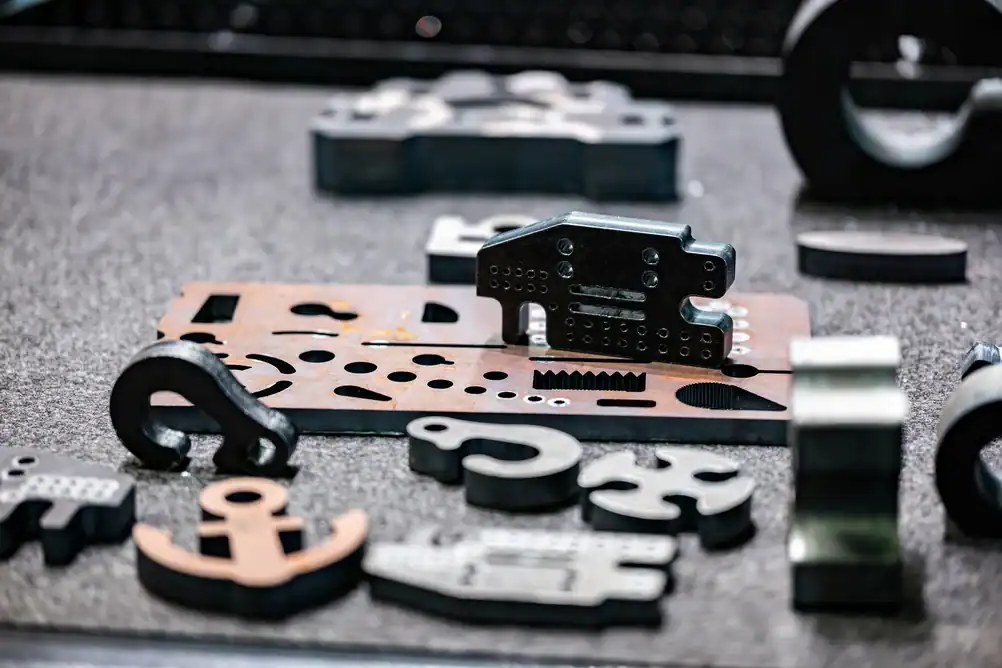
After cutting, we inspect dimensions to verify they match your specifications. If you need secondary services like deburring or surface finishing, we can handle that too. But often, the edge quality straight off the waterjet is clean enough for your application as-is.
You receive parts that fit your assembly, meet your tolerances, and arrive on the timeline we committed to. That’s the process.
Ready to get started?
Custom metal waterjet cutting in Stony Brook, NY means you’re not limited to standard shapes or off-the-shelf dimensions. You get parts cut to your exact specifications from the materials your application requires—whether that’s 304 stainless for corrosion resistance, 6061 aluminum for weight savings, or titanium for aerospace applications.
The service includes design consultation before we cut. If your part design will create excessive waste or if there’s a more efficient nesting arrangement, we’ll walk through options with you. Material consultation is part of the conversation too—sometimes a different alloy or thickness will give you better performance at a lower cost.
Stony Brook’s manufacturing sector includes everything from research facilities at the university to commercial fabricators serving the construction industry. That diversity means projects range from one-off prototypes to production runs. Our waterjet cutting metal services in Stony Brook, NY handle both. You’re not paying for capabilities you don’t need, and you’re not limited when your project scales up.
The Long Island market moves fast. Contractors need architectural metalwork that meets design specs without delays. Aerospace suppliers need components that pass inspection the first time. We deliver cutting services that keep pace with those demands.
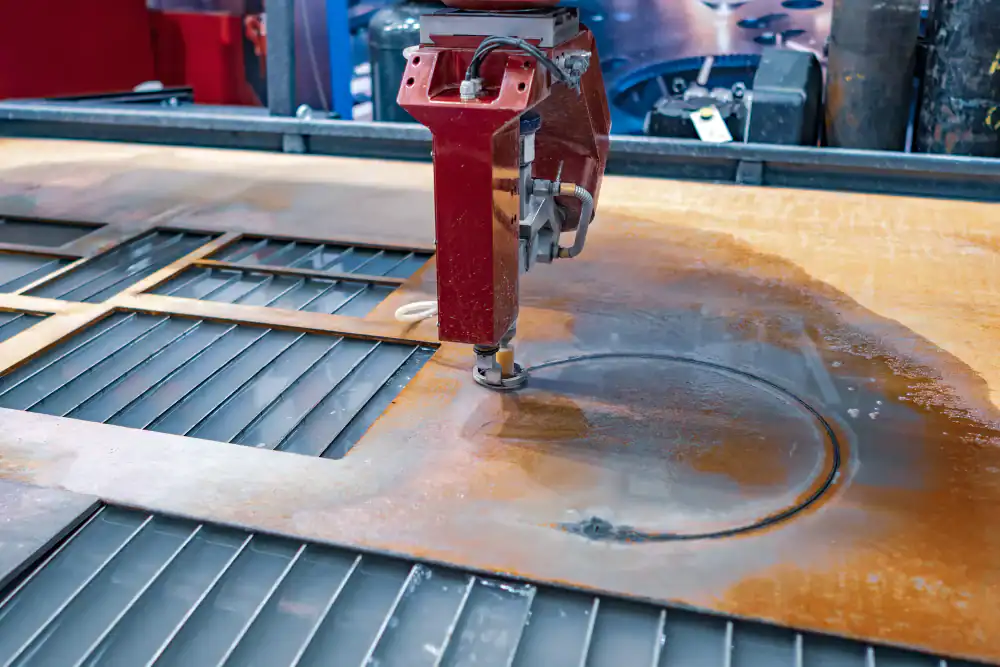
Waterjet systems cut metal up to 300mm thick, though practical limits depend on your material and required edge quality. For most applications in Stony Brook, NY—whether you’re cutting steel plate for structural components or aluminum sheet for architectural panels—you’re looking at materials between 3mm and 150mm thick.
Thicker materials take longer to cut, which affects your cost and turnaround time. But the advantage is that waterjet handles those thicknesses without the limitations you’d hit with laser or plasma cutting. There’s no upper thickness where the process suddenly stops working or where quality drops off.
If you’re working with materials over 150mm, we’ll discuss expected cut times and edge quality upfront. Sometimes a thicker material makes sense. Sometimes switching to a thinner gauge with reinforcement gives you better performance. That’s a conversation worth having before you commit to material purchases.
Waterjet cutting metal doesn’t generate heat, which means zero thermal distortion and no heat-affected zone. Laser cutting is faster on thin materials and gives you excellent edge quality on steel and aluminum under 25mm, but it introduces heat that can warp thin sheets or change material properties near the cut edge.
If you’re cutting materials that are heat-sensitive—like certain aluminum alloys or pre-hardened tool steels—waterjet is often your only option for maintaining material integrity. If you’re working with reflective metals like copper or brass, waterjet handles them easily while laser cutting struggles with reflection issues.
The trade-off is speed. Laser cuts thin materials faster. But when you factor in the cost of dealing with warped parts or heat-affected zones that fail inspection, waterjet often ends up being more cost-effective for precision applications. For Stony Brook aerospace and defense work, that precision matters more than shaving minutes off cut time.
CNC metal waterjet cutting in Stony Brook, NY typically holds tolerances to ±0.1mm for most applications. On materials under 25mm with optimized cutting parameters, you can achieve ±0.05mm or tighter. That’s precise enough for aerospace components, medical device parts, and precision tooling.
Your actual tolerance depends on material thickness, material type, and part geometry. Thicker materials see slightly wider tolerances because the waterjet stream has more distance to travel through the material. Complex curves hold tighter tolerances than sharp internal corners where the stream has to decelerate and change direction.
If your application requires tolerances tighter than ±0.05mm, we’ll discuss whether waterjet is the right process or if you need secondary machining operations. Being upfront about what’s achievable saves you from discovering tolerance issues during assembly. Most projects find that waterjet tolerances are more than adequate, especially compared to the dimensional shifts you’d see with thermal cutting methods.
Waterjet handles both prototype work and production runs efficiently. The advantage for small to medium production volumes—say 10 to 500 pieces—is that there’s no expensive tooling to amortize across parts. You’re not paying for dies, molds, or custom fixtures that only make economic sense at high volumes.
CNC programming means we can switch between different part designs quickly. If you’re running a batch of 50 brackets today and need 30 mounting plates tomorrow, the changeover takes minutes, not hours. That flexibility matters when you’re serving the diverse manufacturing needs across Stony Brook, NY and Long Island.
For higher production volumes, waterjet remains cost-effective if your parts have complex geometries or tight tolerances that would require expensive tooling with other methods. We’ll walk through the economics with you. Sometimes waterjet is your most efficient option even at higher volumes. Sometimes a hybrid approach—waterjet for complex features, other methods for simple cuts—gives you the best result.
Waterjet cutting produces minimal burrs compared to mechanical cutting methods. Most parts come off the machine with edge quality that’s acceptable for final use, especially on the top surface where the waterjet stream enters the material. The bottom edge may have slight burr formation depending on material type and thickness.
For applications where you need completely burr-free edges—like parts that will be powder coated or anodized—light deburring takes minutes per part. That’s significantly less secondary work than you’d need after plasma cutting or mechanical sawing, where heavy burrs and rough edges are standard.
The edge finish from waterjet cutting metal in Stony Brook, NY typically has a satin appearance rather than the mirror finish you’d get from precision milling. For most fabrication, aerospace, and architectural applications, that finish is exactly what you need. If your application requires a specific surface roughness measurement, we can adjust cutting parameters or discuss finishing options that get you there.
Our waterjet metal cutting shop in Stony Brook, NY processes virtually any metal you’re working with—steel, stainless steel, aluminum, titanium, copper, brass, bronze, and exotic alloys like Inconel or Hastelloy. If it’s a metal, waterjet can cut it without the material-specific limitations you’d face with other cutting methods.
That versatility matters when you’re working on projects that combine multiple materials. Architectural metalwork might use stainless steel panels with bronze accents. Aerospace assemblies might combine aluminum structural components with titanium fittings. You’re not switching between different cutting processes or shops to handle different materials.
Abrasive waterjet cutting also handles materials with varying hardness without tool wear issues. Pre-hardened tool steels, case-hardened parts, or materials with hard coatings cut just as easily as soft aluminum. The process doesn’t care about material hardness because it’s not relying on a cutting edge that dulls or wears out.
Useful Links
Other Services we provide in Stony Brook