Hear from Our Customers
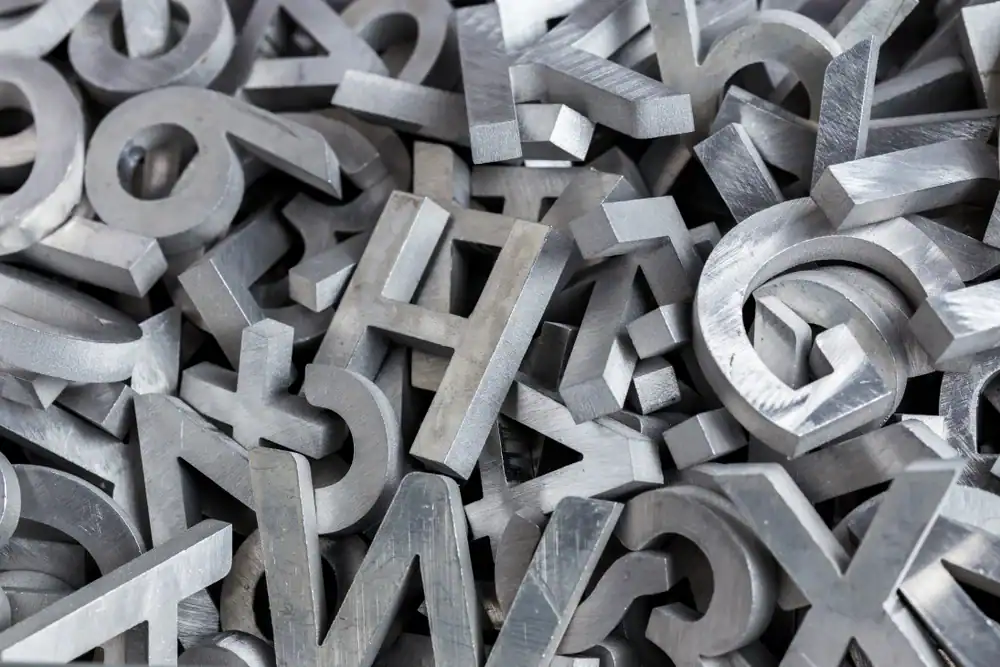
Your parts come out within ±0.001 inch of tolerance. Every time. First piece, last piece, thousandth piece.
There’s no heat-affected zone weakening your material. No warping. No brittleness at the edges that’ll crack under stress or fail inspection. The cold cutting process keeps the physical and chemical properties of your metal exactly as they were before the cut.
You’re also not paying for material you can’t use. The kerf width runs between 0.030″ and 0.040″, which means tighter nesting, less scrap, and more parts per sheet. For shops running high-volume production or working with expensive alloys, that difference shows up fast in your material costs.
And most jobs come off the table ready to use. The edge quality is smooth enough that you can skip grinding, deburring, or polishing in most cases. That’s fewer steps, less labor, and faster turnaround from raw material to finished component.
We handle precision waterjet cutting for manufacturers, fabricators, and contractors across Valley Stream, NY and the broader Long Island area. We work with the aerospace shops, the defense contractors, the marine fabricators, and the industrial manufacturers who need parts that pass inspection the first time.
Valley Stream sits in the middle of one of the densest manufacturing corridors in the region. You’ve got aerospace companies building flight-critical components, pharmaceutical operations running clean production, and plastics manufacturers serving national accounts. The standard here isn’t negotiable, and the turnaround expectations are tight.
We’ve built our operation around that reality. CNC-controlled cutting, closed-loop water systems, and the equipment to handle everything from thin-gauge stainless to thick plate steel.
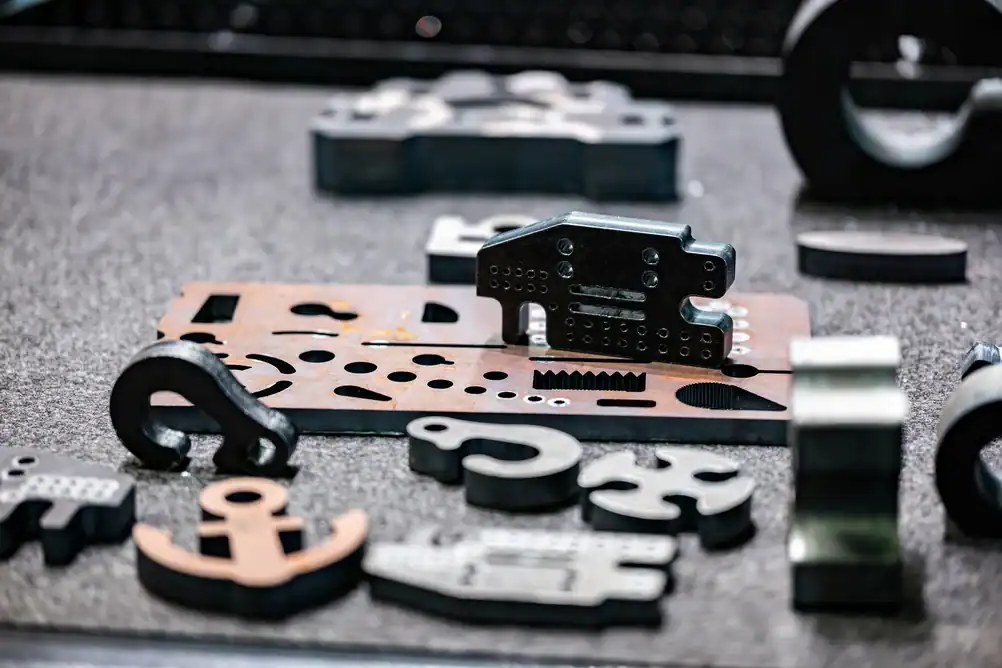
You send us your file—DXF, DWG, or whatever format your CAD system spits out. We’ll review it for any issues that could cause problems during cutting: tight radiuses, kerf compensation, lead-in placement. If something looks off, we’ll flag it before we start.
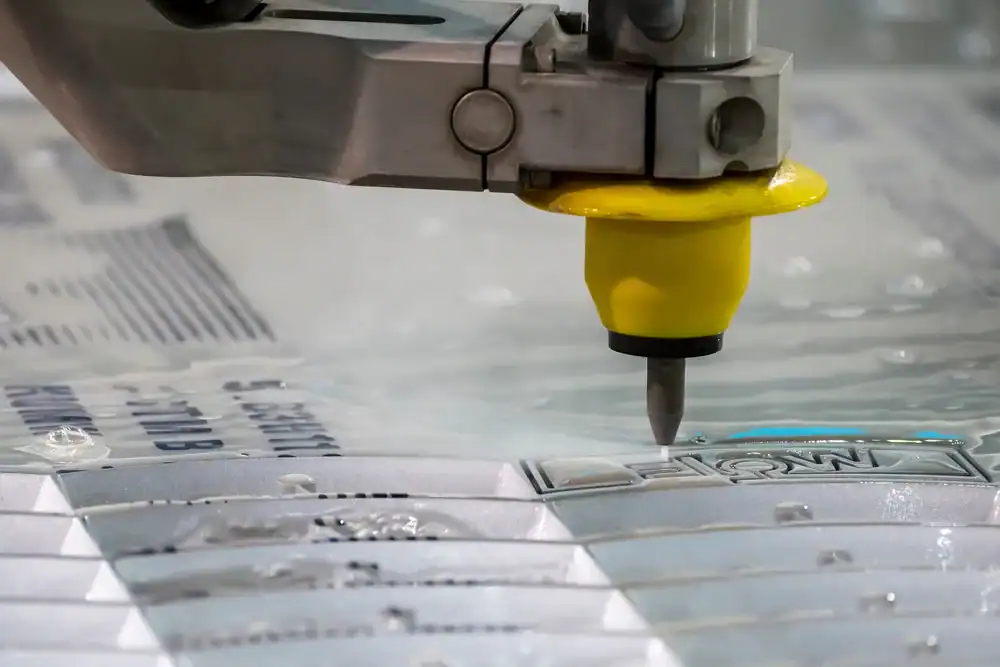
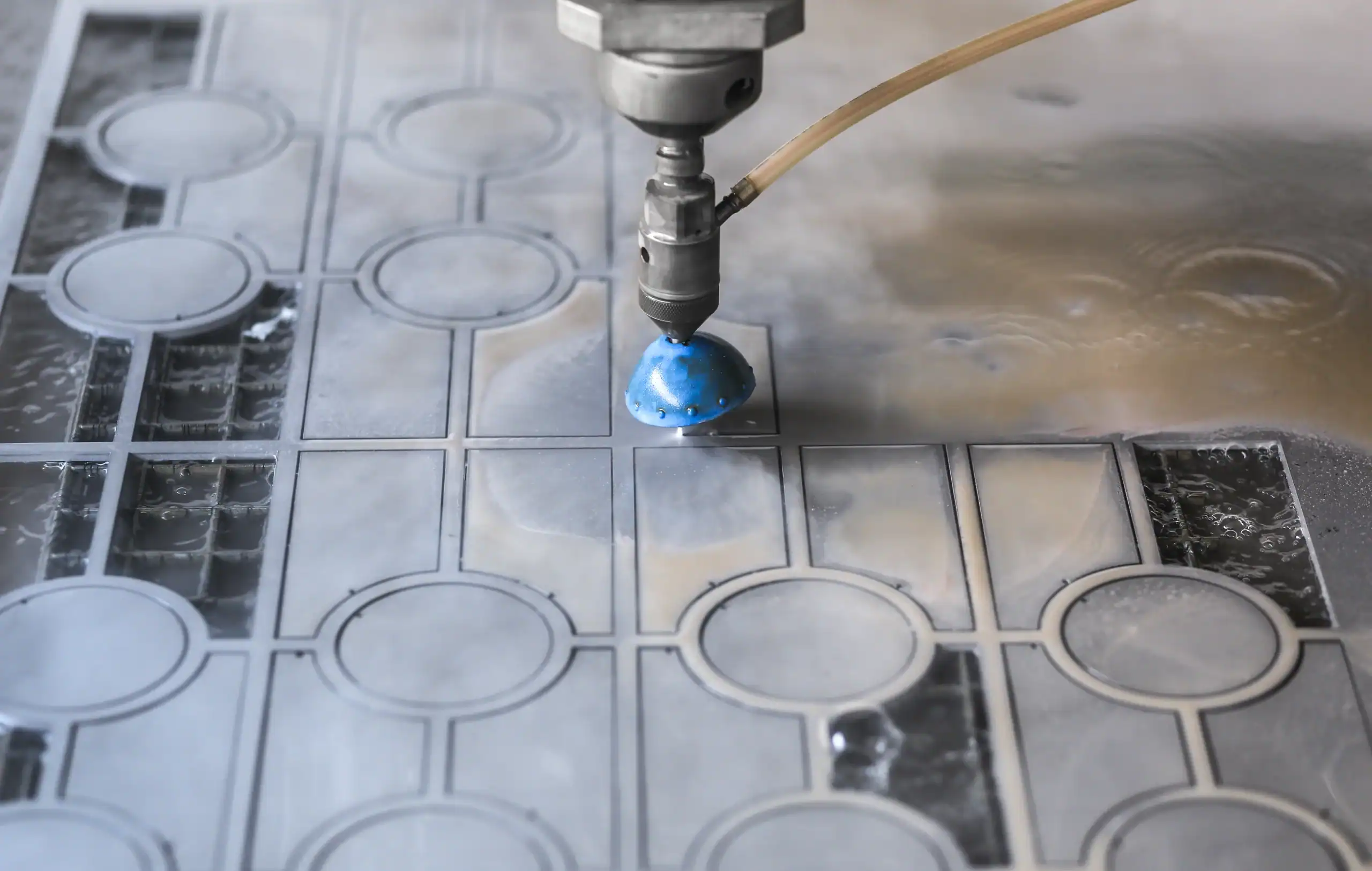
Once the file is dialed in, we load your material onto the cutting table and run the program. The CNC system guides a high-pressure stream of water mixed with abrasive garnet across your material at pressures up to 60,000 PSI. It cuts through without generating heat, so there’s no thermal distortion and no hardened edges.
The system follows your geometry exactly. Complex shapes, tight tolerances, intricate details—it handles all of it without tool changes or setup adjustments. If you’re running multiples, every part comes out identical to the first.
After cutting, we inspect dimensions and edge quality. Most parts are ready to go as-is. If your application requires secondary work, we’ll let you know upfront what’s needed and why.
Ready to get started?
We cut steel, stainless, aluminum, titanium, copper, brass, and tool steel. Hardened materials aren’t a problem. Reflective metals that give lasers trouble cut clean. If it’s metal and you need it cut, we can handle it.
Thickness capacity runs from thin sheet up to several inches depending on material type. The process doesn’t care if you’re cutting 16-gauge stainless or 2-inch plate—it works the same way.
You’re not limited to straight lines or simple shapes. The CNC system handles curves, angles, cutouts, slots, and complex geometries without additional tooling. That makes waterjet cutting metal in Valley Stream, NY particularly useful for prototype work, custom fabrication, or low-to-medium volume production runs where hard tooling doesn’t make sense.
For Long Island’s aerospace and defense manufacturers, this matters. You’re often working with exotic alloys, tight tolerances, and specs that don’t allow for heat damage or material property changes. Waterjet cutting meets those requirements without the compromises that come with thermal cutting methods.
We also work with contractors and designers who need custom architectural metalwork, decorative panels, or structural components. The process gives you clean edges and design flexibility without the lead time of custom dies or punches.
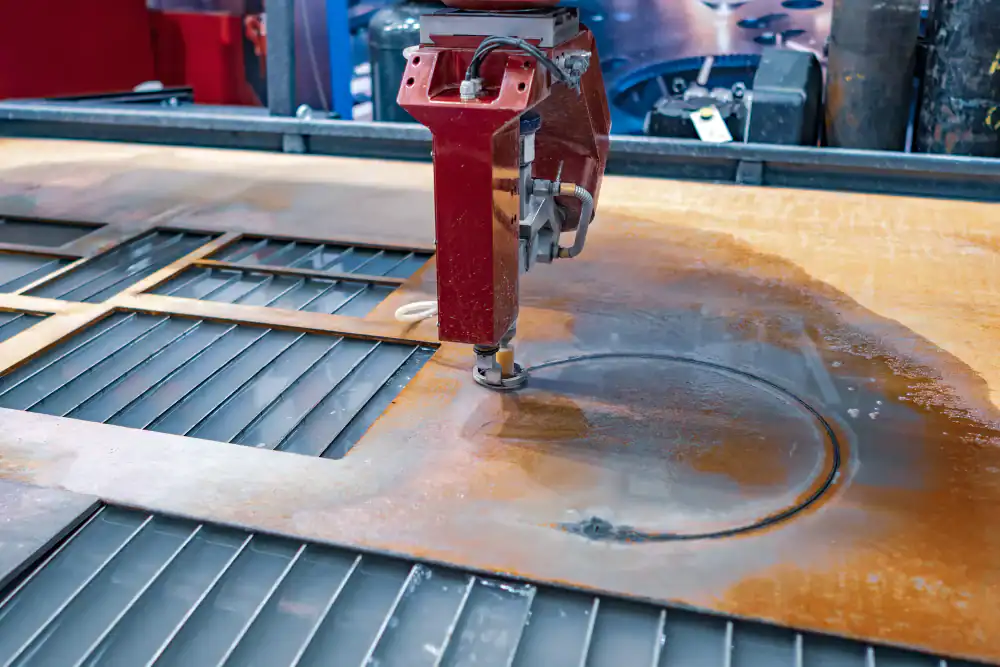
The main difference is heat. Laser and plasma both use thermal energy to melt through material, which creates a heat-affected zone along the cut edge. That zone changes the material properties—it can increase hardness, create brittleness, introduce residual stress, or make the edge more susceptible to corrosion.
Waterjet is a cold cutting process. No heat means no HAZ, no thermal distortion, and no change to your material’s metallurgical properties. For hardened steels, aerospace alloys, or any application where you can’t afford to alter the material, that’s a significant advantage.
Plasma is limited to conductive metals. Lasers struggle with highly reflective materials like copper, brass, and polished aluminum. Waterjet cuts anything regardless of conductivity or reflectivity. It also handles thicker materials more effectively than laser in most cases.
The trade-off is speed. On thin materials, laser can be faster. But when you factor in the lack of secondary finishing, reduced material waste from narrower kerf, and the ability to cut materials that other methods can’t handle, waterjet often comes out ahead on total cost per part.
Standard tolerance is ±0.005 inch on most jobs. With proper setup, material selection, and cutting parameters, we can hit ±0.001 inch on critical dimensions.
Several factors affect tolerance: material thickness, material type, part geometry, and edge quality requirements. Thicker materials see slightly wider tolerances due to stream lag. Softer materials like aluminum hold tighter tolerances than harder materials like tool steel.
The CNC system provides repeatable accuracy, which means part-to-part consistency stays tight across production runs. If the first part measures correctly, the rest of the run will match. That consistency matters for manufacturers running quality inspections on sample parts rather than every piece.
For applications requiring tighter tolerances than waterjet can deliver, we’ll tell you upfront. Some jobs need post-cutting operations like grinding or machining to hit final dimensions. But for the majority of fabrication work, waterjet delivers the accuracy you need right off the table.
Yes. We routinely cut steel plate up to 6 inches thick, and the process can handle even thicker materials in specialized applications.
Cutting speed decreases as thickness increases, but the process remains effective. A 1-inch steel plate takes longer than 1/4-inch sheet, but the edge quality and precision stay consistent. There’s no practical thickness limit like you’d encounter with laser cutting, where power requirements and beam focus become limiting factors.
Thicker materials do require attention to cutting parameters. Abrasive flow rate, water pressure, and traverse speed all get adjusted based on material thickness and type. The goal is to maintain cut quality while optimizing speed.
For Valley Stream manufacturers working with heavy plate for structural components, pressure vessels, or industrial equipment, waterjet provides a viable cutting method that doesn’t introduce heat stress or require preheating like some thermal processes do on thick sections.
Simple jobs with straightforward geometry can often turn around in a few days. Complex parts, high-volume runs, or jobs requiring special materials take longer.
The actual cutting time depends on material thickness, total linear inches of cut, and edge quality requirements. A sheet of 1/4-inch aluminum with basic shapes might take an hour to cut. A sheet of 2-inch stainless with intricate details could take several hours.
We’ll give you a realistic timeline when you submit your files. If you’re on a tight deadline, let us know upfront. We can often prioritize rush jobs or break larger orders into partial shipments so you can start using parts while the rest of the run completes.
For repeat customers running regular production orders, we can often work out scheduling that aligns with your inventory needs. That’s common with our Long Island manufacturing clients who need consistent supply without carrying excess stock.
We can work either way. If you have material on hand or a specific supplier you’re required to use, bring it in and we’ll cut it. If you need us to source material, we can handle that too.
Providing your own material makes sense when you’re buying in volume, have existing supplier relationships, or need certified mill test reports for traceability. You know exactly what you’re getting and can manage your own inventory.
Having us source material works well for one-off jobs, prototypes, or when you need something quickly without minimum order quantities. We work with local metal suppliers and can usually get common materials within a few days.
Either approach works. The important part is making sure the material is appropriate for waterjet cutting and meets your application requirements. If you’re unsure what grade or thickness you need, we can discuss options based on what you’re building and how the part will be used.
Most waterjet cuts come off the table with smooth edges that don’t require additional finishing. The edge quality is clean enough for many applications to use as-is.
You might see slight burr formation on the bottom edge where the stream exits, particularly on thicker materials or softer metals. It’s typically minimal and easily removed with a quick pass of a file or deburring tool if needed. It’s nothing like the slag cleanup required after plasma cutting or the heat scale from oxy-fuel cutting.
The top edge is almost always smooth and square. For parts where the top surface is the visible or functional side, you’re usually good to go without any additional work.
If your application has specific edge finish requirements—like a particular Ra value for sealing surfaces or cosmetic standards for architectural work—let us know upfront. We can adjust cutting parameters to optimize edge quality, or we can discuss what secondary operations might be needed to meet your specs.
Useful Links
Other Services we provide in Valley Stream