
Hear from Our Customers
You’re not looking for someone to just cut metal. You need parts that meet spec, arrive on time, and don’t require additional finishing work that eats into your budget and timeline.
CNC metal waterjet cutting delivers tolerances as tight as ±0.002″. That’s precision you can measure and rely on. No heat-affected zones means no warping, no hardening, and no material distortion that throws off your assembly process.
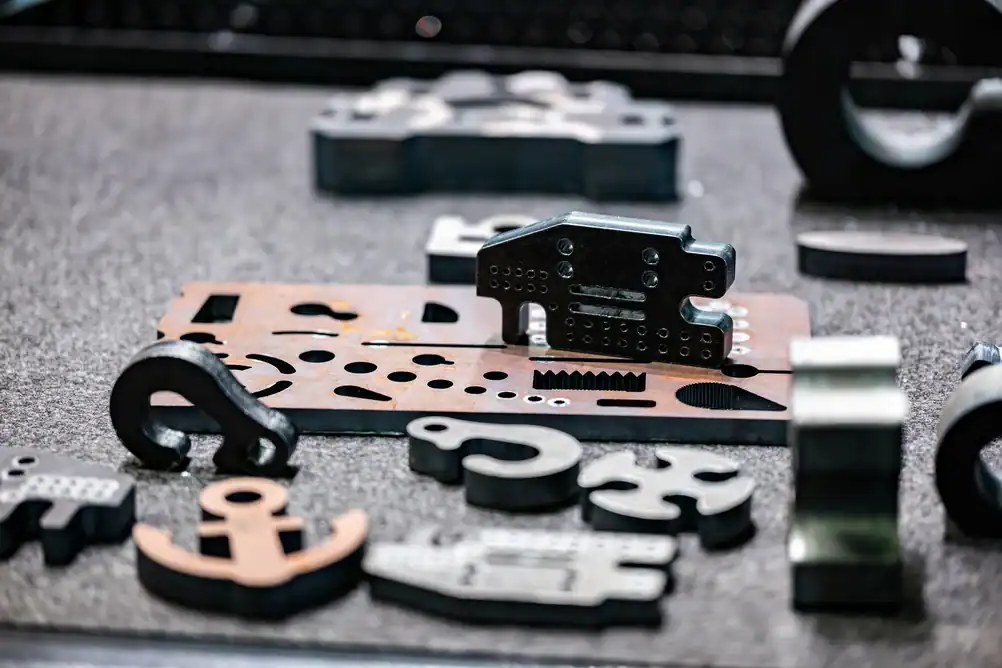
The cut quality is clean enough that most parts go straight into production. No grinding. No secondary machining. No rework because the dimensions drifted during cutting. Just accurate parts ready when you need them.
When you’re working with steel, aluminum, titanium, or specialty alloys in Wantagh, NY, waterjet cutting metal gives you the accuracy and material integrity that laser and plasma cutting can’t match on thicker stock.
We operate from West Islip, serving manufacturers and fabricators throughout Nassau County and the greater Long Island area. We understand the production pressures facing the 3,600+ manufacturing companies across Long Island.
We know what it’s like when your supplier misses a deadline or sends parts that don’t meet tolerance. That’s why our custom metal waterjet cutting focuses on getting your job done right the first time.
Being local matters when you need quick turnarounds or want to discuss a complex project in person. You’re not shipping parts across the country and hoping they arrive intact. You’re working with a waterjet metal cutting shop that’s close enough to respond when your timeline gets tight.
The process starts with your CAD file or drawing. If you’re working from a concept or need design consultation, we can help you develop cutting paths that optimize material usage and maintain the precision your application requires.
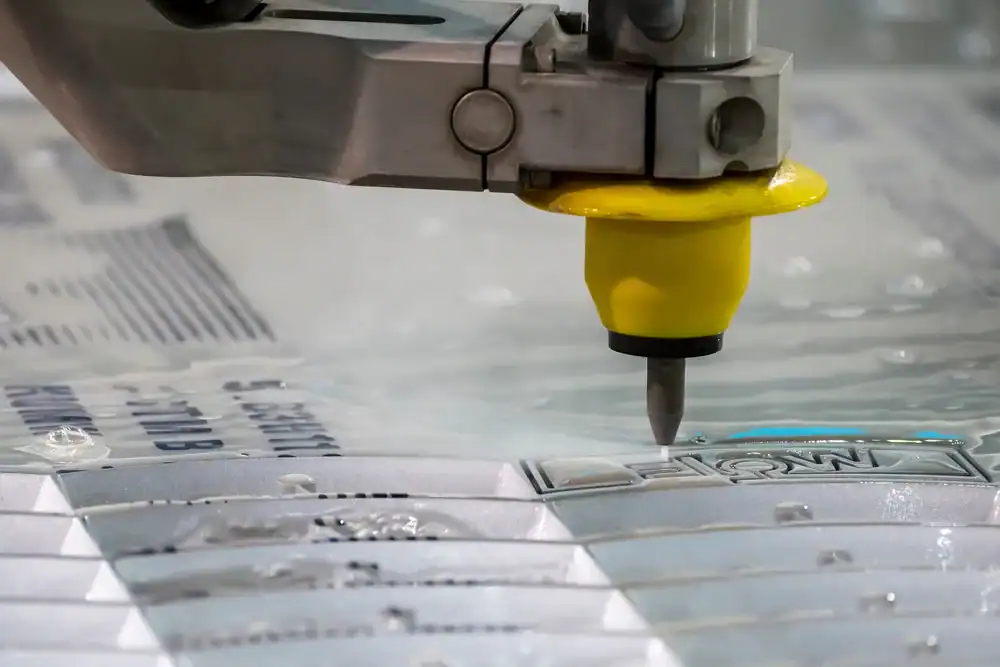
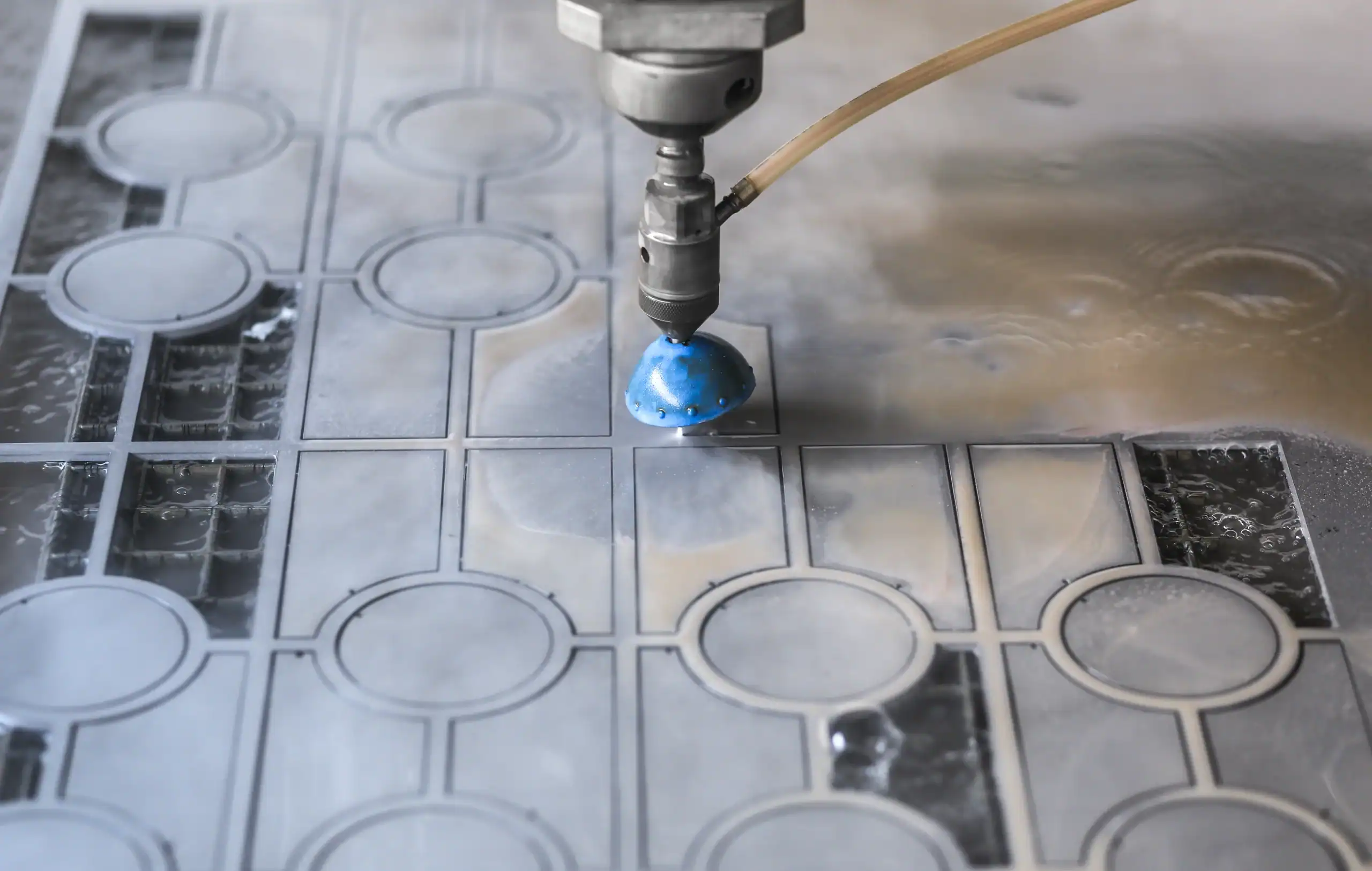
Once the design is programmed into our CNC system, the cutting head follows your exact specifications using a high-pressure stream of water mixed with abrasive garnet. The stream moves through material without generating heat, which means your metal properties stay consistent from edge to edge. The CNC control maintains positioning accuracy throughout the entire cut, even on complex geometries or thick plate.
You get parts that match your specifications without the thermal distortion that comes from flame cutting or the material limitations you’d face with punch presses. The kerf width stays narrow—typically 0.1 to 0.3 millimeters—so you’re not wasting material or losing dimensional accuracy to a wide cutting path.
Most projects move from file to finished parts faster than you’d expect. There’s no tooling to create, no heat treatment to reverse, and no secondary operations to schedule. The parts come off the table ready for your next operation.
Ready to get started?
Waterjet cutting handles virtually any metal you’re working with. Steel plate up to 6 inches thick. Aluminum that would gum up a saw blade. Stainless steel without edge discoloration. Titanium without the fire risk. If you can draw it, we can cut it.
The process works for production runs and one-off prototypes. You’re not paying for expensive tooling or minimum quantities that don’t match your actual needs. Complex shapes, tight inside corners, and intricate patterns get cut with the same accuracy as simple rectangles.
Nassau County manufacturers deal with the same challenges facing shops across Long Island: skilled labor shortages, tight margins, and customers who expect faster turnarounds every year. Waterjet cutting helps because it eliminates process steps. You’re not scheduling multiple operations or waiting for secondary finishing. The cold cutting process means you’re not dealing with heat distortion that requires straightening or stress relief.
Material waste stays minimal because the narrow kerf lets you nest parts tighter. When material costs are climbing and lead times are unpredictable, efficient material usage matters more than ever.
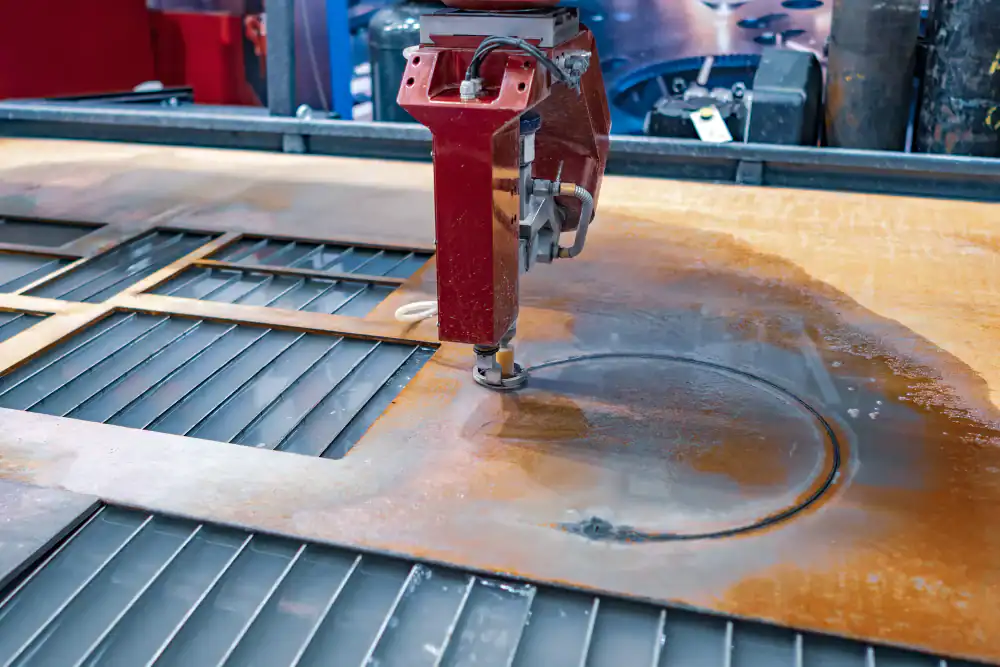
Waterjet cuts any metal you’re likely working with in a manufacturing or fabrication environment. Steel, stainless steel, aluminum, titanium, brass, copper, and specialty alloys all cut cleanly without material-specific limitations.
The process doesn’t rely on heat, so you’re not restricted by melting points, reflectivity, or thermal conductivity. Materials that are difficult or impossible to cut with laser or plasma—like thick aluminum plate or titanium—cut efficiently with abrasive waterjet. You can even cut hardened tool steel without worrying about edge quality.
Thickness capacity typically runs up to 6 inches for steel, though cutting speed decreases as material thickness increases. For most manufacturing applications in Wantagh, NY, you’re working with plate under 2 inches where cutting speed stays productive and edge quality remains excellent.
CNC waterjet cutting holds tolerances as tight as ±0.002 inches, making it one of the most accurate cutting methods available. That’s precision that meets or exceeds what most manufacturing applications require without secondary machining.
The accuracy comes from computer-controlled positioning combined with a cutting stream that doesn’t deflect or wander like mechanical cutting tools. There’s no tool wear changing your dimensions partway through a production run. No heat distortion pulling your material out of flat. No mechanical forces pushing your workpiece around.
For comparison, plasma cutting typically holds ±0.030 inches, and flame cutting is even looser. Laser cutting can match waterjet accuracy on thinner materials, but struggles with thicker plate and reflective metals. If you’re cutting parts that need to fit together precisely or interface with machined components, waterjet delivers the dimensional control you need.
No. Waterjet cutting is a cold process that doesn’t generate heat-affected zones. The cutting stream stays cool throughout the process, so your material properties remain unchanged from edge to edge.
This matters more than you might think. Heat-affected zones from plasma, laser, or flame cutting create hardened edges that are difficult to machine, drill, or tap. The thermal stress can cause warping in thinner materials or residual stresses that lead to cracking during forming operations. You often need secondary operations to remove the heat-affected zone or stress-relieve the part.
Waterjet eliminates all of that. The edges come off the table with the same hardness, grain structure, and mechanical properties as the base material. If you’re working with pre-hardened steel, the edges stay hardened. If you’re cutting annealed material that you plan to form or weld, there’s no hardened zone to grind off first. For manufacturers in Wantagh, NY dealing with tight tolerances and strict material specifications, this makes waterjet cutting the safer choice.
Turnaround time depends on material thickness, part complexity, and current shop schedule, but most projects move faster than traditional cutting methods because there’s no tooling to create or secondary finishing to schedule.
Simple parts in thinner material—under half an inch—can often be cut the same day or next day if the shop schedule allows. More complex projects with thicker plate or intricate geometries might take a few days, but you’re still avoiding the delays that come from outsourcing multiple operations or waiting for custom tooling.
The actual cutting speed varies with material type and thickness. Thin aluminum cuts quickly. Thick stainless takes longer. But because the process runs unattended once programmed, your parts can be cutting overnight or during off-hours, which helps compress overall lead time. Being local to Wantagh, NY means you’re not adding shipping time on both ends of the job. You can often pick up completed parts the same day they’re finished rather than waiting for freight.
Standard industrial waterjet systems cut steel plate up to 6 inches thick. Aluminum and softer metals can go even thicker if needed, though cutting speed slows considerably as thickness increases.
For most manufacturing and fabrication work in Nassau County, you’re dealing with plate under 2 inches where waterjet cutting stays efficient and cost-effective. At those thicknesses, you get excellent edge quality and reasonable cutting speeds. As you move into thicker material, cutting time increases but the process still works when other methods don’t.
Thick plate is actually where waterjet shines compared to alternatives. Laser cutting loses effectiveness above about 1 inch in steel. Plasma cutting can handle thicker material but produces rough edges and wide heat-affected zones. Flame cutting works on thick plate but the accuracy and edge quality are poor. Waterjet gives you the ability to cut complex shapes in thick material with precision that other thermal processes can’t match.
Most waterjet cut parts go directly into production without additional finishing. The edge quality is smooth enough for welding, assembly, or powder coating without grinding or deburring.
You’ll see a slightly textured finish from the abrasive cutting action, but it’s not rough or jagged like a torch-cut edge. There’s no slag to chip off like you get with plasma cutting. No oxide layer or discoloration like laser cutting leaves on stainless steel. Just a clean edge that’s ready for your next operation.
Thicker materials sometimes show a slight taper or striations on the bottom edge where the cutting stream exits. For most applications, this doesn’t matter. If you need perfectly square edges for a specific application, a light touch with a file or grinder cleans it up quickly. But compared to the secondary work required after plasma or flame cutting, waterjet cutting metal saves significant time and labor in your overall production process.
Useful Links
Other Services we provide in Wantagh