Hear from Our Customers
When you’re working with hardened steel, thick aluminum, or titanium, traditional cutting methods leave you dealing with burn marks, warped edges, and parts that need finishing work before you can even use them. That costs you time and money.
Waterjet cutting metal eliminates those problems entirely. The cold-cutting process means no heat-affected zones, no material distortion, and no microscopic cracks that compromise structural integrity. You get clean edges with a fine sand-blasted finish that often doesn’t need secondary work.
This matters when you’re on a deadline or working with expensive materials. You’re not paying for wasted stock or waiting for parts to be recut because they warped during fabrication. The kerf is thin enough that parts nest tightly on the sheet, so you’re maximizing every square inch of material you buy.
We serve manufacturers, architects, and fabricators across West Babylon, NY and throughout Long Island. Our in-house design team reviews your files before they hit the cutting table, catching potential issues that would otherwise show up in your finished parts.
That’s not standard practice everywhere, but it should be. You’re trusting us with materials that aren’t cheap and projects that have real deadlines. We treat that seriously.
West Babylon’s industrial landscape includes automotive shops, marine fabricators, and architectural metalworkers who need precision without the limitations of laser or plasma cutting. We built our process around those requirements.
You send us your design file—DXF, DWG, or whatever CAD format you’re working in. Our team reviews it for any issues with tolerances, kerf width, or nesting that might affect the final part. If we spot something, we’ll reach out before we start cutting.
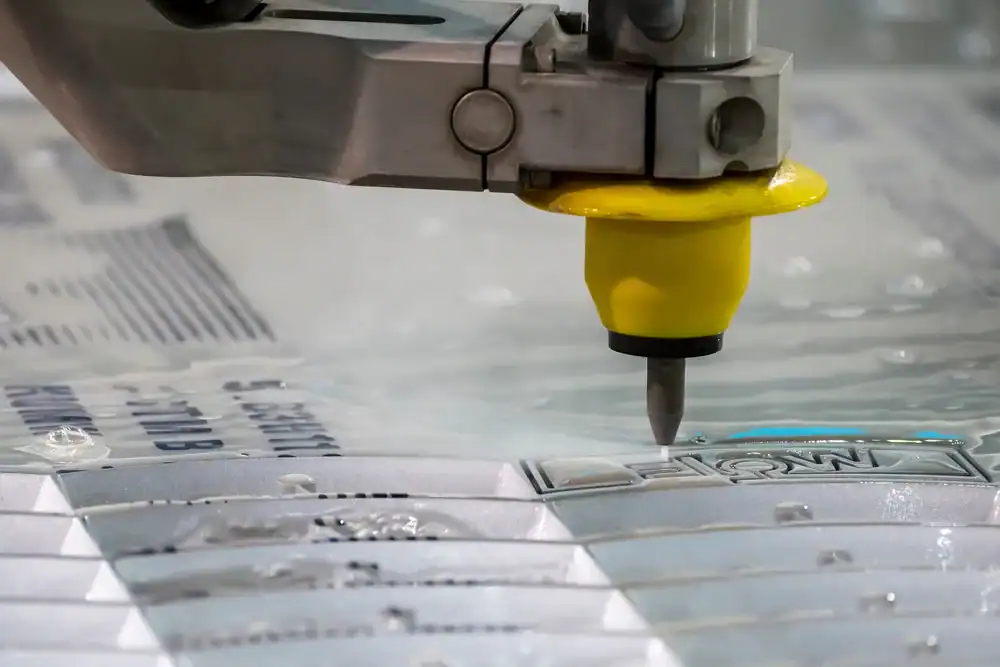
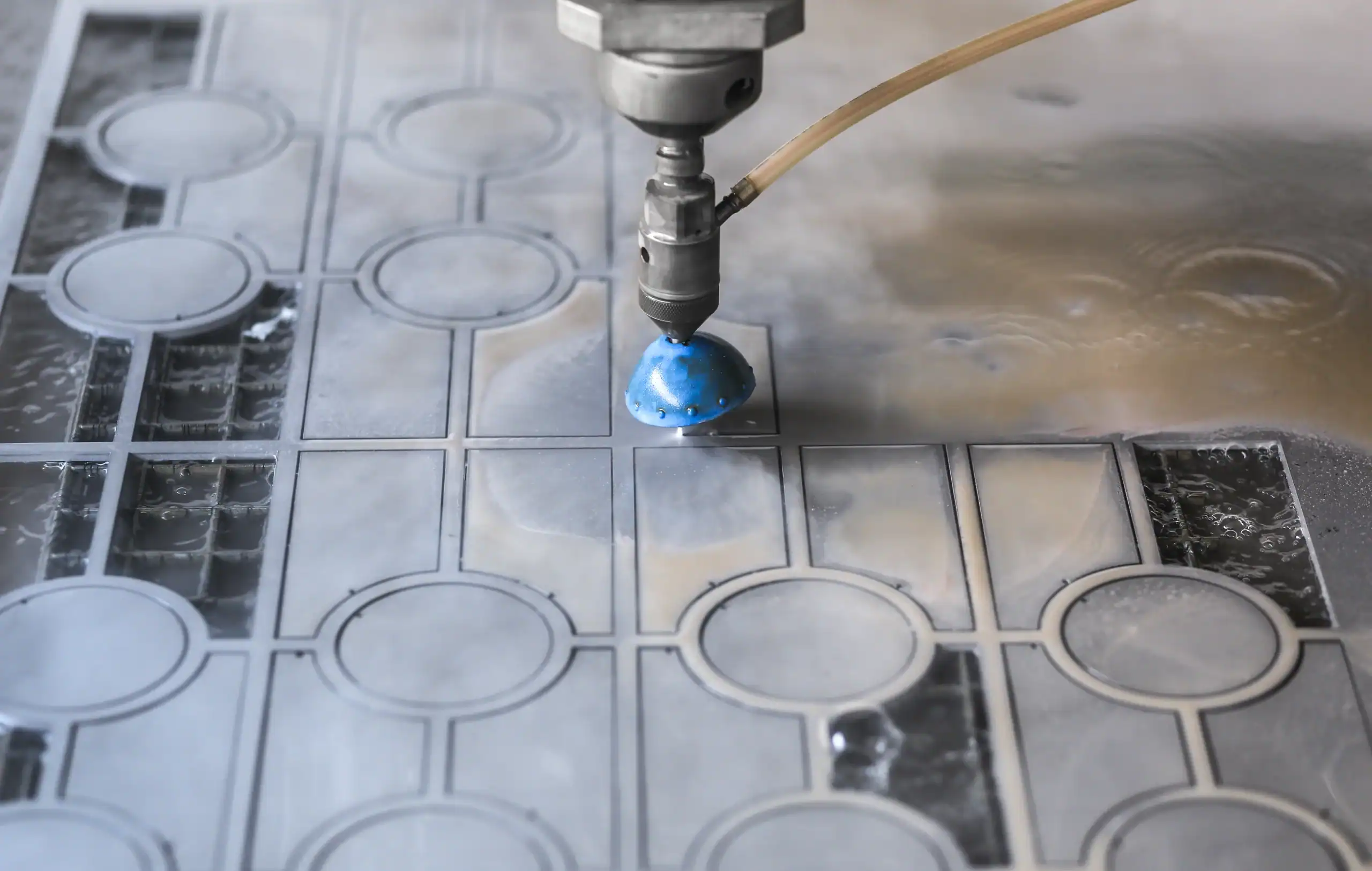
Once the file is dialed in, it goes to our CNC metal waterjet cutting system. A high-pressure stream of water mixed with abrasive garnet cuts through your material—whether that’s quarter-inch aluminum or two-inch stainless steel. The system follows your design with repeatable accuracy, so part one matches part one hundred.
There’s no heat, so there’s no warping. No hardening of edges. No burn marks to grind off. The process works for complex shapes, tight inside corners, and small holes that other methods struggle with. When the cut is done, your parts are ready to use or move to the next stage of your process.
Ready to get started?
You’re not limited to thin materials. Waterjet cutting handles metal up to 10 times thicker than what laser cutting can manage. That opens up options for structural components, thick plate work, and applications where material strength matters.
The process works across the full range of metals—hardened tool steel, titanium, carbon steel, stainless steel, aluminum, brass, copper. If you’re working on a project that uses multiple materials, you’re not switching between different cutting methods or shops.
West Babylon’s proximity to marine and automotive industries means you’re often dealing with corrosion-resistant alloys or materials that can’t tolerate heat exposure. Waterjet cutting preserves the material properties because there’s no thermal change. For marine fabricators working with saltwater-exposed components, that matters. For automotive shops prototyping parts that will see high stress, it matters.
You also get fast setup. The system doesn’t require starting holes for most materials, so projects move from file to first cut quickly. Whether you need one custom prototype or a production run of matching parts, the process scales without requiring new tooling.
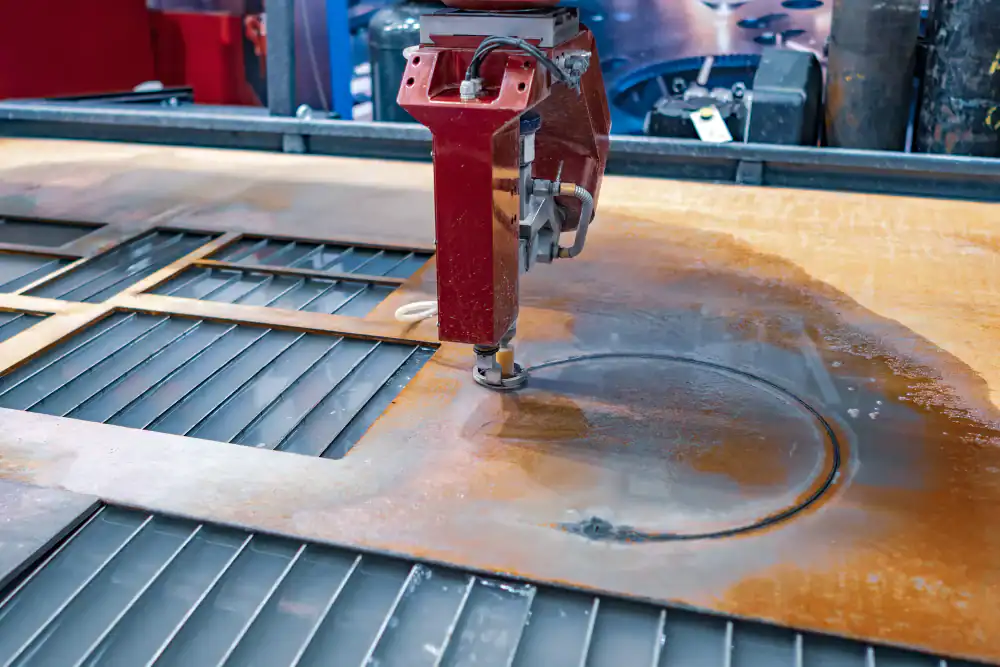
Waterjet cutting delivers tolerances as tight as +/- 0.005 inches, which puts it in the same range as laser cutting for most applications. The difference is that waterjet maintains that precision without introducing heat.
Laser and plasma both create heat-affected zones that can cause microscopic changes in the metal’s structure. For parts under stress or in high-precision assemblies, those changes matter. Edges can harden, materials can warp slightly, and you might see burn marks that need grinding.
Waterjet avoids all of that. You get the precision without the thermal side effects. For industries with strict quality requirements—aerospace components, medical device parts, architectural metalwork—that’s not a nice-to-have. It’s the reason you choose waterjet over thermal cutting methods.
We routinely cut metals up to six inches thick, and the process can handle even thicker materials depending on the specific alloy and project requirements. That’s significantly more than laser cutting, which typically maxes out around half an inch for most metals.
Thicker materials take longer to cut because the waterjet stream needs more time to penetrate and maintain a clean kerf. But the trade-off is that you’re not limited by the physics of thermal cutting. If you’re working with heavy plate steel, thick aluminum structural components, or solid titanium blocks, waterjet is often the only practical option.
The edge quality stays consistent even on thick cuts. You’re not dealing with taper or rough edges on the bottom side of the material. That consistency matters when parts need to fit together precisely or when you’re working with expensive stock that you can’t afford to waste.
Yes. Waterjet handles complex shapes, tight inside corners, narrow slots, and small holes without the limitations you’d hit with traditional methods. The cutting stream is thin—often less than 0.04 inches—so you can achieve fine detail work.
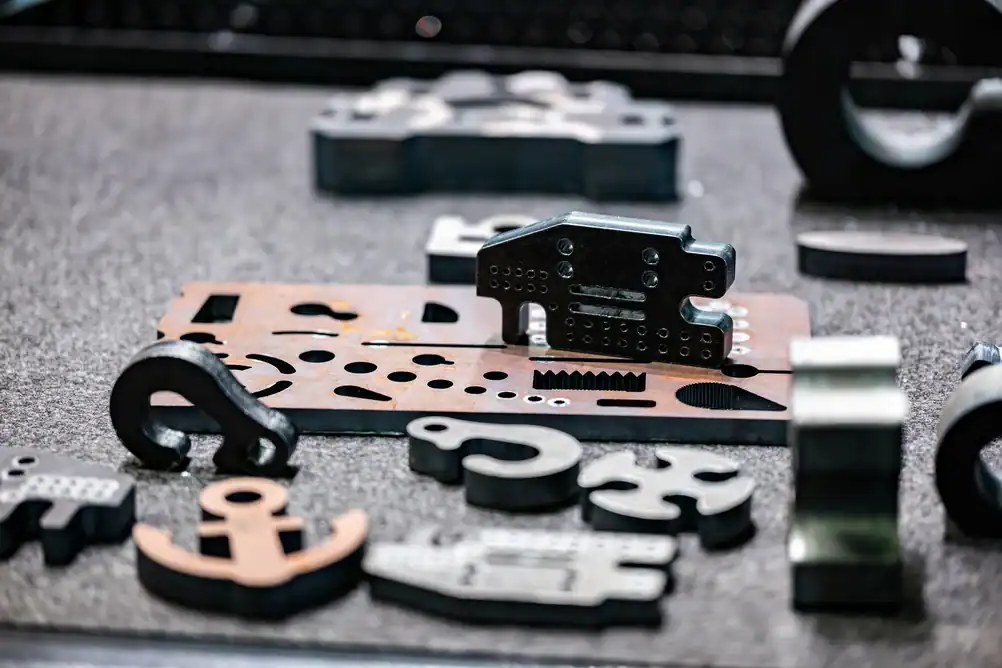
Intricate designs don’t require special tooling or multiple setups. The CNC system follows your CAD file whether you’re cutting simple rectangles or complex organic shapes. That’s useful for architectural metalwork with decorative patterns, custom automotive parts with precise fitment requirements, or prototype components with unusual geometries.
The process also doesn’t create burrs or rough edges that you’d need to deburr by hand. For small parts where manual finishing is tedious and time-consuming, that saves real labor hours. You’re getting parts that are closer to finished condition right off the cutting table.
The thin kerf means parts can nest closely together on the sheet, maximizing how much usable material you get from each piece of stock. When you’re working with expensive alloys—titanium, hardened steel, specialty stainless grades—that efficiency directly impacts your material costs.
Traditional cutting methods with wider kerfs leave more scrap between parts. Plasma cutting, for example, typically has a kerf around 0.15 inches. Waterjet is often a third of that. Over the course of a production run, those fractions add up to significant savings.
The nesting software optimizes part placement to reduce waste even further. You’re not eyeballing layouts or leaving excess material between cuts out of caution. The system calculates the most efficient arrangement, and because there’s no heat distortion, parts can sit closer together without risk of warping into each other.
Marine fabricators use it for corrosion-resistant components that will be exposed to saltwater—stainless railings, aluminum deck fittings, custom brackets. The lack of heat-affected zones means the material’s corrosion resistance isn’t compromised during cutting.
Automotive shops rely on waterjet for custom body panels, chassis components, and prototype parts where precise fitment is critical. When you’re building one-off projects or small production runs, the ability to cut complex shapes without expensive tooling makes the process practical.
Architectural metalworkers use waterjet for decorative panels, structural components, and custom installations where aesthetics matter as much as function. The clean edges and ability to cut intricate patterns without secondary finishing work keep projects on schedule. Manufacturing facilities across Long Island use the process for machine parts, industrial components, and custom tooling where precision and material integrity can’t be compromised.
Cut time depends on material thickness, complexity of the design, and the specific metal you’re working with. Simple shapes in thin material cut quickly—sometimes minutes per part. Intricate designs in thick plate take longer because the waterjet stream needs time to maintain a clean cut through the entire depth.
What matters more than raw cutting speed is total turnaround time. Waterjet doesn’t require the setup time that stamping or traditional machining needs. There’s no tooling to fabricate, no fixtures to build. Your file goes from review to cutting table fast.
For prototype work or custom one-offs, that speed advantage is significant. You’re not waiting days for tooling before the first part gets cut. For production runs, the lack of tool wear means consistent quality from first part to last without stops for maintenance or adjustment. The process scales efficiently whether you need one part tomorrow or a hundred parts next week.
Useful Links
Other Services we provide in West Babylon